Table of Contents
MindReset.org may earn a commission if you buy through our links. This does not increase your price and does not affect our editorial judgment.Future of meditation technology
Affiliate disclosure: MindReset.org may earn a commission if you buy through our links. This does not increase your price and does not affect our editorial judgment.
Research note: This educational guide is based on current research, public product information, and observable trends in meditation apps, wearables, biofeedback, neurofeedback, and immersive technology. We have not personally tested every device or platform mentioned.
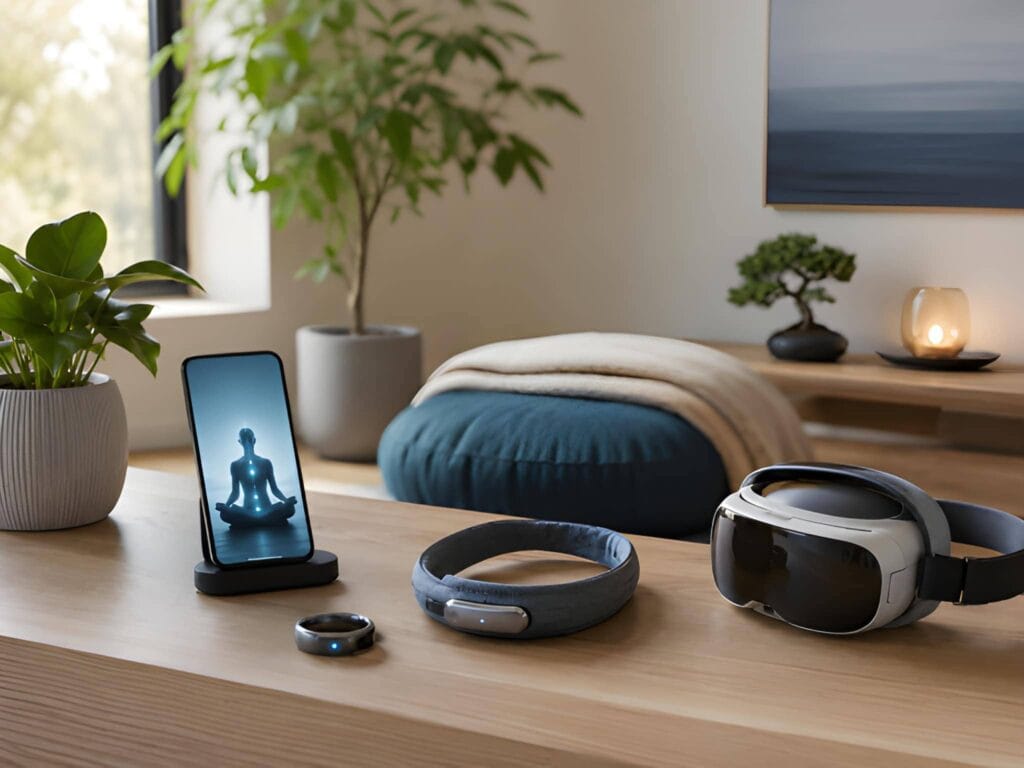
Meditation is moving far beyond simple audio tracks and timer apps. The next wave of meditation technology combines AI, wearables, brain sensors, biofeedback, VR, AR, and adaptive coaching to make the meditation experience more personal, immersive, and measurable.
This guide explores the future of meditation technology without the hype. We will look at how AI meditation, wearable neurotechnology, VR meditation, neurofeedback, and real-time data may transform the way people meditate, focus, and build calm into daily life. The big question is not whether technology will replace traditional meditation. It probably will not. The better question is whether digital tools can help more people start, stay consistent, and understand what is happening during a meditation session.
What Is the Future of Meditation Technology Really About?
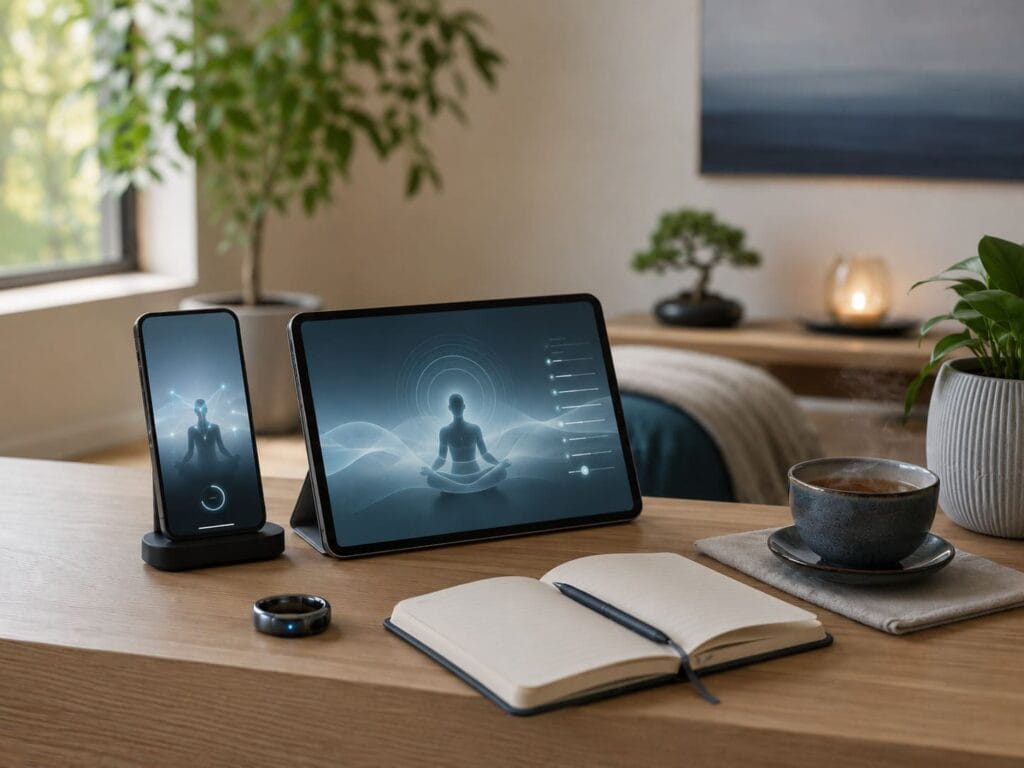
The future of meditation is not just about making a prettier meditation app. It is about moving from static content to adaptive systems. Traditional meditation often depends on a teacher, a recording, or a written guide. That can work well, but many people still stop because they do not know whether they are doing it correctly. They sit, close their eyes, get distracted, and assume they failed.
Meditation technology tries to solve that problem by adding feedback. Instead of guessing what is happening, the user may receive real-time feedback from a sensor, a wearable, a heart rate monitor, or an AI coach. This does not make meditation effortless, but it can make the process easier to understand.
The strongest version of future meditation technology will probably integrate several layers: AI guidance, physiological tracking, heart rate variability, brain sensing, immersive visuals, and personalized meditation instruction. The point is not to turn meditation into a video game. The point is to create a clearer interface between the user, the body, and the mental state they are trying to train.
Why Are AI Meditation Apps Becoming More Adaptive?
The first generation of digital meditation was simple: open an app, choose a guided meditation, listen, and repeat. That model helped millions of people begin a meditation practice, but it has a weakness. The app usually does not know whether the user is tired, focused, restless, emotionally overloaded, or bored.
AI meditation changes that direction. Instead of giving everyone the same script, artificial intelligence can personalize the experience. A future meditation app may adjust the voice, pacing, background sound, breathing rhythm, meditation techniques, and session length based on the user’s behavior and real-time data.
This is where the idea of a just-in-time adaptive intervention becomes interesting. In plain English, it means support arrives when it is most useful. If an app notices that someone usually loses focus in the evening, it may suggest a shorter practice. If heart rate data shows tension before sleep, it may offer guided mindfulness instead of a long concentration session. Done well, AI could make meditation feel less generic and more responsive.
Can Wearables Personalize the Meditation Experience?
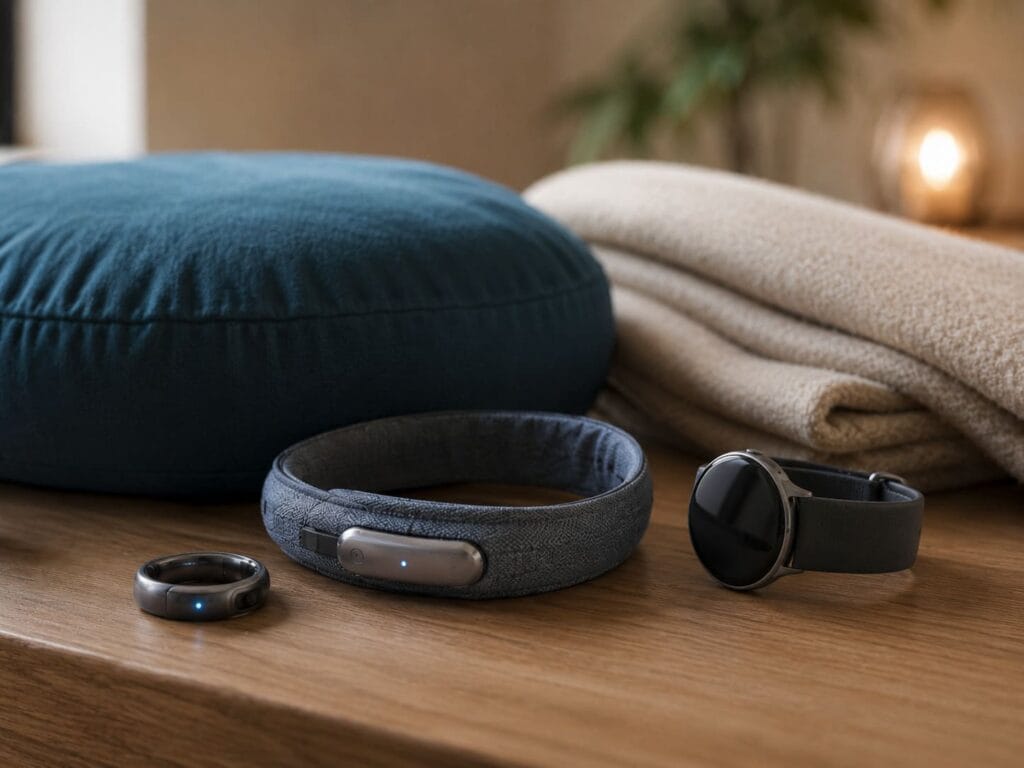
Wearables are becoming one of the most important bridges between meditation and technology, especially as smart rings for stress recovery make physiological signals easier to track outside formal practice. A wearable can track physiological signals such as heart rate, movement, breathing patterns, or sleep-related data. More advanced meditation wearables may also use EEG, optical sensors, or other forms of bio-sensing to estimate how the body responds during practice.
This matters because meditation is not only a mental activity. Breathing, posture, movement, attention, and physiological signals can also influence the meditation experience. Your posture, breath, nervous system, emotional state, and attention all influence the meditation session. A wearable can help the user notice patterns that are hard to sense directly.
The future will likely move toward devices that personalize practice without overwhelming the user. A good meditation device should not turn every session into a dashboard obsession. It should give enough feedback to support awareness, then help the user return to the actual practice. The best meditation technology will be the kind that quietly improves consistency instead of making the user chase perfect scores.
How Do Meditation Devices Use Biofeedback and Heart Rate Data?
Many meditation devices use biofeedback to turn invisible body signals into something the user can hear, see, or feel. For example, heart rate and heart rate variability can give clues about the body’s regulation state. A calmer breathing rhythm may support better physiological balance, while irregular patterns may show that the body is not settling easily.
Biofeedback can be useful because it makes meditation less abstract. Instead of simply being told to “relax,” the user can see how breathing, attention, and posture affect measurable signals. This can enhance meditation for beginners who need structure and for experienced users who want a clearer feedback loop.
The danger is overinterpretation. A sensor can provide useful signals, but it cannot fully explain a person’s inner life. A low score does not mean the meditation failed. A good score does not mean the user has mastered mindfulness meditation. The role of technology is to guide attention, not to define the entire value of the practice.
Is Neurofeedback the Next Step After Guided Meditation?
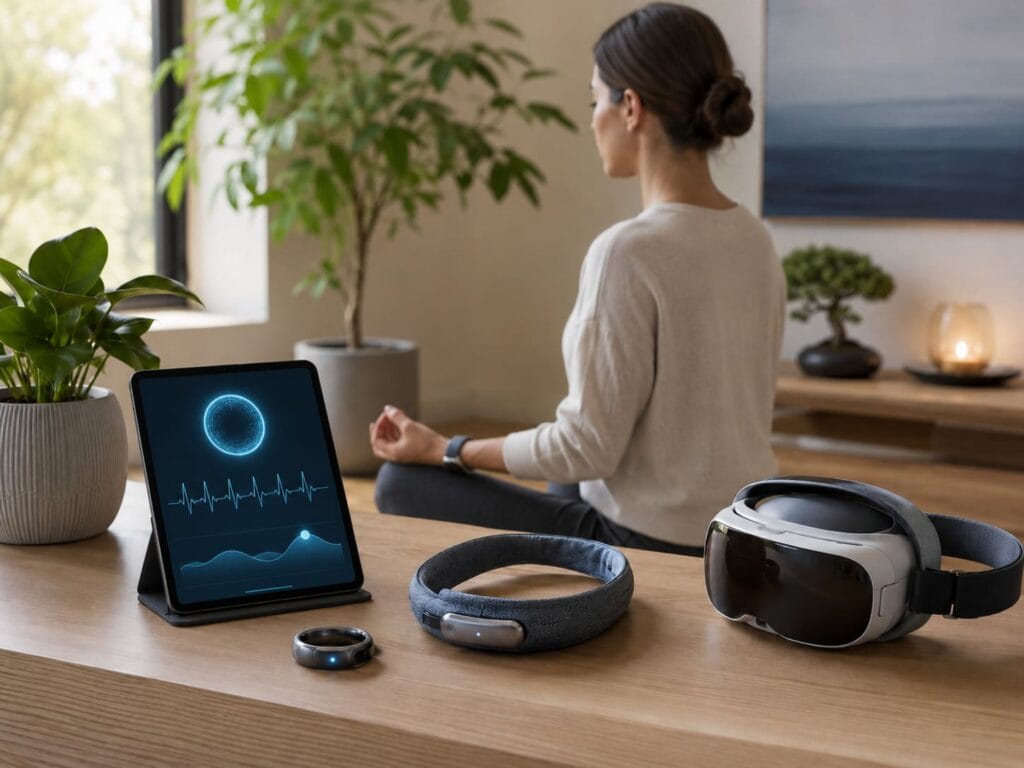
Guided meditation tells the user what to do. Neurofeedback tries to show the user what is happening. That is the key difference. In a neurofeedback-style system, the user receives real-time feedback linked to brain or body signals, often through sound, visuals, or simple game-like tasks.
For meditation, this creates an interesting closed-loop system. The user practices, the system reads a signal, the system responds, and the user adjusts. Over time, this can make the meditation experience feel more interactive than a standard audio guide.
Consumer neurofeedback is still developing, and it should not be treated as magic. The brain is complex, and a single signal rarely tells the whole story. But as a training concept, neurofeedback fits the future of meditation very well. It helps answer the question many beginners ask: “Am I actually meditating, or am I just sitting here thinking?”
For a broader research overview, see this systematic review of mindfulness-based neurofeedback. It helps explain both the potential of closed-loop meditation training and the limitations of current evidence.
Could VR and AR Make Meditation More Immersive?
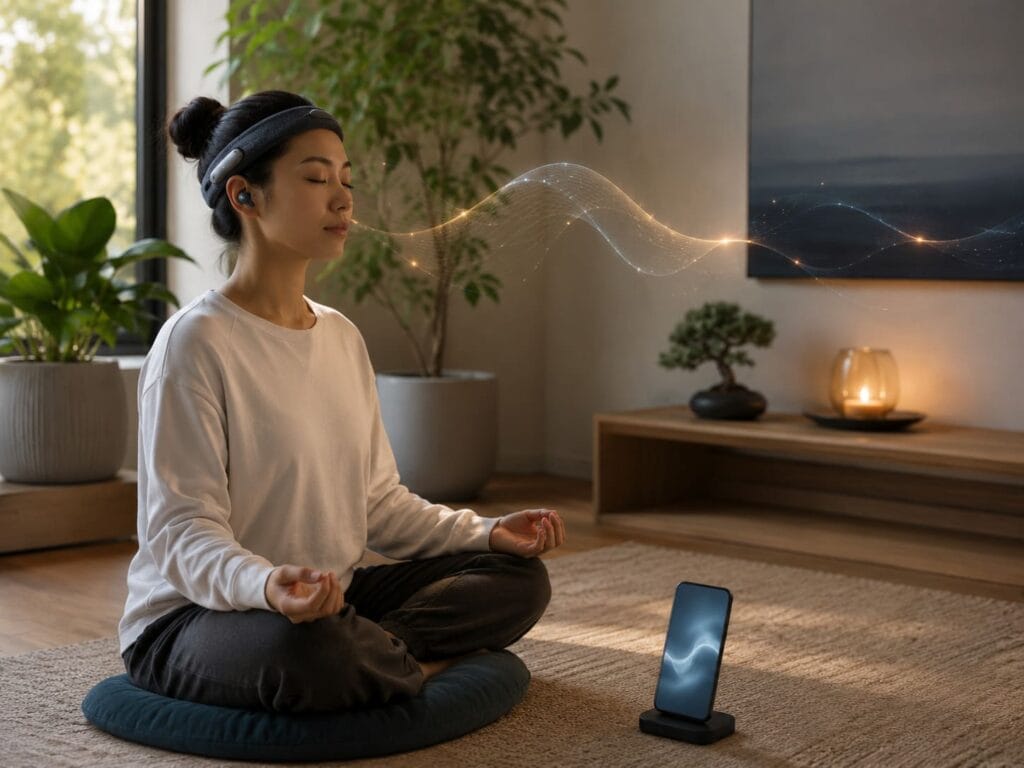
VR meditation is one of the most visually powerful areas of future meditation technology. Instead of sitting in a normal room with a phone app, the user can enter an immersive virtual environment: a quiet forest, a mountain platform, a minimal breathing space, or a soft digital temple designed for focus and calm.
VR and AR can change the meditation experience because they reduce external distraction. A headset can block the visual noise of daily life and replace it with a controlled environment. For people who find it hard to meditate in a chaotic home, this can be valuable.
Virtual and augmented reality also create new possibilities for guided meditation. A breathing exercise could be visualized as expanding light. A body scan could be supported by gentle spatial cues. A focus session could use minimal movement and sound to keep attention stable. The future of meditation technology may integrate VR and AR seamlessly into routines for relaxation, breathwork, and mental reset.
How Will AI Coaches Change the Way We Meditate?
An AI coach could become the layer that connects everything: the meditation app, the wearable, the sensor, the user’s goals, and the user’s daily routine — a direction already visible in the rise of AI companion tools for emotional support and daily reset rituals.
Instead of choosing from a menu of hundreds of sessions, the user may ask for what they need: calm before sleep, focus before work, emotional reset after a difficult day, or a short meditative break between tasks.
The value of an AI coach is not just content generation. The real value is adaptation. A good coach can notice patterns over time. It may learn that a user prefers shorter morning sessions, responds better to breath-based guidance than visualization, or becomes more consistent when the meditation practice is connected to an existing habit.
This is where meditation training could become more personal. The user would not need to build a perfect plan from scratch. The system could guide them toward a realistic rhythm: five minutes here, ten minutes there, longer sessions when life allows. That kind of adaptive support may be more useful than another large library of generic guided meditation tracks.
Where Do Muse, Mendi, Sens.ai, and OpenBCI Fit Into the Future Meditation Market?
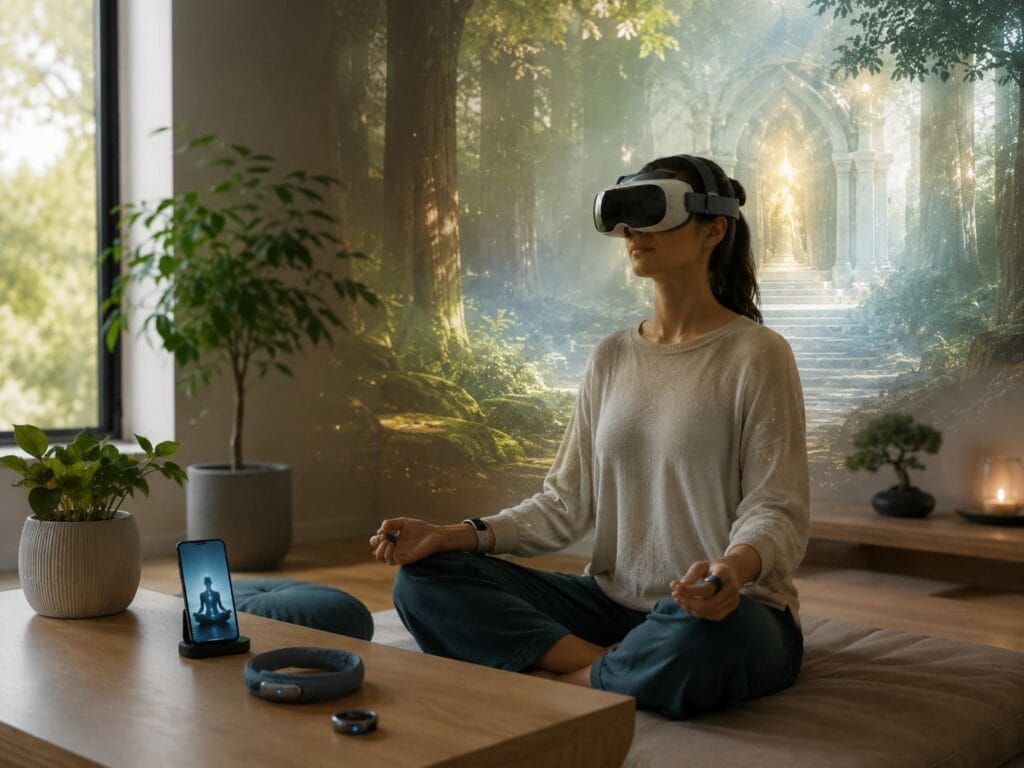
The future meditation market will not be built by one type of device. It will likely be a mix of meditation devices, mental health apps, wearables, VR headsets, neurotechnology platforms, and AI-guided software.
Muse is a strong example of a consumer EEG headband built around real-time meditation feedback, using audio cues based on brain activity to support focus during sessions. It turns brain and body signals into audio cues, helping users understand when their mind is more active or more settled. That makes it relevant for people who want feedback during mindfulness practice.
Mendi takes a different path. It focuses on neurofeedback-style training connected to focus and brain activity. Sens.ai sits closer to a broader neurotechnology system, combining feedback, training, and personalization. OpenBCI and Galea point toward a more experimental future where BCI, body sensors, eye tracking, and immersive environments may be integrated into one interface. These systems are not all the same, but together they show where the market is going: meditation is becoming more measurable, adaptive, and connected to real-time signals.
Can Meditation Technology Support Mental Wellness Without Replacing Professionals?
Meditation technology can support mental wellness, but it should not pretend to replace mental health professionals. That distinction matters. A meditation app, wearable, or AI coach can help with routine-building, guided mindfulness, focus, relaxation, and self-awareness. It can support health behavior by making practice more consistent and easier to integrate into daily life.
But mental health is not only a data problem. People may need human support, clinical care, personal context, or professional guidance. Digital tools can help, but they should not make unrealistic promises about health interventions or emotional outcomes.
This is especially important when apps discuss positive and negative affect, stress patterns, or mental state tracking. Technology can offer signals, reminders, and structure. It cannot fully understand a human life. The strongest future meditation platforms will probably work alongside professionals, not against them.
What Should Users Remember Before Choosing the Best Meditation Technology?
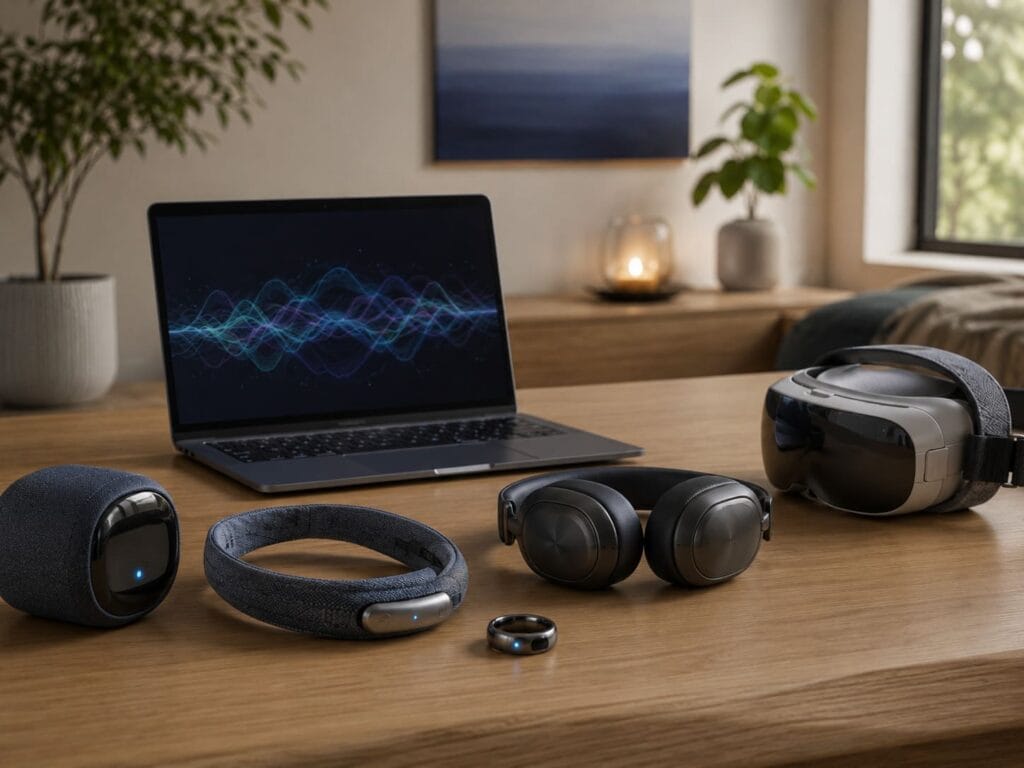
The best meditation technology is not always the most advanced device; sometimes the right choice is a simple tool from a broader instant mind reset setup that helps you calm down, focus, and return to the day. It is the tool that helps the user actually meditate. Some people need a simple app. Others benefit from a wearable. Some may enjoy VR meditation. A smaller group may want deeper neurofeedback or brain-sensing tools.
Before buying anything, users should ask a practical question: “Will this help me build a real habit?” A beautiful interface does not matter if the user stops after three days. A powerful sensor does not matter if the feedback creates anxiety. A premium device does not matter if the person only needed a basic guided meditation routine.
The future of meditation will probably combine technology and neuroscience with human simplicity. Better data, better design, and better personalization can make practice easier to start. But calm still requires repetition. No app, headband, computer, or AI system can do the inner work for the user.
Final Summary: What to Remember
- Meditation technology is moving from static audio sessions toward adaptive, personalized systems.
- AI meditation may help personalize guidance, session length, pacing, and meditation instruction.
- Wearables can add useful physiological feedback, including heart rate and heart rate variability.
- Biofeedback can make meditation feel more concrete, but it should not become score-chasing.
- Neurofeedback may help users understand their attention patterns during practice.
- VR meditation and AR can create immersive environments that reduce distraction and support focus.
- Muse, Mendi, Sens.ai, OpenBCI, and Galea represent different parts of the future meditation ecosystem.
- A meditation device can support practice, but it should not replace human judgment or mental health professionals.
- The future of meditation technology is not instant enlightenment. It is better feedback, better personalization, and easier consistency.
- The real goal is simple: use technology to support awareness, then return to the practice itself.