
Table of Contents
Affiliate disclosure: MindReset.org may earn a commission if you buy through our links. This does not increase your price and does not affect our editorial judgment.
Research note: We have not personally tested this product yet. This guide is based on product specifications, public documentation, available research, user feedback, and comparison with similar tools.
Quick Verdict: Is the Mendi Neurofeedback Device Worth It?
Mendi may be worth considering if you want an active, app-guided focus-training device and are comfortable using fNIRS feedback as a consumer wellness tool rather than a medical measurement.
Its main appeal is practical: the headset measures changes in blood oxygenation near the prefrontal area during short training sessions and turns that signal into simple visual feedback inside the Mendi app.
Choose Mendi if you want active brain-training sessions, dislike recurring software subscriptions, and prefer focus-oriented feedback over meditation soundscapes.
Skip Mendi if you expect it to diagnose or treat ADHD, anxiety, depression, brain fog, sleep disorders, or any neurological condition. Also skip it if you want passive tracking, clinically interpreted results, or a device that works without regular practice.
Mendi Buyer Decision Table
| Buyer need | Better option | Why | Skip if |
|---|---|---|---|
| Active focus-training sessions | Mendi | fNIRS-based visual feedback and short app-guided exercises | You want passive tracking |
| Meditation feedback | Muse | EEG-based meditation soundscapes and guided practice | You mainly want focus games |
| Passive stress-awareness data | Smart ring or wearable | Tracks trends without active sessions | You want real-time brain training |
| ADHD diagnosis or treatment | Qualified clinician | Consumer headsets cannot diagnose or treat ADHD | Do not substitute a wellness device for care |
How Does Mendi Use fNIRS?
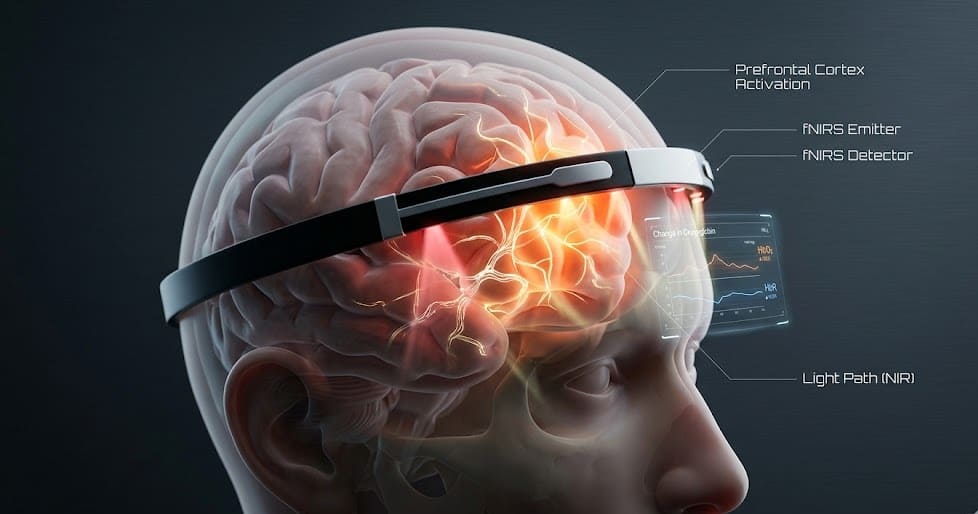
Mendi uses functional near-infrared spectroscopy, or fNIRS, an optical method that estimates changes in oxygenated and deoxygenated blood near the prefrontal area.
The headset sends near-infrared light through the forehead and measures reflected light during a training session. The Mendi app converts changes in the signal into simple visual feedback.
This is consumer neurofeedback rather than a clinical brain scan. Mendi does not show thoughts, diagnose a neurological condition, or isolate the exact tissue responsible for attention, working memory, impulse control, or emotional regulation.
fNIRS can provide information about hemodynamic changes near the sensor area, but product-specific cognitive outcomes and clinical accuracy remain unverified.
| fNIRS Optical Sensor Mechanics | Practical Interpretation |
| Optical signal | Uses near-infrared light through the forehead. |
| Hemodynamic signal | Estimates changes associated with oxygenated and deoxygenated hemoglobin. |
| Sensor position | Collects a consumer fNIRS signal near the prefrontal area. |
| Signal limits | Fit, movement, skin, hair, and superficial blood flow may influence readings. |
Important limitation: This table summarizes the general fNIRS mechanism. It should not be read as independent validation of Mendi’s spatial precision, clinical accuracy, or ability to separate every cortical signal from superficial interference.
Kohl et al. (2020): Systematic Review of fNIRS-Based Neurofeedback

Can Mendi Diagnose or Treat ADHD?
No. Mendi is not an ADHD diagnostic or treatment device.
Mendi is positioned as a consumer wellness and focus-training device. Researchers have studied fNIRS neurofeedback in clinical and experimental settings, but those findings cannot automatically be transferred to the Mendi headset or to individual users.
Mendi may help some users maintain a structured focus-training routine. Product-specific ADHD outcomes, symptom improvement, cognitive rehabilitation, and long-term neurological effects remain unverified.
Anyone seeking assessment or treatment for ADHD should use a qualified clinician rather than relying on a consumer neurofeedback headset.
For a different type of feedback-based meditation device, see our Muse 2 biofeedback device review.
| Evidence question | Safe interpretation |
|---|---|
| Has fNIRS neurofeedback been studied? | Yes, in research and clinical settings using different protocols and participant groups. |
| Does that prove Mendi treats ADHD? | No. General fNIRS research does not establish product-specific treatment outcomes. |
| Does a higher Mendi score prove symptom improvement? | No. An app score is not a clinical ADHD assessment. |
| Are long-term Mendi outcomes established? | No. Product-specific cognitive and neurological outcomes remain unverified. |
Using the Mendi Headset: What the App Measures
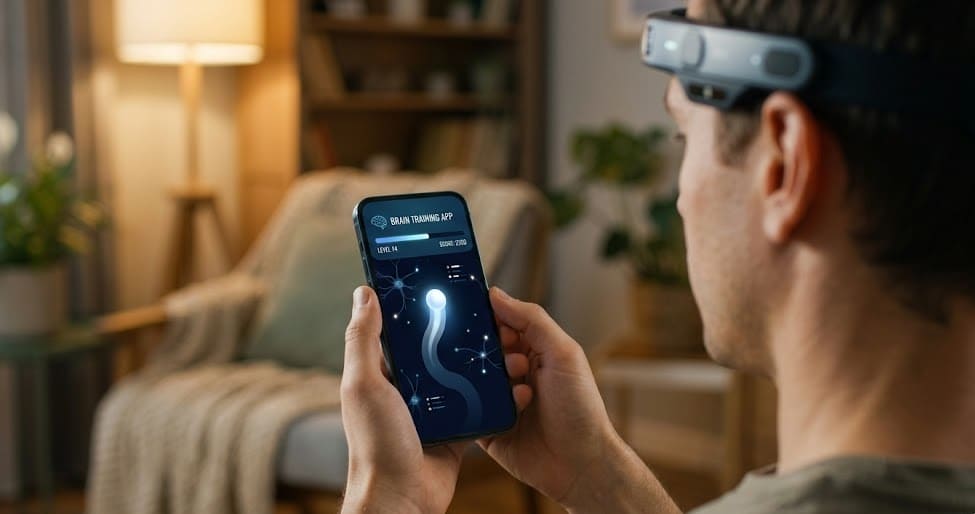
To use Mendi, the user places the headband against the forehead, connects it to the app, and completes a short visual training exercise.
The device estimates changes in blood oxygenation near the prefrontal area. The app converts that signal into game-like feedback, including movement of an on-screen ball.
A higher score reflects the signal and scoring system used during the Mendi training session. It does not prove better attention, emotional control, executive function, clinical improvement, or structural brain change.
The practical value is routine structure. Mendi may help some users repeat a focus-training exercise consistently, but product-specific cognitive outcomes remain unverified.
Who Should Consider Mendi?
Mendi may fit buyers who:
- want structured focus-training sessions;
- prefer visual feedback and game-like exercises;
- are interested in consumer fNIRS technology;
- want an app without a required recurring subscription;
- understand that the device does not provide a clinical diagnosis;
- are willing to train consistently rather than use the device passively.
Who Should Avoid Mendi?
Skip Mendi if you:
- expect treatment for ADHD, anxiety, depression, insomnia, or brain fog;
- need clinical-grade brain imaging or medical interpretation;
- want passive all-day tracking;
- dislike app-guided exercises;
- are unlikely to train consistently;
- need guaranteed cognitive or neurological outcomes.
Mendi vs Muse: Which Neurofeedback Headset Fits You Better?
Mendi and Muse are consumer neurofeedback headsets, but they are designed around different measurement methods and user experiences.
Mendi uses fNIRS to estimate changes in blood oxygenation near the prefrontal area during active visual training. Muse uses EEG signals to provide meditation-oriented feedback, soundscapes, guided sessions, and model-dependent sleep features.
Neither method should be treated as a clinical diagnosis or a guaranteed route to cognitive improvement. The better choice depends on whether you want active focus-training feedback or meditation-oriented EEG feedback.
Mendi is the better fit for active focus-training feedback, while Muse is the better fit for meditation-oriented EEG feedback.
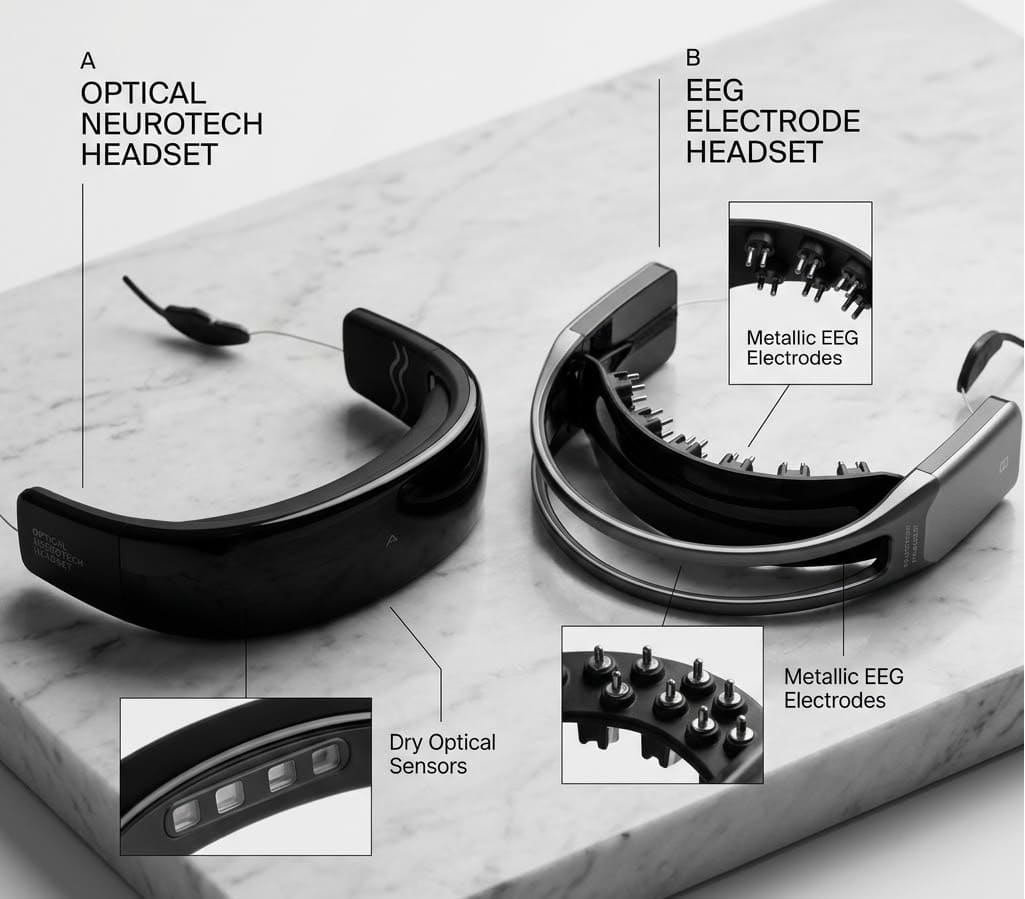
| Feature Comparison | Mendi Headband (fNIRS) | Muse Headband (EEG) |
| Primary Measurement | Changes in blood oxygenation near the prefrontal area | Electrical activity detected by EEG sensors |
| Feedback Style | Visual, game-like focus-training feedback | Meditation-oriented audio and app feedback |
| Primary Consumer Use Case | Active focus-training sessions and visual neurofeedback | Meditation, guided practice, and EEG feedback |
| App & Software Cost | No required recurring subscription according to current brand information | Core features and optional premium content vary by model and plan |
| Sensor Preparation | Optical sensors require stable forehead contact | EEG sensors require correct placement and reliable contact |
For a wider category comparison, use our neurotechnology devices buyer guide; buyers considering premium EEG systems can also compare Sens.ai with Neurosity Crown.
Global Access, Logistics, and Hardware Specifications
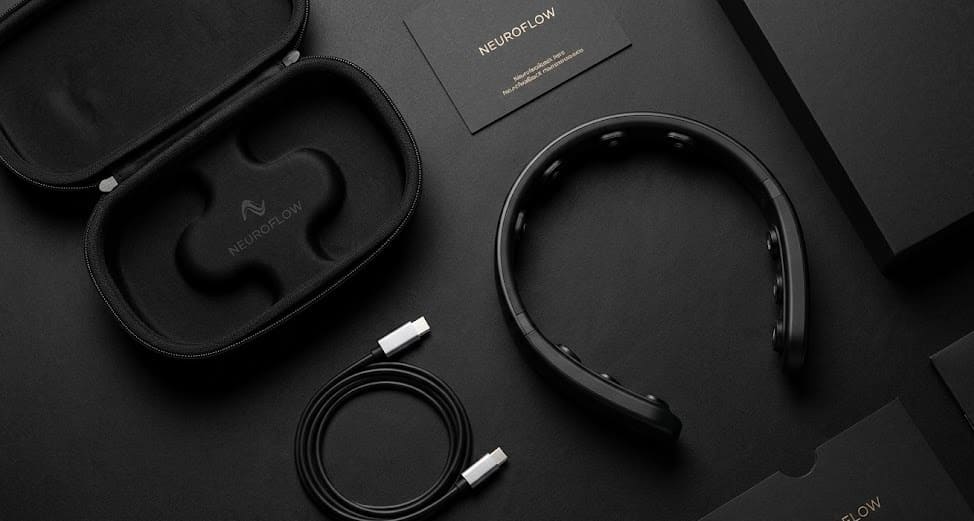
Mendi is sold as a consumer neurofeedback headset through the brand’s online store. Availability, shipping costs, taxes, import duties, return terms, and delivery times can vary by destination and should be confirmed before purchase.
The headset connects to the Mendi app and is designed for repeated short training sessions. Current phone compatibility, charging requirements, battery expectations, supported accounts, and included accessories should be checked on the product page because software and regional terms may change.
A CE mark or participation in a research-funded programme does not establish that Mendi produces clinical cognitive outcomes. Buyers should separate manufacturing or market-access information from evidence about effectiveness.
What We Could Verify
We could verify public product specifications, stated features, pricing or subscription information where available, app or platform details, claimed use cases, and publicly available customer feedback.
What We Could Not Verify
We could not verify long-term comfort, app stability, battery degradation, customer support quality, and real-world durability over months of daily use.
Final Verdict: Is Mendi Legit?
Mendi is a legitimate consumer fNIRS neurofeedback device, but “legit” does not mean clinically proven treatment or guaranteed cognitive improvement.
Its strongest buyer case is straightforward: it turns an optical signal from the forehead area into short, app-guided visual exercises that may help some users maintain a structured focus-training routine.
Its main limitations are equally important. The app does not diagnose ADHD, anxiety, depression, brain fog, or another condition. A higher training score does not prove improved executive function, emotional regulation, work performance, or structural brain change.
Mendi is the better fit when you want active visual neurofeedback without a required recurring subscription. Muse is the better fit when meditation-oriented EEG feedback is the main goal. A smart ring or recovery wearable is more suitable when you want passive trends rather than dedicated training sessions.
For a different category of wearable support, our Apollo Neuro review explains how tactile cues differ from fNIRS training. Neither device should be described as forcing the body or brain into a specific clinical state.
MindReset recommendation: consider Mendi if you understand its consumer-wellness role, will use the app consistently, and value structured focus-training feedback. Skip it if you need diagnosis, treatment, passive tracking, medical interpretation, or guaranteed results.