Table of Contents
Best Smart Rings for Stress Awareness and Recovery Routines
Smart rings can be useful if you want a quieter way to track sleep, HRV trends, resting heart rate, recovery patterns, and daily stress signals without wearing a bright smartwatch to bed.
They are not medical devices, and they cannot diagnose or treat anxiety, insomnia, burnout, heart problems, or sleep disorders. Their real value is simpler: they may help you notice patterns in your routine before you feel completely drained.
This guide compares Oura, Ultrahuman Ring AIR, Samsung Galaxy Ring, RingConn Gen 2 Air, Amazfit Helio Ring, and watch-based alternatives like Apple Watch and Garmin. The goal is to help you decide which option is worth buying, which is better to skip, and when a smart ring may not be the right tool at all.
Affiliate disclosure
MindReset.org may earn a commission if you buy through our links. This does not increase your price and does not affect our editorial judgment.
As an Amazon Associate, we earn from qualifying purchases.
Research note
Research note: We have not personally tested every smart ring in this guide. This article is based on product specifications, public documentation, available research, user feedback patterns, and comparison with similar wearable recovery tools.
Smart rings should be used for general wellness awareness only. If you have chest pain, severe sleep problems, breathing issues during sleep, suspected sleep apnea, persistent anxiety symptoms, or any medical concern, speak with a qualified healthcare professional.
Quick verdict
Choose Oura Ring 4 if you want the most polished sleep, stress, and readiness experience and accept an ongoing membership.
Choose RingConn Gen 2 Air if your priority is a lower-cost, subscription-free ring for core sleep, HRV, heart-rate, and recovery trends.
Compare RingConn Gen 3 if you want the newest RingConn flagship, longer advertised battery life, a charging case, and vibration-based reminders rather than the lowest upfront price.
Choose Samsung Galaxy Ring if you already use a compatible Samsung phone and want your ring data inside Samsung Health.
Consider Ultrahuman Ring AIR if you want a subscription-free recovery platform, but confirm regional availability before buying. It is currently listed as unavailable in the United States.
Choose Amazfit Helio Ring mainly if you already use the Zepp or Amazfit ecosystem and want ring and watch data in one platform.
Choose Garmin or Apple Watch instead if workout tracking, GPS, notifications, and broader fitness features matter more than discreet overnight wear.
Skip every smart ring if you need a medical diagnosis, dislike wearing rings, become anxious about wellness scores, or already know which routine needs to change.
What a smart ring can and cannot do for stress
A smart ring can help you notice patterns. It can show whether your sleep was shorter than usual, whether your resting heart rate stayed elevated overnight, whether your HRV is trending lower, and whether your body appears less recovered than normal.
That can be useful for routine decisions. You may decide to train lighter, avoid late caffeine, go to bed earlier, reduce evening screen time, or take a lower-intensity recovery day.
But a smart ring cannot tell you why you feel stressed with certainty. It cannot diagnose anxiety. It cannot prove that your nervous system is healed or damaged. It cannot replace therapy, medical advice, or a proper sleep evaluation.
The best way to use a smart ring is as a trend tool, not as a judge.
Why choose a smart ring instead of a smartwatch?
The main reason is comfort.
A smartwatch gives you more features, but it also brings a screen, notifications, bulk, charging pressure, and sometimes a stronger “fitness goal” feeling. For some people, that is fine. For others, especially at night, it becomes another device demanding attention.
A smart ring is quieter. It has no screen. It usually feels more discreet in bed. It tracks passively while you sleep, then gives you a morning summary through the app.
That makes smart rings useful for people who want recovery awareness without turning bedtime into another data-heavy activity.
The key metrics that matter
HRV trends
Heart rate variability, or HRV, is one of the main recovery metrics used by smart rings. In simple terms, HRV looks at the variation in time between heartbeats.
For buyers, the important point is not a single score. The useful part is the trend. If your HRV is consistently lower than your normal range, that may be a sign to review sleep, training load, alcohol, stress, illness, or recovery habits.
Do not treat HRV as a perfect stress score. Use it as one signal among several.
Resting heart rate
Overnight resting heart rate can help you notice whether your body looked more settled or more activated during sleep.
If your resting heart rate is higher than usual after alcohol, late food, poor sleep, travel, or hard training, that pattern can be useful.
Again, this is not a diagnosis. It is a routine signal.
Sleep consistency
For most people, sleep consistency matters more than obsessing over sleep stages.
A smart ring can help you notice whether your bedtime, wake time, sleep duration, and overnight interruptions are stable or chaotic.
This is where smart rings can be genuinely practical. They make inconsistency visible.
Recovery or readiness score
Most smart rings turn sleep, HRV, resting heart rate, temperature trends, and activity into some kind of readiness or recovery score.
This score can be helpful if you use it calmly. It becomes a problem if you let it control your mood every morning.
The best approach is simple: use the score as a suggestion, not a verdict.
How to Choose a Smart Ring for Stress Awareness

A smart ring does not directly measure emotional stress. It combines signals such as heart rate, HRV, movement, sleep, temperature trends, and activity into estimates or daily scores.
The most useful buying questions are therefore practical:
- Will you wear it every night? Poor fit or discomfort makes every other feature irrelevant.
- Does it require a subscription? Compare the full cost across at least two years, not only the purchase price.
- Does it work with your phone? Samsung, Apple Health, Google Health Connect, Zepp, and other integrations vary.
- How often must it be charged? Advertised battery life may differ from real use and usually declines as the battery ages.
- Can you exchange the size? Fingers change throughout the day, during sleep, in hot weather, and after exercise.
- Will the data change a decision? A recovery score has little value when it does not affect bedtime, training, caffeine, alcohol, or rest.
Use smart-ring data to compare your current pattern with your own baseline. Do not compare one HRV number with another person’s score or treat a low reading as proof that your nervous system is damaged.
Why choose the best smart ring over a loud fitness tracker
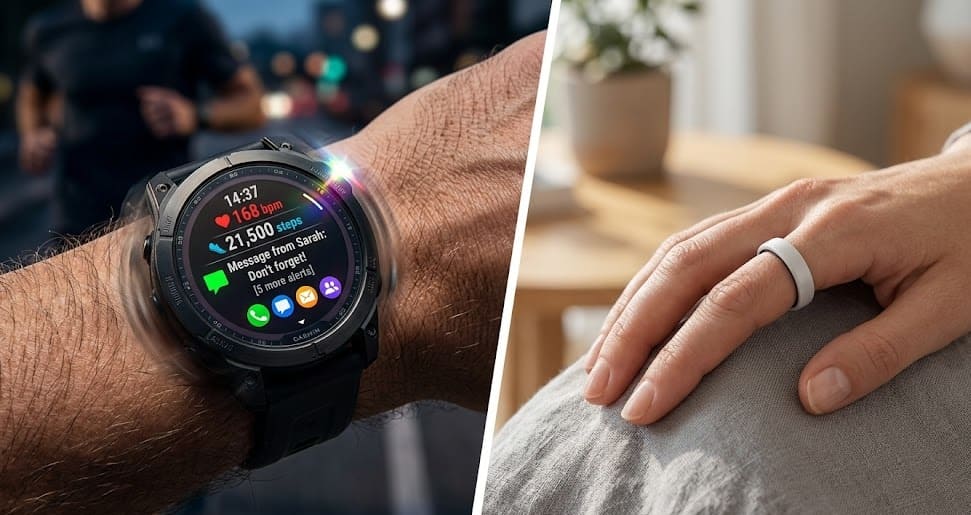
When you are looking for a smart ring, you are essentially seeking a quiet companion. The fundamental beauty of a smart ring is its absolute silence. There are no screens to distract you, no notifications to pull you away from a moment of peace, and no sudden vibrations to startle an already sensitive nervous system. Wearing a smart ring feels like a quiet promise to yourself to begin paying attention to your inner world without judgment.
These devices function as personal translators for the subtle language of the body. When we are disconnected from our physical form due to chronic stress, we routinely ignore the quiet pleas for rest. We push through the fatigue with caffeine and sheer willpower. A smart ring changes this dynamic by providing gentle, objective evidence of our internal state. It transforms the abstract feeling of being tired into tangible data that validates our experience.
This validation is perhaps the most crucial step in the healing journey. In a culture that glorifies constant output, choosing to rest often carries a heavy burden of guilt. We feel that we should be doing more. However, seeing a low readiness or recovery score can encourage you to reconsider your schedule. These scores are device-generated estimates, not proof that your body is physically incapable of recovery, and they are most useful when viewed as trends over time. The data provides the ultimate grace. It gives you the undeniable, official permission to cancel your plans, lie down, and allow the body to heal.
Smart rings track the silent whispers of the body
The primary metric that these silent observers use to understand your emotional and physical state is known as heart rate variability, or hrv. In the context of mindful living, we do not view hrv as a score to be conquered, but rather as the beautiful, flexible dance of a resilient heart.
Stress can affect heart rate and HRV, but a consumer ring cannot determine that the nervous system is ‘locked’ in fear. Treat the readings as personal trends rather than a diagnosis of emotional or physiological state.
Conversely, when you are safe, calm, and resting, the heart dances. It speeds up slightly as you breathe in, gathering oxygen, and it slows down beautifully as you breathe out, spreading that oxygen through the body. This continuous, fluid variation in the rhythm is the true signature of inner peace.
Smart rings also track sleep with incredible tenderness. They do not monitor sleep stages to grade your performance; they do so to help you understand the depth of your restoration. By gently observing your temperature, your movement, and the subtle shifts in your pulse throughout the night, these devices paint a portrait of your recovery. They help you see how the events of your day ripple into the quiet hours of the night.
Oura ring 4: a gentle observer for stress tracking and wellness
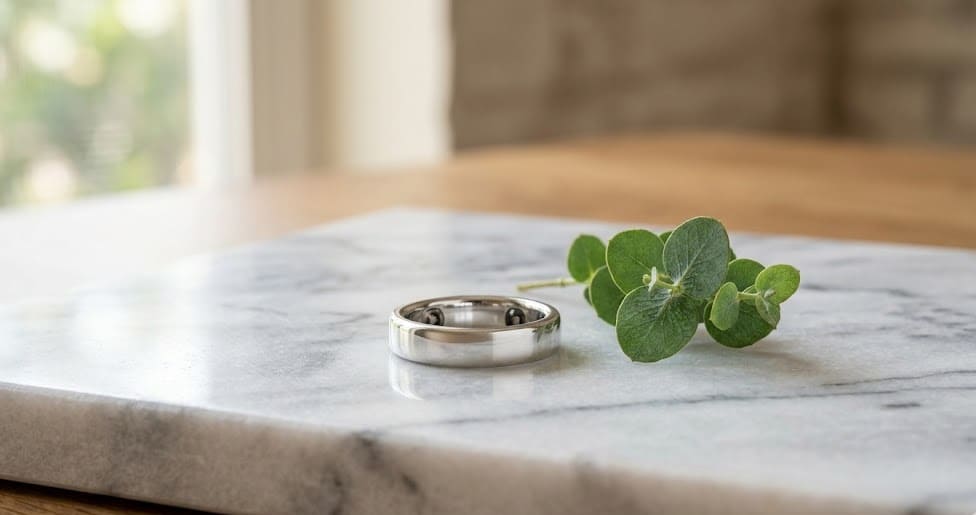
Oura Ring 4 is the strongest premium option for buyers who value the app experience as much as the hardware. The platform combines sleep, activity, resting heart rate, HRV trends, temperature trends, readiness, and daytime stress features into relatively clear daily guidance.
Its main advantage is presentation. Oura is generally easier to understand than platforms that provide many disconnected charts without explaining what to review first.
The main disadvantage is long-term cost. Oura Ring 4 starts at a premium hardware price, and full app access requires an Oura Membership after the included trial period. In the United States, the membership is currently listed at $5.99 per month or $69.99 per year.
Best for: buyers who want a mature app, simple readiness guidance, sleep trends, and daytime stress awareness.
Skip if: you dislike recurring fees, want detailed workout metrics, or tend to let a morning score control your mood.
Ultrahuman ring air: a light and discreet companion for recovery

Ultrahuman Ring AIR is a subscription-free alternative built around sleep, recovery, movement, temperature, and circadian-routine insights.
Its clearest advantage over Oura is that ordinary access to ring data does not require an ongoing subscription. The app also places more emphasis on timing behaviours such as light exposure, activity, meals, caffeine, and winding down.
Availability is now an important limitation. Ultrahuman currently lists Ring AIR as unavailable in the United States, while availability and support continue in other regions. Confirm that the ring, sizing kit, warranty, and returns are available in your country before ordering.
Best for: buyers outside restricted regions who want no required data subscription and prefer behaviour-timing insights.
Skip if: the ring is unavailable in your market, you want the most established app ecosystem, or local warranty support is unclear.
Samsung galaxy ring and the seamless integration into mindful living
Samsung Galaxy Ring makes the most sense for existing Samsung Health users. It tracks sleep, heart rate, activity, skin-temperature trends, and other wellness signals that contribute to Samsung’s Energy Score.
The ring includes a portable charging case and has no separate Oura-style membership requirement for its standard Samsung Health features. Advertised battery life reaches up to seven days for larger sizes, while smaller sizes are rated for slightly less.
Its biggest limitation is ecosystem fit. Buyers should confirm phone compatibility and required Samsung apps before ordering rather than assuming that every Android or iPhone experience is identical.
Best for: compatible Samsung-phone users who want ring data integrated with Samsung Health.
Skip if: you do not use Samsung’s ecosystem or want the most platform-independent smart ring.
RingConn Gen 2 Air: Best Lower-Cost Smart Ring
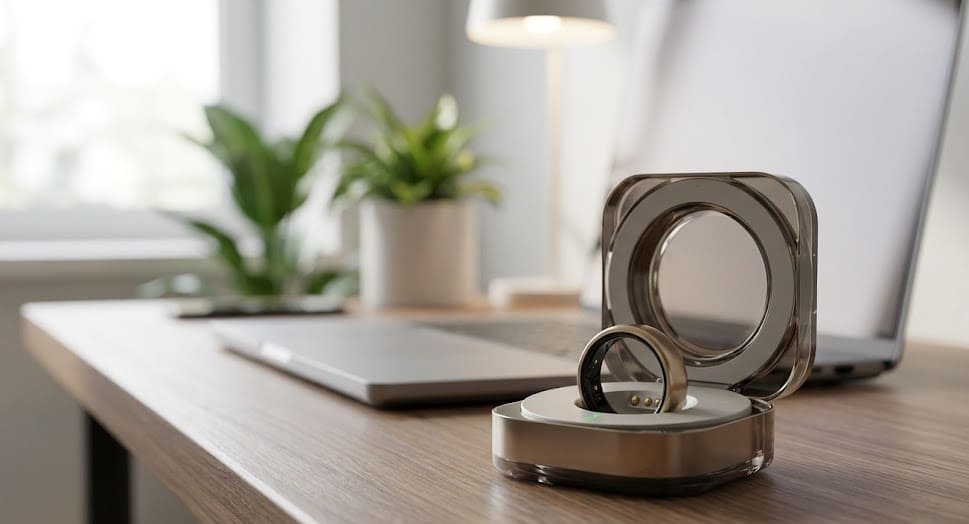
RingConn Gen 2 Air is the practical budget choice for buyers who want core smart-ring tracking without an ongoing subscription.
It tracks sleep, heart rate, HRV, blood-oxygen trends, temperature, activity, and stress-related patterns. The company advertises up to ten days of battery life, although actual results depend on size, syncing, settings, usage, and battery age.
The main compromise is that Gen 2 Air is the entry-level model. It uses a charging dock rather than the extended-battery charging case supplied with some more expensive RingConn models.
Best for: buyers who want a lower upfront price, no required subscription, and long battery life.
Skip if: you want RingConn’s newest features, charging case, sleep-apnea feature set, or vibration alerts.
What About RingConn Gen 3?
RingConn Gen 3 is the newer flagship and should now be considered alongside Gen 2 and Gen 2 Air. It adds vibration-based reminders, vascular-health trend features, a charging case, and longer advertised battery life.
RingConn states that Gen 3 provides trends rather than individual blood-pressure readings. It should therefore remain a general wellness device, not a replacement for a validated blood-pressure monitor or medical evaluation.
Best for: buyers who want the newest RingConn model and accept the higher price.
Skip if: basic sleep and recovery tracking are enough and Gen 2 Air provides better value.
Amazfit Helio Ring: Best for Zepp and Amazfit Users
Amazfit Helio Ring is primarily a recovery accessory for users already invested in Amazfit watches and the Zepp app.
It can be worn alone, but its strongest use case is combining ring-based sleep and recovery data with workout data from a compatible Amazfit smartwatch.
The limited range of available ring sizes may make fit more difficult than with brands offering a broader sizing selection.
Best for: athletes and existing Amazfit users who want one combined Zepp recovery view.
Skip if: you want the broadest sizing range, a sleep-first premium app, or no connection to the Amazfit ecosystem.
Table: Gentle characteristics of silent health trackers
To help you find the best smart device for your specific needs, the following table softly compares the guiding features of the leading rings on the market.

Smart Ring Comparison by Buyer Use Case
| Smart ring | Best for | Subscription | Main limitation |
|---|---|---|---|
| Oura Ring 4 | Most polished stress, sleep, and readiness app | Required for full experience | Highest long-term cost |
| Ultrahuman Ring AIR | Subscription-free recovery insights | No required data subscription | Regional availability, including current US restriction |
| Samsung Galaxy Ring | Samsung Health users | No separate standard-data subscription | Best inside Samsung ecosystem |
| RingConn Gen 2 Air | Lower-cost subscription-free tracking | No | Entry-level model and charging dock |
| RingConn Gen 3 | Newest RingConn features and longer battery | No | Higher price and newer feature set |
| Amazfit Helio Ring | Amazfit watch and Zepp users | Check current optional services | Limited sizing and narrower use case |
How smart rings also track sleep to nurture the exhausted nervous system

Hidden Costs and Buyer Risks
Subscription cost
Oura requires an ongoing membership for its full experience. Compare at least two years of membership fees with subscription-free alternatives before deciding that the initial ring price is similar.
Regional availability
A ring shown in a global comparison may not be available, supported, or covered by the same return policy in every country. This is currently especially relevant to Ultrahuman Ring AIR availability in the United States.
Sizing mistakes
Order the official sizing kit when available and wear the sample size during the day and overnight. A ring that is too loose may produce inconsistent readings, while a ring that is too tight may become uncomfortable when fingers swell.
Battery degradation
Advertised battery life reflects a new device under particular conditions. Charging frequency may increase as the battery ages or when more tracking and syncing features are enabled.
Scratch and durability risk
Smart rings are worn on the hand and may contact weights, tools, handles, desks, and hard surfaces. Remove the ring during activities that could damage the device or create a finger-injury risk.
Data anxiety
A low readiness score can affect how rested a person believes they feel. Consider hiding or checking scores less often if the data increases worry, compulsive monitoring, or sleep anxiety.
Estimated sleep stages
Consumer smart rings estimate sleep stages from indirect signals. They do not perform the same assessment as a clinical sleep study and cannot rule out sleep apnea or another sleep disorder.
Buyer rule: choose a ring for the trend data you will actually use—not for promises that it can heal the nervous system, repair cellular damage, remove burnout, or prove that the body feels safe.
What we could verify
We could verify the basic product positioning and feature categories from public product information:
- these devices are designed for wearable wellness tracking
- smart rings commonly track sleep, heart rate, HRV, movement, and temperature trends
- Oura uses a membership model for full app access
- Ultrahuman Ring AIR and RingConn rings are positioned as options without a required recurring fee for ordinary access to ring data, although availability and optional services can vary by region.
- Samsung Galaxy Ring is mainly strongest for Samsung ecosystem users
- Apple Watch and Garmin are stronger if you want broader smartwatch or fitness features
- smart rings are better suited to passive overnight tracking than serious workout tracking
What we could not verify
What we could not verify without long-term hands-on testing:
- long-term comfort across different finger shapes
- app stability after months of daily use
- battery degradation over one to two years
- scratch resistance in real daily life
- customer support quality
- return experience
- real-world accuracy for disrupted sleep
- whether the app insights will feel helpful or annoying to a specific user
This is why sizing, return policy, subscription cost, and your actual use case matter more than marketing claims.
Who should buy a smart ring for stress awareness?
A smart ring makes sense if you want passive tracking and you are willing to use the data calmly.
You may benefit from one if you want to:
- notice sleep and recovery patterns
- monitor HRV trends over time
- see how late nights, alcohol, caffeine, travel, or hard workouts affect recovery
- reduce smartwatch use at night
- build a more consistent evening routine
- understand whether your body looks recovered before training hard
A smart ring is most useful when it changes your behavior. If the data helps you go to bed earlier, reduce late caffeine, plan lighter recovery days, or stop pushing through fatigue, it can be worth buying.
Who should avoid a smart ring?
Avoid buying a smart ring if you expect it to solve stress or sleep by itself.
You should also skip it if:
- you need medical answers
- you obsess over health scores
- you hate wearing rings
- you mainly need workout GPS
- you already sleep comfortably with Apple Watch or Garmin
- you do not want to use an app
- you do not want to change your routine
A smart ring can show you patterns. It cannot do the recovery work for you.
Smart ring alternatives
Apple Watch
Best if you already use iPhone and want a full smartwatch with sleep, health, activity, and notification features.
Garmin
Best if you train regularly and care about HRV status, body battery, training readiness, endurance, and workout recovery.
HRV biofeedback device
Best if you want to actively train breathing and self-regulation instead of only tracking passive data.
Sleep routine tools
Best if your main problem is inconsistent bedtime, evening screens, light exposure, caffeine timing, or bedroom setup.
No device yet
Best if you already know the habit that is damaging your recovery and you are not ready to change it. In that case, buying another tracker may only add more data without improving your life.
FAQ
Can a smart ring measure stress?
A smart ring can estimate stress-related patterns using signals such as heart rate, HRV, temperature trends, sleep, and movement. It cannot diagnose stress, anxiety, burnout, or any medical condition.
Is Oura good for stress awareness?
Oura is one of the most polished smart rings for stress and recovery awareness. It is best for buyers who want simple daily scores and a premium app experience, but the membership adds long-term cost.
Is Ultrahuman Ring AIR better than Oura?
Ultrahuman Ring AIR may be better if you want a no-subscription smart ring with strong sleep and recovery tracking. Oura may be better if you want the most polished and established smart ring app.
Is RingConn good for recovery tracking?
RingConn Gen 2 Air is a practical lower-cost option for sleep, HRV, stress-related trends, and recovery awareness. It may not feel as premium as Oura, but it is attractive for buyers avoiding monthly fees.
Should I buy a smart ring or a smartwatch?
Buy a smart ring if you want discreet overnight tracking with no screen. Choose a smartwatch if you want workout tracking, notifications, apps, GPS, and broader daily features.
Can a smart ring help with burnout?
A smart ring may help you notice recovery and sleep patterns during stressful periods, but it does not treat burnout. Use it as a routine awareness tool, not as a recovery cure.
Are smart rings accurate?
Smart rings can be useful for trends, especially sleep timing, resting heart rate, HRV direction, and consistency. They are not medical-grade sleep studies or diagnostic tools.
Final verdict
The best smart ring for stress awareness is not the one with the most dramatic wellness language. It is the one you will wear consistently, understand easily, and use to make better routine decisions.
Choose Oura if you want the strongest premium app and accept the subscription.
Choose Ultrahuman Ring AIR if you want a no-subscription Oura alternative.
Choose RingConn Gen 2 Air if you want the most practical lower-cost option.
Choose Samsung Galaxy Ring if you already live inside the Samsung ecosystem.
Choose Garmin or Apple Watch if you need a broader fitness or smartwatch tool.
Skip smart rings if you need medical answers, hate health scores, or already know you will not change your routine.
CTA
Compare the current smart ring options before buying:
- Check Oura if you want the premium smart ring ecosystem.
- Check Ultrahuman Ring AIR if you want no subscription.
- Check RingConn if you want a lower-cost smart ring.
- Read our full guide to the best smart rings for sleep and recovery if you are still comparing options.