Table of Contents
A good office chair should do more than look professional, especially if you prefer criss cross sitting, shifting positions, or sitting cross legged during long desk work. They want to sit cross-legged, shift posture, stretch one leg, use a footrest, or take a short mindful reset without leaving the workspace.
This guide looks at what makes a cross legged office chair different, who it fits, what features matter, and why a wide ergonomic office chair with lumbar support, a supportive seat, flip-up arm design, and a built-in footrest can make sense for home office work.
The best cross legged office chair should provide enough usable seat space for criss cross sitting without sacrificing back support, desk compatibility, stability, or an easy return to a conventional working position.
This buyer guide examines the SUNNOW SUN-ATLAS chair as a premium featured option. We compare its flip-up arms, retractable footrest, lumbar pillow, recline, overall dimensions, stated weight capacity, warranty, room requirements, and suitability for sitting cross legged at a desk.
Affiliate disclosure: MindReset.org may earn a commission if you buy through our links. This does not increase your price and does not affect our editorial judgment.
Amazon disclosure: As an Amazon Associate, we earn from qualifying purchases.
Research note: We have not personally tested the SUNNOW SUN-ATLAS chair. This guide is based on the current Amazon listing, manufacturer information, available buyer feedback, workstation ergonomics guidance, and comparison with standard office chairs, gaming chairs, and simpler criss cross chairs.
What we assessed: overall dimensions, seat design, arm configuration, lumbar support, recline, footrest, stated capacity, upholstery, assembly, warranty, room fit, desk compatibility, and buyer use case.
What we could not independently verify: usable seat-pan width and depth, long-term cushion compression, comfort across different body sizes, durability under daily use, real-world weight capacity, certification details, delivery quality, return handling, or customer support over time.
Ergonomics note: No chair makes one sitting position healthy for an entire workday. Change position regularly, stand, walk, and adjust the complete workstation rather than relying only on a wide seat or lumbar pillow.
Best Cross Legged Office Chair: Quick Verdict
The SUNNOW SUN-ATLAS is a credible premium option for buyers who specifically want a large executive-style chair with flip-up arms, a retractable footrest, a separate lumbar pillow, and room to change sitting positions.
The current product listing states that it includes six-position flip-up arms, a 90°–135° three-position recline, a wide spring-and-foam cushion, faux-leather upholstery, a 500 lb maximum weight recommendation, and a three-year manufacturer warranty.
Its biggest weaknesses are the large footprint, high price compared with basic criss cross chairs, required assembly, heat retention from faux leather, and the absence of a clearly published usable seat-pan width in the accessible specifications.
Buy it if: you want a substantial high-back office chair that can switch between conventional desk work, cross-legged sitting, recline, and footrest use.
Skip it if: you need a compact chair, breathable mesh, precise seat-width measurements, strong independent testing, or a low-cost minimalist criss cross chair.
Why Are Cross Legged Office Chairs Becoming Popular?
Cross Legged Office Chair Decision Table
| Your use case | Best option | Why | Skip if |
|---|---|---|---|
| Wide executive-style chair with footrest | SUNNOW SUN-ATLAS | Flip-up arms, high back, recline, lumbar pillow, and retractable footrest | You need a compact or breathable chair |
| Simple criss cross sitting | Armless wide-seat chair | More open knee space and usually a lower price | You need strong back and lumbar support |
| Conventional all-day desk work | Adjustable mesh ergonomic chair | Better ventilation and typically more precise adjustments | You regularly fold both legs onto the seat |
| Gaming and fixed support | Gaming chair | Headrest and more structured seating position | Side bolsters restrict your knees |
| Small home office | Compact task chair | Requires less floor and desk clearance | You need a footrest or oversized seat |
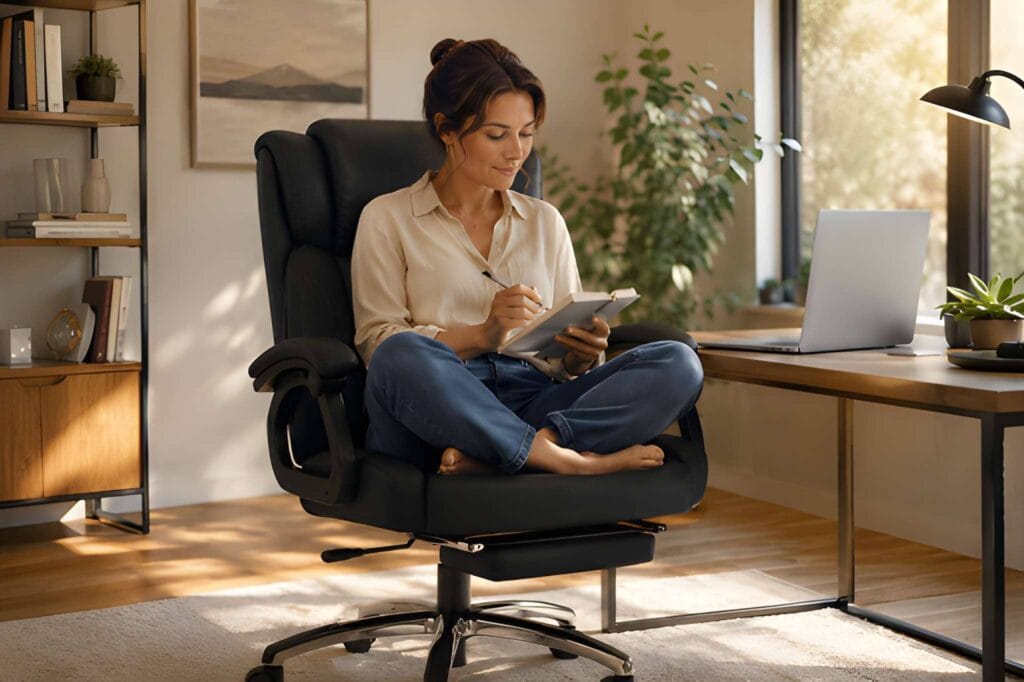
The cross legged office chair trend is not just about looks. It comes from a real problem: many people do not sit in one perfect position all day. They shift, lean, fold one leg under the body, cross their legs, stretch forward, or sit cross-legged at your desk during deep work. A traditional office chair often fights against those natural sitting positions.
That is why the criss cross chair category has become so visible. A wider seat office chair gives more room for posture variety. Instead of forcing the body into one narrow sitting posture, it gives you more space to adjust. For people who work from home, write, edit videos, manage content, study, or spend long periods in front of a computer chair, that freedom can make the workspace feel less rigid.
The best office chair for this use is not simply the softest chair. It needs enough ergonomic support, a stable base, a wide seat, and enough back support to stay useful during long sitting sessions. Comfort matters, but structure matters too.
Who Should Consider a Cross Legged Office Chair?
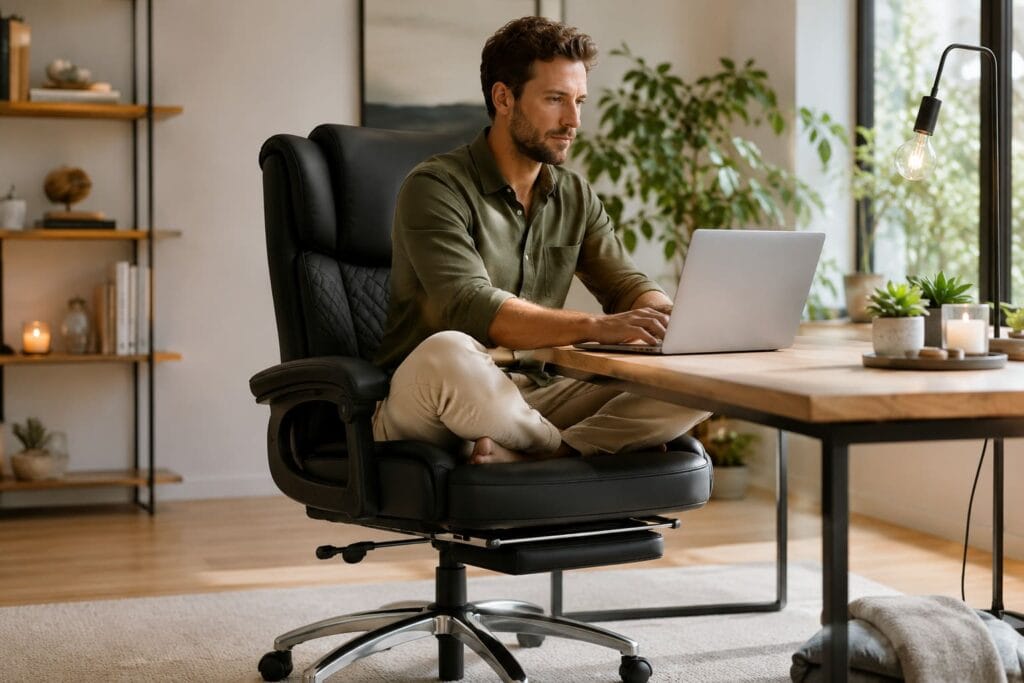
A cross legged office chair is useful for people who dislike being locked into one fixed posture. If you naturally sit cross-legged on a chair, curl one leg under your body, or keep changing position while working, a standard chair can feel too narrow. The armrests may block your knees, the seat depth may feel wrong, or the cushion may not give enough support.
This type of office chair can work well for home office users, creators, writers, students, remote workers, and anyone looking for a chair that allows more relaxed sitting. It can also fit people who want a calmer work setup where they can pause, breathe, reset, and return to focus without moving to another room.
It is not only about comfort. A better chair can improve how your workspace feels. When the desk chair gives your body more options, the workday can feel less compressed. That does not mean a chair fixes back pain or replaces movement, but the right office chair can make long hours at a desk feel more manageable.
Who Should Avoid a Cross Legged Office Chair?
- You have limited hip, knee, or ankle mobility and cross-legged sitting creates pain, numbness, or pressure.
- You need a compact chair that fits beneath a small desk.
- You prefer breathable mesh to faux-leather upholstery.
- You want highly adjustable seat depth, lumbar height, or armrest width.
- You need independently tested long-term comfort rather than seller specifications and customer reviews.
- You expect a chair to treat back pain or remove the need for movement breaks.
What Makes a Chair Comfortable for Sitting Cross Legged?
The first thing to check is the seat. A chair designed for cross-legged sitting usually has a wide seat, softer edges, and enough depth to let you sit without feeling squeezed. If the seat is too narrow, your knees press against the arm area. If the cushion is too shallow, sitting cross legged becomes awkward after an hour.
The second factor is arm design. Flip-up armrests are useful because they let you move the arms out of the way when you want more space. A chair with fixed arms may look supportive, but it can block cross-legged sitting. For this category, flexible arm design is not a small feature. It changes how the office chair works in daily use.
The third factor is balance between softness and support. A very soft cushion can feel comfortable at first, but it may collapse during long periods. A premium ergonomic office chair should keep the seat supportive while still feeling comfortable. That is especially important if you work at an office desk for several hours at a time.
Is a Wide Seat Better Than a Regular Office Chair?
A wide seat is the main reason people look for a cross-legged office chair. A regular office chair is usually made for one “correct” posture: feet down, knees forward, back straight. That is fine for some users, but many people do not actually sit like that all day. A wide office chair gives more freedom.
For sitting cross legged, width matters more than most buyers expect. The seat needs room for the knees, ankles, and hips. It should also allow small changes in sitting positions without making the chair feel unstable. This is where a criss cross office chair can be more practical than a narrow gaming chair or standard office chair.
A wide seat does not automatically make a chair ergonomic. You still need back support, height adjustment, stable wheels, and enough structure for the lower back. The goal is not to buy the biggest chair. The goal is to choose a chair that supports both comfort and posture variety.
How Important Are Lumbar Support and Back Support?
Lumbar support matters because cross-legged sitting can change how the pelvis and lower back rest against the chair. If the backrest is too flat or too far away, you may end up leaning forward without noticing. Over time, that can make the chair feel less comfortable, even if the seat is wide.
A good ergonomic chair should support the lower back without forcing your spine into an unnatural shape. Some chairs use a built-in lumbar curve. Others use a removable lumbar pillow. Both can work, but the important question is whether the support fits your body and your sitting posture.
Back support is especially important if you plan to use the chair for long hours. A stylish criss cross chair may look good in a photo, but if it has no useful support, it may become a decorative piece instead of a serious work chair. For MindReset-style productivity, the chair has to serve the body first.
For independent workstation guidance, see the OSHA office chair ergonomics guide. It recommends matching seat width and depth to the user, using appropriate lumbar support, and choosing a backrest that supports multiple seated positions.
Can You Use a Criss Cross Chair for Meditation Breaks?
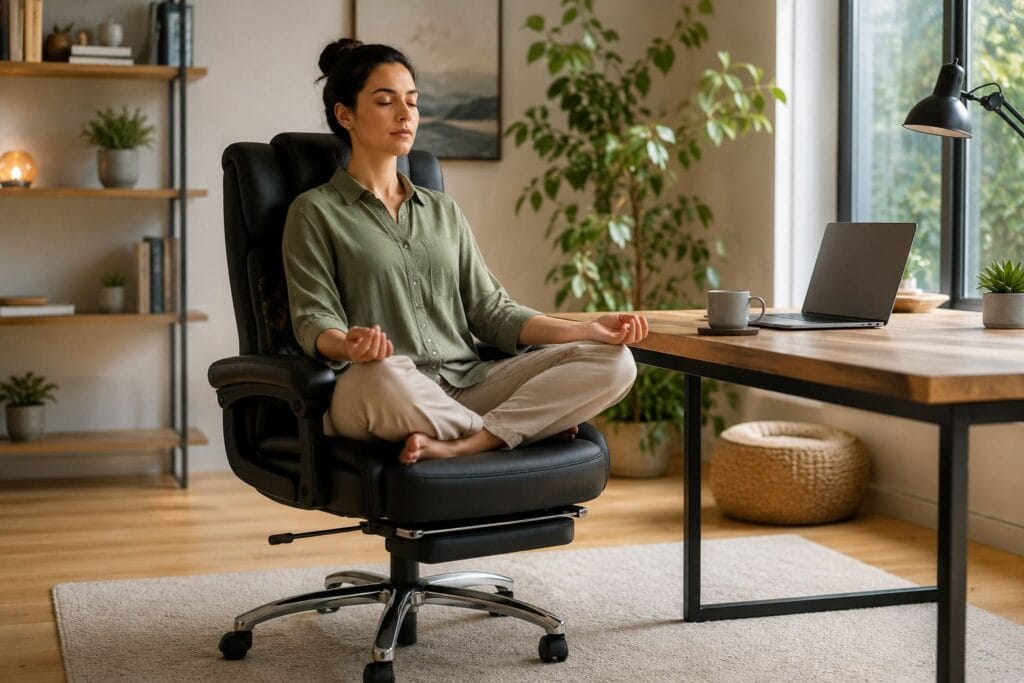
Yes, a criss cross chair can be useful for short mindful breaks, especially in a home office. You can sit cross-legged, rest your hands, breathe for two minutes, or use the chair as a small reset point between tasks. This is one reason the category fits a focus and wellness workspace better than ordinary office furniture.
That said, this chair is not a full meditation cushion replacement, and if traditional practice feels difficult, this guide on why conventional meditation struggles can help frame the problem better. A cushion on the floor gives a different hip angle and grounding experience. But for people who work at a desk and want a practical reset without changing rooms, a cross-legged office chair can be surprisingly useful.
Think of it as a hybrid: part desk chair, part comfort chair, part mindful workspace tool. You can write, plan, work, pause, breathe, and return to your task. That is a stronger angle than treating it as just another executive chair.
What Features Matter in a Premium Ergonomic Office Chair?
A premium ergonomic office chair for this category should have several practical features. First, a wide seat with a comfortable cushion. Second, flip-up arms or enough open space to sit cross-legged. Third, lumbar support. Fourth, a stable base. Fifth, a footrest, if you want more relaxed sitting options.
The footrest is useful because it gives your legs another position when you do not want to sit cross-legged. It can make the chair feel more like a recovery corner during a short break. For people who alternate between work mode and reset mode, this is a real advantage.
A tall backrest can also matter, especially if you prefer an executive office chair feel. Big and tall users may want to check dimensions carefully before buying. A chair may look wide in photos, but the real fit depends on seat width, seat depth, arm spacing, and weight capacity. Always check the current product page before purchase.
SUNNOW SUN-ATLAS Cross Legged Office Chair: Featured Pick
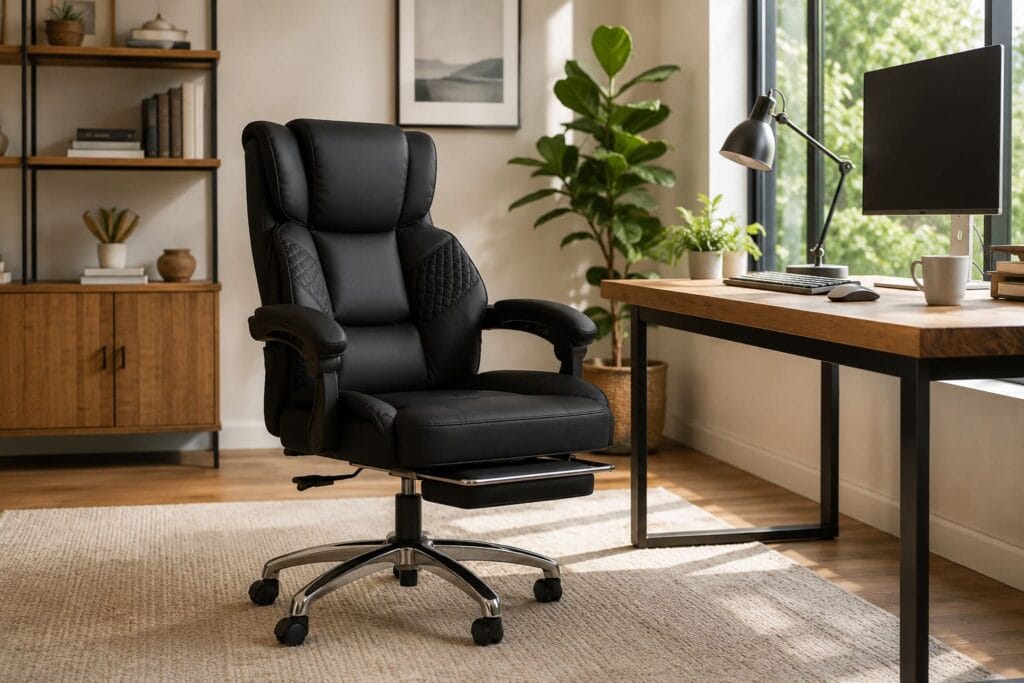
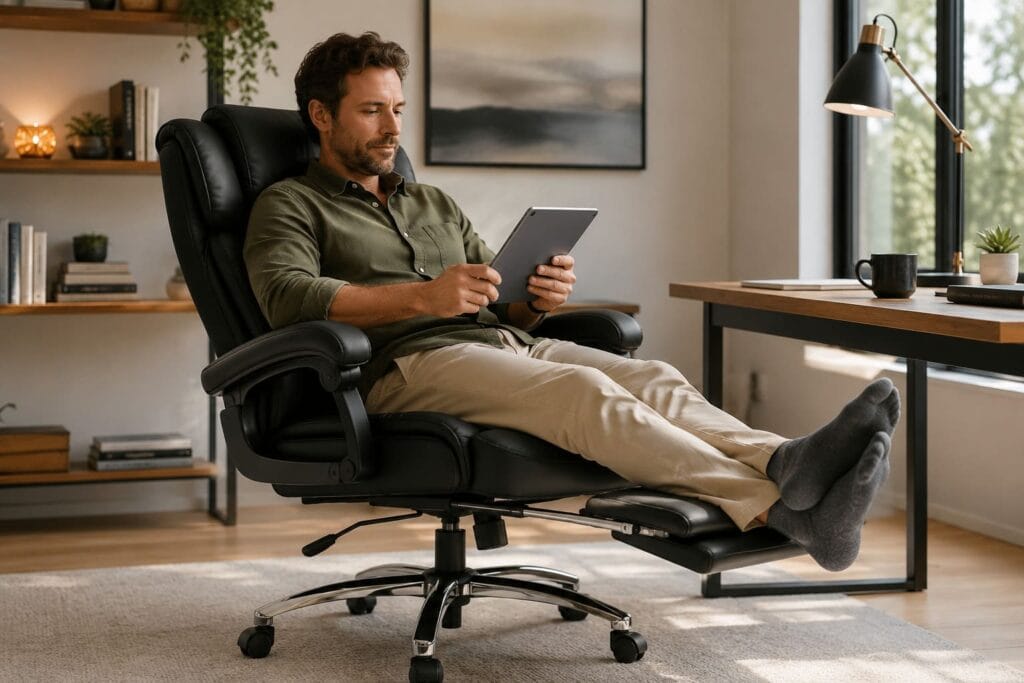
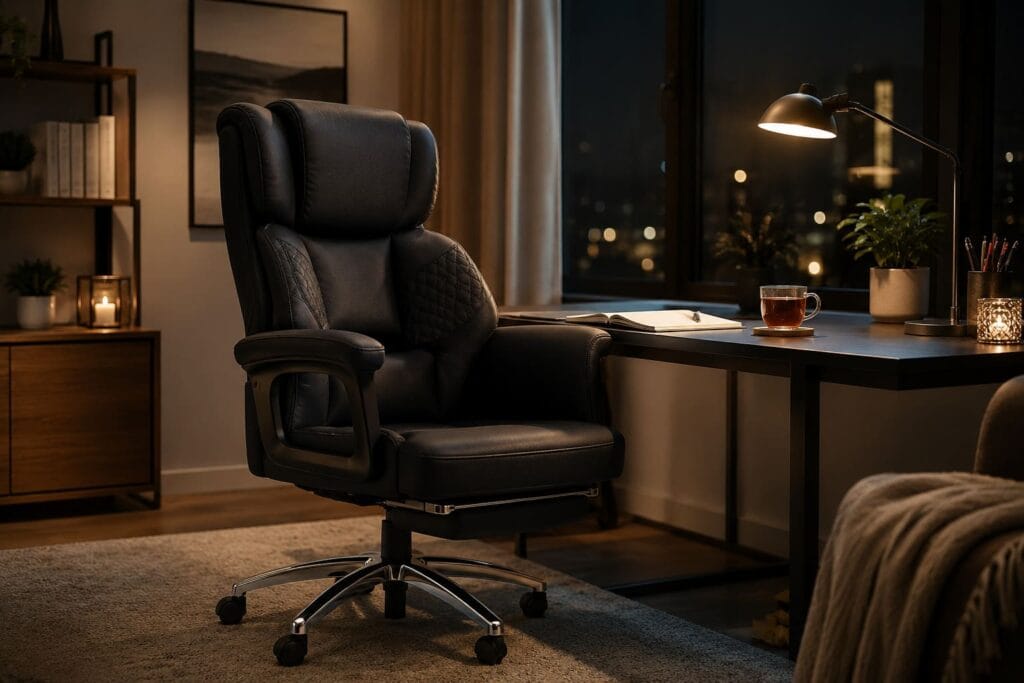
The SUNNOW SUN-ATLAS combines the open-seat appeal of a criss cross chair with the high back, lumbar pillow, recline, wheels, and footrest expected from a large executive office chair.
The current listing describes six-position flip-up arms, a retractable footrest, a 90°–135° three-position reclining backrest, a spring-and-foam cushion, faux-leather upholstery, a metal base, and a stated maximum capacity of 500 lb.
Its listed overall dimensions are 26.5 inches deep, 47.2 inches wide, and 51.6 inches high. Those are overall product dimensions—not necessarily the usable width of the seat between the arms. Buyers should confirm the seat-pan width, seat depth, minimum and maximum height, desk clearance, and return terms before ordering.
What makes it relevant: the arms can move out of the way, the cushion is designed for more than one sitting position, and the footrest provides another option when you no longer want to sit cross legged.
What gives us pause: the chair is large, requires assembly, uses faux leather rather than breathable mesh, and is considerably more expensive than many basic criss cross chairs. We also found no independent long-term test establishing that it remains comfortable for a full workday.
Is a Cross-Legged Office Chair Better Than a Gaming Chair?
A gaming chair can look supportive, but many gaming chair designs are narrow around the seat and side bolsters. That can make cross-legged sitting uncomfortable. The raised sides may press against your legs, and fixed arms can limit movement. For people who like to cross your legs or sit with one leg folded, this is a common problem.
A cross-legged office chair usually gives more open space. It is less about racing-style shape and more about usable seat area. If your priority is posture variety, a wide chair may serve you better than a gaming chair with aggressive side structure.
However, a gaming chair may still be better for some users who want firm structure, a headrest, and a more locked-in sitting position. The better choice depends on how you actually sit. Do not buy for the photo. Buy for your real sitting behavior.
What Are the Downsides of Cross Legged Desk Chairs?
The first downside is size. A wide chair takes more room than a standard chair. If your desk setup is small, measure before buying. You need enough room for the base, the backrest, the arm movement, and the footrest if the chair includes one.
The second downside is that not every wide chair is truly ergonomic. Some products are designed mainly for the trend. They may look good for social media but lack proper lower back support, seat structure, or long-term comfort. This is why it is worth checking real dimensions, materials, return policy, and recent reviews.
Even with a better chair, your body still needs movement, which is why somatic recovery tools for the body and nervous system can be a useful next step beyond furniture. No office chair removes the need to stand, stretch, walk, and change posture. The right office chair can support a better work rhythm, but it should be part of a healthier workspace setup, not the whole solution.
How to Choose the Right Office Chair for Sitting Cross Legged
Start with the way you actually sit. If you often sit cross-legged, look for a wide seat and enough seat depth. If you lean back often, prioritize back support and lumbar support. If you like to shift between focused work and short rest, consider a chair with a footrest.
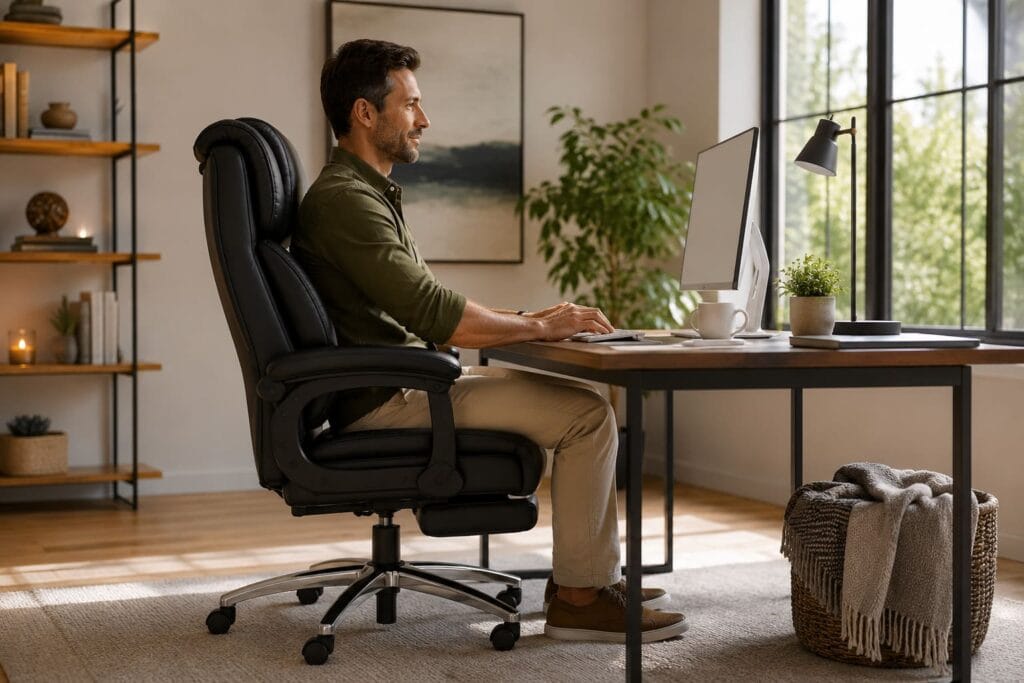
Then check your desk height. A chair is easy to like in a product photo but harder to use if it does not match your office desk. Your arms should rest naturally, your shoulders should stay relaxed, and your screen should be at a comfortable height. A new office chair works best when the full setup makes sense.
Finally, decide whether you want a soft lounge-style feel or a more structured ergonomic office feel. A criss cross chair can be cozy, but a work chair should still help you stay productive. The right office chair gives you comfort without turning your workday into a slump.
Is This Chair Style Worth It for a Home Office?
For the right person, yes. If you spend long hours at your desk and constantly fight against a narrow standard chair, a cross-legged office chair can be a smart upgrade. It gives you more room, more sitting positions, and more flexibility during long sitting sessions.
For a home office, this type of chair makes even more sense because you are not trying to match a corporate furniture standard. You can choose a chair that fits your body, your work habits, and your reset routine. That is where the category becomes interesting for MindReset readers.
If your workday includes deep focus, writing, content creation, planning, studying, or online business tasks, the chair becomes part of your environment — and that fits naturally into the broader Biohacking & Body cluster. A better environment does not do the work for you, but it removes some friction. Sometimes that is enough to make the next hour feel easier.
What We Could Verify
We could verify the listed chair specifications, dimensions, features, current purchase information, and how the featured chair compares with similar options in the same category.
What We Could Not Verify
We could not verify long-term comfort, real-world durability over months of daily use, customer support quality, delivery or return experience, or whether the chair will suit every body, desk, and sitting style.
Final Verdict: Is the SUNNOW Cross Legged Office Chair Worth It?
The SUNNOW SUN-ATLAS is worth considering when you want one large office chair for conventional desk work, cross-legged sitting, reclining, and footrest use.
Its strongest features are the flip-up arms, spring-and-foam cushion, separate lumbar pillow, high back, retractable footrest, and stated heavy-duty construction.
It is not automatically the best office chair for every cross-legged sitter. The listing does not clearly publish the usable seat width, the chair occupies substantial space, faux leather may feel warm, and we have not verified long-term comfort or durability.
MindReset recommendation: consider it when the listed dimensions fit your room and desk, the return terms are acceptable, and you specifically want a premium executive-style chair rather than a compact armless criss cross chair.
Skip it when breathability, precise ergonomic adjustment, compact dimensions, or independent long-term testing matter more than the footrest and wide-seat design.
Key Things to Remember
- A cross legged office chair is best for people who want more sitting positions during desk work.
- A wide seat matters because it gives your knees, hips, and legs more room.
- Flip-up arms make it easier to sit cross-legged without feeling blocked.
- Lumbar support and back support still matter, even in a relaxed chair.
- A footrest can make short work breaks more comfortable.
- A criss cross chair can support mindful pauses, but it does not replace movement or a full meditation cushion.
- A gaming chair may be too narrow for people who prefer sitting cross legged.
- The right office chair should match your body, your desk, your home office, and your daily work rhythm.
- SUNNOW is a strong premium pick if you want a wide ergonomic chair with footrest and executive styling.
- Better focus often starts with a workspace that does not fight your body.