
Table of Contents
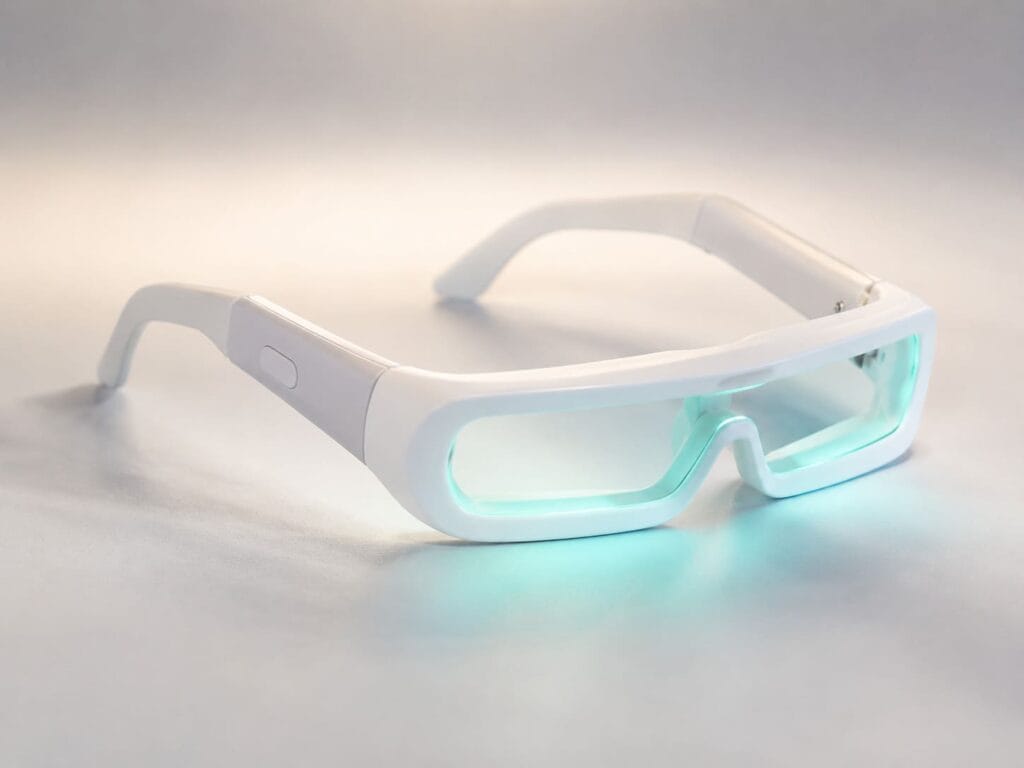
Retimer 3 is a wearable light therapy device designed to help you use timed light exposure without sitting in front of a traditional light box. Instead of placing a lamp on your desk, you wear the glasses while getting ready, reading, having breakfast, or planning your morning.
If you prefer a desk-based option, start with our guide to a light therapy lamp.
This Retimer 3 review looks at what the device does, who it may help, how it compares with Luminette 3, AYO, and a standard light box, and what buyers should check before ordering. This is not a medical review and not a hands-on test. The goal is simple: help you decide whether Retimer light therapy glasses are worth buying, worth comparing, or better to skip.
Affiliate disclosure: MindReset.org may earn a commission if you buy through our links. This does not increase your price and does not affect our editorial judgment.
Research note: We have not personally tested Retimer 3 yet. This guide is based on product specifications, public documentation, available research, user feedback, and comparison with similar light therapy glasses.
Health note: Light therapy may not be suitable for everyone, especially people with eye conditions, light sensitivity, bipolar disorder, migraine sensitivity, or medication that increases light sensitivity. Speak with a qualified professional before using any light therapy product for a medical condition.
Retimer 3 Review: Quick Verdict on These Light Therapy Glasses
Retimer 3 is worth considering if you want portable light therapy glasses for morning light exposure, jet lag routines, shift work, dark winter mornings, or a more consistent sleep schedule. Its strongest selling point is convenience. You can use light therapy while moving around instead of sitting still in front of a light box.
The main reason to skip Retimer 3 is price. At the time of writing, the official shop lists Retimer 3 at $220, while Re-Timer v2 is listed at $179. Retimer 3 also has app features, USB-C charging, three nosepieces, and a lighter 36-gram design, but you still need to be realistic. These glasses may support your body clock, but they are not a magic fix for poor sleep habits, late-night screens, caffeine timing, or inconsistent bedtime routines.
If you already get outdoor light in the morning, sleep well, and do not travel across time zones, Retimer may be unnecessary. If you wake before sunrise, work odd hours, or struggle to get light in the morning, Retimer 3 light therapy glasses become more interesting.
What Are Re-Timer Light Therapy Glasses?
Retimer, also written as Re-Timer, is a brand of wearable light therapy glasses designed to deliver timed light exposure near the eyes. The idea is to support the circadian rhythm, also called the body clock, by giving your eyes controlled light at specific times of day.
Unlike a standard light box or SAD lamps, Retimer sits on your face and directs light from below the eyes. This makes it more portable than a desk lamp. You can use the Retimer while drinking coffee, reading, packing for a trip, or doing simple morning tasks.
According to the official product page, it uses blue-green light at 500 nm, is UV-free and flicker-free, weighs 36 grams, can be worn with prescription glasses, and works with the Retimer app for iOS and Android. The app can create personalized schedules, track progress, and sync with Apple Health and Android Health.
How Do Light Therapy Glasses Work With Circadian Rhythm, Blue Light, and Green Light?
Your body uses light exposure to understand when it should feel more alert and when it should prepare for sleep. Morning light can help reinforce daytime alertness, while too much bright light late at night can push your sleep pattern later.
Light therapy glasses try to make this process more practical. Instead of depending only on sunlight, they deliver controlled circadian light at a chosen time. Retimer 3 uses blue-green light, while some alternatives use white light or different parts of the light spectrum.
The wavelength matters because different types of light can affect the body clock differently. Retimer says the new Retimer 3 uses blue-green light at 500 nm. Older Re-Timer glasses are described as using green light with 500 lux at the eye and are compared by the brand to a 10,000-lux lamp.
This does not mean the glasses will automatically improve sleep for everyone. Effective light therapy depends on timing, consistency, light intensity, your current sleep schedule, and your reason for using it.

Who Should Use Retimer 3 Light Therapy Glasses for Better Sleep, Jet Lag, or Shift Work?
Retimer 3 makes the most sense for people who need help getting consistent light in the morning. That includes people who live in darker climates, wake before sunrise, work indoors all day, or spend winter mornings without meaningful outdoor light.
It may also be useful for travelers dealing with jet lag. When you cross a time zone, your body clock can stay attached to the old schedule. A timed light routine may help some users adjust faster, especially when it is combined with smart sleep timing, meal timing, and reduced evening light.
Shift workers are another possible buyer group. If your work schedule changes often, or you sleep at unusual hours, controlled light exposure can become part of a structured routine. Retimer 3 uses the Retimer app to help create timing plans, but the user still needs discipline. A wearable light therapy device only helps if it is used at the right time and used consistently.
Retimer may also suit people who want to use light therapy but hate sitting in front of a lamp. This is the practical advantage. The glasses may be easier to fit into a morning routine than a stationary light box.
Who Should Avoid Using the Retimer or Any Wearable Light Therapy Device?
You should avoid Retimer light therapy glasses if you expect them to solve sleep problems without changing anything else. If your room is too bright at night, your phone use is uncontrolled, and your bedroom setup works against sleep, fix those basics first.
Retimer may also be a poor fit if you dislike wearing devices on your face. Even lightweight glasses can feel annoying if you already wear prescription glasses, headphones, or other wearables. Retimer 3 can be worn with prescription glasses, but that does not guarantee comfort for every face shape.
You should also be cautious if you have eye conditions, high light sensitivity, migraine triggered by light, or a diagnosed mental health condition where bright light therapy could be inappropriate without supervision. This is especially important if you are researching seasonal affective disorder. A consumer light therapy product is not a replacement for diagnosis, treatment, or medical advice.
Finally, skip Retimer if you already get enough light in the morning and sleep well. For many people, free outdoor light in the morning is still the best first step.

Retimer 3 vs Re-Timer Glasses: What Changed in the New Retimer 3?
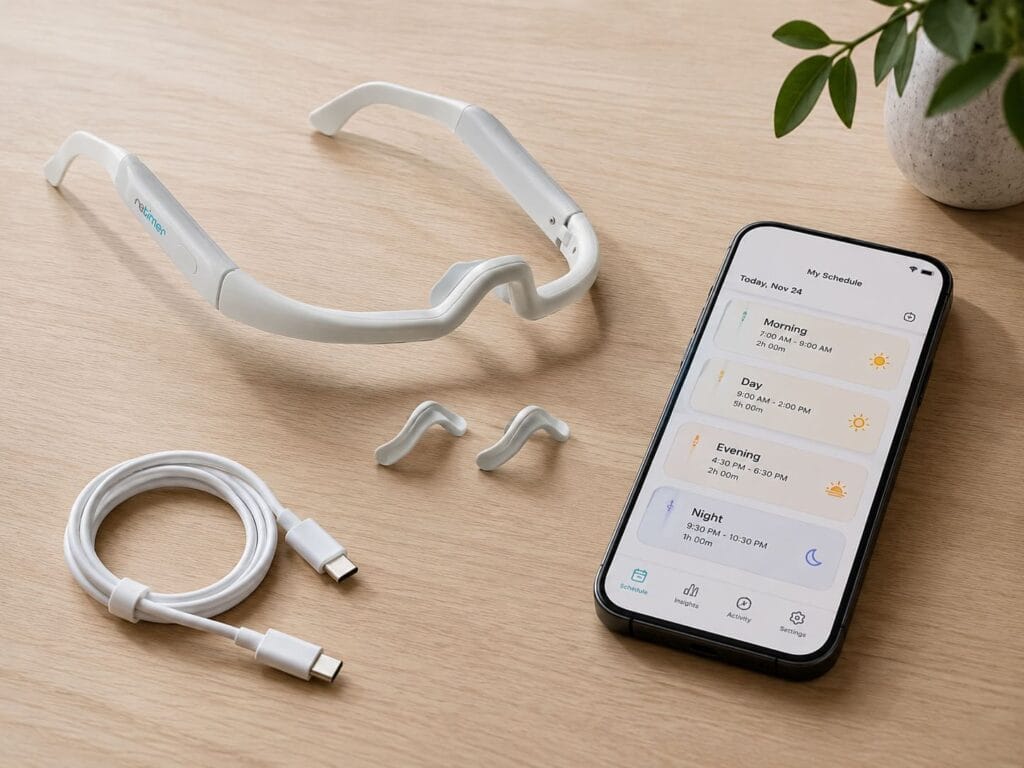
Retimer 3 looks like the more modern product. The official shop describes Retimer 3 as a smart sleep tech wearable that includes three nosepieces and a USB-C cable. It weighs 36 grams, works with the Retimer app, and syncs with Apple Health and Android Health.
Re-Timer v2 is the older model. The official shop lists it as a portable light therapy wearable with one nosepiece and a USB-B cable. It is cheaper than Retimer 3, but it does not have the same updated app-centered positioning.
The buying decision is simple. Choose Retimer 3 if you want the newer design, app support, USB-C charging, and a more premium sleep tech feel. Consider Re-Timer v2 if you mainly want the core light therapy function and prefer to save money.
For most MindReset readers, Retimer 3 is the cleaner affiliate recommendation because it feels more current, more premium, and more relevant to people comparing modern light therapy glasses.
Retimer vs Luminette 3 Review: AYO or Luminette, Light Glasses, and Alternatives
The most common comparison is Retimer vs Luminette. Luminette 3 is one of the better-known wearable light therapy options and often appears in best light therapy glasses lists. Luminette light therapy glasses use a different design and light delivery approach, so the best option depends on comfort, brightness preference, availability, and price.
AYO glasses and AYO light therapy glasses are another alternative. AYO and Luminette both compete in the same wearable category: portable light exposure for energy, sleep timing, travel, and winter routines. Some users may prefer AYO or Luminette because of design or app experience. Others may prefer Retimer because of the blue-green light approach and under-eye delivery.
There are also Pegasi 2 glasses and other smaller brands. The problem is that this market can become confusing quickly. Many products promise better sleep, more energy, and easier mornings, but buyers should look at practical details: comfort, warranty, return policy, app stability, battery life, light spectrum, and whether the device fits your routine.
If you want the best light therapy glasses, do not buy only because one model claims to be the brightest SAD glasses. Brightest is not always best. Timing, comfort, and consistency matter more than maximum brightness.
Retimer 3 vs Light Box, SAD Lamps, and the Best Light Therapy Glasses
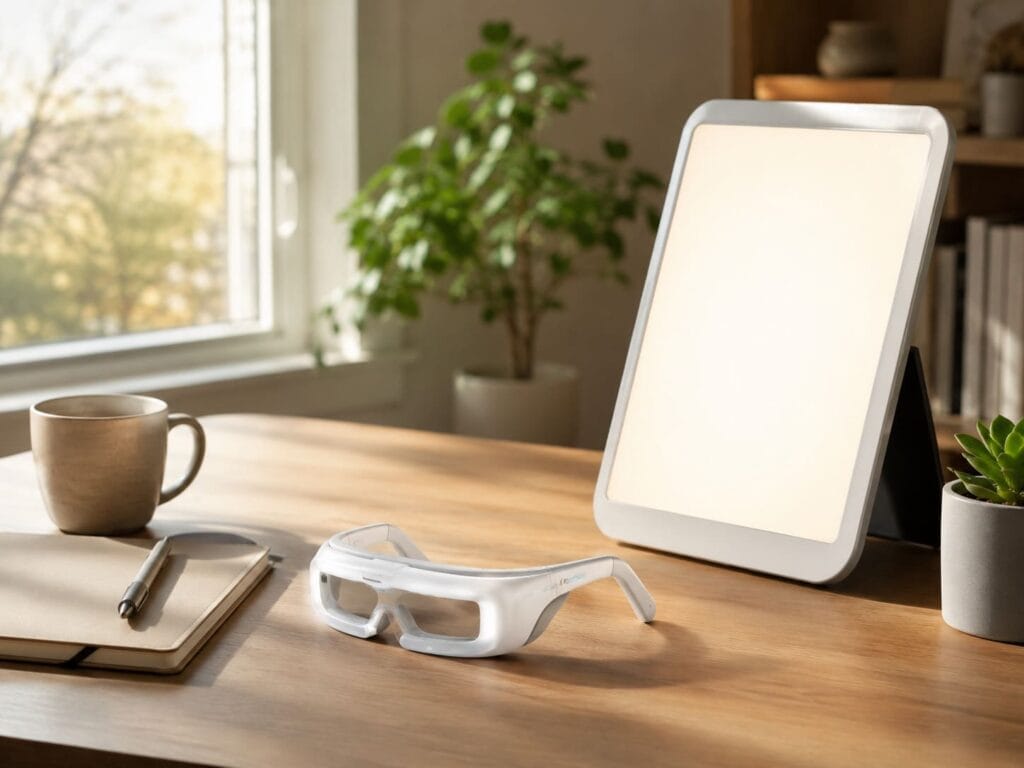
A light box is usually cheaper per unit of light and can be a good choice if you sit at a desk every morning. Many people use a bright light therapy lamp during breakfast, work, or reading. If that habit is easy for you, a light box may be enough.
Retimer 3 is different because it is wearable. You do not need to face a lamp or keep your head in one position. You can use light therapy while moving around. That is the main advantage of re-timer glasses.
The trade-off is cost and comfort. A good light box can be simple: turn it on, sit nearby, and use it. Light therapy glasses require wearing something on your face, charging it, following a schedule, and remembering to use the device.
Choose a light box if you want a lower-friction desk setup, or compare more light environment tools before buying.
Can Retimer Light Therapy Help With Jet Lag, Sleep Schedule, and Sleep Time?
Retimer 3 uses timed light exposure, which is relevant to jet lag because jet lag is partly a body clock timing problem. When you fly across several time zones, your sleep time, alertness, and hunger cues may not match the local clock.
Using the Retimer before or after travel may help some users align your circadian routine with the new destination. The official Retimer page specifically mentions time zone changes, irregular sleep schedules, jet lag, and shift work fatigue as use cases.
That said, buyers should keep expectations grounded. Jet lag is affected by flight timing, sleep debt, caffeine, alcohol, meal timing, stress, and how many time zones you cross. Retimer can be part of a travel routine, but it should not be treated as a guaranteed jet lag cure.
For shift workers, the same rule applies. Retimer may help with structured light exposure, but shift work sleep is complex. You may also need blackout curtains, a consistent wind-down routine, smart caffeine timing, and protection from unwanted light after work.
Blue-Green Light, White Light, and Green Light Spectrum: What Does Retimer Use?
Many people hear “blue light” and immediately think it is bad. That is too simple. Blue light at night can make it harder for some people to fall asleep because it can signal daytime to the brain. But controlled blue or blue-green light in the morning may be useful when the goal is alertness and body clock support.
Retimer 3 uses blue-green light at 500 nm. Older Re-Timer material emphasizes green light, while the newer product page describes blue-green light. The brand also says the product is UV-free and flicker-free.
The key is timing. Light in the morning can support a daytime signal. Light too late in the evening may push your sleep schedule later. This is why using the Retimer correctly matters. Do not just turn it on randomly and hope for better sleep.
If you are sensitive to light, start carefully and follow the brand instructions. Glasses may feel convenient, but they still deliver light close to your eyes.
Retimer App Review: Comfort, Wearable Design, and Using the Retimer Daily
The Retimer app is designed to support the device with schedules and progress tracking. The official App Store page describes the app as a way to manage, monitor, and align your circadian rhythm with lifestyle challenges such as jet lag, odd working hours, difficulty sleeping or waking on time, and poor sleep in general.
App support is useful, but it also creates a possible weak point. If the app is confusing, buggy, or requires too much manual input, some buyers may stop using the device. That is why app stability belongs in the “what we could not verify” section until we have long-term personal testing.
Comfort is another practical issue. Retimer 3 weighs 36 grams and is designed to be worn with prescription glasses. It includes adjustable silicone nose pads. That sounds promising, but comfort is personal. A product can be light on paper and still feel awkward on one face shape.
Daily use should be simple: charge the device, follow your schedule, use it at the right time, and avoid random evening sessions unless the plan specifically calls for it.
Retimer 3 Price, Hidden Costs, Return Policy, and Buyer Checks
Retimer 3 is not a tiny impulse purchase. The official shop lists Retimer 3 at $220.00. Accessories listed on the shop page include a USB-C charging cable for Retimer 3 at $11.99 and a retainer strap at $6.99.
The return policy also deserves attention. Retimer states that its 30-day money back guarantee is available to consumers in all countries, but it is not applicable to businesses or “in case any discounts availed.” The returned item must be received within 30 calendar days of the initial transaction date, clean, undamaged, and returned with all original components and packaging. The refund may exclude postage and duties, and the buyer is responsible for return costs or liability.
That does not mean you should avoid buying. It means you should check the current terms before ordering, especially if you use a discount code. If the discount affects the money-back guarantee, that matters.
Before buying, check current price, shipping region, discount rules, warranty, return address, import duties, and whether the affiliate link goes to the best available offer.
What We Could Verify About Retimer 3 Light Therapy Glasses
We could verify that Retimer 3 is positioned as a smart sleep tech wearable and that the official shop lists it with three nosepieces and a USB-C cable. We could also verify the listed $220.00 price at the time of writing.
We could verify that Retimer 3 is described as using blue-green light at 500 nm, weighing 36 grams, working with prescription glasses, and integrating with the Retimer app for iOS and Android.
We could verify that Re-Timer v2 is still listed as a lower-priced product with USB-B charging and that Retimer accessories are sold separately. We could also verify the return policy details, including the discount-related limitation, 30-day requirement, and buyer responsibility for return costs.
What We Could Not Verify in This Re-Timer Light Therapy Glasses Review
We could not verify long-term comfort because we have not personally worn Retimer 3 for weeks or months. Comfort depends on face shape, nose fit, whether you wear prescription glasses, and how sensitive you are to devices near your eyes.
We could not verify long-term app stability. The app looks useful on paper, but wearable products often depend heavily on software. A good device can become frustrating if the app is unreliable, hard to edit, or poor at syncing.
We could not verify battery degradation, real-world durability, customer support quality, or how well Retimer 3 holds up after months of daily use. These are exactly the things we would want to test before calling this a hands-on review.
We also could not verify whether Retimer 3 is better for you than Luminette 3, AYO, Pegasi 2 glasses, or a standard light box. That depends on your budget, routine, sensitivity, and how much portability matters.

Final Verdict: Are Retimer 3 Light Therapy Glasses Worth It?
Retimer 3 is a strong candidate if you want wearable light therapy for dark mornings, jet lag, shift work, or a more structured sleep schedule. It is especially interesting for people who will not sit in front of a lamp but would realistically wear light therapy glasses while getting ready.
The best buyer fit is someone who values convenience and is willing to follow timing instructions. Retimer light therapy is not something to use randomly. The benefit comes from using the right light at the right time.
Skip it if you want the cheapest option and start with a broader sleep gadget setup instead.
For the right user, Retimer 3 may be one of the more practical light therapy glasses because it combines blue-green light, app guidance, portability, and a modern wearable design. For the wrong user, it is an expensive gadget that will sit in a drawer.
Key Things to Remember
- Retimer 3 is a wearable light therapy device, not a sleep tracker and not a medical treatment.
- The main use cases are morning light, winter mornings, jet lag, shift work, and sleep schedule support.
- Retimer 3 uses blue-green light at 500 nm and is listed as weighing 36 grams.
- Retimer may be more convenient than a light box because you can use it while moving around.
- Luminette 3, AYO glasses, Pegasi 2 glasses, and SAD lamps are the main alternatives to compare.
- Timing matters: morning light can support alertness, while badly timed light may work against your sleep routine.
- Check the return policy carefully, especially if using a discount code.
- We have not personally tested Retimer 3, so long-term comfort, app stability, and durability remain unverified.
- Retimer 3 is most worth considering if you want portable circadian light support and will actually use it consistently.