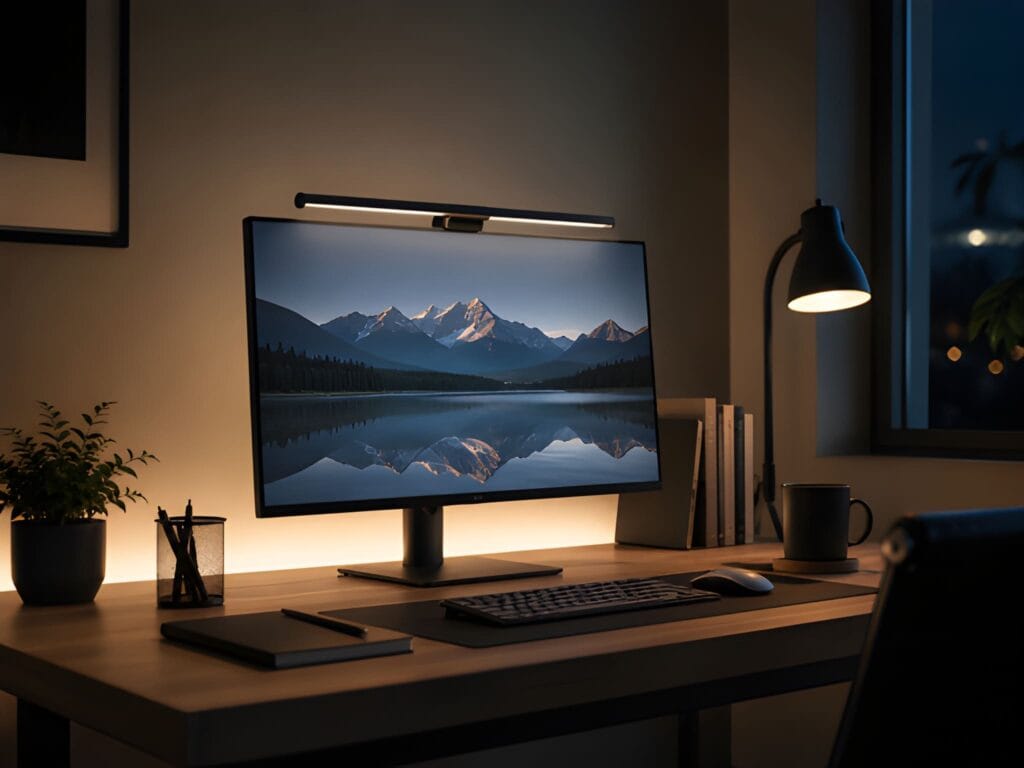
Your room affects your brain more than most people realise.
Harsh overhead lighting, dark winter mornings, screen glare, bright LEDs, and chaotic visual clutter can all make it harder to focus during the day and wind down at night. That does not mean every glowing gadget on Amazon is a serious wellness tool. Some products are useful. Some are only decoration. Some are better skipped.
This guide compares practical light environment tools for focus, screen comfort, calm, and evening wind-down. The goal is simple: help you decide what is worth buying, what is optional, and what is mostly visual noise.
MindReset.org may earn a commission if you buy through our links. This does not increase your price and does not affect our editorial judgment. As an Amazon Associate, we earn from qualifying purchases.
Research note: We have not personally tested every product mentioned on this page. This guide is based on product specifications, public documentation, available research on light exposure and screen comfort, user feedback, and comparison with similar light environment tools.
Quick Verdict: Which Light Environment Tools Are Actually Worth It?
Start with the problem, not the product.
If your mornings are dark and heavy, a SAD lamp or bright light box may be useful. If your evenings feel too harsh, warm smart bulbs or dimmable lamps are a better first step. If screen work drains your eyes, a monitor light bar or bias lighting may help. If your bedroom feels too stimulating, blackout support and warmer bedside lighting matter more than decorative projectors.
Decorative tools such as lava lamps, galaxy projectors, moving sand frames, and kinetic spinners can be pleasant, but they should not be presented as serious nervous system reset tools. Buy them for atmosphere, not because they promise focus, sleep, or emotional regulation.
What Are Light Environment Tools?
Light environment tools are products that change how your room feels visually.
They may include:
- SAD lamps and bright light boxes;
- warm smart bulbs;
- dimmable lamps;
- sunset projection lamps;
- monitor light bars;
- bias lighting;
- blackout curtains or shades;
- ambient projectors;
- soft decorative lights;
- visual timers or focus lamps.
The best ones solve a real daily problem. The weaker ones look interesting but do not meaningfully improve your workday, evening routine, or sleep environment. For the bigger daily rhythm behind morning light and evening darkness, read our Biorhythms and Light guide.
A good light environment tool should answer one clear question:
What problem does this fix?
If the answer is unclear, skip it.
Quick Decision Table: Which Tool Should You Choose?
| Problem | Best first tool | Why | Skip if |
|---|---|---|---|
| Dark mornings | SAD lamp / morning light routine | Stronger morning cue | You have light sensitivity |
| Harsh evenings | Warm bulbs / dimmable lamps | Softer wind-down environment | You hate app-controlled bulbs |
| Screen strain | Monitor light bar / bias lighting | Reduces contrast | Notifications are the real issue |
| Bright bedroom | Blackout curtains / sleep mask | Better darkness control | Noise/stress is the real issue |
| Visual clutter | One soft ambient light | Atmosphere only | You expect sleep/focus miracles |
Best for Dark Mornings: SAD Lamps and Bright Light Boxes

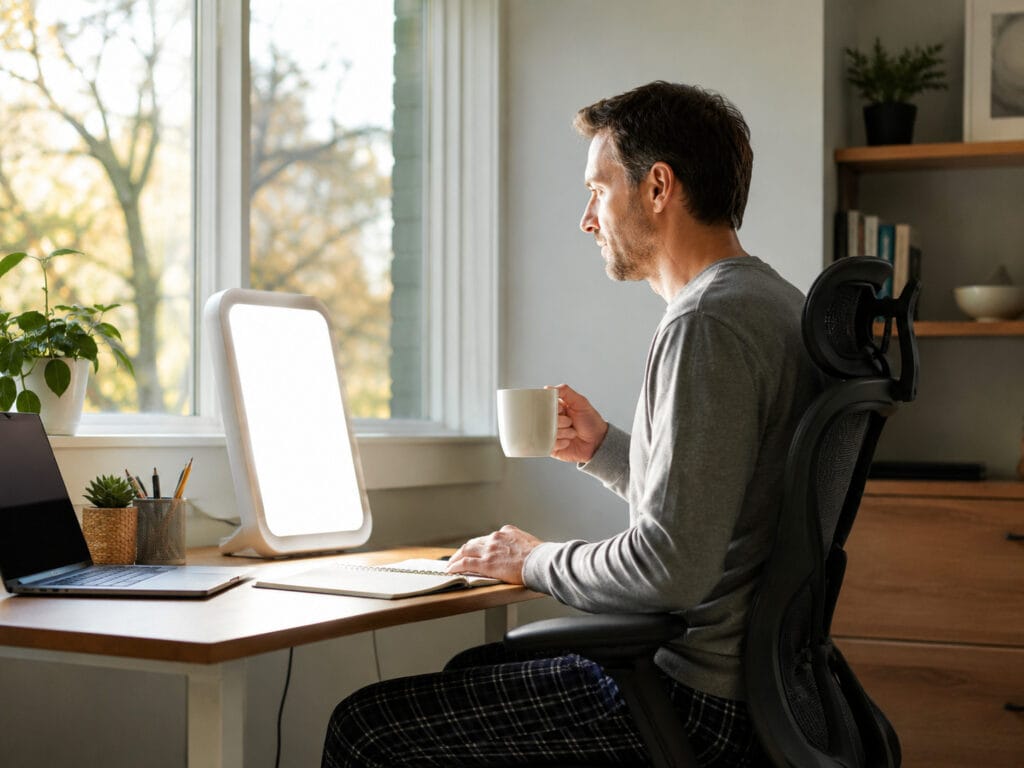
A SAD lamp or bright light box is one of the few light environment tools with a clear use case: dark mornings.
If you live in a northern climate, work indoors, or struggle with winter mornings, a bright light box may help create a stronger morning light cue. This can be useful when natural daylight is weak or delayed.
Look for:
- high brightness;
- comfortable distance;
- UV-free design;
- stable stand;
- simple controls;
- clear usage instructions.
Do not buy a SAD lamp because a listing says it will “fix” your mood or energy. That is too strong. Think of it as a morning light support tool, not a cure. The NHS explains that light therapy and SAD lamps are used by some people during darker months, but also advises speaking with a GP first if you have eye conditions or take medication that increases light sensitivity.
Best for: dark mornings, winter routines, indoor workers.
Not ideal for: people with light sensitivity, certain eye conditions, or medication that increases light sensitivity.
Best for Evening Wind-Down: Warm Smart Bulbs and Dimmable Lamps

Most homes are too bright at night.
Bright ceiling lights, white LED bulbs, and glowing screens can make a room feel like a workspace long after the workday should be over. For evening wind-down, the best upgrade is usually not a projector or expensive gadget. It is warmer, lower, softer lighting.
Warm smart bulbs or dimmable lamps let you shift the room from “work mode” to “evening mode.” You can reduce brightness, change colour temperature, and build a repeatable wind-down environment.
Look for:
- warm colour temperature;
- dimming control;
- reliable app or remote;
- schedule options;
- compatibility with your current lamps;
- no annoying buzzing or flicker.
Best for: evening routines, bedrooms, living rooms, screen-heavy homes.
Not ideal for: people who want one simple lamp and no app setup.
Best for Screen Comfort: Monitor Light Bars and Bias Lighting

If you work at a desk, your screen may be creating more visual strain than you realise.
A bright screen in a dark room forces your eyes to constantly adjust. A monitor light bar or soft bias light can reduce the contrast between your screen and the room around it. This can make long work sessions feel less harsh.
A monitor light bar sits on top of your screen and lights the desk without shining directly into your eyes. Bias lighting sits behind the monitor and adds a soft glow to the wall. If your desk setup is visually comfortable but your attention still gets pulled apart by notifications, digital detox tools may solve more than another lighting accessory.
Look for:
- adjustable brightness;
- adjustable colour temperature;
- low glare;
- USB or simple power setup;
- stable mounting;
- no screen reflection.
Best for: desk workers, creators, writers, students, and remote workers.
Not ideal for: people whose real problem is constant notifications, not lighting.
Best for Bedroom Calm: Blackout Support and Soft Bedside Lighting

A good sleep environment starts with control.
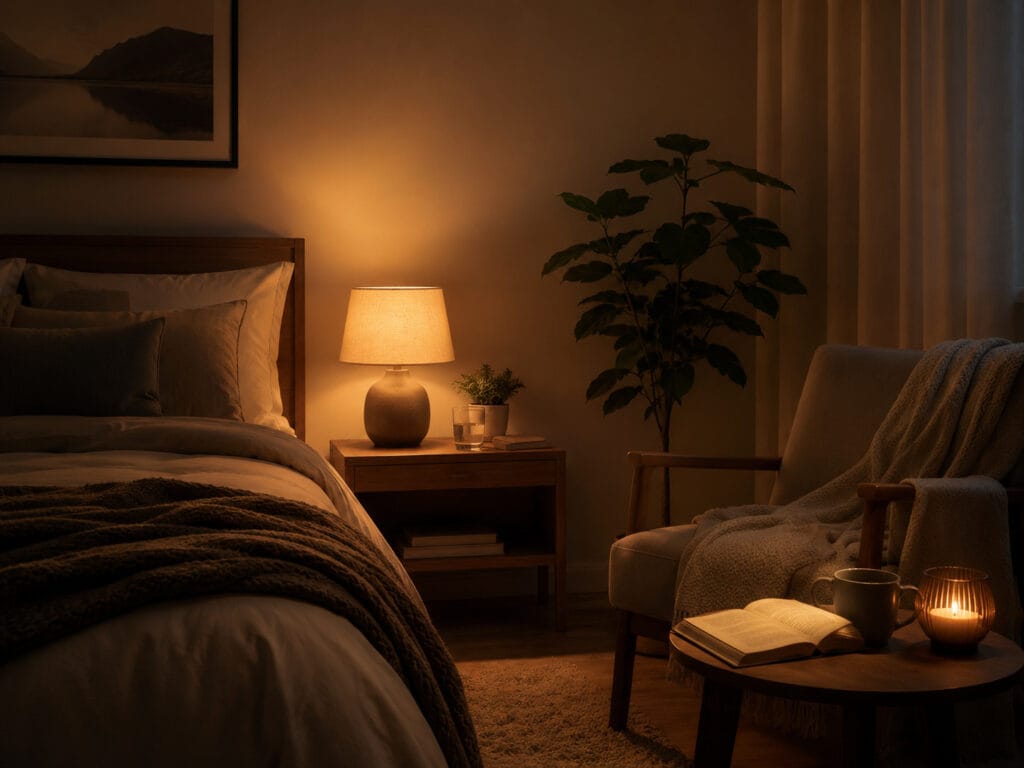
If your room is too bright at night, start with blackout curtains, blackout shades, a sleep mask, or covering small LEDs. If your bedside lighting is too harsh, switch to a warmer lamp with lower brightness.
This is more practical than buying a decorative light and hoping it changes your sleep routine.
A bedroom should make it easy to understand what time it is:
Morning: brighter light.
Evening: softer light.
Night: darkness.
Look for:
- blackout curtains or shades if outside light leaks in;
- warm bedside lamp;
- low-glare bulbs;
- motion lights that do not blast your eyes at night;
- no bright charging LEDs near the bed.
Best for: sleep routines, evening wind-down, bright bedrooms.
Not ideal for: people whose main sleep issue is noise, stress, or irregular bedtime.
Best for Atmosphere: Sunset Lamps, Galaxy Projectors, and Ambient Lights

Atmosphere tools are not useless. They just need to be understood correctly.
A sunset lamp, galaxy projector, lava lamp, or ambient light can make a room feel softer and more pleasant. This may help some people create a clearer evening ritual, meditation corner, or low-stimulation space.
But these tools are optional.
They are not the foundation of a better light environment. They come after the basics: morning light, warm evening bulbs, screen comfort, and bedroom darkness.
Look for:
- soft brightness;
- no harsh flashing;
- quiet operation;
- simple controls;
- no aggressive colour cycling;
- easy placement.
Best for: atmosphere, evening mood, meditation spaces, visual relaxation.
Not ideal for: people who need practical fixes for sleep, screen strain, or dark mornings.
Optional Decor: What Looks Nice but Is Not Essential
Some visual tools look relaxing but should stay in the “optional decor” category.
Examples include:
- moving sand art;
- lava lamps;
- liquid motion bubblers;
- crystal prisms;
- kinetic spinners;
- digital wall canvases;
- decorative projectors.
These can be pleasant if you enjoy them. They may make a desk or room feel less sterile. But do not treat them as essential focus tools.
Buy them only if:
- you like the look;
- you already fixed harsh lighting;
- the product is affordable;
- it does not create more visual clutter;
- it supports a specific space, such as a reading corner or meditation area.
Skip them if you are buying from anxiety, boredom, or the hope that one object will solve your focus problem.
What to Buy First
Start with the most practical tool for your actual environment.
If mornings are hard: choose a SAD lamp or bright morning light routine.
If evenings feel harsh: choose warm bulbs or dimmable lamps.
If screens feel tiring: choose monitor lighting or bias lighting.
If your bedroom is too bright: choose blackout support.
If your space feels cold and sterile: consider one soft atmosphere tool.
Do not buy ten decorative gadgets at once. That usually creates more clutter, not more calm.
The best light environment tools make your day easier to run.
What to Skip
Skip products that make big claims without solving a clear problem.
Be careful with products that promise to:
- reset your nervous system;
- cure poor sleep;
- eliminate stress;
- unlock deep focus;
- treat seasonal depression;
- heal burnout;
- transform your mood instantly.
These claims are too aggressive for normal consumer lighting products.
Also skip anything that adds flashing colours, visual chaos, noisy motors, unreliable apps, or bright LEDs in the bedroom.
A calmer room is not always a more complicated room.
What We Could Verify
For most light environment tools, we can usually verify:
- product type;
- basic specifications;
- brightness claims when listed;
- colour options;
- power source;
- app or remote support;
- size and placement requirements;
- visible customer feedback;
- return availability when shown by the retailer.
This helps compare products at a basic buyer level.
What We Could Not Verify
What we could not verify: long-term durability, real-world brightness accuracy, app stability, colour accuracy, customer support quality, flicker performance, exact light output in your room, and whether each Amazon product remains available over time.
This matters because many visual environment products are sold by changing third-party sellers. Availability, branding, and product quality can shift.
If a product has poor reviews, unclear specs, or exaggerated claims, skip it.
Safety Notes
Most simple lighting products are low-risk, but bright light tools deserve caution.
Be careful with SAD lamps or bright light boxes if you have eye conditions, migraines triggered by light, bipolar disorder, or medication that increases light sensitivity. Speak with a qualified healthcare professional if you are unsure.
For bedroom and evening lighting, avoid bright blue-heavy light late at night if your goal is wind-down. For projectors and decorative lights, avoid fast flashing patterns if you are sensitive to flicker or visual stimulation.
This guide is for general wellness and home environment education only. It is not medical advice.
Final Verdict
Light environment tools are worth buying only when they solve a real problem.
A SAD lamp can make sense for dark mornings. Warm bulbs can make evenings feel calmer. Monitor lighting can improve desk comfort. Blackout support can make the bedroom easier to sleep in. Ambient projectors and visual decor can be enjoyable, but they are optional.
Start with the practical fixes first.
Better morning light.
Warmer evenings.
Less screen glare.
Darker bedroom.
Less visual clutter.
That is the real light environment reset.
Next step: compare the tools that fit your actual problem before buying another glowing gadget for the sake of it.