
Table of Contents
Biorhythms and Light: A Practical Circadian Reset for Better Energy and Sleep
Your body is not designed to live under dim office light all day and bright screen light at night. Light is one of the strongest signals your brain uses to understand when to wake up, when to wind down, and when to prepare for sleep.
This guide explains how biorhythms and light work together, why morning light matters, why evening brightness can work against your sleep routine, and how to build a simple light reset without turning your life into a complicated biohacking experiment.
Quick Verdict: Is Light the First Biohack Worth Fixing?
Yes — but only if you keep it practical.
Fixing your light routine is one of the simplest environmental changes you can make for better energy, focus, and sleep timing. You do not need a complicated gadget stack to start. Begin with outdoor morning light, lower evening brightness, a darker bedroom, and fewer screens before bed.
If you live in a low-light climate, work indoors, or struggle with dark winter mornings, a SAD lamp, sunrise alarm, smart bulbs, blackout curtains, or blue light reduction may be worth considering. But these tools should support your routine, not replace it.

What Are Biorhythms?
Biorhythms are the daily patterns your body follows across sleep, wakefulness, body temperature, hormones, digestion, mood, and alertness. The most important one for sleep and energy is your circadian rhythm — your roughly 24-hour internal clock.
This rhythm is coordinated by a small area in the brain called the suprachiasmatic nucleus, often described as the body’s master clock. It receives light information from the eyes and uses that signal to help time wakefulness during the day and sleepiness at night.
In simple terms: light tells your body what time it is. For a deeper research background, this review on light and human circadian rhythms explains how daylight, artificial light, sleep, and mood are connected.
Why Morning Light Matters
Morning light is one of the clearest signals you can give your body after waking. It helps tell your brain that the day has started and supports the natural rhythm of alertness.
The best version is outdoor light, not light through a window. Even on a cloudy morning, natural outdoor light is usually much stronger than indoor lighting. You do not need to stare at the sun. Just step outside, keep your eyes open naturally, and let daylight reach your eyes indirectly.
A practical target is 5–15 minutes outside in the morning. On dark winter days, you may need longer. If you live in a place with very limited morning light, a bright light box may be useful, but it should be used carefully and not treated as a magic cure.
The Edinburgh Light Challenge
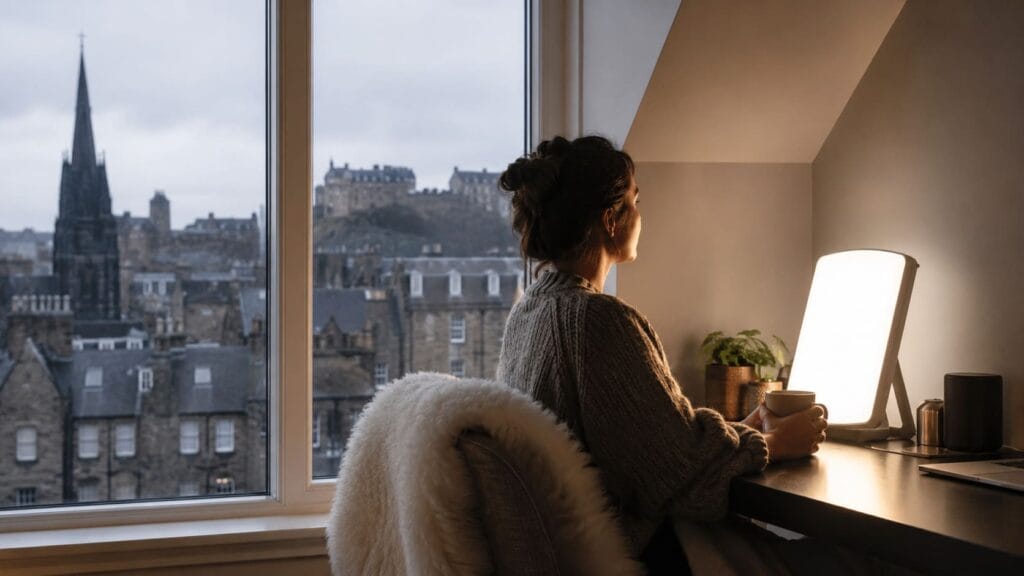
In northern cities such as Edinburgh, winter light is not just a lifestyle detail. It can become a real challenge for energy, mood, and sleep timing.
Short days, grey skies, early darkness, and indoor work can leave your body with weak daytime light signals and too much artificial light at night. That combination can make your internal clock feel confused: not fully awake during the day, not fully ready for sleep at night.
The practical solution is not extreme biohacking. It is better light timing:
Get outside early when possible. Sit near a bright window during the day. Use stronger light in the morning and early afternoon. Then reduce overhead lights, screens, and blue-enriched light in the evening.
Why Evening Blue Light Can Disrupt Your Wind-Down
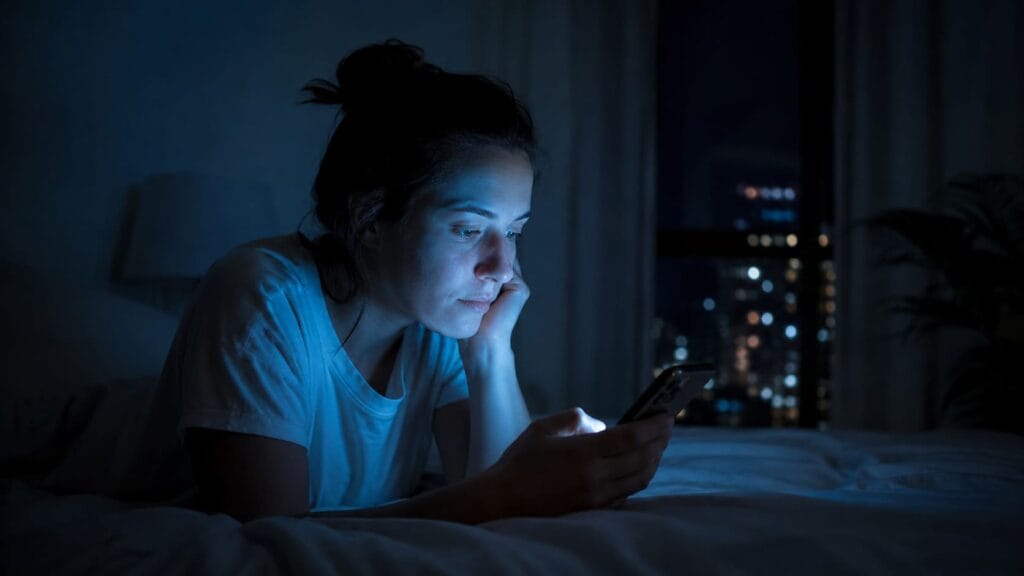
Blue light is not “bad.” During the day, blue-enriched light can support alertness and focus. The problem starts when bright screens, LED lights, and overhead lighting stay active late into the evening.
For a practical explanation of blue light and sleep, Sleep Foundation notes that evening blue-light exposure can interfere with the body’s natural melatonin release. Bright evening light can delay your natural sleep signal and make it harder to feel sleepy at the right time. The issue is not only the screen itself. It is the full evening environment: phone brightness, laptop use, ceiling lights, stressful content, and lack of a clear shutdown routine.
This is why “night shift mode” helps only a little if the rest of your room is still bright and your brain is still mentally switched on.
The MindReset Light Protocol
Use this as a simple daily light routine.
1. Get outdoor light after waking
Go outside within the first hour after waking. Aim for 5–15 minutes on bright days and longer on darker days. Do not stare at the sun. Avoid sunglasses only when it is safe and comfortable.
2. Add an afternoon light anchor
Try to get another short dose of natural light in the afternoon. This helps reinforce the difference between day and evening, especially if you work indoors.
3. Lower lights after sunset
After sunset, reduce overhead lights where possible. Use warmer lamps, dimmer settings, amber lighting, or smart bulbs set to a warmer colour temperature.
4. Reduce screens before bed
The best option is no screens for the final 30–60 minutes before sleep. If that is unrealistic, reduce brightness, use night mode, avoid stressful content, and keep the device away from your face.
5. Make the bedroom dark
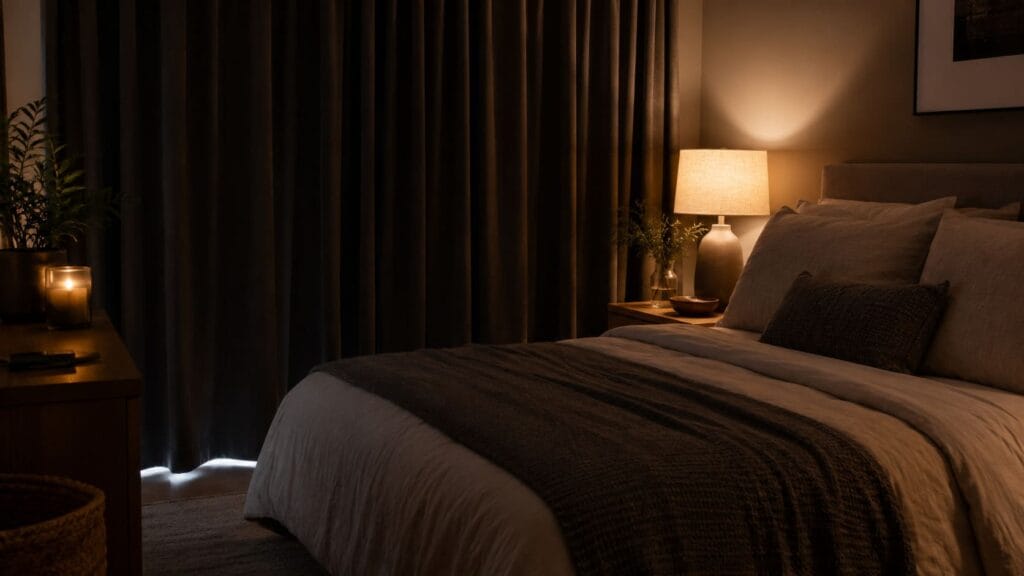
Your bedroom should be dark enough that light is not constantly leaking into your sleep environment. If streetlights, early sunrise, or devices brighten the room, consider blackout curtains, blackout shades, a sleep mask, or covering small LEDs.
What Should You Buy First?
Start with the cheapest fix that solves the actual problem.
If your room is too bright, start with blackout curtains or a sleep mask.
If your evenings are too bright, start with warm lamps or smart bulbs.
If winter mornings are dark and heavy, consider a sunrise alarm or bright light box.
If you cannot stay consistent, smart blinds or scheduled lighting may help automate the routine.
Do not buy expensive light gadgets before fixing the basics. A £20 sleep mask and a better evening routine may do more for you than a premium device you never use properly.
Who Should Try a Light Reset?
Not every sleep or energy problem needs the same light tool. Use this table to decide whether you need a simple habit change, a low-cost bedroom fix, or a more automated light setup.
| Problem | First Fix | Upgrade Option | Skip If |
|---|---|---|---|
| Dark winter mornings | Get outdoor light within the first hour after waking | Sunrise alarm or SAD lamp | You already wake easily and feel alert |
| Bright bedroom at night | Use a sleep mask or cover small LEDs | Blackout curtains, blackout shades, or smart blinds | Your main issue is noise, stress, or an irregular bedtime |
| Late screen use | Reduce screen brightness and stop scrolling 30–60 minutes before bed | Blue light filters, amber glasses, or warmer smart bulbs | You still keep bright overhead lights on at night |
| Inconsistent sleep timing | Keep a stable wake-up time | Scheduled smart bulbs, sunrise alarm, or automated blinds | You are not ready to follow a basic routine |
| Low daytime energy indoors | Sit near natural daylight and take short outdoor breaks | Bright desk lamp or morning light box | Your fatigue is severe, sudden, or medically unexplained |
The best choice is usually the simplest fix that solves the real problem. Do not buy smart blinds, SAD lamps, or premium lighting systems before checking whether morning daylight, lower evening brightness, and a darker bedroom are enough.
A light reset may be useful if you:
- wake up groggy even after enough hours in bed;
- spend most of the day indoors;
- use screens late at night;
- live in a dark winter climate;
- struggle with inconsistent sleep timing;
- have a bedroom affected by streetlights or early sunrise.
Who Should Be Careful?
Be cautious with bright light boxes or SAD lamps if you have eye conditions, bipolar disorder, migraines triggered by light, or medication that increases light sensitivity. In these cases, speak with a qualified healthcare professional before using strong light exposure tools.
Also, do not treat light routines as a replacement for medical support. If you have persistent insomnia, severe daytime sleepiness, suspected sleep apnea, or major mood symptoms, get proper medical advice.
Final Verdict
Biorhythms and light are not a trendy wellness trick. They are a basic part of how your body understands time.
The goal is simple: bright enough days, softer evenings, and a dark enough bedroom. When your light routine becomes clearer, your energy, focus, and sleep timing may become easier to manage.
Start with the sun. Reduce evening brightness. Make your bedroom darker. Then use tools like blackout curtains, smart bulbs, sunrise alarms, or SAD lamps only where they solve a real problem.
Next step: for a complete evening setup, read our guide on building a calmer Evening Wind-down Routine.