Table of Contents
Mantra meditation for beginners is a simple practice that uses a repeated word, sound, or short phrase as an anchor. It can feel easier than silent meditation because you always know where to return when your attention wanders.
This guide explains how to choose a mantra, practise for five minutes, avoid common beginner mistakes, and test the method for seven days without buying an app, subscription, or meditation device.
Affiliate disclosure: MindReset.org may earn a commission if you buy through our links. This does not increase your price and does not affect our editorial judgment.
Research note: This educational guide is based on public meditation guidance, safety resources, and practical comparison of mantra, breath-based, silent, and guided meditation formats.
What we could not independently verify: that mantra meditation will reduce anxiety, improve sleep, increase attention, or produce the same emotional or physical result for every user.
Health note: Meditation may support relaxation, self-awareness, and a steadier routine, but it is not medical treatment. If practice brings up panic, traumatic memories, severe distress, or worsening symptoms, stop and seek appropriate professional support. The NCCIH meditation and mindfulness overview provides a cautious summary of potential benefits and safety limitations.
Quick Verdict: Is Mantra Meditation a Good First Step for Beginners?
For many beginners, mantra meditation is easier than fully silent meditation because it gives the mind a simple anchor. Instead of trying to stop thoughts, you repeat one word or phrase and gently return to it whenever your attention wanders.
Start with one mantra, five minutes, and a simple timer. If you still feel lost, guided audio or beginner-friendly meditation tools can help — but you do not need expensive devices to begin.
What Is Mantra Meditation and Why Is It a Form of Meditation That Involves Mantra Repetition?
Mantra meditation is a form of meditation that involves repeating a mantra silently, softly, or aloud. A mantra can be a sound, a word, or a short phrase used to focus attention. In simple terms, mantra means a mental anchor that helps bring your attention back when your thoughts drift.
Mantras have been used in many meditation traditions, including Hindu, Buddhist, yoga, and modern mindfulness practices. Some people use a traditional mantra, a Sanskrit mantra, or mantras like “om.” Others prefer a personal mantra such as “I am here,” “let go,” or “peace.”
The point is not to force your mind to become blank. Meditation doesn’t require silence inside your head. Instead, the mantra serves as a steady object of attention. When your mind wanders, you return to the mantra without judging yourself.
Is Mantra Meditation for Beginners Easier Than Silent Meditation for Many Beginners?
Silent meditation asks you to sit with the breath, body, and thoughts without much structure. If breath-based practice feels more natural than repetition, start with these simple breathing techniques for calm before moving into longer meditation sessions.
That can be powerful, but it can also feel too open-ended when you are just starting.
Mantra meditation is straightforward because it gives you something specific to do. You repeat your mantra, notice when your attention has wandered, and return to the mantra. This makes the meditation technique easier to understand and easier to repeat.
Many beginners quit because they think a busy mind means they are failing. But thoughts are not a failure. A mantra helps you notice the wandering mind and come back. In that sense, meditation for beginners often works better when there is a simple anchor.
What Are the Benefits of Mantra Meditation and What Could Meditation Bring to Your Routine?
The benefits of mantra meditation are mostly practical: it can make meditation feel more structured, less vague, and easier to repeat. For people who struggle with silent sitting, mantra meditation can help reduce the feeling of “I don’t know what I’m supposed to do.”
Meditation can help some people build a calmer routine, improve self-awareness, and create a short pause between stress and reaction. Mantra meditation may also support relaxation because the rhythm of mantra repetition gives the mind a predictable pattern.
That said, avoid treating meditation as a magic fix. Meditation may support your routine, but it should not be sold as a cure.
The real value is that meditation can bring a small daily reset: a few minutes where you stop scrolling, stop reacting, and give your attention one simple job. Mayo Clinic also frames meditation as a simple practice that may help with stress relief, while noting that evidence should not be overstated.
How Does a Mantra Help and Why Can Using a Mantra Make Meditation More Straightforward?
A mantra helps by giving your attention somewhere to land. When you sit quietly, your mind may jump into planning, memories, worries, or random inner noise. The mantra acts like a soft return point.
You do not have to fight thoughts. You simply notice them and return to the mantra. This is why using a mantra can be useful for beginners. The mantra gives you a repeatable structure without needing complex instructions.
Think of the mantra as a mental handrail. You are not using it to block your thoughts. You are using it to come back whenever your attention has drifted. Over time, the mantra becomes familiar, and meditation sessions may feel less chaotic.
Choosing a Mantra: How Do You Find the Right Mantra That Resonates?
Choosing a mantra should be simple. The right mantra is not necessarily exotic, ancient, or dramatic. It should be easy to repeat and easy to remember. A mantra that resonates with you is more useful than a powerful mantra that feels forced.
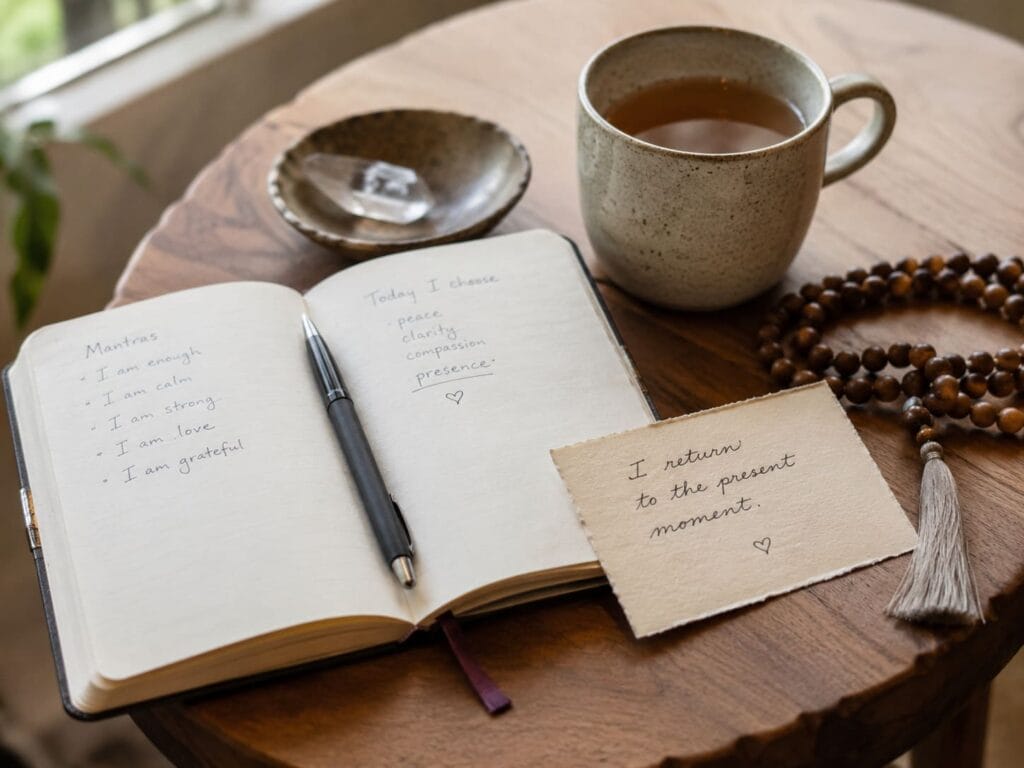
A good mantra for meditation can be one word or phrase. Examples include “peace,” “still,” “breathe,” “I am here,” or “let go.” You can also use a traditional sound such as “om,” or a Sanskrit mantra if that feels meaningful and respectful to you.
When choosing a mantra, avoid spending days searching for the perfect phrase. Select a mantra, use it for a few days, and see how it feels. Beginners might change too often because they think the phrase is the problem. Usually, the real work is learning to return to the same anchor.
Should You Use a Sanskrit Mantra, Buddhist Mantra, Personal Mantra, or Simple Phrase?
There are different types of mantras, and none is automatically best for everyone. A Sanskrit mantra may feel sacred, traditional, or rhythmic. A Buddhist mantra may connect with compassion, awareness, or devotion. Metta meditation and loving-kindness meditation often use repeated phrases to support warmth and goodwill.
A personal mantra can feel more direct. For example, “I am safe in this moment,” “soften,” or “one breath at a time” may be easier for modern beginners to understand. A single mantra is enough. You do not need a long list of meditation mantras.
The best choice is the mantra that speaks to your actual practice. If a phrase feels fake, choose something simpler. If a sacred mantra feels meaningful, use it with respect. If you want the cleanest beginner option, choose a short phrase and stay with it for one week.
Getting Started With Mantra Meditation: How to Practice Mantra Meditation in 5 Minutes
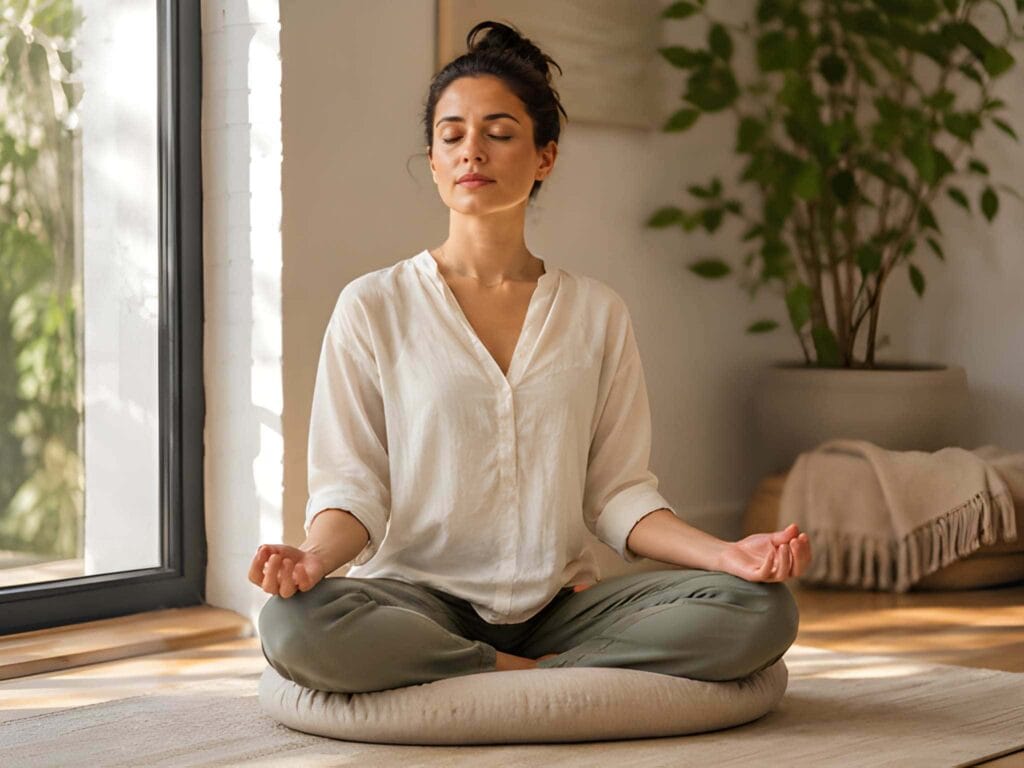
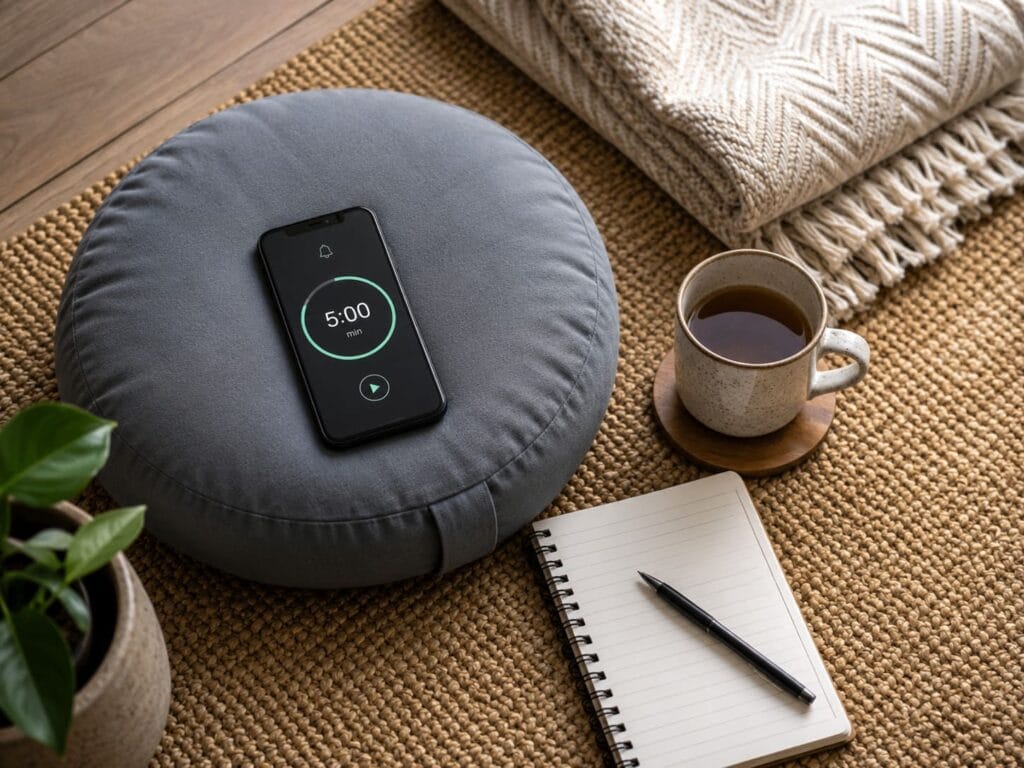
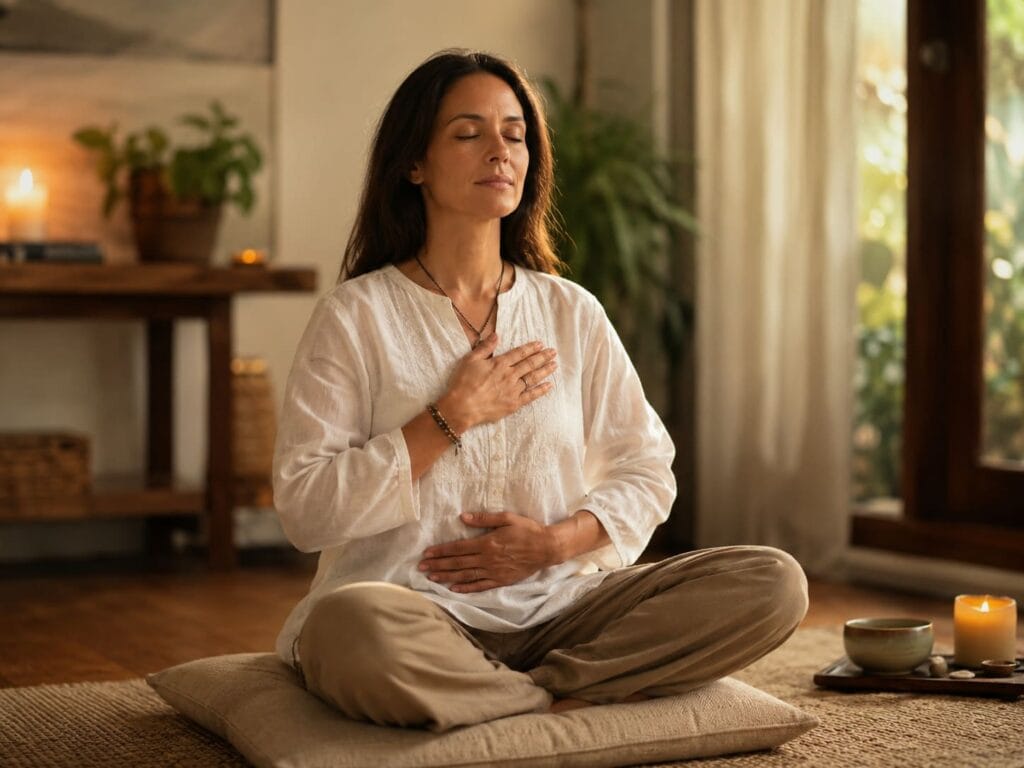
Getting started with mantra meditation does not need a cushion, app, incense, or special room. Sit comfortably, set a timer for five minutes, and choose one mantra. Close your eyes if that feels comfortable, or keep your gaze soft.
Start by breathing naturally. Then begin saying your mantra silently in your mind. You can also chant your mantra softly if that helps you stay present. Repeat the mantra slowly and steadily. When thoughts appear, notice them and return to the mantra.
Here is a simple method:
- Sit comfortably.
- Choose one mantra.
- Set a timer for five minutes.
- Repeat the mantra.
- Notice distractions without judging.
- Return to the mantra.
- Stop when the timer ends.
This is enough. You do not need to enter deep meditation. You do not need a perfect meditation experience. The goal is to make meditation easy enough to repeat tomorrow.
Guided Mantra Meditation vs Mantra Silently: Which Meditation Technique Should You Try?
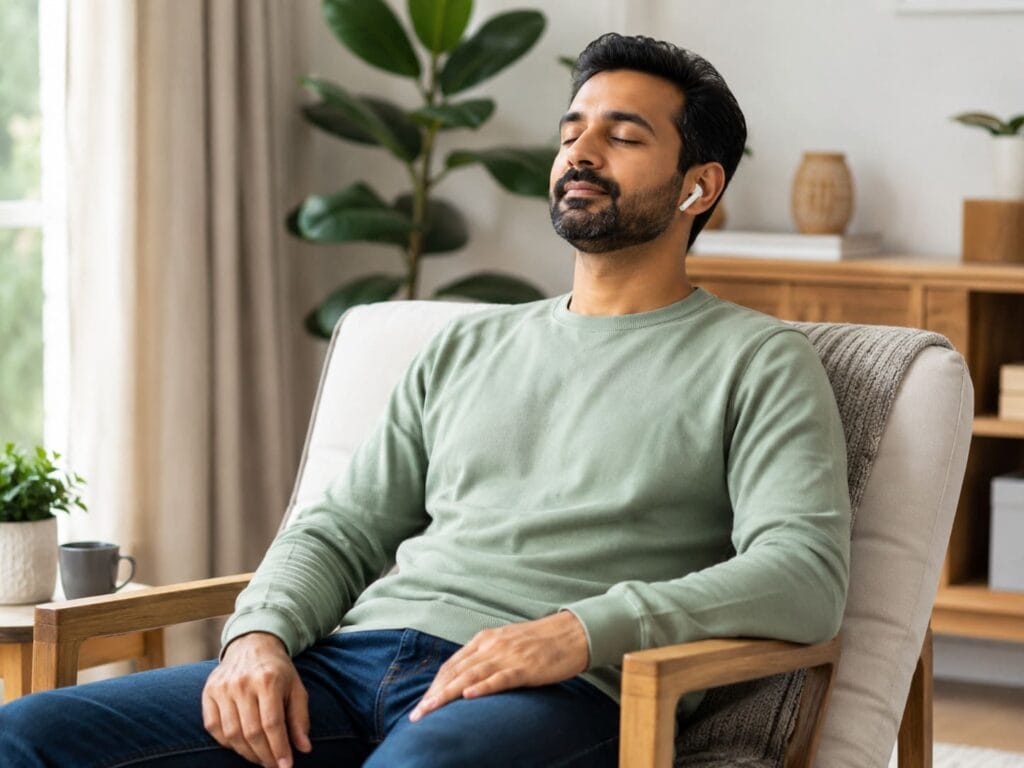
Guided mantra meditation gives you a voice, pacing, and structure. This can be especially helpful when you are new to meditation and need reassurance that wandering thoughts are normal.
A guided mantra can also help you learn the rhythm of the practice. After a few sessions, you may find that you no longer need the voice every time. Some beginners also prefer a more immersive light and sound meditation device when audio alone does not give enough structure.
Silent mantra meditation is better if you want fewer distractions and more independence. Unlike other meditation tools, a mantra requires no device once you know what to do. Start guided if you need support. Move toward silent practice when the structure feels familiar.
Common Beginner Mistakes: When Saying Your Mantra Becomes Another Distraction
The first mistake is trying to stop thoughts. Meditation involves noticing thoughts, not deleting them. If your mind wanders fifty times, you return fifty times. That is the practice.
The second mistake is changing your mantra too often. A new phrase can feel exciting, but repetition is the point. If you stop repeating the mantra every time it feels boring, you never give the practice time to settle.
The third mistake is turning meditation into another productivity task. Meditation could become stressful if you track it too aggressively, compare sessions, or expect instant inner peace. Make meditation simple: same place, same time, same mantra, short sessions.
7-Day Mantra Meditation Practice Plan to Make Meditation Easier
If you want to try mantra meditation, use this simple plan before buying tools or switching techniques. The goal is not perfection. The goal is consistency.
Day 1: Sit for three minutes and repeat the mantra silently.
Day 2: Sit for five minutes and return to the mantra whenever the mind wanders.
Day 3: Try the same mantra again, even if it feels repetitive.
Day 4: Notice whether the mantra can feel calming, neutral, or boring without needing to change it.
Day 5: Try one session without guided audio. Use only a timer.
Day 6: Practice in the morning or evening and notice which time feels easier.
Day 7: Decide whether this mantra practice is worth continuing for another week.
This small daily meditation plan is enough to test the method. If you find that using a mantra helps practitioners stay with the practice, keep going. If it feels irritating or forced, try breath meditation, metta phrases, or guided audio instead.
When Could Meditation Tools Help — and When Do They Distract From the Mantra?
Meditation tools can help when they reduce friction. A timer, app, guided audio, or breathing tool can make meditation easier to start.
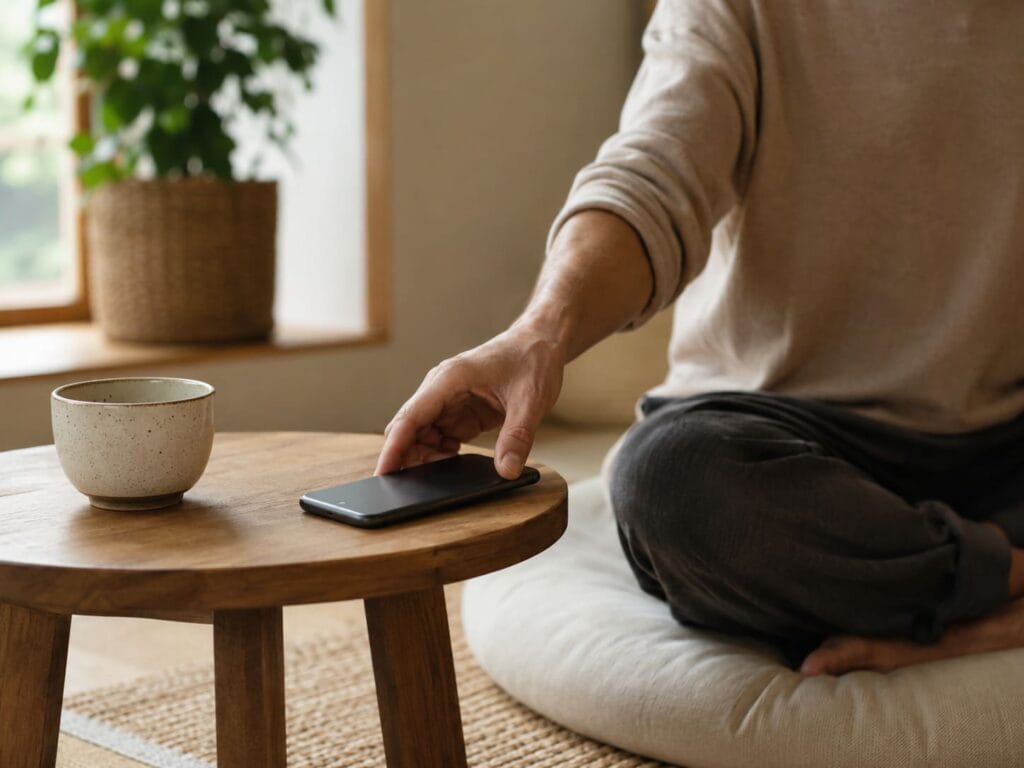
But tools can also become a distraction. If you spend more time choosing apps, changing sounds, checking streaks, or researching devices than actually sitting down, the tool is no longer helping.
For mantra meditation, start with the lowest-friction setup: a timer and one phrase. Later, if you want more structure, try guided mantra meditation or a beginner-friendly app.
HRV biofeedback and meditation headbands can be useful for some users, but they are not required for getting started. If you are comparing meditation devices, trackers, and recovery tools more broadly, see our guide to biohacking wearables before buying anything expensive.
Beginner Tool Shortcuts
Use this table only after trying a timer and one mantra first:
| If you want… | Start here | Best next step |
|---|---|---|
| Feedback while meditating | Meditation headband | Meditation Headband |
| Breathing and coherence feedback | HRV biofeedback tool | HRV Biofeedback Tool |
| A more immersive meditation session | Light and sound meditation | Light & Sound Meditation |
| Less phone distraction before practice | Digital detox tools | Digital Detox Tools |
When Should You Be Careful With Meditation?
Most people can try short meditation sessions safely, but meditation is not automatically comfortable for everyone. If sitting quietly brings up distress, panic, traumatic memories, dissociation, or overwhelming emotions, stop the session and consider appropriate professional support. NCCIH notes that meditation is generally considered low risk, while some participants in studies have reported negative experiences.
Final Verdict: Should You Try Mantra Meditation If Silent Meditation Doesn’t Work Yet?
Yes — if silent meditation feels too vague, mantra meditation is one of the simplest ways to begin. It gives your attention a clear anchor and makes the practice easier to repeat.
Mantra meditation offers a practical middle ground between fully silent sitting and heavily guided sessions. It is simple, flexible, and easy to test for one week. You can use a Sanskrit mantra, a personal mantra, or a plain English phrase.
The best first step is not finding the perfect mantra. The best first step is sitting down for five minutes, repeating a mantra, and gently returning when your mind wanders. That is the practice.
FAQ для Rank Math / Schema
Is mantra meditation good for beginners?
Yes. Mantra meditation can be good for beginners because it gives the mind a simple anchor. Instead of trying to stop thoughts, you repeat a mantra and return to it whenever your attention wanders.
What mantra should a beginner use?
A beginner can use a simple word or phrase such as “peace,” “breathe,” “let go,” or “I am here.” A Sanskrit mantra such as “om” can also work if it feels meaningful and respectful.
Is mantra meditation better than silent meditation?
Not always, but it may be easier at the start. Silent meditation can feel too open-ended for many beginners. Mantra meditation gives more structure.
How long should I practice mantra meditation?
Start with three to five minutes per day. Once it feels natural, increase to 10 minutes. Consistency matters more than long sessions.
Do I need a meditation app for mantra meditation?
No. You can start with only a timer and one mantra. A guided meditation app can help if you need structure, but it is not required.
CTA block
Not sure where to start?
Begin with one mantra, five minutes, and a simple timer. Once the habit feels stable, you can explore guided audio, meditation apps, breathing tools, or biofeedback devices.
Suggested next read:
Best Meditation Tools for Beginners: What Helps, What Distracts, and What to Skip.