Table of Contents
MindReset.org may earn a commission if you buy through our links. This does not increase your price and does not affect our editorial judgment.
Research note: We have not personally tested this product yet. This guide is based on product specifications, public documentation, available research, user feedback, and comparison with similar tools.
Mendi Review
This Mendi review is for people who want brain training without mysticism. Mendi takes a different route from most focus apps: it gives you a headband, a mobile app, and a simple task — raise a ball on the screen by increasing activity in your prefrontal cortex.
This Mendi review is for people whose brain feels constantly switched on.
You know the state: too many tabs open, too many decisions pending, too much internal noise. You can read, plan, compare, analyze, and still struggle to sit down and hold clean focus for ten minutes. That is the analytical mind trap: the same brain that helps you solve problems can also keep you locked in overthinking.
Mendi attacks that problem from a different angle.
Instead of giving you another meditation timer or productivity quote, Mendi gives you a real-time feedback loop. You wear a neurofeedback headband, open the app, and try to raise a virtual ball by increasing activity in your prefrontal cortex — the part of the brain involved in focus, control, and emotional regulation.
The point is simple: stop guessing whether you are focused and start training with feedback.
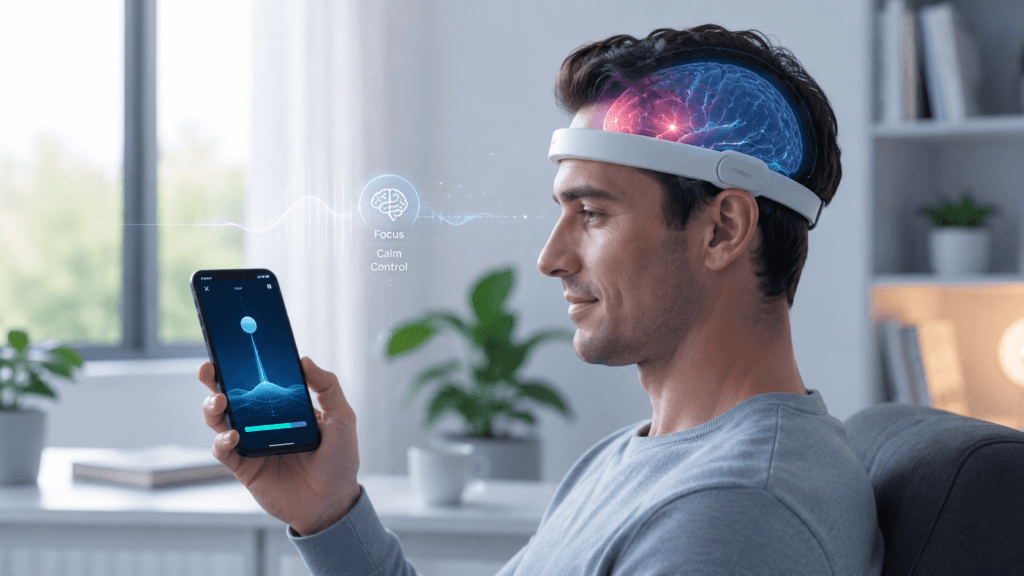
Mendi uses fNIRS technology, a non-invasive way to track changes in oxygenated blood flow near the forehead. When your prefrontal cortex becomes more engaged, the app turns that signal into a visual game. You see focus as something you can practice, not just something you hope will appear when the pressure is high enough.
If your current strategy is caffeine, willpower, and waiting for motivation to arrive, Mendi offers a more structured option: ten minutes, one target, and a measurable signal from your own brain.
The Analytical Mind Trap: When Your Brain Will Not Switch Off
The worst part of poor focus is not laziness. It is mental friction.
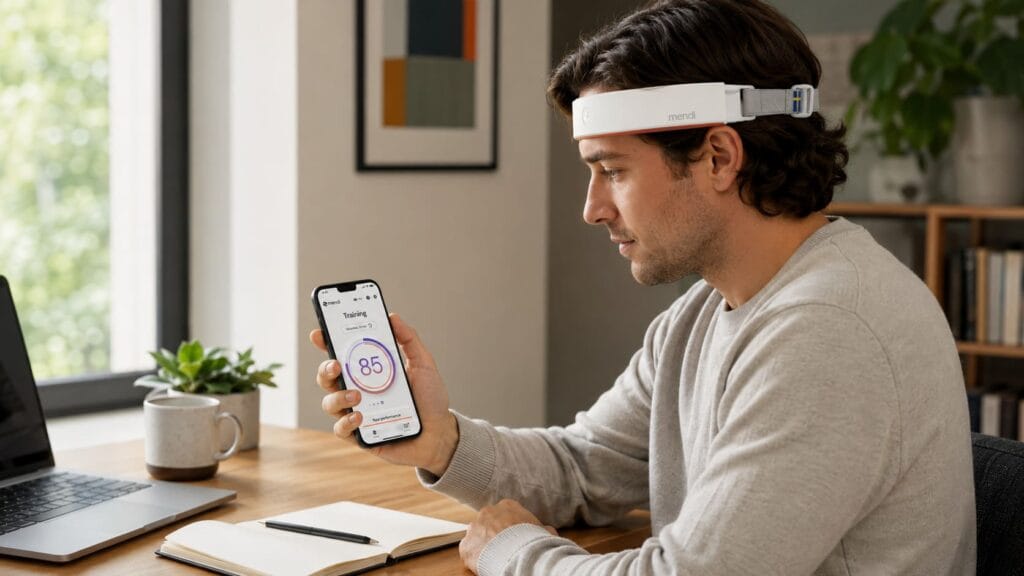
You sit down to work, but your attention keeps splitting. One part of your mind tries to complete the task. Another part replays conversations, checks future risks, compares options, remembers unfinished problems, and quietly burns energy in the background.
This is where many smart, analytical people get stuck. They do not lack intelligence. They lack a clean feedback loop for control.
In neuroscience terms, this often feels like a battle between task-focused attention and the brain’s default mode network — the system linked with self-referential thinking, wandering thoughts, rumination, and mental time travel. When that internal background noise gets too loud, focus becomes expensive.
You can try to force your way through it. Many people do. They use coffee, deadlines, anxiety, and self-criticism as fuel.
But that is like running a laptop with the fan screaming all day.
Mendi offers a different kind of training. It gives your prefrontal cortex a target. Instead of fighting your thoughts blindly, you practice producing a state the device can detect and reflect back to you. That is what makes neurofeedback interesting: it turns an invisible mental process into something visible enough to train.
What Is the Mendi Neurofeedback Device?
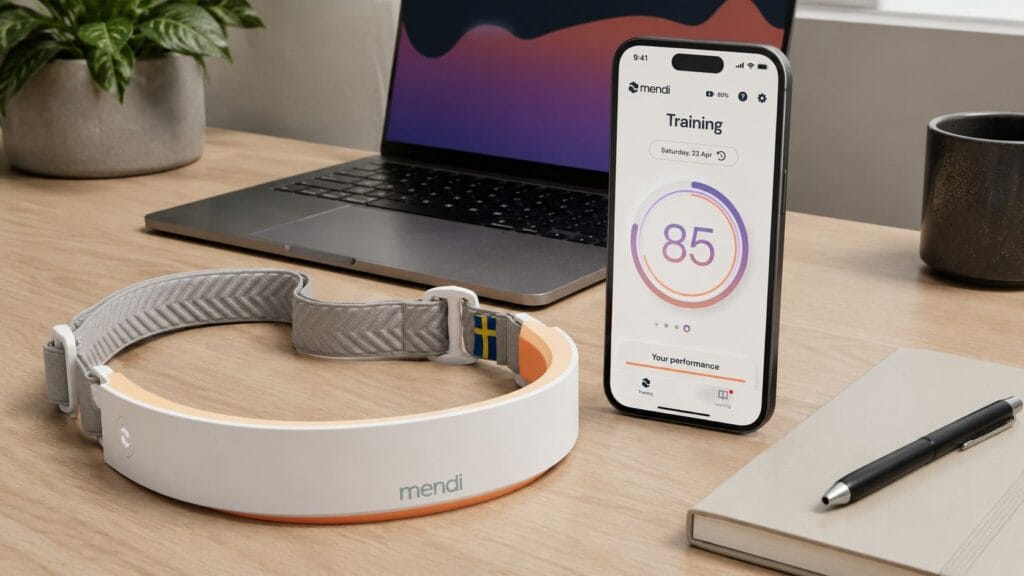
Mendi is a home neurofeedback device designed to train focus through short brain training sessions. The system includes a headband and an app. You wear the Mendi headband on your forehead, open the app, and complete a simple training game where your goal is to raise a virtual ball using focused mental effort.
The device is built around fNIRS technology, which stands for functional near-infrared spectroscopy. In simple terms, Mendi uses light sensors to monitor changes in blood flow and oxygenation in the prefrontal cortex. This brain region is strongly involved in attention, executive function, cognitive control, emotional regulation, and stress response.
The core idea is straightforward: when you focus, your prefrontal cortex becomes more active. Increased brain activity in that region requires more oxygenated blood flow. Mendi tracks that change and turns it into visual feedback inside the app.
That feedback loop is the product.
How Mendi Uses fNIRS Technology and Functional Near-Infrared Spectroscopy to Measure Brain Activity
To understand Mendi, you need to understand fNIRS neurofeedback.
fNIRS, or functional near-infrared spectroscopy, is a non-invasive method for measuring changes in oxygenated and deoxygenated blood in the brain. It does this by sending near-infrared light through the scalp and measuring how that light is absorbed and reflected by blood tissue.
When a brain region becomes more active, it needs more oxygen. The body responds by increasing local blood flow. This is called a hemodynamic response. Mendi uses this principle to estimate activity in the prefrontal cortex.
That does not mean Mendi is reading your thoughts. It is not decoding your emotions or showing a full map of your brain. It is measuring a biological signal related to blood oxygenation and brain activity in a specific area near the forehead.
This is important because many people hear “brain training device” and imagine something magical or futuristic. Mendi is more grounded than that. It does not know what you are thinking. It does not force your brain to change. It gives you feedback based on a measurable physiological signal.
That feedback is useful because the brain normally does not give us clear information about its own activity. You can feel distracted, tired, alert, or calm, but you cannot directly see what your prefrontal cortex is doing. Mendi tries to make that invisible process visible enough to train.
fNIRS vs EEG Neurofeedback: Why Mendi Works Differently from Muse
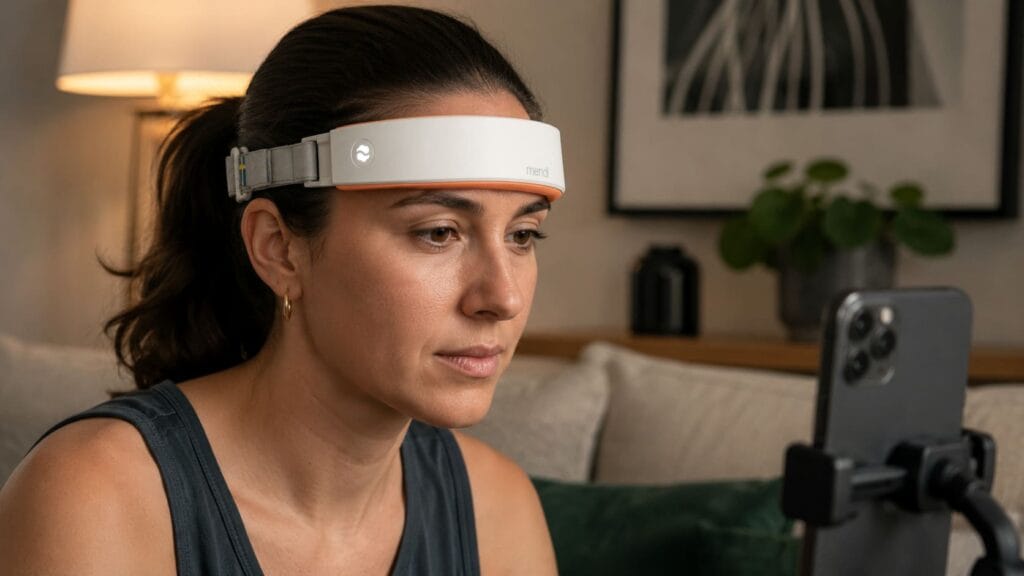
A common comparison is Mendi vs Muse. Both are consumer brain training devices, but they are not measuring the same thing.
Muse-style headsets are based on EEG, or electroencephalography. EEG measures electrical activity produced by the brain. It is commonly associated with brainwave feedback, meditation tracking, and relaxation training.
Mendi uses fNIRS instead of EEG. Rather than measuring electrical brainwave patterns, Mendi tracks changes in oxygenated blood flow in the prefrontal cortex. This makes it a different type of neurofeedback system.
The difference matters.
EEG neurofeedback is faster because electrical activity changes very quickly. fNIRS is slower because blood flow changes take more time. But fNIRS may feel more intuitive for users who want to train focus and cognitive control rather than simply monitor meditation states.
That does not automatically make one better than the other. It depends on what you want.
If your main goal is meditation support, relaxation tracking, or EEG-based brainwave feedback, Muse may make more sense. If your goal is to train focus through a visual feedback loop connected to prefrontal activity, Mendi is the more relevant device.
What Happens During a 10 Minute Mendi Training Session?
A typical Mendi training session is short. The device is designed around 10-minute sessions, which is useful because most people do not stick with complicated routines.
You put on the Mendi headband, open the app, and start the training game. The screen shows a ball. Your goal is to raise the ball by increasing your focus. When your measured signal improves, the ball moves upward. When your focus drops or the signal weakens, the ball responds.
This is the entire point of real-time neurofeedback: your brain gets a mirror.
At first, this can feel strange. You may try to concentrate harder and see no immediate improvement. You may relax slightly and notice the signal improves. You may discover that forcing attention is less effective than steady, calm focus.
That learning process is where the value sits.
Mendi does not simply tell you to “focus more.” It gives you a simple training environment where you can experiment with focus and see feedback. Over time, the user is supposed to learn which internal state produces better control.
This is why Mendi brain training is closer to practice than passive tracking. The app is not just recording your session. It is giving you a target and asking you to regulate your attention in response to feedback.
If your current focus system depends on pressure, caffeine, and last-minute panic, Mendi gives you a cleaner alternative: a short daily session with real-time feedback from your own brain.
The Science Behind Prefrontal Cortex Brain Health, Focus, Stress, and Emotional Regulation
The prefrontal cortex is one of the most important brain regions for self-control, decision-making, attention, planning, emotional regulation, and executive function.
When people talk about “willpower,” “mental discipline,” or “staying calm under pressure,” they are often describing functions linked to the prefrontal cortex. This part of the brain helps you pause before reacting, hold attention on a task, regulate impulses, and manage competing thoughts.
That is why Mendi focuses on this region.
Stress and focus are closely connected. When stress is high, attention often becomes scattered. Emotional regulation becomes harder. Cognitive control weakens. You may still be technically awake and active, but your brain is not operating in a clean, directed way.
Training the prefrontal cortex does not mean you become emotionless. It means you may improve your ability to notice internal pressure and return to a more controlled mental state.
This is the practical promise behind Mendi neurofeedback. Not instant calm. Not a perfect mind. Not “unlocking hidden brain power.” The more realistic promise is this: repeated feedback-based training may help you practice the mental state required for sustained focus and better self-regulation.
Mendi Results After 8 Weeks: What Consistent Training Can Change
The real promise of Mendi is not one perfect session. It is the compound effect of repeated training.
Mendi reports a 42% improvement in sustained focus and a 31% reduction in perceived stress after eight weeks, based on aggregated in-app data and self-reported outcomes. For a practical buyer, the important point is not that every person will get the exact same number. The important point is that Mendi is built around a repeatable training loop.
That matters because focus usually fails in private.
Nobody sees the moment when you open a document and immediately check something else. Nobody sees the five-minute task that takes forty minutes because your mind keeps jumping. Nobody sees the cost of carrying mental noise from morning into evening.
Mendi gives that problem a structure.
You train for a short session. You get feedback. You repeat. Over time, you are not just hoping to “be more focused.” You are practicing the internal state of focus while your brain receives a visual response.
That is the difference between motivation and training.
Motivation says: try harder today.
Training says: repeat the signal until the system learns.
Using the Mendi Brain Training App: Ball Game, Feedback, and Daily Training Routine
The Mendi app is intentionally simple. That is a strength.
Many cognitive training products become overloaded with dashboards, scores, badges, and unnecessary complexity. Mendi keeps the central experience focused on one thing: the ball game.
The ball gives you an immediate visual representation of your training signal. When your focus improves, the ball rises. When your signal drops, the ball reacts. This turns prefrontal activity into something you can interact with.
Is this a perfect measurement of focus? No.
Focus is complex. Brain activity is complex. fNIRS measures a specific biological signal, not your entire mental state. But the game gives you a feedback loop, and feedback loops are powerful because they make training more concrete.
This is where neuroplasticity becomes relevant. Neuroplasticity simply means the brain can change through repeated experience and practice. Mendi does not create neuroplasticity by itself. The device provides a training environment where repeated focus practice may support learning over time.
That distinction matters.
The Mendi headset is not doing the work for you. You are still doing the mental training. The device just gives you feedback while you do it.
Mendi Headband vs Muse Headset: fNIRS vs EEG Neurofeedback Device Comparison
The Mendi headband and Muse headset are often compared because both sit in the consumer neurofeedback category. But they serve slightly different users.
Mendi is more interesting for people who want focus training, prefrontal cortex activation, and fNIRS-based feedback. Muse is more attractive for people who want meditation support, relaxation tracking, and EEG-based feedback.
Here is the practical difference:
Mendi is about training the brain through blood flow feedback from the prefrontal cortex. Muse is about tracking brainwave activity, usually in the context of meditation and calmness.
For a pragmatic buyer, the question is not “Which technology sounds cooler?” The question is “Which routine will I actually use?”
Choose Mendi if you want a short, direct, focus-oriented training session. Choose Muse if you want guided meditation with EEG-style feedback.
Mendi may be the better fit for people who dislike traditional meditation apps because it gives them a concrete task. Instead of closing your eyes and hoping you are doing it right, you interact with a signal. You have a goal. You get feedback.
That can make the training feel more active and measurable.
Who Should Use Mendi at Home?
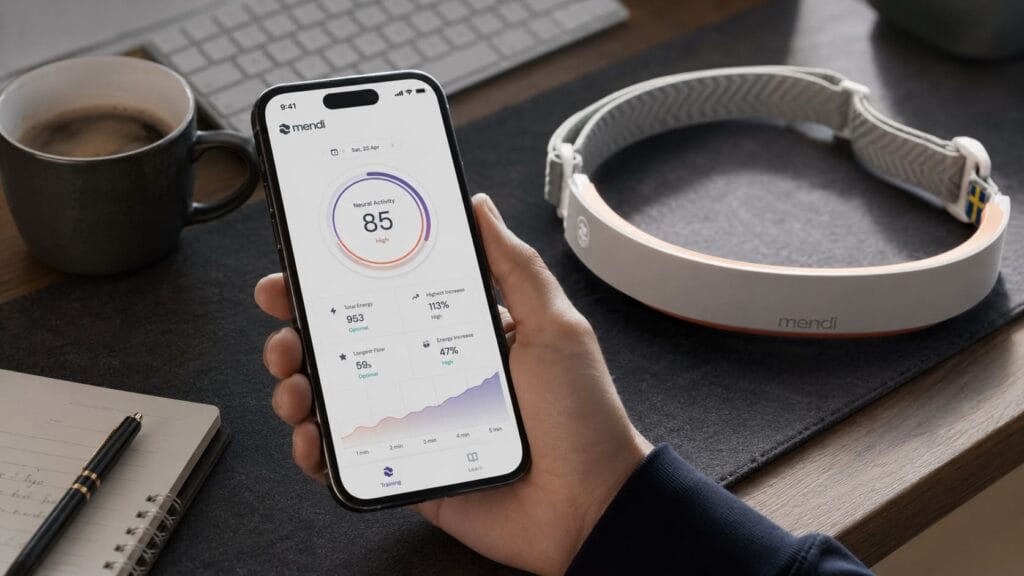
Mendi makes the most sense for people who are tired of managing focus with brute force.
It is especially relevant for people who:
- overthink instead of executing;
- feel mentally tired before the real work begins;
- jump between tabs, tasks, and unfinished ideas;
- want focus training without mystical language;
- dislike passive meditation but still want better self-regulation;
- prefer measurable feedback over vague wellness advice;
- are willing to train for ten minutes instead of waiting for motivation.
The best Mendi user is not someone looking for entertainment. It is someone who already knows their attention is costing them money, time, energy, and emotional stability.
That is where the device becomes interesting. Mendi gives you a simple daily ritual for training the part of your mind that has to stay in control when everything else wants to scatter.
Who Should Not Buy Mendi?
Mendi is probably not for you if you want a gadget to do the work while you stay passive.
This is a training device. You still need to show up. You still need to complete the sessions. You still need to build the habit.
It is also not the right tool if you are looking for medical treatment or professional therapy. Mendi is best understood as a home neurofeedback training system for focus and self-regulation.
But if you already know that your current focus routine is not working, doing nothing is also a choice.
It means accepting the same scattered mornings, the same overthinking loops, the same unfinished work, and the same feeling that your brain has power but no steering wheel.
Mendi Pros and Cons
Pros
Mendi uses fNIRS technology, which gives it a different angle from EEG neurofeedback devices. Instead of focusing on brainwaves, it tracks oxygenated blood flow related to prefrontal cortex activity.
The training sessions are short, which makes the routine more realistic. Ten minutes is manageable for most users.
The app is simple and easy to understand. The ball game turns brain activity feedback into something visual and practical.
Mendi is non-invasive. There are no electrical stimulations, no implants, and no complicated setup.
It may be especially useful for people who dislike meditation apps but still want to train attention and emotional control.
The device is designed for home use, which makes neurofeedback training more accessible than clinic-based options.
Cons
Mendi is not cheap compared with ordinary focus apps or meditation subscriptions.
The results depend heavily on consistency. Buying the device does not mean you will automatically improve your focus.
fNIRS does not measure everything happening in the brain. It focuses on blood flow and oxygenation signals, mainly around the prefrontal cortex.
The reported results should not be treated as guaranteed personal outcomes.
The app experience may feel too simple for people who expect advanced games, deep analytics, or entertainment.
Mendi is not a medical device and should not be used as a replacement for professional care.
Is Mendi a Neurofeedback System, Neurofeedback Therapy, or Just Another Wellness Gadget?
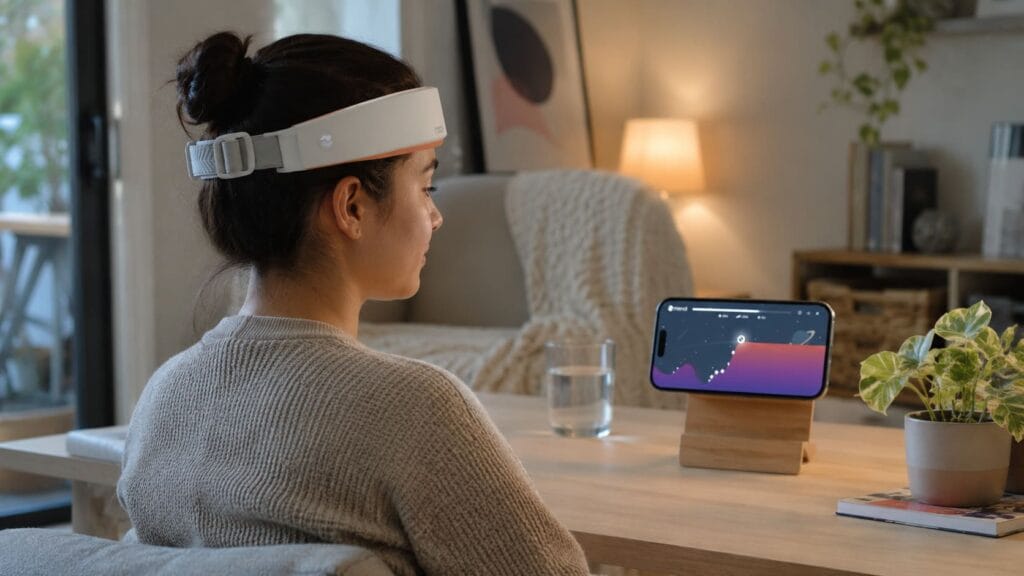
Mendi is better described as a consumer neurofeedback system for brain training, not as clinical neurofeedback therapy.
This is the central question.
Mendi is more credible than many vague brain training products because it is built around a real measurement method: fNIRS. Functional near-infrared spectroscopy is a legitimate technology used to study brain activity through blood oxygenation changes.
But that does not automatically mean every marketing claim should be accepted without question.
The sensible view is somewhere in the middle.
Mendi is not nonsense. It has a clear mechanism: use fNIRS technology to measure changes in prefrontal blood flow and turn that signal into real-time neurofeedback. That is a real and understandable feedback model.
At the same time, Mendi is not a miracle device. It should not be presented as a guaranteed way to fix focus, eliminate stress, or upgrade your brain on command.
The strongest case for Mendi is behavioral. It gives users a structured way to practice focus. It makes the practice measurable enough to stay engaging. It turns attention training into a feedback-based routine.
That may not sound as exciting as “rewire your brain,” but it is more believable.
Mendi vs Traditional Meditation Apps
Many people try meditation apps and quit. Not because meditation is useless, but because the feedback is weak.
You sit down, breathe, listen to a voice, and hope something is happening. For some people, that is enough. For others, it feels vague and frustrating.
Mendi solves part of that problem by making the session interactive. You are still training attention, but you are not doing it blindly. The ball gives you something to respond to.
This does not mean Mendi replaces meditation. It means Mendi may work better for people who need a more active training format.
Traditional meditation asks you to observe your mind. Mendi asks you to regulate your focus while watching feedback. Both can support self-regulation, but they appeal to different personalities.
For pragmatic users, this is one of Mendi’s strongest selling points. It removes some of the uncertainty from mental training. You still need patience, but at least you are not guessing completely.
Can Mendi Help With Stress Control?
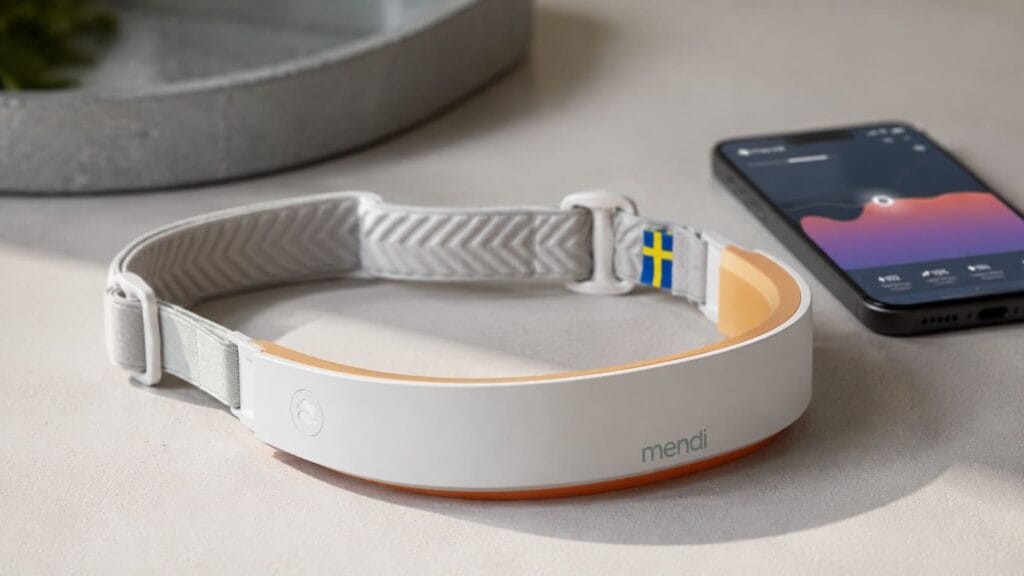
Mendi may help with stress control indirectly by training attention and prefrontal regulation.
Stress is not just a feeling. It affects attention, decision-making, impulse control, and emotional reactions. When stress rises, it becomes harder to stay mentally organized. That is why training focus and emotional regulation can matter.
Mendi does not remove stress from your life. It does not solve financial pressure, work problems, family conflict, poor sleep, or burnout. But it may help you practice the mental skill of returning to a more focused state.
That is a realistic benefit.
The device is best understood as a training tool for self-regulation, not a stress cure. It gives you repeated practice in controlling attention under feedback. Over time, that may support better perceived stress management for some users.
Again, the keyword is practice.
What we could verify
We could verify public product specifications, stated features, pricing or subscription information where available, app or platform details, claimed use cases, and publicly available customer feedback.
What we could not verify
We could not verify long-term comfort, app stability, battery degradation, customer support quality, and real-world durability over months of daily use.
Final Verdict: Is Mendi Worth It?
Mendi is worth considering if you are tired of trying to fix focus with willpower alone.
Most people do not have a focus problem because they are stupid or lazy. They have a feedback problem. They cannot see when their attention is slipping until the time is already gone. They cannot measure the difference between forced concentration and clean control. They keep pushing a tired brain harder and then wonder why it overheats.
Mendi changes the training environment.
It gives you a headband, an app, a simple visual target, and a signal from your prefrontal cortex. That may sound minimal, but minimal is the point. Ten minutes. One ball. One feedback loop. Repeat it enough times, and focus stops being an abstract wish and becomes something you practice.
The strongest reason to buy Mendi is not curiosity. It is cost.
What is the cost of another month of scattered work? Another month of mental noise? Another month of using caffeine, pressure, and late-night panic as your productivity system?
If your brain is your main tool, leaving it untrained is expensive.
Mendi will not make discipline automatic. But it gives you something better than another productivity hack: a way to train focus directly, with real-time feedback, at home.
For people who want practical, non-invasive brain training without mysticism, Mendi is one of the most compelling neurofeedback devices available right now.
If you are ready to stop guessing whether your focus routine is working, this is the point where Mendi becomes worth testing.
CTA

If you want a focus tool that gives you more than motivational quotes and generic meditation timers, Mendi is worth considering. It will not do the work for you, but it gives your brain something most people never get during focus training: a real-time feedback loop.
For readers who want practical, non-invasive brain training at home, Mendi is one of the more interesting fNIRS neurofeedback devices currently available.
FAQ: Mendi, fNIRS, EEG, and Home review Neurofeedback
Is Mendi a non-invasive brain training device?
Yes. Mendi is a non-invasive device, meaning it does not stimulate the brain with electricity and does not require any clinical procedure. The headband uses near infrared light to read changes related to blood oxygenation in the forehead area.
Does Mendi improve brain function?
Mendi is designed to support focus practice and self-regulation, but it should not be described as a guaranteed way to improve brain function for everyone. A more accurate way to explain it is that Mendi gives users a structured way to practice mental effort with measurable signals over time.
Is Mendi the same as neurofeedback therapy?
No. Mendi is better described as a consumer neurofeedback system for home use, not as clinical neurofeedback therapy. Traditional neurofeedback therapy is usually guided by a trained professional, while Mendi is a self-guided product used through an app.
How many neurofeedback sessions do you need with Mendi?
Mendi is built around repeated short neurofeedback sessions rather than one dramatic session. The practical approach is to use it consistently for several weeks and track whether your focus routine feels easier, more stable, and more repeatable.
What is the difference between a neurofeedback headband and an EEG headset?
A neurofeedback headband like Mendi uses fNIRS to monitor changes in blood oxygenation, while an EEG headset measures electrical brainwave activity. This is why FocusCalm and Mendi, Muse and Mendi, or other neurofeedback technologies can feel similar as products but work through different measurement methods.
Does Mendi provide real-time neurofeedback?
Yes. Mendi provides real-time neurofeedback by turning the measured signal into a simple visual task inside the app. The point is not entertainment. The point is to give the user something visible to respond to during practice.
What does “individualized fNIRS neurofeedback training” mean?
Individualized fNIRS neurofeedback training means the session responds to your own measured signal instead of giving every user the same generic exercise. In Mendi’s case, the app reacts to changes detected by the headband during use.
Is Mendi an advanced neurofeedback technology?
For a consumer product, Mendi is an advanced neurofeedback technology because it brings fNIRS-based measurement into a simple home format. That does not make it a medical miracle, but it does make it more concrete than ordinary focus apps that only use timers or reminders.