
Table of Contents
Apollo Neuro review burnout
It is the specific use case examined in this guide. When someone feels deeply depleted, even a simple meditation session, workout, breathing routine, or detailed recovery plan may feel like another task.
Apollo Neuro takes a different approach. Instead of measuring sleep, stress, or heart rate, the wearable delivers programmable vibration patterns through the wrist or ankle. The appeal is low effort: select a Vibe, adjust the intensity, and continue with the day.
That does not make Apollo a burnout treatment. Burnout can involve workload, sleep loss, pain, medical conditions, workplace conflict, caregiving demands, or mental-health difficulties that a wearable cannot resolve.
This research-based review examines whether Apollo may still be useful as a passive routine cue, what the evidence does and does not show, how the current SmartVibes membership affects the real cost, and who should avoid buying it.
Affiliate disclosure: MindReset.org may earn a commission if you buy through our links. This does not increase your price and does not affect our editorial judgment.
Research note: We have not personally tested this product. This guide is based on official product documentation, public research information, subscription terms, user-feedback patterns, and comparison with similar tactile wellness tools.
What we assessed: vibration delivery, setup effort, app dependence, SmartVibes membership, daily-use recommendations, battery life, water resistance, integration with other platforms, buyer fit, hidden costs, and evidence limitations.
What we could not independently verify: long-term comfort, app stability, battery degradation, customer support quality, real-world durability, consistent benefits during burnout, or whether individual changes in HRV, sleep, calm, or focus are caused by Apollo.
Health note: Apollo Neuro is a consumer wellness device. It is not intended to diagnose, treat, or cure burnout, anxiety, depression, insomnia, panic attacks, trauma, autonomic dysfunction, or another medical or mental-health condition.
Availability note: Device price, memberships, trial periods, Vibes, app features, warranties, accessories, and regional availability may change. Check the official offer before purchasing.
Quick Verdict: Is Apollo Neuro Worth Buying for Burnout?
Apollo Neuro may be worth considering when you want a low-effort tactile cue that can run during work, rest, travel, or a wind-down routine.
Its strongest advantage is not diagnosis or tracking. It is simplicity. The device provides gentle vibration patterns without requiring the user to watch a screen, complete a breathing exercise, interpret a dashboard, or actively meditate.
Its main weakness is value. Apollo is expensive for a device that does not directly measure HRV, sleep, cortisol, stress, or brain activity. Current wearables also depend on the SmartVibes membership ecosystem.
Best for: buyers who already understand that the device is a wellness cue, prefer passive tools, dislike headbands or ear-worn devices, and are comfortable with the current membership terms.
Skip it: anyone expecting treatment for burnout, panic, insomnia, anxiety, depression, trauma, or autonomic dysfunction; buyers who want objective biometric tracking; or people unwilling to pay a recurring membership cost.
Apollo Neuro for Burnout: Decision Table
| Buyer need | Is Apollo a fit? | Why | Better alternative |
|---|---|---|---|
| Low-effort physical cue | Potentially | Vibration routines can run without active meditation or screen attention | Basic vibration timer or breathing pacer |
| Burnout treatment | No | Consumer wellness device, not medical care | Clinician, therapist, GP, or workplace changes |
| HRV or stress tracking | No | Apollo does not directly measure biometrics | Heart-rate wearable or HRV sensor |
| Sleep wind-down cue | Possibly | Some users may prefer gentle tactile routines before bed | Sleep mask, sound machine, or screen-free routine |
| No-subscription ownership | Poor fit | Current wearable use is tied to SmartVibes membership | Non-connected tactile or breathing tool |
| Passive use during work | Potentially | Can be worn on the wrist or ankle during ordinary activities | Analog timer or scheduled breaks |

What Apollo Neuro Actually Does
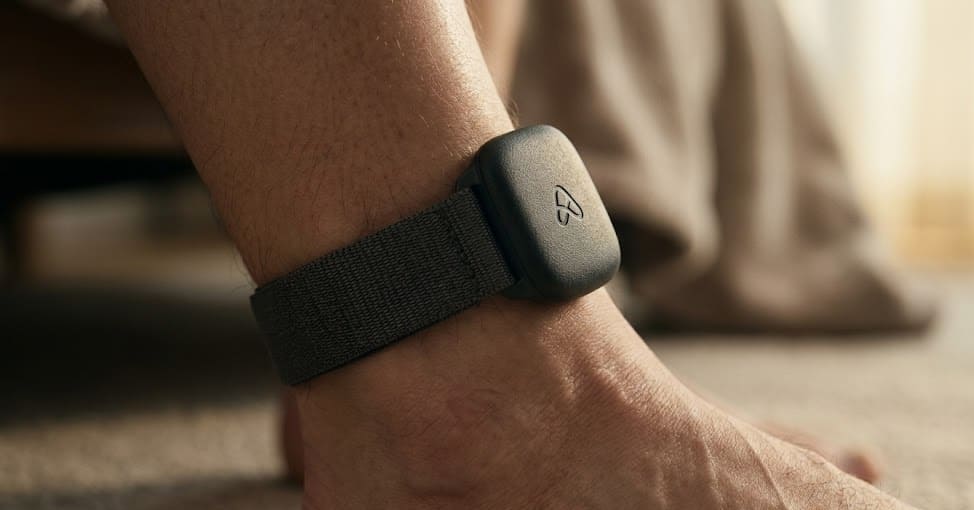
Apollo Neuro is a wearable vibration device. It can be attached to the wrist or ankle and controlled through the Apollo Neuro mobile app.
The app provides goal-based vibration programs, commonly called Vibes. These programs differ in rhythm, intensity, and intended use case, such as relaxation, sleep preparation, focus, energy, or social situations.
The vibrations are physical sensations delivered through the skin. Apollo does not directly measure your brainwaves, cortisol, breathing rate, nervous-system state, or HRV.
That distinction matters. Apollo is not a tracker that detects when you are burned out and automatically proves that your body has recovered. It is an output device that delivers vibration patterns selected through software.
Some users may experience the patterns as grounding, calming, energizing, distracting, pleasant, or barely noticeable. Others may feel little benefit or may dislike the sensation.
Does Apollo Neuro Stimulate the Vagus Nerve?
Apollo should not be described as a direct electrical vagus nerve stimulator.
The device delivers vibration to the skin. It is different from implanted vagus nerve stimulation and different from medical or consumer electrical stimulation devices placed near the neck or ear.
Apollo’s marketing connects soothing touch and vibration with autonomic regulation, but that does not justify claiming that the wearable directly stimulates the vagus nerve, balances the sympathetic and parasympathetic systems, or switches the body from survival mode into recovery mode.
For an electrical neck-wearable comparison rather than tactile vibration, see our Pulsetto buyer review; the safety questions and use case are different.
For a broader comparison of EEG, fNIRS, HRV, and tactile wearables, see our guide to the best neurotechnology devices.
What Does the Research Show?
Apollo publishes research summaries and cites studies examining vibration, HRV, cognitive performance, sleep, and use under stress.
That is more useful than relying only on testimonials, but several limitations remain:
- A physiological change in a small controlled study is not the same as proven treatment for burnout.
- Short-term HRV changes do not establish lasting recovery from chronic workplace or caregiving stress.
- Research on healthy adults cannot automatically be applied to people with depression, panic disorder, trauma, chronic illness, or severe insomnia.
- Brand-funded or brand-reported research should be read alongside study design, sample size, control conditions, and independent replication.
- User-reported sleep or calm improvements do not prove that Apollo caused the result.
The most defensible conclusion is that tactile vibration may influence short-term experience or physiological measurements in some settings. That is not enough to present Apollo as a therapy for burnout or nervous-system dysfunction.
Can Apollo Help When Active Relaxation Feels Like Work?
This is the use case where Apollo makes the most sense.
Some people dislike guided breathing, meditation apps, long journaling sessions, or detailed recovery plans when they already feel overloaded. A tactile wearable asks for less active participation.
You can start a Vibe, reduce the intensity until it becomes subtle, and continue working, reading, resting, or preparing for bed.
That may help create a repeatable cue:
- start the Unwind routine after work;
- use a short Vibe before a difficult meeting;
- pair a tactile session with a phone-free break;
- use a bedtime routine at the same time each evening;
- wear the device on the ankle when the wrist feels distracting.
The benefit may come partly from ritual and consistency rather than a unique therapeutic mechanism. That does not make the routine useless, but it should keep expectations realistic.
Apollo App and SmartVibes Membership
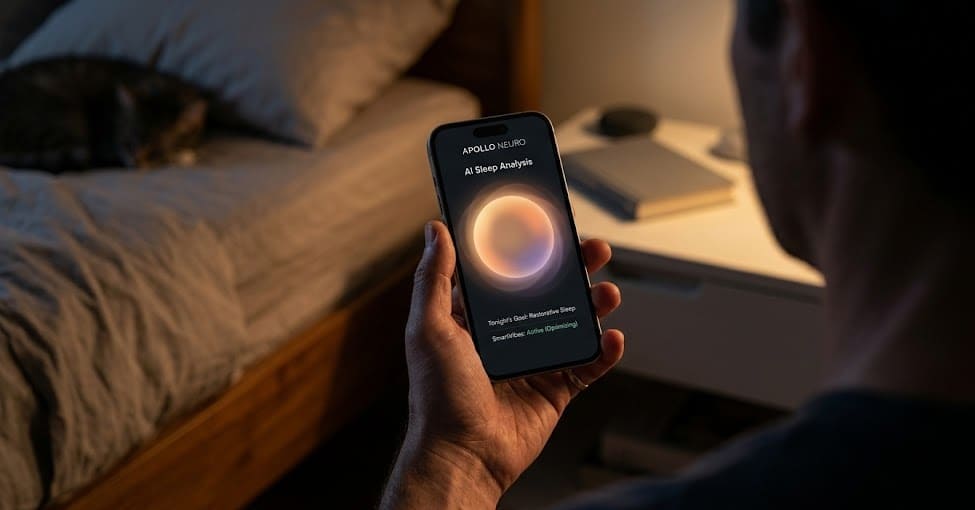
The Apollo wearable is controlled through the Apollo Neuro app. Current versions organize content into personalised recommendations, available Vibes, and instructional sections.
SmartVibes is now a central part of the product. Current official offers bundle the wearable with one year of SmartVibes membership, and Apollo states that current wearables require a SmartVibes membership for use.
This changes the buyer decision. Apollo should no longer be treated as a simple one-time hardware purchase.
Before buying, verify:
- the current annual renewal price;
- which Vibes remain available without an active paid plan;
- whether cancellation must be completed before renewal;
- which app features require iOS or Android compatibility;
- whether the current offer includes a trial or full year;
- whether taxes, duties, or international shipping apply.
AI recommendations should also be treated as software personalization, not medical prediction. The app cannot diagnose burnout, detect panic before it happens, or determine that your nervous system requires a specific treatment.
Can Apollo Neuro Improve Sleep During Burnout?
Apollo includes Vibes intended for evening relaxation and sleep preparation. Some users may prefer a subtle tactile cue to a bright phone screen, spoken meditation, or changing audio track.
However, the device should not be described as slowing your pulse, shutting off racing thoughts, preventing nighttime panic, or helping every user fall asleep and stay asleep.
Sleep disruption during burnout may be connected to workload, pain, medication, alcohol, caffeine, sleep apnea, shift work, anxiety, depression, hormonal changes, or another issue that Apollo cannot identify.
Use Apollo as an optional wind-down cue, not as a replacement for investigating persistent sleep problems.
Battery Life, Water Resistance, and Daily Use
Apollo states that the battery provides at least 12 hours of play time at recommended Vibe and intensity settings, with longer use possible under efficient conditions.
Real-world battery life will depend on intensity, session length, charging habits, temperature, battery age, and software use.
The wearable is water-resistant, not waterproof. Remove it before showering, bathing, swimming, or submerging it in water.
For routine use:
- start with a low intensity;
- increase only until the pattern is clearly but comfortably noticeable;
- keep the device and band clean;
- avoid wearing it over irritated or damaged skin;
- confirm phone compatibility before purchasing;
- keep the magnetic device away from medical equipment that may be affected;
- stop using it if vibration causes discomfort, irritation, dizziness, or another unexpected reaction.
Does Apollo Track HRV or Burnout?
No. Apollo does not directly measure HRV, stress, sleep stages, readiness, cortisol, or burnout.
The app can record usage and may integrate with platforms such as Apple Health or Oura, but that does not prove that changes recorded by another device were caused by Apollo.
For example, a higher readiness score after using Apollo could also be influenced by sleep duration, workload, exercise, alcohol, illness, medication, meal timing, or ordinary measurement variation.
Use another wearable for tracking only when the data genuinely helps your routine. Avoid building a system where Apollo, Oura, Apple Watch, and several apps create more checking, scoring, and decision fatigue.
Hidden Costs and Practical Limitations
- SmartVibes renewal: the current product ecosystem includes an ongoing membership cost.
- Replacement bands: different wrist and ankle sizes may require additional accessories.
- App dependence: setup, Vibe selection, schedules, updates, and recommendations depend on software.
- Battery degradation: runtime may decline over months or years.
- Skin contact: heat, sweat, friction, and band tightness may affect comfort.
- No biometric tracking: a separate device is needed for objective HRV or sleep trends.
- Subtle sensation: buyers expecting a powerful massager may be disappointed.
- Abandonment risk: an expensive wearable has little value when it is no longer used after the first month.
- Expectation risk: strong medical-style marketing can make a modest tactile routine feel disappointing.

Who Should Consider Apollo Neuro?
- People who want a low-effort tactile routine rather than another tracker.
- Buyers who dislike meditation headbands, ear clips, or audio-based exercises.
- Users comfortable wearing the device on the wrist or ankle.
- People who understand that results may be subtle or absent.
- Buyers willing to pay for the SmartVibes ecosystem.
- People who already have realistic plans for workload, sleep, breaks, and professional support.
Who Should Avoid Apollo Neuro?
- Anyone expecting Apollo to treat burnout, anxiety, panic attacks, depression, trauma, or insomnia.
- Buyers who specifically want HRV, sleep, stress, or brainwave tracking.
- People unwilling to maintain a paid membership.
- Users who dislike vibration or skin-contact wearables.
- People with implanted or nearby medical devices that may be affected by magnets without first checking professional guidance.
- Anyone using shopping as a substitute for workload changes, medical assessment, therapy, or adequate rest.
Lower-Cost Alternatives
- A basic vibration timer for scheduled work and rest transitions.
- A visual timer for screen-free focus blocks.
- A white noise machine for unpredictable environmental sound.
- A sleep mask when bedroom light is the main issue.
- A paced-breathing app used without buying new hardware.
- Short outdoor walks and daylight exposure where practical.
- Calendar boundaries, reduced notifications, and defined shutdown times.
- Professional support when exhaustion is persistent or severe.
For the complete commercial comparison, including general pros, cons, subscription costs, and alternatives, read our full Apollo Neuro review.
What We Could Verify
- Apollo Neuro is a consumer wellness device, not an FDA-approved medical treatment.
- The wearable delivers programmable vibration patterns through the wrist or ankle.
- Current Apollo wearables are connected to the SmartVibes membership ecosystem.
- Current official bundles include one year of SmartVibes membership.
- The app supports scheduled and goal-based vibration routines.
- Apollo does not directly track HRV, cortisol, sleep stages, burnout, or brain activity.
- The battery is rated for at least 12 hours of play time at recommended settings.
- The device is water-resistant but not waterproof.
- The wearable contains magnets and should be kept away from medical devices that may be affected.
What We Could Not Verify
We could not verify that Apollo Neuro treats burnout, directly stimulates the vagus nerve, balances the autonomic nervous system, stops panic, slows the pulse, repairs stress damage, or creates a lasting “signal of safety” in every user.
We could not verify that Apollo consistently improves HRV, sleep, emotional exhaustion, focus, or recovery during ordinary long-term use outside controlled research settings.
We also could not verify long-term comfort, app stability, battery degradation, membership value, customer support quality, or real-world durability over months of daily use.
FAQ
Can Apollo Neuro treat burnout?
No. Apollo Neuro is a consumer wellness device and should not be presented as a treatment for burnout. It may serve as a low-effort tactile routine for some users.
Does Apollo Neuro stimulate the vagus nerve?
Apollo delivers vibration through the skin. It is not a direct electrical vagus nerve stimulator and should not be described as equivalent to medical VNS.
Does Apollo Neuro track HRV?
No. Apollo does not directly measure HRV. Users may compare Apollo usage with HRV data from another compatible wearable, but correlation does not prove causation.
Does Apollo Neuro require a subscription?
Current Apollo wearables are tied to the SmartVibes membership ecosystem. Verify the included membership period, annual renewal price, and cancellation terms before purchasing.
Can I wear Apollo Neuro in the shower?
No. Apollo is water-resistant, not waterproof. Remove it before showering, bathing, or swimming.
Is Apollo Neuro useful for sleep?
Some buyers may find its evening vibration routines useful as a wind-down cue. It should not be expected to diagnose or treat persistent insomnia or nighttime panic.
Final Verdict
Apollo Neuro may be useful during burnout as a passive tactile routine, but not as a burnout treatment.
Its main strength is low effort. You can run a subtle vibration pattern while resting, working, travelling, or preparing for bed without completing a complex exercise.
Its main weaknesses are price, membership dependence, lack of direct biometric tracking, and a gap between cautious evidence and much stronger wellness marketing.
Buy Apollo only when you specifically want tactile vibration, understand the SmartVibes costs, and have realistic expectations.
Skip it when the real need is treatment, workload change, medical assessment, therapy, sleep evaluation, or objective tracking.