
Table of Contents
MindReset.org may earn a commission if you buy through our links. This does not increase your price and does not affect our editorial judgment.
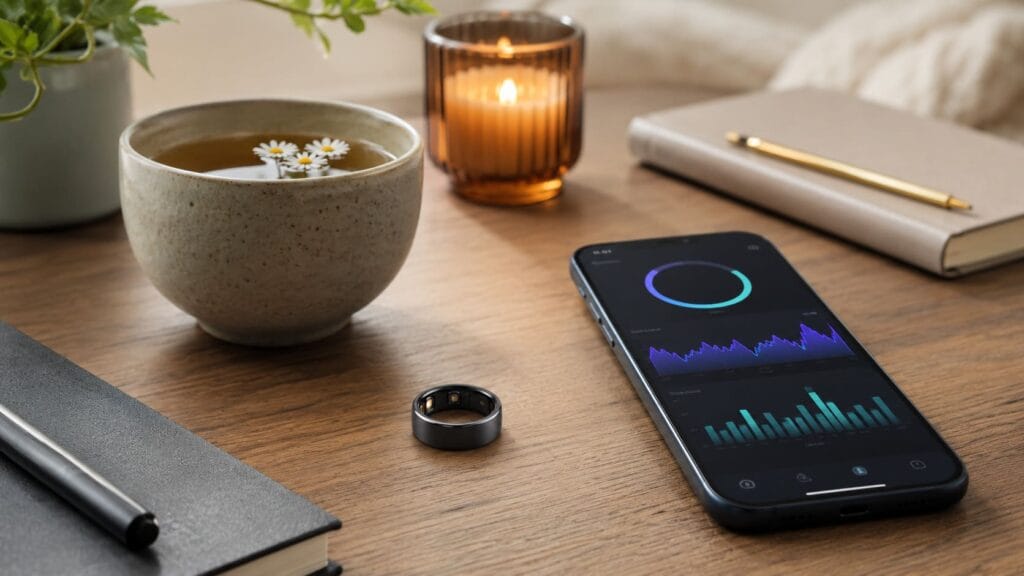
Ultrahuman Ring AIR is one of the strongest Oura alternatives for people who want sleep tracking, HRV trends, recovery insights, and stress awareness without paying a monthly subscription.
It is not a medical device, and it will not fix burnout, insomnia, anxiety, or recovery by itself. Its real value is more practical: it can help you notice how sleep, caffeine, late meals, movement, stress, and routine choices affect your daily recovery patterns.
This research-based review looks at who should buy Ultrahuman Ring AIR, who should skip it, how it compares with Oura, and where the hidden costs or limitations may appear.
Research note: We have not personally tested this product yet. This guide is based on product specifications, public documentation, available research, user feedback patterns, and comparison with similar smart rings and recovery wearables.
Ultrahuman Ring AIR should be used for general wellness awareness only. It is not intended to diagnose, treat, prevent, or manage any disease or medical condition. If you have serious sleep problems, chest symptoms, suspected sleep apnea, persistent anxiety symptoms, or health concerns, speak with a qualified healthcare professional.
Quick verdict
Ultrahuman Ring AIR is worth considering if you want a lightweight smart ring for sleep, HRV, recovery trends, and stress awareness without an Oura-style monthly subscription.
It is best for buyers who want passive tracking, no screen in bed, no recurring membership, and a deeper wellness app than many cheaper smart rings.
It is not the best choice if you want workout GPS, smartwatch features, medical answers, or the lowest possible upfront price.
Best for: no-subscription smart ring buyers.
Skip if: you need serious training metrics, medical-grade sleep answers, or a cheap starter ring.
Who should buy Ultrahuman Ring AIR?
Ultrahuman Ring AIR makes sense if you want a smart ring mainly for overnight tracking and daily recovery awareness.
It is a good fit if you care about:
- sleep duration and consistency
- HRV trends
- resting heart rate
- recovery score
- temperature trends
- caffeine timing
- circadian rhythm prompts
- stress awareness
- screen-free sleep tracking
- no monthly subscription
This is the kind of device that works best when you use the data to adjust your routine. For example, it may help you notice that late caffeine, heavy evening meals, alcohol, inconsistent bedtime, or hard training days affect your next morning recovery score.
If you are still comparing Oura, RingConn, Ultrahuman, Apple Watch, and Garmin, read our full guide to the best smart rings for sleep and recovery before choosing one device.
Who should avoid Ultrahuman Ring AIR?
Skip Ultrahuman Ring AIR if you expect it to solve sleep or stress for you.
You should also avoid it if:
- you want built-in GPS
- you need advanced workout metrics
- you dislike wearing rings
- you want the cheapest possible smart ring
- you already sleep comfortably with Apple Watch or Garmin
- you tend to obsess over health scores
- you want medical diagnosis or treatment guidance
- you do not want to check an app regularly
A smart ring can show patterns. It cannot do the routine change for you.
Ultrahuman Ring AIR is a screen-free consumer wellness wearable that tracks sleep, heart rate, HRV, skin-temperature trends, movement, and recovery-related patterns. Its practical value is pattern awareness. It does not identify “internal distress,” prove that healing is taking place, or explain the medical cause of fatigue or poor sleep.
Ultrahuman Ring AIR vs Apple Watch and Garmin
Ultrahuman Ring AIR is better if your main goal is passive sleep and recovery tracking without wearing a screen to bed.
Apple Watch is better if you want notifications, apps, workouts, calls, music, and full smartwatch features.
Garmin is better if you train seriously and care about running, cycling, endurance, HRV Status, Body Battery, Training Readiness, GPS, and long battery life.
Do not buy a smart ring just because it looks cleaner. Buy it because the form factor fits your real routine.
Hidden costs and limitations
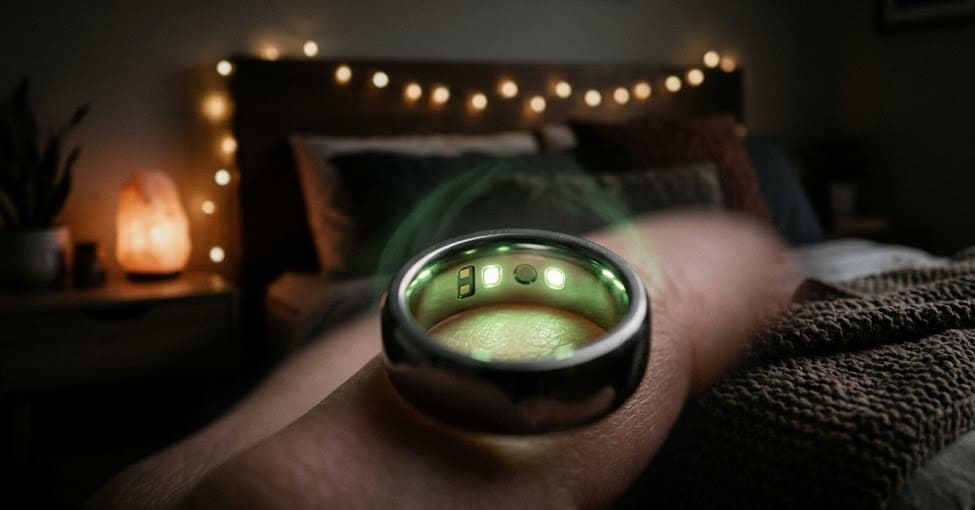
Before buying Ultrahuman Ring AIR, check these points:
1. Sizing mistakes
Wrong size is the easiest way to ruin the experience. Use the sizing kit and test it overnight.
2. Battery degradation
The battery may decline over time, as with any tiny wearable device.
3. Optional ecosystem features
Some advanced app features or connected Ultrahuman services may not be relevant to every buyer. Do not assume you need the full ecosystem.
4. Workout limitations
Smart rings are not ideal for weightlifting, heavy gripping, sports tracking, or GPS-based training.
5. Region and availability
Check whether the product, warranty, returns, and support are available in your region before buying.
6. Health score anxiety
If you know you become anxious about health data, a smart ring may make your mornings worse, not better.
If you want to actively train breathing and HRV instead of only tracking passive recovery data, compare it with a dedicated HRV biofeedback tool like HeartMath Inner Balance.
Design, Comfort, and Battery Life
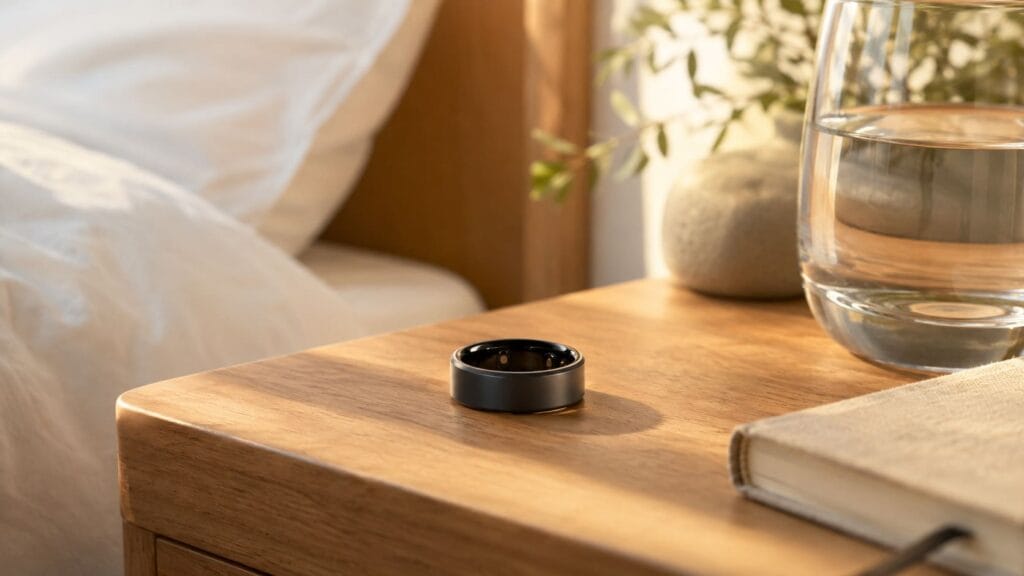
The Ultrahuman Ring AIR is designed primarily for passive, screen-free wear. Ultrahuman lists the ring at approximately 2.4 mm thick and around 2.4 g at its lightest, although the exact feel will depend on size, finger shape, and fit.
The official battery estimate is approximately four to six days under standard use, with around three hours required for a full charge. Battery life varies with settings, temperature, syncing, age, and usage, and Ultrahuman notes that gradual decline can be expected after one to two years.
The titanium exterior has a tungsten-carbide coating, while the inner surface uses a hypoallergenic polymer-based material. These specifications do not guarantee comfort or skin tolerance for every user, so the sizing kit and an overnight test remain important.
Ultrahuman lists water resistance to 100 metres but advises against continuous submersion for more than 30 minutes. The company also recommends removing the ring during intense weight training or when handling heavy metal objects.
Independent reviewers have also highlighted the Ring AIR’s wearability. A TechRadar editor who switched from an Apple Watch said she wore the Ultrahuman Ring AIR every day and would not go back, mainly because the lightweight ring was more comfortable for sleep and provided deeper health insights without a screen on the wrist. TechRadar currently lists Ring AIR as its best smart ring for comfort.
Buyer takeaway: the small form factor is a genuine advantage for overnight tracking, but it still requires charging, careful sizing, and removal during some workouts.

How Ring AIR Uses Skin-Temperature Trends
Ring AIR tracks changes in skin temperature relative to the user’s personal baseline. These changes may coincide with circadian timing, menstrual-cycle patterns, illness, environmental temperature, stress, travel, or recovery.
This is not the same as measuring core body temperature. One elevated reading does not diagnose an infection, hormonal problem, digestive issue, burnout, or poor recovery. The data is more useful when a repeated trend is reviewed alongside sleep, resting heart rate, HRV, symptoms, and context.
Stress Rhythm and Circadian Tracking
Stress Rhythm and Dynamic Recovery combine wearable signals such as heart rate, HRV, sleep, temperature, movement, and the timing of detected stress into proprietary app scores.
These scores can help users compare recurring patterns across workdays, travel, training, and sleep schedules. They are not direct measurements of cortisol, autonomic “dominance,” emotional resilience, or the body’s exact capacity for stress.
| Metric | Useful for | Does not prove |
|---|---|---|
| HRV | Comparing overnight trends with your own baseline | That the nervous system is healed, damaged, or in a specific autonomic state |
| Resting heart rate | Noticing repeated changes during training, travel, illness, or poor sleep | The medical cause of the change |
| Skin temperature | Seeing deviations from a personal baseline | Infection, hormonal imbalance, or burnout |
| Recovery score | Summarising several wearable signals in one app estimate | Whether exercise, work, or rest is medically safe |
Ultrahuman Ring AIR vs Oura Ring 4
Ring AIR and Oura Ring 4 are both premium, screen-free smart rings focused on sleep, recovery, temperature, movement, and cardiovascular trends.
The clearest buyer difference is the subscription model. Oura currently charges $5.99 per month or $69.99 per year in the United States for its full membership experience. Ultrahuman does not require a recurring subscription for access to core Ring AIR data.
That does not mean every future Ultrahuman feature is guaranteed to remain free. Optional PowerPlugs, protection plans such as UltrahumanX, partner integrations, and additional ecosystem products may carry separate costs or terms.
Choose Ring AIR if: avoiding a core monthly membership is the priority.
Consider Oura if: you prefer its more established app experience and are comfortable paying the membership.
Do not choose based only on marketing: sizing, comfort, battery life, app preferences, returns, and regional support matter more in daily ownership.
The Science of the Caffeine Window
Ultrahuman’s Caffeine Window is designed to suggest caffeine timing, personalised cut-off periods, and estimated body-caffeine levels based on app and wearable data.
Treat this as a behavioural prompt, not a measurement of caffeine in the blood. Ring AIR cannot know a user’s exact caffeine metabolism, prove that early coffee disrupted cortisol, measure brain-waste clearance, or determine that a complete caffeine detox is necessary.
For practical food and caffeine ideas without supplement hype, see our brain food for focus guide.
Honoring Non-Traditional Rhythms: Shift Work and New Parents

Ultrahuman offers separate Shift Work and New Parent PowerPlugs that change how the app interprets irregular or fragmented sleep.
The Shift Work PowerPlug adjusts sleep timing and nap interpretation for users who sleep outside conventional hours. The New Parent PowerPlug applies more flexible sleep and recovery thresholds and gives greater weight to naps and fragmented rest.
These modes change the scoring model; they do not remove sleep deprivation, reverse circadian disruption, or guarantee accurate sleep stages. Their value is a dashboard that may feel more relevant to an unconventional schedule.
How to Read the Dynamic Recovery Score
Dynamic Recovery is a proprietary Ultrahuman score that combines several wearable inputs and may update as new data is recorded during the day.
Use it as an estimate and compare trends over time. Do not assume that a higher score proves a walk or meditation added “restorative energy,” or that a lower score validates the need for complete inactivity.
The score may be useful for asking better questions about sleep, training, travel, illness, caffeine, or routine changes. It should not replace symptoms, judgement, medical advice, or practical safety decisions.

Do You Need Ultrahuman Home?
Ultrahuman Home is a separate environmental monitor that tracks factors such as light, air quality, temperature, humidity, and noise. Its data can be viewed alongside Ring AIR sleep and recovery trends.
The useful buyer case is environmental troubleshooting—for example, noticing that a bedroom repeatedly becomes warm, noisy, bright, or poorly ventilated.
Home cannot prove that one environmental reading caused a bad night of sleep, and most buyers do not need to purchase it with the ring. Start with Ring AIR alone unless environmental monitoring solves a specific problem.
How to Use Ring AIR Without Letting Scores Control Your Routine
Use Ring AIR to generate questions, not commands. Review repeated patterns involving bedtime, caffeine, alcohol, meals, travel, training, illness, and work schedules.
Do not use a higher HRV reading or recovery score as proof that grounding, breathwork, supplements, detoxification, vagus-nerve techniques, or another wellness practice has “healed” the body. Wearable metrics can change for many reasons.
The most useful workflow is simple: change one routine, observe several days or weeks, and decide whether the change is practical and consistent with how you actually feel.
What we could verify
We could verify the following from public product information:
- Ultrahuman Ring AIR is positioned as a smart ring for sleep, movement, stress, and recovery tracking.
- It tracks metrics such as heart rate, HRV, body temperature, SpO2, sleep stages, movement, and recovery patterns.
- Ultrahuman states that Ring AIR does not require recurring subscription fees for access to ring data.
- The ring is designed for approximately 4–6 days of battery life under standard usage.
- It is compatible with iOS and Android devices.
- It is made with titanium and a tungsten carbide coating.
- Ultrahuman states that Ring AIR is not a medical device.
What we could not verify
What we could not verify without long-term hands-on testing:
- long-term comfort across different finger shapes
- real-world app stability over months
- battery degradation after one to two years
- customer support quality
- return experience
- scratch resistance in daily use
- accuracy for disrupted sleep
- whether the app insights feel useful or overwhelming
- how well advanced PowerPlug features perform for different users
This is why this review should be treated as research-based, not hands-on testing.
Pros and cons
Pros
- No core monthly subscription
- Lightweight smart ring form factor
- Good fit for sleep and recovery tracking
- Tracks HRV, heart rate, temperature, movement, SpO2, and sleep stages
- More discreet than a smartwatch at night
- Strong Oura alternative for subscription-averse buyers
- Useful for routine awareness
Cons
- Not cheap upfront
- Not a replacement for Garmin or Apple Watch for serious training
- Requires accurate sizing
- Small wearable batteries degrade over time
- Not a medical device
- Some users may find health scores stressful
- App depth may feel too much for buyers who only want simple sleep tracking
FAQ
Is Ultrahuman Ring AIR worth it?
Ultrahuman Ring AIR is worth considering if you want a smart ring for sleep, HRV, recovery trends, and stress awareness without a monthly subscription. It is less suitable if you want serious workout tracking or the cheapest possible ring.
Does Ultrahuman Ring AIR require a subscription?
Ultrahuman Ring AIR does not require an Oura-style recurring subscription for access to core ring data.
Is Ultrahuman Ring AIR better than Oura?
Ultrahuman may be better if avoiding monthly fees is your priority. Oura may be better if you want the most polished and established smart ring ecosystem.
Can Ultrahuman Ring AIR help with burnout?
It may help you notice sleep, HRV, recovery, and stress-related patterns during demanding periods. It does not treat burnout or replace medical or mental health support.
Is Ultrahuman Ring AIR accurate?
It can be useful for tracking trends such as sleep timing, HRV direction, resting heart rate, and recovery patterns. Like all consumer wearables, it should not be treated as a medical-grade device.
Can I wear Ultrahuman Ring AIR while sleeping?
Yes, sleep tracking is one of the main reasons to consider the ring. The main issue is sizing and comfort, so use the sizing kit before buying.
Is Ultrahuman Ring AIR good for workouts?
It can track movement and activity, but it is not the best choice for serious workout tracking, GPS, running metrics, cycling, or heavy strength training. Garmin or Apple Watch is better for that.
What is the biggest advantage of Ultrahuman Ring AIR?
The biggest buyer advantage is the combination of smart ring sleep/recovery tracking and no core monthly subscription.
Final verdict
Ultrahuman Ring AIR is one of the strongest smart rings to consider if you want sleep tracking, HRV trends, recovery insights, and stress awareness without paying a monthly membership.
It is not a cure for burnout, anxiety, insomnia, or poor recovery. It is a screen-free wearable that can help you see patterns and make better routine decisions.
Buy it if you want a no-subscription Oura alternative and you will actually use the data to improve your sleep and recovery habits.
Skip it if you need workout GPS, medical answers, the cheapest ring, or a device that will change your routine without effort from you.
CTA
Check the current Ultrahuman Ring AIR price and sizing options before buying.
Also compare:
- Oura if you want the most polished premium smart ring ecosystem.
- RingConn if you want a lower-cost smart ring.
- Apple Watch if you want a full smartwatch.
- Garmin if training recovery matters more than ring comfort.