Table of Contents
Focus is not only about discipline, apps, or productivity systems. Your brain also needs steady fuel.
If your day runs on sugary snacks, skipped meals, ultra-processed foods, and too much caffeine, even the best focus routine can fall apart by mid-afternoon. Food will not turn you into a productivity machine overnight, but better choices can make deep work easier to sustain.
This guide explains practical brain food for focus: what to eat, what to avoid, and how to build a simple food routine that supports mental energy without turning your life into a strict diet.
Nutrition note: This guide provides general wellness information, not personalised medical or dietary advice. Food choices should be adapted to allergies, health conditions, medicines, pregnancy, dietary restrictions, and individual energy needs. Persistent fatigue, concentration problems, unexplained weight changes, or digestive symptoms should be discussed with a qualified healthcare professional or registered dietitian.
Quick Verdict: Is Brain Food for Focus Worth Taking Seriously?
Yes — but not as a miracle fix.
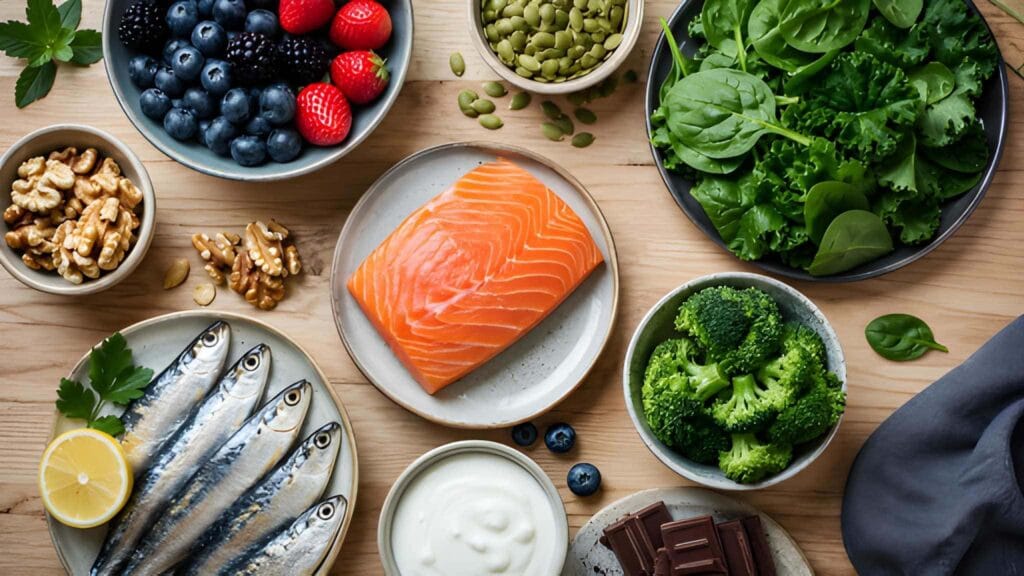
Brain food for focus is not about one magic ingredient. It is about building meals and snacks that support steadier energy, better hydration, healthy fats, protein, fibre, and micronutrients.
Start with simple upgrades:
- fatty fish or plant-based omega-3 sources;
- berries;
- leafy greens;
- nuts and seeds;
- eggs or other protein-rich foods;
- fermented foods if they suit you;
- water instead of constant caffeine;
- fewer high-sugar snacks during deep work.
The goal is not perfection. The goal is fewer energy crashes and a brain that is not constantly fighting poor fuel.
Why Your Brain Needs Better Fuel
Your brain is small compared with the rest of your body, but it has high energy demands. It depends on a steady supply of nutrients and energy to support attention, memory, mood, and decision-making.
That does not mean you need a complicated “brain diet.” It means your daily food choices matter.
A workday built on coffee, pastries, crisps, and late meals often leads to uneven energy. You may feel sharp for a short period, then crash, crave more sugar, or lose patience with tasks that require focus.
A better focus meal usually includes:
- protein;
- healthy fats;
- fibre-rich carbohydrates;
- colourful plants;
- enough fluids;
- lower sugar load.
This creates a more stable base for mental work. Research on brain energy metabolism shows that the adult brain represents about 2% of body weight but uses roughly 20% of the body’s energy.
The Top Brain Foods for Focus
These foods are not magic. They are useful because they fit into a nutrient-dense pattern of eating. Harvard Health lists fatty fish, berries, leafy greens, walnuts, and other nutrient-dense foods among foods linked to better brainpower.
1. Fatty Fish
Fatty fish such as salmon, sardines, trout, and mackerel are rich in omega-3 fatty acids. These fats are important for normal brain structure and function.
If you eat fish, adding it once or twice per week can be a practical upgrade. If you do not eat fish, consider plant-based options such as chia seeds, flaxseed, walnuts, or algae-based omega-3 products.
Best for: people who want a simple protein-and-fat upgrade.
Skip if: you dislike fish or need to avoid it for dietary, allergy, or ethical reasons.
2. Blueberries and Other Berries
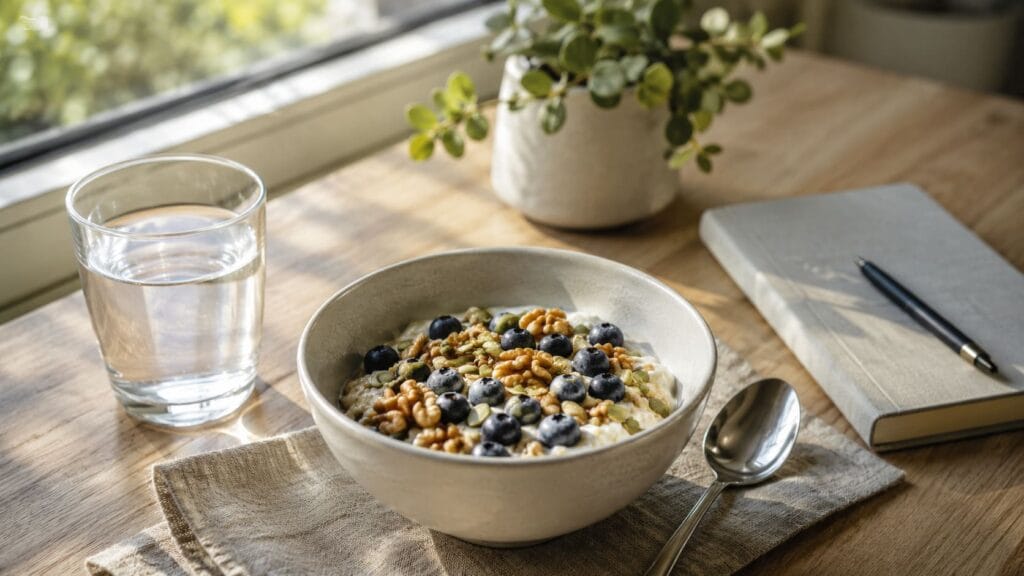
Blueberries, blackberries, raspberries, and strawberries contain polyphenols and antioxidants. They are easy to add to breakfast, smoothies, yoghurt, or porridge.
Berries are useful because they give you sweetness without turning breakfast into a high-sugar dessert.
Best for: smoothies, oats, yoghurt bowls, and light snacks.
Skip if: they trigger digestive issues or you need to manage fruit intake for personal medical reasons.
3. Leafy Greens and Broccoli
Spinach, kale, rocket, broccoli, and other greens add fibre, folate, vitamin K, and plant compounds to your meals.
They are not glamorous, but they are one of the easiest ways to upgrade a poor diet. Add greens to eggs, wraps, soups, smoothies, stir-fries, or lunch bowls.
Best for: people who need a low-cost daily nutrition upgrade.
Skip if: you are on medication or have a medical condition that requires careful vitamin K management.
4. Pumpkin Seeds
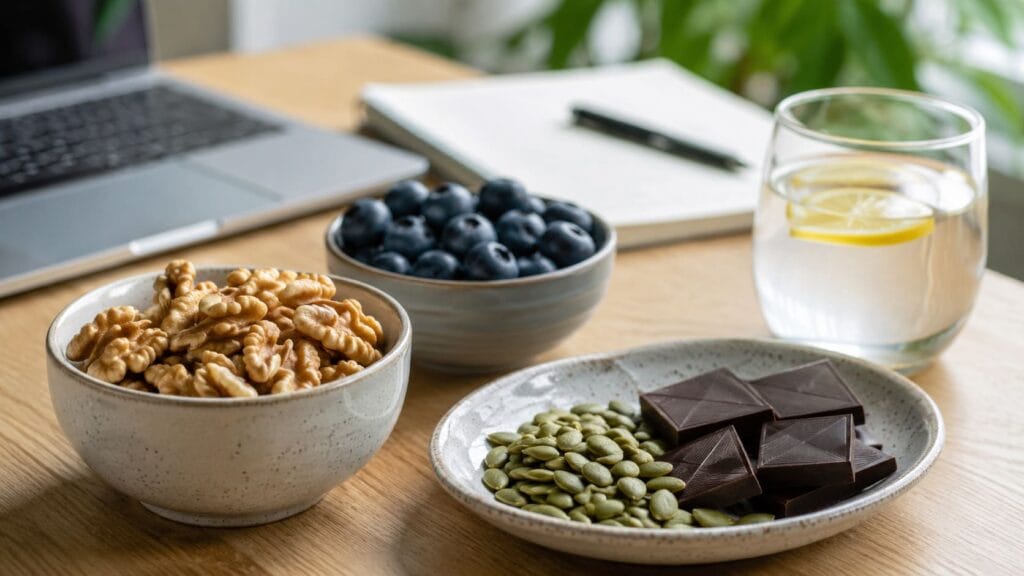
Pumpkin seeds are small but useful. They provide magnesium, zinc, healthy fats, and protein. They work well as a topping for salads, porridge, yoghurt, or smoothie bowls.
They are also easy to store and travel with, which makes them a good desk-friendly option.
Best for: quick snacks and meal toppings.
Skip if: you need to avoid seeds or find them hard to digest.
5. Walnuts
Walnuts are a simple brain-friendly snack because they provide healthy fats, including plant-based omega-3 ALA.
They are not a cure for cognitive decline. But as part of a balanced diet, they are a better snack than biscuits, sweets, or ultra-processed options.
Best for: replacing low-quality snacks.
Skip if: you have a nut allergy or need lower-calorie snack options.
6. Dark Chocolate
Dark chocolate can be useful in small amounts. It contains cocoa flavanols and gives a more satisfying flavour hit than many sugary snacks.
The key is moderation. Choose higher-cocoa dark chocolate and keep the portion small. It should be a focus-friendly treat, not a sugar delivery system.
Best for: replacing a second coffee or afternoon candy.
Skip if: it triggers cravings, reflux, migraines, or sleep problems.
7. Fermented Foods
Fermented foods such as kefir, live yoghurt, sauerkraut, kimchi, and miso may support gut health for some people.
The gut-brain connection is real, but it is often exaggerated online. You do not need to treat your gut as a magic focus switch. Just build meals that are easier on digestion and support a healthier food pattern.
Best for: people who tolerate fermented foods well.
Skip if: they cause bloating, discomfort, or do not fit your diet.
Which Brain Food Should You Try First?
Start with the easiest gap in your current routine rather than trying to add every food at once.
- If breakfast is mostly sugar: add Greek yoghurt, eggs, oats, seeds, or another protein-rich option.
- If you rarely eat omega-3-rich foods: consider lower-mercury fatty fish, walnuts, chia seeds, flaxseed, or an algae-based option that fits your diet.
- If afternoon snacking is the problem: try berries, pumpkin seeds, walnuts, yoghurt, or a balanced snack instead of relying on sweets or another energy drink.
- If lunch causes a heavy slump: reduce the portion size and build the meal around protein, vegetables, fibre-rich carbohydrates, and a moderate amount of fat.
The best first choice is the one that replaces a repeated weak point in your day and is easy enough to maintain.
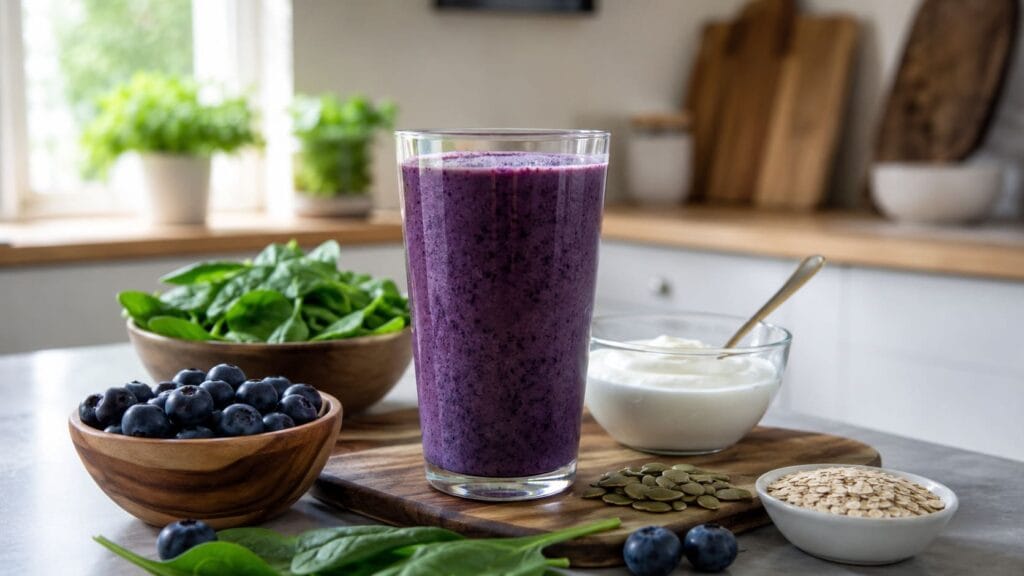
A Simple MindReset Focus Smoothie
You do not need complicated recipes. Start with a simple smoothie or bowl that covers the basics.
Try this:
- one cup of blueberries;
- a handful of spinach;
- one tablespoon of pumpkin seeds;
- Greek yoghurt or kefir if tolerated;
- water or unsweetened milk;
- optional: a spoon of oats for extra fibre.
This is not a magic drink. It is simply an easy way to combine berries, greens, protein, fibre, and seeds without cooking.
If smoothies do not satisfy you, use the same ingredients as a yoghurt bowl or breakfast bowl instead.
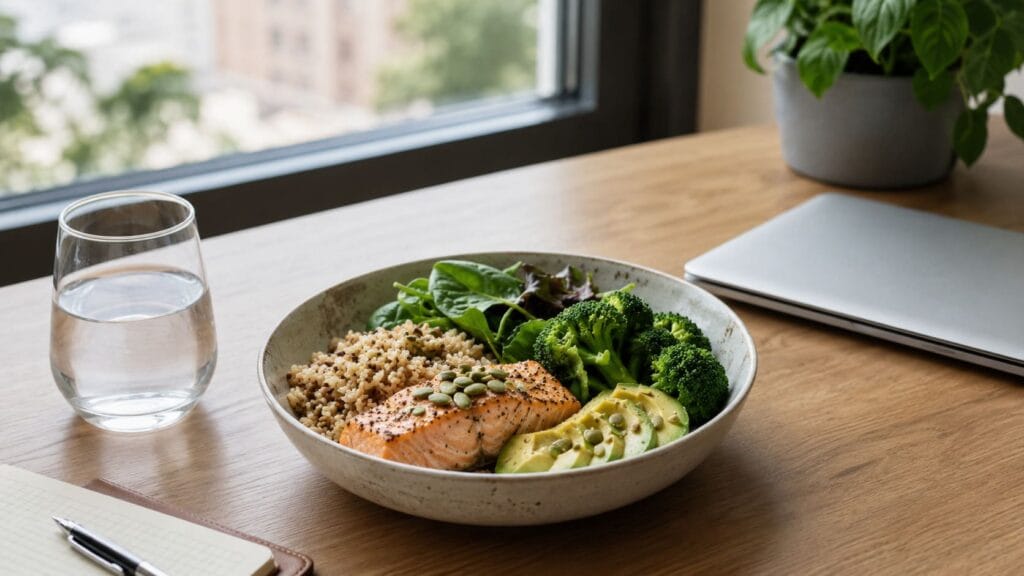
Better Focus Lunch Formula
For workday focus, lunch matters more than most people admit.
A good focus lunch should not leave you heavy, sleepy, or hungry again in 45 minutes. Keep it simple:
Protein + colourful plants + fibre-rich carbs + healthy fats.
Examples:
- salmon, greens, brown rice, olive oil dressing;
- eggs, avocado, spinach, and wholegrain toast;
- lentil bowl with broccoli, pumpkin seeds, and yoghurt sauce;
- chicken or tofu salad with berries and walnuts;
- sardines on wholegrain toast with greens on the side.
The best meal is the one you can repeat without turning lunch into a project. After lunch, a quick brain reset can help you return to work without jumping straight from food into another overstimulating screen session.
What to Skip Before Deep Work
Some foods are fine occasionally but poor choices before demanding mental work.
Be careful with:
- very sugary snacks;
- large heavy lunches;
- ultra-processed foods;
- energy drinks;
- too much coffee;
- alcohol during workdays;
- skipping meals and then overeating later.
The problem is not one biscuit. The problem is a pattern that creates unstable energy and makes focus harder than it needs to be. If your food routine is solid but your attention still gets pulled apart by notifications, compare digital detox tools that create real friction around distracting apps.
What About Supplements?
Start with food first.
Most people do not need to begin with nootropics, expensive powders, or aggressive supplement stacks. If your basic diet is poor, supplements are not the first fix.
A supplement may be useful in specific cases, but that depends on your diet, health status, blood work, medication, and professional advice. Do not use supplements to cover a lifestyle that is built on poor sleep, no movement, and chaotic meals.
Who Should Try This Brain Food Routine?
This routine is a good fit if you:
- work at a desk;
- get afternoon slumps;
- rely too much on caffeine;
- snack heavily during screen work;
- want steadier energy for deep work;
- prefer practical food upgrades over strict dieting.
It is especially useful for remote workers, students, creators, writers, and anyone doing long blocks of cognitive work.
Who Should Be Careful?
Be careful if you have diabetes, food allergies, digestive conditions, eating disorder history, kidney disease, are pregnant, take medication, or follow a medically prescribed diet.
This guide is for general wellness education only. It is not medical nutrition advice. If you have a health condition or persistent fatigue, speak with a qualified healthcare professional or registered dietitian.
Final Verdict
Brain food for focus is not about chasing a miracle ingredient. It is about removing the food choices that make your workday harder and replacing them with simple, nutrient-dense options.
Start small:
Add berries to breakfast.
Use seeds or walnuts instead of sugary snacks.
Eat protein at lunch.
Drink water before more coffee.
Keep dark chocolate as a small treat, not a rescue plan.
Your brain does not need a perfect diet. It needs steadier fuel. For a physical reset between meals and deep work sessions, pair this routine with micro-movements for focus.
Next step: once your food routine is more stable, use that energy to improve single-tasking, reduce multitasking, and build a cleaner deep work routine.