Table of Contents
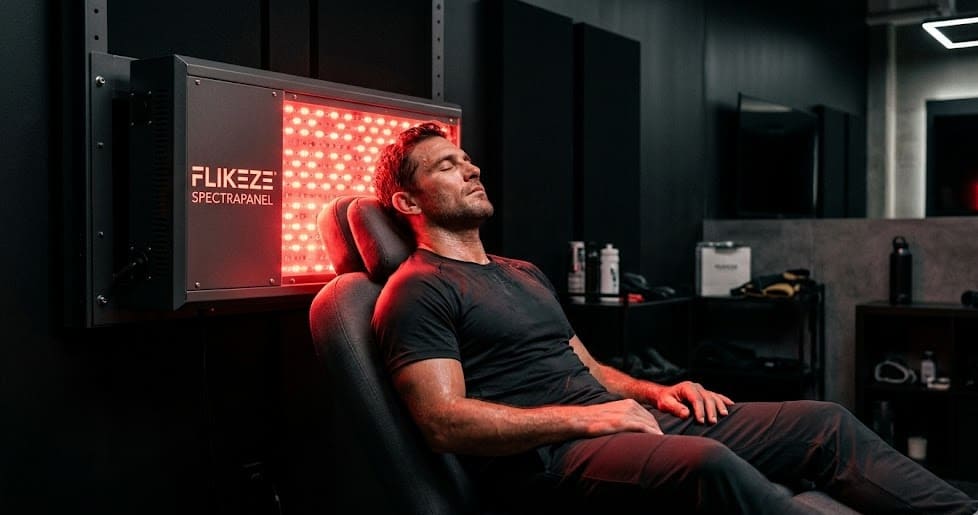
A red light therapy panel for home can provide broad, hands-free light exposure without repeated clinic visits. But panel size, wavelength mix, irradiance, distance, mounting options, eye comfort, and return terms matter more than dramatic claims about “cellular rescue.”
This guide explains how to compare home red light therapy panels, what the main specifications mean, and which Flikeze SpectraPanel series may fit different buyers.
Affiliate Disclosure
MindReset.org may earn a commission if you buy through our links. This does not increase your price and does not affect our editorial judgment.
Research Note and Health Note
Research note: We have not personally tested the Flikeze SpectraPanel models featured in this guide. This research-based review uses current manufacturer specifications, public product documentation, available research, customer review patterns, and comparison with similar light therapy devices at home.
We assessed panel sizes, wavelength combinations, manufacturer-listed irradiance, power consumption, recommended distance, warranty information, advertised customer use cases, and practical buyer limitations.
Health note: Red light and near-infrared light devices are not replacements for diagnosis or medical care. Speak with a qualified clinician before use if you have an eye condition, active skin condition, cancer history, seizure condition triggered by light, unusual light sensitivity, or use medication or skincare products that may increase photosensitivity.
Do not use this guide to self-treat persistent pain, unexplained fatigue, inflammation, mood symptoms, sleep disorders, injuries, or neurological conditions.
Quick Verdict: Should You Buy a Red Light Therapy Panel for Home?
A home panel may be worth buying if you want repeatable red and near-infrared light exposure across a larger area and are likely to use it regularly.
For most first-time buyers, a mid-size panel is the practical balance. It covers more than a portable red light device or LED mask without requiring the space, stand, or higher budget of a full-body red light setup.
Within the Flikeze range, the Basic series is the simplest option, the Pro series adds more red and infrared wavelengths, and the Elite series adds a wider wavelength range plus a separate 460nm blue light mode.
Best for: buyers who want a repeatable home wellness or muscle recovery routine and understand that results depend on the device, dose, distance, consistency, and use case.
Skip if: you expect guaranteed pain relief, treatment of inflammation, a nervous-system reset, or a cure for fatigue, burnout, arthritis, acne, or sleep problems.
Who Should Buy a Home Red Light Therapy Panel?
A red light therapy device may fit your routine if:
- You want broader coverage than a red light mask or handheld device.
- You have enough space to position the panel at the recommended distance.
- You are willing to follow the manufacturer’s session guidance.
- You want separate red light, near-infrared light, or combined modes.
- You prefer home use over booking repeated wellness sessions.
- You want to include light exposure in a post-exercise or body wellness routine.
- You understand that regular use is more practical than occasional, random sessions.
- You accept that research on the benefits of red light therapy is use-case and protocol specific.
The best red light therapy devices are not automatically the most powerful or expensive. The best option is the one that covers the intended area, fits the available space, has understandable controls, and can be returned if the setup does not suit your routine.
Who Should Avoid or Delay Buying One?
Delay the purchase or seek clinical guidance if:
- You are buying primarily to treat a diagnosed medical condition.
- You expect the panel to replace rehabilitation, medication, or medical assessment.
- You have significant light sensitivity or an eye condition.
- You use photosensitizing medication or topical products.
- You cannot confirm whether eye protection is required for your chosen mode.
- You have no practical place to mount, hang, or position a larger panel.
- You are likely to abandon the routine after the first week.
- You are choosing solely from a headline about pain relief or reducing inflammation.
- You feel pressured to buy the biggest model despite needing only a small treatment area.
A red light therapy panel is also the wrong purchase when the real goal is morning bright-light exposure or circadian support. Red and near-infrared panels are not substitutes for daylight or a properly designed bright-light lamp. Our light therapy tools guide explains that distinction.
Best Red Light Therapy Panel by Use Case
| Use case | Best panel type | Why it fits | Skip if |
|---|---|---|---|
| Face, neck, or one small area | Compact 60-LED panel | Lower cost, easier positioning, smaller footprint | You want simultaneous torso or leg coverage |
| Upper body or half-body use | Mid-size 78-LED panel | Better coverage without full-body equipment | You need head-to-toe exposure in one position |
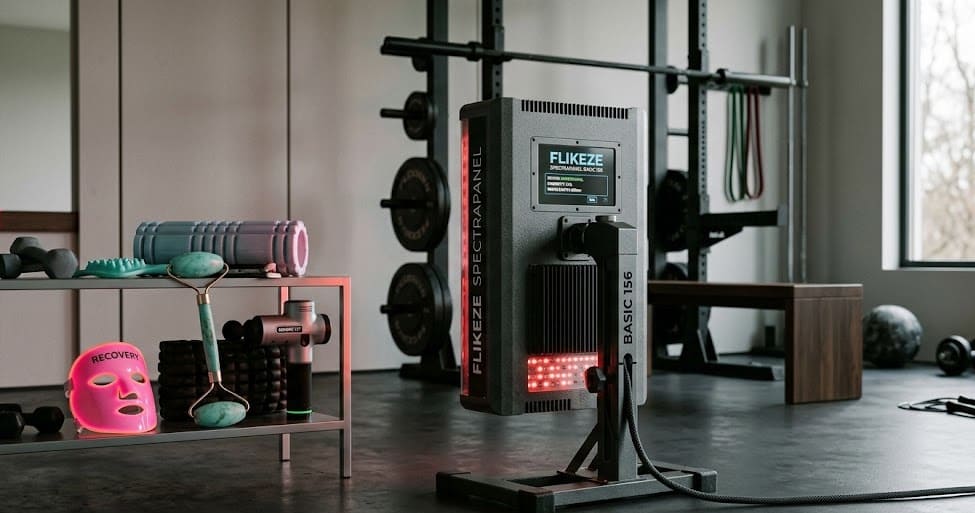
| Full-body red light routine | 156-LED panel | Wider coverage and fewer repositioning steps | You lack floor or wall space |
| Simple red and near-infrared exposure | Flikeze Basic | Uses 660nm red and 850nm NIR without extra modes | You want a broader wavelength selection |
| Four red and NIR wavelengths | Flikeze Pro | Adds 630nm and 830nm to the Basic combination | You only need the lowest-cost setup |
| Maximum mode flexibility | Flikeze Elite | Adds multiple NIR wavelengths and a separate 460nm blue light mode | You do not need blue light or advanced controls |
| Facial skincare only | LED mask or compact panel | Smaller device may be easier to use consistently | You want body or muscle recovery coverage |
| Portable use or travel | Portable red light device | Easier to store and transport | You want broad, even full-body light exposure |
How Red Light Therapy Works — Without the Marketing Hype
Red light therapy, also called photobiomodulation in research settings, uses specific wavelengths of light delivered at a defined intensity, distance, and session duration.
Research explores how red and near-infrared light may interact with cellular and mitochondrial signaling pathways. Proposed mechanisms include changes in cellular signaling, temporary changes in blood flow, and responses involving oxidative stress and energy metabolism.
That does not mean a home panel “forces mitochondria to create energy,” repairs damaged organs, reverses tissue decay, or guarantees recovery. Laboratory mechanisms cannot be converted directly into guaranteed consumer outcomes.
Whether red light therapy works for a particular goal depends on the condition being studied, wavelength, dose, frequency, treatment area, device design, and quality of the evidence.
Red Light vs Near-Infrared Light
Visible red lights are commonly used for skin-focused and surface-level light exposure. Many panels use red wavelengths around 630nm or 660nm.
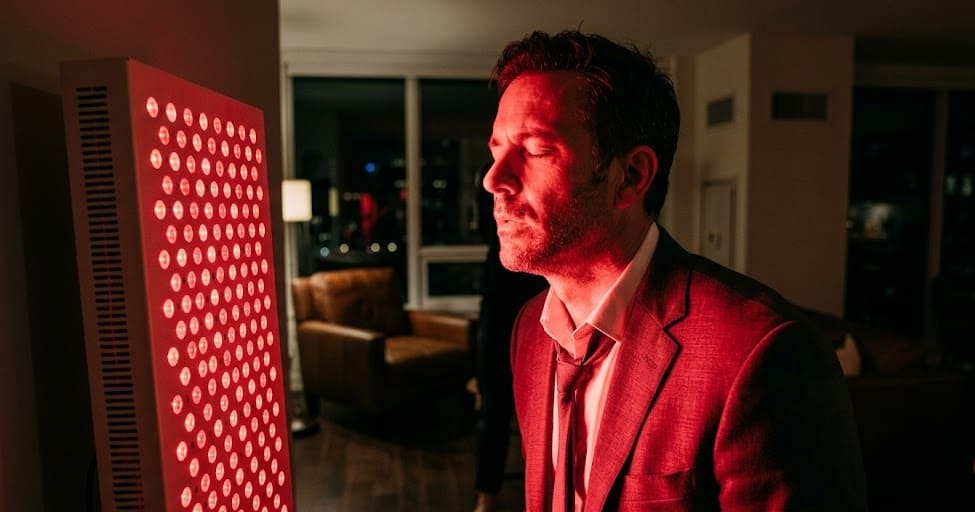
Near-infrared light is invisible to the eye and is commonly included in devices marketed for larger body areas, exercise recovery, and deeper-targeted routines. Common panel wavelengths include 810nm, 830nm, 850nm, and 880nm.
Near-infrared does not travel to one guaranteed depth in every user. Skin, tissue type, distance, irradiance, beam angle, and treatment setup all affect delivered light energy.
| Light range | Common panel wavelengths | Typical buyer use | Main caution |
|---|---|---|---|
| Visible red light | 630nm and 660nm | Skin-focused, scalp, face, and surface-area routines | Do not assume cosmetic or repair results are guaranteed |
| Near-infrared light | 810nm, 830nm, 850nm, and 880nm | Body, muscle recovery, larger-area, and combined routines | Invisible output can still be intense and requires correct use |
| Blue light | 460nm on the Flikeze Elite series | Separate daytime or skin-focused mode | It is not red light therapy and requires its own safety considerations |
What the Research Does Not Prove
Research on photobiomodulation does not prove that every red light therapy panel provides the same result.
It also does not prove that a consumer panel can:
- eliminate brain fog or severe fatigue
- heal the nervous system
- reset the circadian rhythm
- treat arthritis or damaged cartilage
- replace rehabilitation after injury or stroke
- guarantee collagen production or skin repair
- reduce inflammation throughout the body
- produce permanent pain relief
- treat burnout, anxiety, depression, or insomnia
The FDA distinguishes regulated photobiomodulation medical devices from some lower-risk products marketed only for general wellness. A visible external reference is available in the FDA’s photobiomodulation device guidance.

How to Choose a Red Light Therapy Panel for Home
The best red light therapy panel is not determined by one number. Coverage, wavelength mix, usable distance, controls, stand options, warranty, room space, and regular use all matter.
1. Choose the Right Coverage Area
Start with the area you realistically plan to expose.
- Compact panel: face, neck, shoulder, knee, hand, or another targeted area.
- Mid-size panel: upper body, back, abdomen, thighs, or half-body exposure.
- Larger panel: broader full-body red light routines with less repositioning.
A larger panel provides more coverage, but it also costs more, takes up more space, weighs more, and may require a floor stand or secure wall mounting.
2. Check Wavelengths, Not Just LED Count
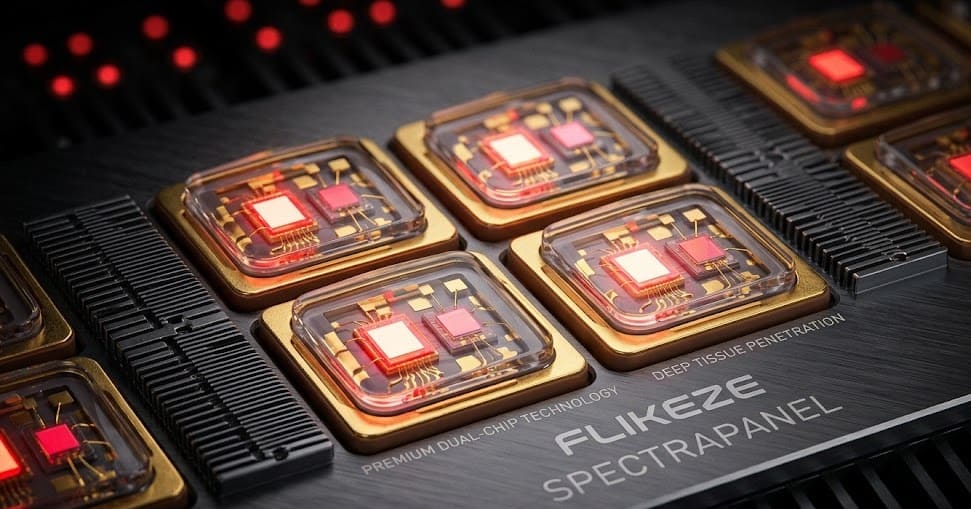
A high LED count does not tell you which wavelengths of light the panel emits or how the output is distributed.
For a basic home setup, 660nm red and 850nm near-infrared wavelengths are common. More advanced panels may add 630nm, 810nm, 830nm, or 880nm.
Additional wavelengths can offer more mode flexibility, but they do not automatically make the panel clinically superior or more effective for every user.
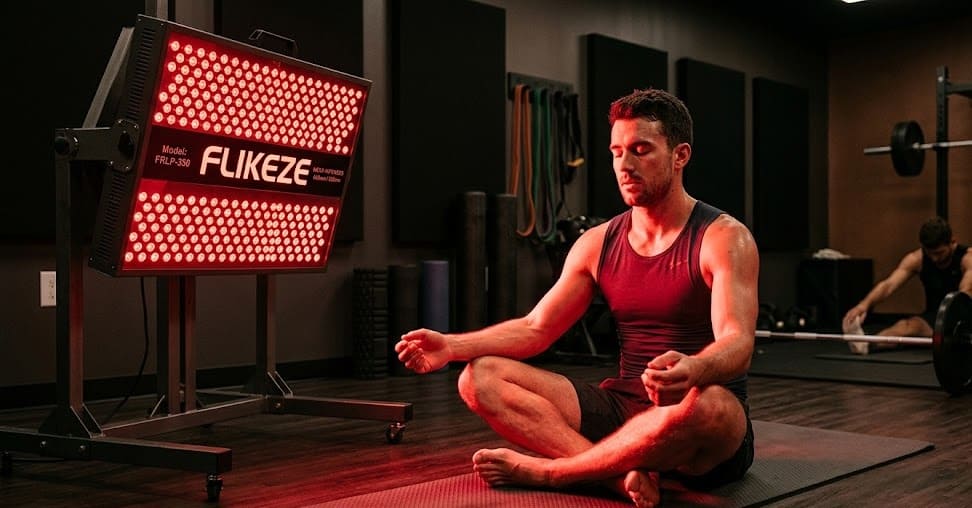
3. Understand Irradiance, Distance, and Dose
Irradiance describes the power reaching a defined area, usually expressed in milliwatts per square centimetre. The figure is meaningful only when the measurement distance and testing method are clear.
A manufacturer may publish a strong reading at six inches, but actual exposure changes as you move farther away. Beam angle, body position, panel size, timer length, and whether red and NIR modes run together can also affect the delivered dose.
More irradiance is not automatically better. Photobiomodulation is often discussed as dose dependent, and using concentrated red or infrared light for longer than instructed does not guarantee a stronger result.
Follow the exact manual for your model. Do not copy a protocol from a different panel with different output.
4. Panel or Mask?
A light therapy mask is designed mainly for facial coverage. A red light panel can cover the face, neck, torso, limbs, or several body areas depending on its size and position.
| Device type | Best for | Main advantage | Main limitation |
|---|---|---|---|
| LED mask | Facial skincare routine | Consistent face distance and hands-free wear | Little or no body coverage |
| Compact panel | Face plus targeted body use | More versatile than a mask | Requires positioning |
| Mid-size panel | Upper or half-body use | Good coverage-to-cost balance | Less portable |
| Full-body panel | Large-area home use | Fewer repositioning steps | Higher cost and space requirement |
| Portable devices | Travel or one small area | Easy storage | Slow for large-area exposure |
Flikeze SpectraPanel Basic vs Pro vs Elite
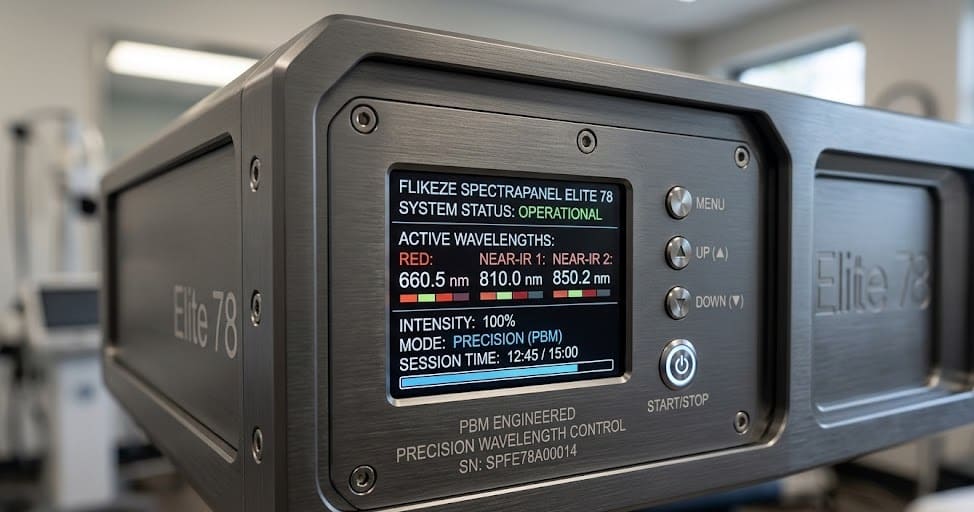
Flikeze currently divides its SpectraPanel range into Basic, Pro, and Elite series. Each series is available in 60-, 78-, and 156-LED formats.
The main differences are wavelength selection and manufacturer-listed irradiance. Panel size determines coverage.
| Series | Wavelengths | Sizes | Manufacturer-listed irradiance at 6 in | Best buyer fit |
|---|---|---|---|---|
| Basic | 660nm red + 850nm NIR | 60, 78, 156 LEDs | 112–151 mW/cm², depending on size | Simple red and near-infrared home use |
| Pro | 630nm, 660nm, 830nm, 850nm | 60, 78, 156 LEDs | 126–157 mW/cm², depending on size | Buyers who want four red and NIR wavelengths |
| Elite | 460nm blue; 630nm and 660nm red; 810nm, 830nm, 850nm, and 880nm NIR | 60, 78, 156 LEDs | 142–163 mW/cm², depending on size | Maximum mode flexibility and a separate blue light option |
These irradiance figures come from Flikeze product pages. We did not independently measure the panels or verify laboratory methodology.
SpectraPanel Basic Series
The Basic series is the most straightforward Flikeze option. It combines 660nm red light with 850nm near-infrared light.
Choose Basic if you want:
- a simpler red and infrared setup
- lower entry pricing than Pro or Elite
- separate red, NIR, and combined modes
- a choice of targeted, half-body, or full-body sizes
Skip Basic if you specifically want 630nm, 810nm, 830nm, 880nm, or blue light.
SpectraPanel Pro Series
The Pro series expands the wavelength mix to 630nm and 660nm red light plus 830nm and 850nm near-infrared light.
It is the middle option for home users who want more wavelength variety without paying for the Elite blue light mode or six red and NIR wavelengths.
MindReset verdict: Pro is likely the most balanced series for buyers who know they want more than the Basic wavelength combination but do not need every Elite feature.
SpectraPanel Elite Series
The Elite series includes 630nm and 660nm red light, four near-infrared wavelengths—810nm, 830nm, 850nm, and 880nm—and a separate 460nm blue light mode.
Blue light is a separate modality. It should not be described as stronger red light therapy, and it does not make Elite necessary for every buyer.
Choose Elite if you want maximum mode selection and understand how you plan to use each wavelength. Skip it when your routine only requires standard red and NIR light.
Which Flikeze Panel Size Should You Buy?
| Panel size | Manufacturer positioning | Practical buyer use | Skip if |
|---|---|---|---|
| 60 LEDs | Face and upper-body coverage | Desk, bedside, face, neck, shoulder, or targeted use | You want broad torso or leg coverage |
| 78 LEDs | Mid or half-body coverage | Back, chest, abdomen, thighs, and general home use | You want full-body coverage with minimal repositioning |
| 156 LEDs | Full-body sessions | Dedicated home gym or recovery area | You lack space, a suitable stand, or a regular routine |
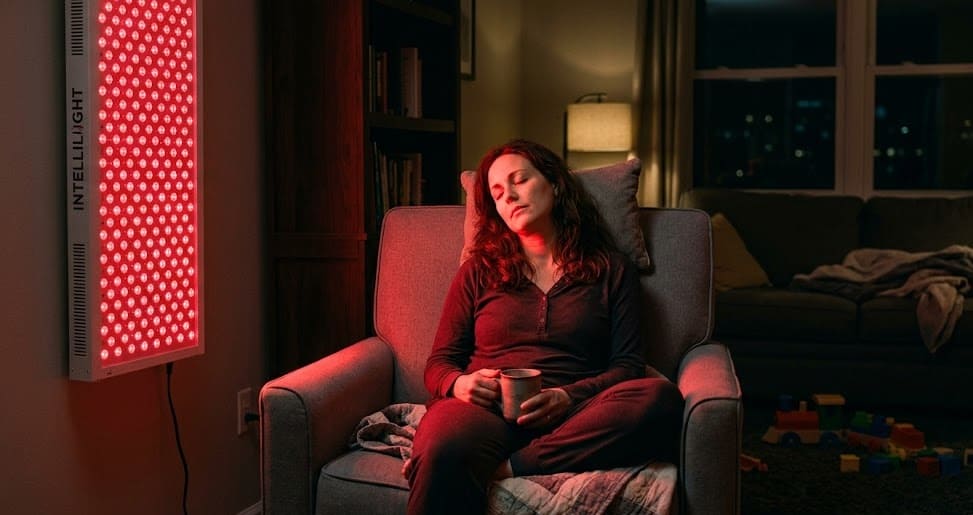
The 78-LED size is likely the safest default for many buyers. It provides more useful coverage than a small panel without the footprint and cost of the largest full-body red light model.
The 156-LED model makes more sense when you already have a dedicated home gym, treatment space, wall position, or compatible stand.
The 60-LED model is the easier entry point for home users who want a targeted light therapy device rather than a permanent full-body setup.
Customer Reviews: What They Can and Cannot Tell You
Customer reviews can help identify practical details such as fan noise, timer usability, panel weight, packaging, controls, stand stability, and how easy the device is to position.
They are less reliable for proving biological or medical outcomes. A review claiming pain relief, better sleep, reduced inflammation, skin repair, or faster muscle recovery does not establish that the device will produce the same result for another user.
We could see customer reviews on Flikeze product pages, but we could not independently verify purchaser identity, long-term use, review collection methods, or whether negative feedback was represented proportionally.
Safety, Eye Protection, and Light Sensitivity

Bright LED light can be uncomfortable even when it is not ultraviolet light. Never stare directly into a red light therapy panel.
Follow the eye-protection guidance supplied with the exact model and mode. Blue light, visible red light, and near-infrared exposure should not be treated as identical.
- Use the manufacturer’s recommended distance.
- Begin with the suggested session time rather than extending it.
- Check whether goggles are supplied or recommended.
- Stop if you experience persistent eye discomfort, headache, skin irritation, dizziness, or unusual symptoms.
- Do not place the panel where children or pets can activate it unsupervised.
- Keep ventilation openings clear.
- Do not use damaged wiring, plugs, stands, or mounting hardware.
- Check medication and skincare warnings for photosensitivity.
- Do not assume “zero flicker” or low EMF guarantees total safety.
A panel used in the comfort of your home still requires the same basic caution as other high-output electrical and light-emitting equipment.
Hidden Costs and Buyer Risks
| Buyer issue | Why it matters | What to check |
|---|---|---|
| Stand or mounting hardware | The included hanging setup may not suit every room | Included accessories and compatible stand cost |
| Floor and wall space | A larger panel can be difficult to position or store | Panel dimensions and safe clearance |
| Return window | A short window limits real-world testing time | Current return conditions before checkout |
| Warranty exclusions | Wear, misuse, accessories, open-box, or unauthorized sellers may not be covered | Original purchase proof and authorized channel status |
| Return shipping | Large panels may be expensive to return | Who pays shipping and possible deductions |
| Regional availability | Voltage, plug type, duties, and delivery terms can differ | Correct country version and checkout total |
| Noise and heat | Cooling fans may affect bedroom or relaxation use | Customer feedback and return rights |
| Eye protection | Goggles or additional shielding may be needed | What is included with the exact model |
| Routine adherence | An unused panel provides no practical value | Realistic location and session schedule |
Flikeze currently advertises a 14-day return policy and a 12-month warranty. Its warranty information says coverage is mainly for manufacturing defects and normal-use malfunctions, while misuse, unauthorized repairs, normal wear, some accessories, unauthorized sellers, and some discounted or open-box products may be excluded.
Return, warranty, shipping, price, and promotional terms may change. Read the current conditions before purchasing.
What We Could Verify
From current Flikeze product and support pages, we could verify that:
- The SpectraPanel range currently includes Basic, Pro, and Elite series.
- Each series is offered in 60-, 78-, and 156-LED sizes.
- Basic models use 660nm red and 850nm near-infrared light.
- Pro models use 630nm, 660nm, 830nm, and 850nm.
- Elite models use 460nm blue, 630nm and 660nm red, and 810nm, 830nm, 850nm, and 880nm near-infrared wavelengths.
- Flikeze publishes irradiance figures measured at six inches.
- The manufacturer recommends a distance of approximately 6–12 inches on the reviewed SpectraPanel pages.
- Flikeze lists cooling systems, multi-chip LEDs, timers, and several light modes.
- Flikeze lists a 12-month warranty and a 14-day return policy.
- Warranty eligibility may depend on purchase channel, proof of purchase, product condition, and type of damage.
Flikeze also displays regulatory and testing references such as FDA, ETL/UL, FCC, CE, and RoHS on its product pages. We did not independently verify what exact registration, listing, test, clearance, or certification applies to every individual panel.
Do not interpret a logo or the phrase “FDA verified” as proof that a product is FDA approved to treat every condition mentioned in marketing.
What We Could Not Verify
Without independent laboratory testing and long-term hands-on use, we could not verify:
- real-world irradiance across the full panel surface
- measurement equipment and test methodology
- actual EMF and flicker readings for each production unit
- long-term LED output and cooling performance
- fan noise in a quiet bedroom or recovery space
- stand durability and mounting stability
- customer support response quality
- warranty and return handling
- the authenticity or completeness of customer reviews
- skin, muscle recovery, pain relief, sleep, mood, or inflammation outcomes
- whether the added Elite wavelengths produce a meaningful advantage for typical home users
- whether the panel will provide meaningful results for any specific medical condition
This is a research-based buyer guide, not a hands-on review or clinical recommendation.
Alternatives to a Full-Body Red Light Panel
A full-body panel is not the only recovery tool for home use.
| Alternative | Best for | Main trade-off |
|---|---|---|
| LED mask | Facial light therapy routine | No meaningful body coverage |
| Portable red light | Travel and targeted exposure | Slow for large areas |
| Infrared sauna blanket | Heat-based relaxation and home sauna routine | Uses heat rather than the same PBM setup |
| Contrast therapy | Alternating hot and cold recovery routine | Requires temperature tolerance and more setup |
| Movement or mobility routine | Low-cost everyday body support | Requires active participation |
| Bright-light lamp | Morning light exposure and seasonal routine | Not a red light or NIR device |
For heat-based home recovery, compare the HigherDOSE infrared sauna blanket. For temperature-based routines, see our contrast therapy guide.
For bedroom and circadian improvements, a sleep-friendly bedroom setup may solve the actual problem more directly than adding a red light panel.
Pros and Cons
Pros
- Broad hands-free exposure compared with portable devices
- Basic, Pro, and Elite options for different budgets
- Three panel sizes in each SpectraPanel series
- Separate red, near-infrared, or combined modes
- Basic series uses a simple 660nm and 850nm combination
- Pro and Elite provide broader wavelength options
- Can fit a home gym or regular wellness routine
- No mandatory subscription
Cons
- No independent MindReset irradiance testing
- Large models require significant space
- Stand or mounting costs may be additional
- Manufacturer claims are not the same as clinical evidence for the exact device
- Short listed return window
- Warranty limitations and possible return-shipping costs
- Blue light on Elite is unnecessary for many buyers
- Results cannot be guaranteed
- Not a replacement for medical treatment or rehabilitation
FAQ
Does red light therapy work at home?
Home devices can deliver red and near-infrared light, but results depend on the exact device, wavelength, irradiance, dose, treatment area, regular use, and goal. Evidence for one clinical protocol does not prove that every RLT home device will provide the same result.
What wavelengths should a home panel have?
Many panels combine 660nm red light with 850nm near-infrared light. Advanced models may add 630nm, 810nm, 830nm, or 880nm. More wavelengths provide more options but do not guarantee better results.
Is a larger panel always better?
No. A larger panel is useful for broad or full-body red light coverage, but it costs more and requires more space. A compact or mid-size panel may be more practical for regular use.
How often should you use red light therapy at home?
Follow the instructions for the exact model. Session frequency should account for irradiance, distance, mode, treatment area, and user tolerance. Do not assume that longer or more frequent sessions are better.
Can a red light panel replace medical treatment?
No. A consumer light therapy panel should not replace diagnosis, medication, physical therapy, rehabilitation, dermatology care, or other professional treatment.
Is an LED mask better than a red light panel?
A red light mask may be more convenient for facial use. A panel is more versatile for the neck, torso, limbs, or full body. The better choice depends on the area you plan to use regularly.
Does higher irradiance always mean better results?
No. Irradiance is only one part of the delivered dose. Distance, time, wavelength, coverage, measurement method, and treatment goal also matter.
Which Flikeze SpectraPanel is best for home use?
Basic is the simplest entry point, Pro offers a balanced four-wavelength setup, and Elite provides the most modes. For many buyers, a Pro 78 or Basic 78 may offer a practical balance of coverage, price, and storage. This is a specification-based conclusion, not a hands-on test.
Final Verdict
A red light therapy panel for home can be a practical wellness device when the buyer chooses the right coverage area and follows a realistic routine.
The Flikeze Basic series is the clearest starting point for simple 660nm red and 850nm near-infrared light. Pro adds a useful broader wavelength mix. Elite offers the most control, but the extra blue light and NIR wavelengths will not justify the higher cost for every buyer.
Buy a compact panel for targeted or facial use.
Buy a mid-size panel for the most practical balance of coverage and room space.
Buy a full-body panel only when you have a dedicated setup and plan to use it consistently.
Skip the purchase if you expect guaranteed pain relief, treatment of inflammation, nervous-system healing, or medical recovery. Those expectations go beyond what we could verify for these exact consumer panels.
Check Flikeze SpectraPanel Availability
Before buying red light therapy equipment, compare the Basic, Pro, and Elite wavelength combinations, choose the required coverage size, confirm included mounting accessories, and read the current return and warranty terms.