A real reset is not only mental. Sometimes your mind feels overloaded because your body has been holding tension for hours: tight shoulders, stiff hips, compressed posture, jaw tension, tired feet, or a lower back that never fully relaxes.
Not as magic fixes. Not as medical treatments. But as practical body-based tools that can help you notice tension, improve comfort, support better posture, and create a calmer recovery routine after long sitting, screen work, training, or stressful days.
The key is choosing the right tool for the right problem. An ergonomic chair solves a different issue than a massage gun. A seat cushion does a different job than a foam roller. A heated back wrap is not the same thing as an acupressure mat.
This guide breaks down 10 practical somatic recovery tools and explains who each one fits, how to use it, and what to avoid.
Why Somatic Recovery Tools Matter
Your body is constantly sending information to your brain.
If your shoulders are tight, your hips are locked, your lower back is irritated, or your posture collapses after hours at a desk, your brain has to keep processing those signals. That can make it harder to focus, relax, or feel grounded.
A body-first reset works from the outside in. Instead of trying to “think yourself calm,” you use pressure, warmth, movement, vibration, stretching, or physical support to make the body feel less restricted and create a more deliberate recovery routine.
Instead of trying to “think yourself calm,” you use pressure, warmth, movement, vibration, stretching, or support to make the body feel less restricted.
That is the practical value of somatic tools. They help create a physical pause. They give your attention a place to land. They can make recovery feel more concrete, especially if meditation alone does not work well for you.
How to Choose the Right Somatic Recovery Tool
Do not buy a tool just because it looks powerful. Start with the actual problem.
If your body feels tense after desk work, look at posture support, neck release, or shoulder recovery.
If your muscles feel tight after training, look at massage tools, foam rolling, or vibration.
If sitting is the problem, improve your chair or seat cushion first.
If you need a calming evening ritual, warmth, pressure, and slower tools may fit better than aggressive massage.
The best somatic recovery tool is the one you will actually use consistently. A premium device that stays in a drawer is useless. A simple cushion, roller, or mat used regularly may do more for your daily comfort.
Affiliate disclosure: MindReset.org may earn a commission if you buy through our links. This does not increase your price and does not affect our editorial judgment. As an Amazon Associate, we earn from qualifying purchases.
Research note: We have not personally tested every recovery tool in this guide. Recommendations are based on public product specifications, manufacturer documentation, general safety guidance, available user feedback, and comparison with similar ergonomic, massage, heat, vibration, and mobility tools.
We could assess the listed product formats, intended use cases, controls, portability, ergonomic features, and published buyer information. We could not independently verify long-term durability, comfort for every body type, battery degradation, operating noise, heat consistency, customer support quality, or real-world results after months of daily use. Prices, availability, product versions, warranty terms, and Amazon listings may change.
Safety note: Somatic recovery tools may support comfort, mobility, relaxation, and body awareness, but they are not substitutes for medical assessment or treatment. Stop using a tool and seek qualified advice if you have persistent pain, injury, numbness, weakness, dizziness, severe symptoms, or a diagnosed condition that may affect safe use.
1. Pranamat ECO: Best Acupressure Mat for Body Awareness
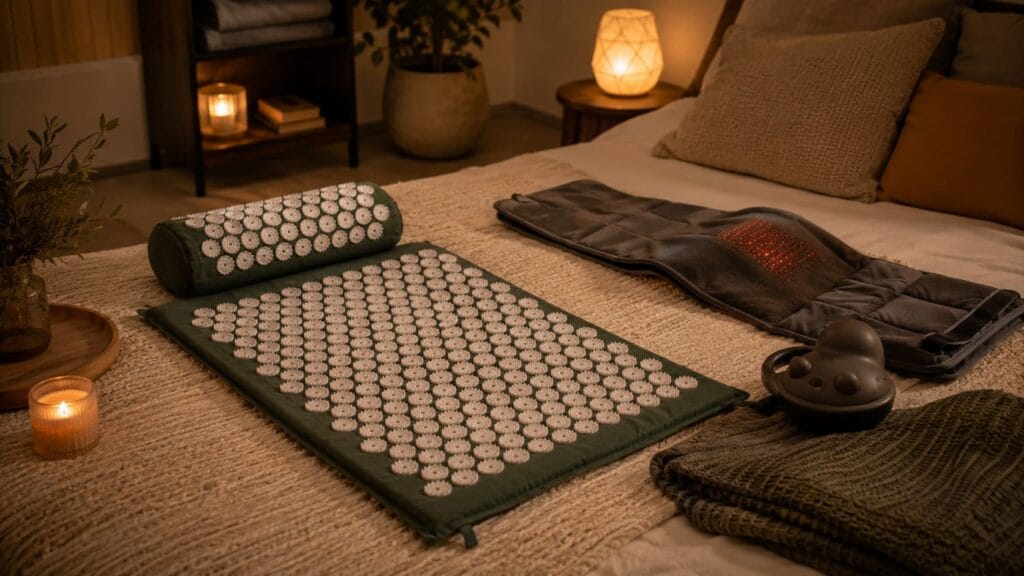
An acupressure mat is one of the simplest body-based reset tools. You lie down, breathe slowly, and let the pressure points create a strong tactile signal across your back, neck, or shoulders.
The point is not to “force” the body into relaxation. A better way to think about it is this: the mat gives your nervous system a clear physical input. That input can help shift attention away from racing thoughts and back into the body.
The Pranamat ECO fits people who want a quiet, non-electronic tool for evening recovery, post-work decompression, or a short reset after screen-heavy days.
Best for
People who like strong physical sensation, body-awareness practices, and slow recovery rituals.
Who should skip it
If you dislike sharp pressure, have sensitive skin, or need a very gentle tool, an acupressure mat may feel too intense. Start slowly and avoid using it on irritated skin.

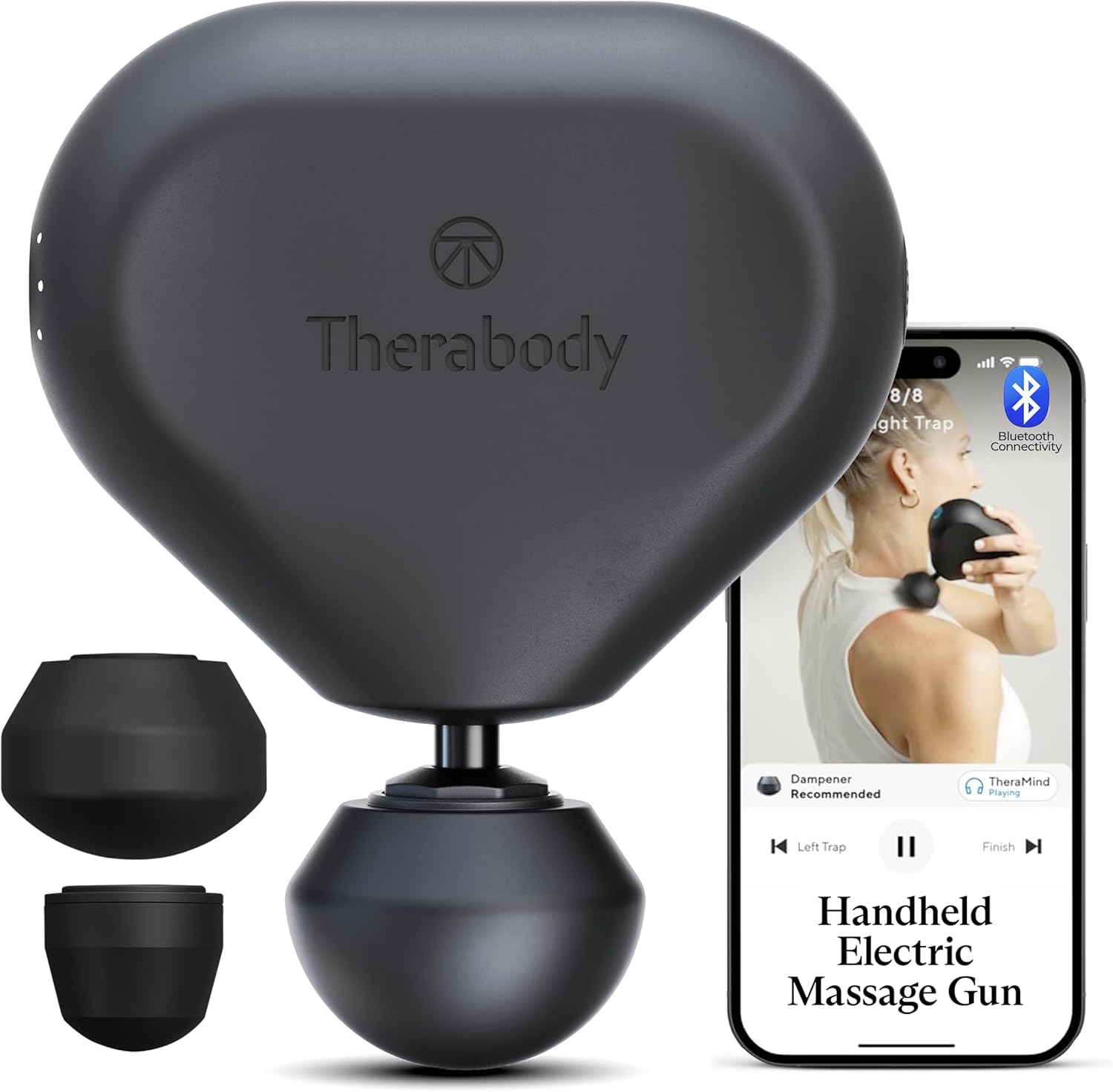
2. Theragun Mini: Best Portable Massage Gun for Quick Muscle Reset
A portable massage gun is useful when you want targeted work on areas that feel tight: shoulders, calves, glutes, quads, or upper back.
The Theragun Mini is a strong fit because it is compact and easier to keep nearby than a full-sized massage gun. That matters. If a recovery tool is easy to grab, you are more likely to use it for two or three minutes instead of waiting until tension builds for days.
Use this kind of tool as a short reset, not a punishment session. More force is not always better. Start light, move slowly, and avoid bony areas, joints, or sensitive spots.
Best for
Desk workers, travelers, gym users, and people who want a portable tool for targeted muscle work.
Who should skip it
Avoid using a massage gun over injuries, swelling, unexplained pain, varicose veins, numb areas, or anywhere it feels wrong. If pain is persistent or severe, get professional guidance.
3. Herman Miller Aeron: Best Ergonomic Chair for Long Desk Sessions
Sometimes the best somatic recovery tool is not something you use after discomfort appears. It is something that prevents your work setup from creating unnecessary discomfort in the first place.
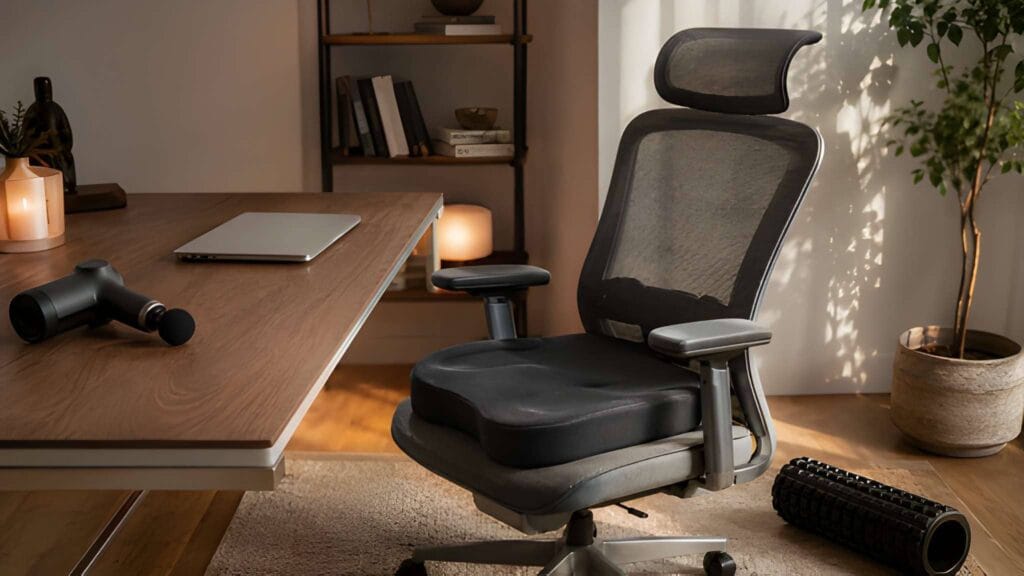
The Herman Miller Aeron is a premium ergonomic chair designed for long desk sessions. It is not a recovery gadget in the usual sense, but it belongs in this list because posture support is one of the biggest missing pieces in many “mind reset” routines.
If your chair is bad, your body has to compensate all day. Your shoulders creep up. Your hips tighten. Your lower back gets irritated. By the evening, you are not just mentally tired — you are physically compressed.
Best for
Remote workers, creators, developers, writers, students, and anyone spending long hours at a desk.
Who should skip it
If you do not sit much, this is not your first priority. Also, no chair fixes poor desk height, bad monitor position, or zero movement breaks. Ergonomics is a system, not only a chair.

4. TriggerPoint GRID Foam Roller: Best Active Recovery Tool
Foam rolling is a more active form of somatic recovery. Unlike a massage cushion or heating wrap, it asks you to move, breathe, and pay attention to what the body is telling you.
The TriggerPoint GRID Foam Roller is useful for larger muscle groups such as calves, quads, glutes, upper back, and lats. It can be a good tool after training, walking, sitting, or travel.
The benefit is not that it “removes stress from fascia” in a dramatic way. The practical benefit is simpler: it gives you a structured way to move slowly, apply pressure, and notice where your body feels stiff or guarded.
Best for
People who want an active recovery tool for mobility, warm-ups, cool-downs, or short body reset sessions.
Who should skip it
If you hate floor-based work, have limited mobility, or find rolling too uncomfortable, this may not be the right first tool. Start gently and avoid rolling directly over joints or painful areas.

5. Chirp Wheel+: Best Back Stretch Tool for Screen-Heavy Posture
The modern desk posture problem is simple: too much folding forward.
Laptop work, phone use, driving, and sitting can all pull the chest, shoulders, and upper back into the same closed position. Over time, that can make the body feel tight and compressed.
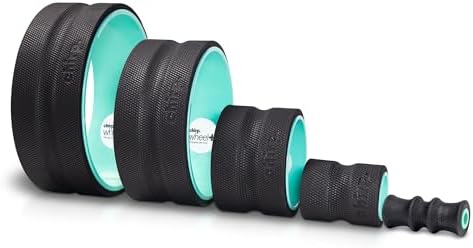
The Chirp Wheel+ is designed to support back stretching in a more targeted way than a basic foam roller. The wheel shape helps guide the spine while you slowly lean back and open the chest area.
This is not something to rush. The best use is slow, controlled movement with steady breathing.
Best for
People who feel stiff through the upper back after screen work, desk work, or long sitting.
Who should skip it
Avoid aggressive back extension if you have spine issues, acute pain, dizziness, or any condition where back stretching is not advised. This is a comfort and mobility tool, not a medical fix.
6. Everlasting Comfort Seat Cushion: Best Simple Upgrade for Sitting Comfort
The Everlasting Comfort Seat Cushion is designed to improve the feel of a hard or uncomfortable chair. For people who work from a basic office chair, dining chair, car seat, or shared workspace, that can make a real difference in day-to-day comfort.
The goal is not to “perfect” your posture. The goal is to reduce unnecessary pressure and make sitting less irritating so your body is not constantly sending discomfort signals while you work.
Best for
Desk workers, drivers, students, remote workers, and anyone sitting for long periods.
Who should skip it
If a cushion changes your seat height too much or makes your desk setup awkward, it may create new problems. Your feet, knees, hips, desk, and monitor still need to work together.

7. Neck Hammock: Best Gentle Neck Decompression Tool
Neck tension is one of the most common body complaints for screen-heavy people. The issue is often not only the neck itself. It is the full pattern: forward head posture, rounded shoulders, shallow breathing, and hours of looking down.
The Neck Hammock gives you a simple way to pause and gently unload the neck area. It is not something to use aggressively. Think of it as a quiet decompression break, not a forceful stretch.
A few calm minutes can be enough for some people to feel more aware of how much tension they were carrying.
Best for
People who want a simple, low-tech reset after computer work, phone use, or travel.
Who should skip it
Do not use neck traction tools if you have neck injury, nerve symptoms, dizziness, instability, recent surgery, or medical concerns around the cervical spine. If you are unsure, ask a professional first.

8. Hyperice Venom 2 Back: Best Heat and Vibration Tool for Lower Back Comfort
The Hyperice Venom 2 Back combines heat and vibration in a wearable back wrap. This makes it useful for people who want a more premium evening recovery tool for the lower back area.
The right angle here is comfort and routine. A heated vibration wrap can be part of a post-work reset, while deeper at-home recovery setups may also include an infrared PEMF mat.
Best for
People who like warmth, rhythmic vibration, and a more passive recovery experience.
Who should skip it
Skip heat-based tools if heat is not recommended for your situation, if you have reduced sensation, active inflammation concerns, or skin sensitivity. Do not sleep with heated devices unless the manufacturer clearly says it is safe.

9. Zyllion Shiatsu Massager: Best Passive Massage Tool for Desk Breaks
A shiatsu massager is the “sit down and let the tool work” option. It is not as precise as a professional massage, but it can be convenient for short breaks at home.
The Zyllion Shiatsu Massager fits people who want a simple massage-style tool for the neck, shoulders, upper back, or lower back while reading, resting, or taking a break from screens.
The key is moderation. Use it as a comfort tool, not as a way to grind through pain. If a spot feels sharp, numb, or irritated, move away from that area.
Best for
People who want passive, easy-to-use massage support without needing to lie on the floor or do active mobility work.
Who should skip it
If rotating nodes feel too intense, or if you have sensitive areas, recent injuries, or medical concerns, choose a gentler tool.

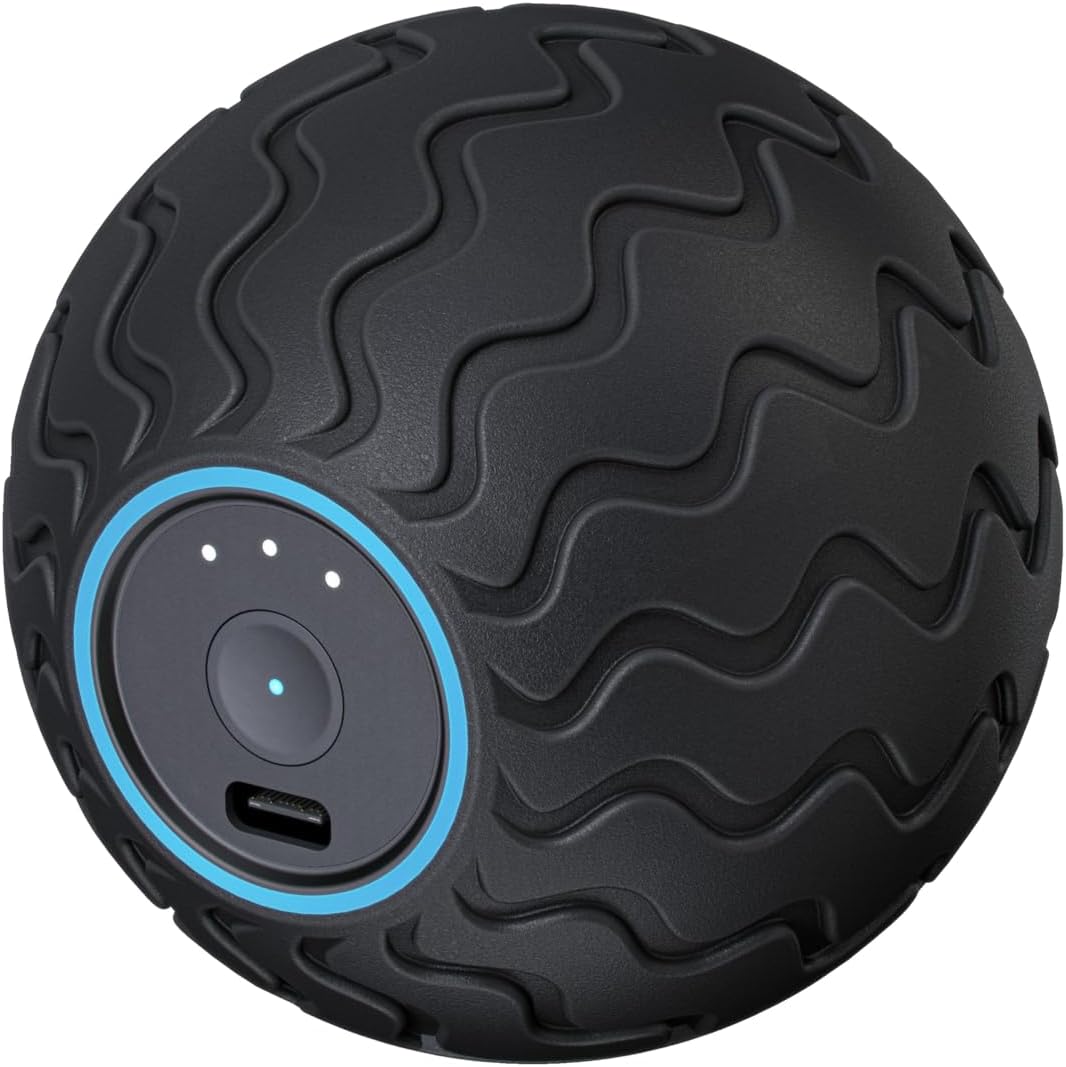
10. Therabody WaveSolo: Best Compact Vibration Ball for Feet, Hips, and Small Areas
A vibration ball is useful when a foam roller feels too large or a massage gun feels too direct.
The Therabody WaveSolo is a compact tool for smaller areas such as feet, glutes, hips, calves, or shoulder areas. It gives targeted vibration and pressure in a format that is easier to position than a full roller.
For many people, the feet are a smart place to start. After a long day of standing, walking, or sitting, rolling the feet slowly can create a grounded, body-aware reset without needing a full routine.
Best for
People who want a compact recovery tool for small areas, travel, foot rolling, and targeted pressure.
Who should skip it
Skip it if vibration feels uncomfortable, you have reduced sensation, unexplained pain, swelling, a recent injury, or need a broader tool for large muscle groups. Avoid pressing it directly over joints, bones, or irritated areas.
How to Build a Simple Somatic Recovery Routine
You do not need all 10 tools. That would be too much.
A better approach is to build a short routine around your main body pattern.
Desk worker reset
Start with posture support during the day. Use the ergonomic chair or seat cushion as your foundation. Add a short neck reset or foam rolling session after work.
Training recovery reset
Use the foam roller, massage gun, or vibration ball after workouts. Keep it short and focused. The goal is not pain. The goal is better body awareness and easier movement.
Evening calm reset
Travel reset
Use portable tools: seat cushion, Theragun Mini, Neck Hammock, or WaveSolo. Travel creates stiffness because the body stays in limited positions. Small tools can make recovery easier without needing a full home setup.
What to Avoid With Somatic Recovery Tools
The biggest mistake is using recovery tools too aggressively.
More pressure is not always better. Longer sessions are not always better. Stronger vibration is not always better.
Your body should feel supported, not punished.
Also avoid turning every sensation into a diagnosis. Tight shoulders after laptop work do not mean something dramatic is happening. Often, the body simply needs movement, better ergonomics, and a calmer routine.
If pain is severe, persistent, spreading, or connected with numbness, weakness, breathing issues, injury, fever, or unexplained symptoms, stop guessing and seek qualified help.
Best First Choice for Most People
If you are not sure where to start, pick based on your main daily problem.
For desk discomfort, start with a better chair or seat cushion.
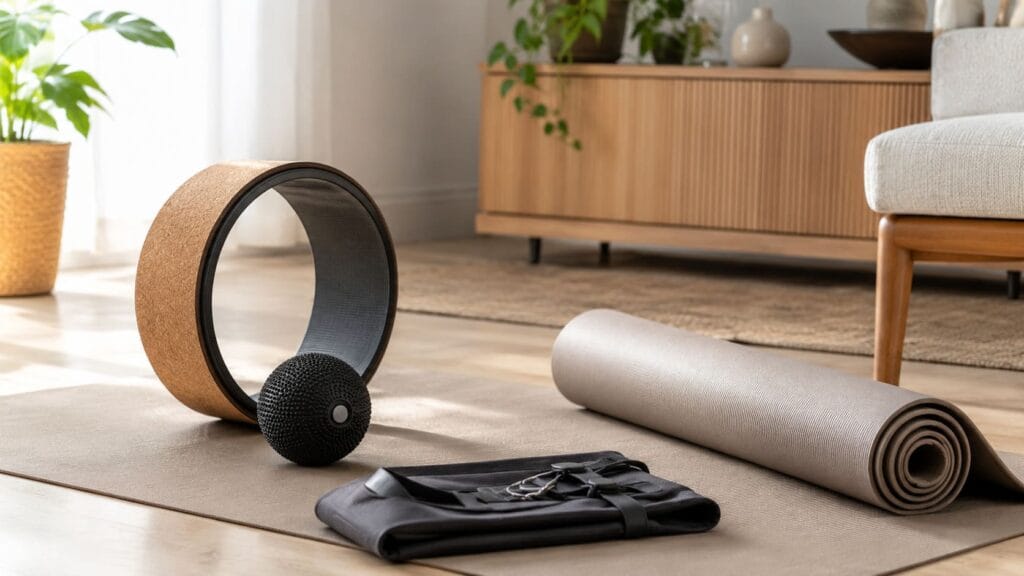
For upper back stiffness, start with a foam roller or Chirp Wheel.
For targeted muscle tightness, start with a massage gun or vibration ball.
For neck decompression, consider a Neck Hammock carefully.
For evening relaxation, start with an acupressure mat or heat-and-vibration wrap.
The best tool is not the most expensive one. It is the one that solves the body signal you keep ignoring.
Final Verdict: Reset the Body Before You Demand Calm From the Mind
Somatic recovery tools work best when you stop treating the body like background noise.
Posture, movement, muscle tension, and physical comfort can affect how easy it feels to work, focus, rest, or maintain a recovery routine during the day.
The right tool can create a practical pause. It can help you shift from thinking to sensing, from tension to movement, from discomfort to better support.
Start with one problem. Choose one tool. Use it consistently.
That is a much stronger strategy than buying random recovery gadgets and hoping your nervous system magically resets itself.