Table of Contents
Female biohacking tools range from smart rings and cycle-tracking apps to cooling wearables, pelvic floor trainers, light-therapy devices, and HRV biofeedback tools. Some can make useful patterns easier to see. Others mainly add cost, anxiety, subscriptions, and wellness marketing.
The right starting point is not the most advanced device. It is the specific problem you want to understand or make easier: inconsistent sleep, cycle awareness, hot nights, guided pelvic floor exercise, screen-free relaxation, or basic activity tracking.
This guide explains what may be worth buying, what is better to skip, and how to choose one useful tool without turning everyday wellbeing into a full-time tracking project.
Affiliate disclosure: MindReset.org may earn a commission if you buy through our links. This does not increase your price and does not affect our editorial judgment.
Amazon disclosure: As an Amazon Associate, we earn from qualifying purchases.
Research note: We have not personally tested every product or service mentioned in this guide. This article is based on current product documentation, available research, public health guidance, user feedback, and comparison with similar wellness tools.
Health note: Consumer wearables and wellness products are not substitutes for medical assessment, contraception advice, fertility care, pelvic health treatment, or menopause care. Seek qualified support for significant pain, unusual bleeding, persistent sleep problems, severe hot flushes, leakage, sexual pain, dizziness, palpitations, or other concerning symptoms.
We could compare tool categories, published features, intended uses, subscription models, and practical buyer limitations. We could not independently verify long-term comfort, app reliability, prediction accuracy, battery degradation, customer support quality, or whether a particular product will improve health or symptoms for an individual user.
Quick Verdict: Which Female Biohacking Tools Are Worth Considering?
Most women do not need a large biohacking setup. One carefully chosen tool is usually more useful than several devices collecting overlapping data.
Best first purchase for sleep and recovery patterns: a comfortable smart ring or smartwatch that you will consistently wear.
Best low-cost starting point: a simple cycle and symptom journal or reputable tracking app.
Best for hot nights or temperature discomfort: improve bedding, airflow, clothing, and bedroom temperature before buying a premium thermal wearable.
Best for guided pelvic floor exercises: a biofeedback trainer may help some users, but pain, leakage, prolapse symptoms, postpartum problems, or sexual pain deserve professional assessment.
Best for a repeatable calming routine: start with free paced breathing before buying an HRV or vibration-based device.
What to skip: hormone-balancing supplement stacks, aggressive detox programmes, universal cycle-syncing rules, unvalidated hormone monitors, and devices claiming to heal the nervous system or fix menopause.
What Does Female Biohacking Actually Mean?
Female biohacking is a marketing term rather than a medical discipline. Used carefully, it can describe a practical process: observe personal patterns, change one routine at a time, and use technology only when it provides information or support that leads to a useful decision.
That may involve tracking sleep consistency, noting cycle-related symptoms, improving thermal comfort, reducing late-night screen exposure, building a breathing routine, or using guided biofeedback.
It should not mean assuming that every woman needs the same cycle-based workout plan, fasting schedule, supplement stack, or recovery protocol. People vary in age, contraception use, cycle regularity, pregnancy status, menopause stage, health conditions, sleep patterns, stress, and personal response.
A useful tool helps answer a clear question. An unhelpful tool creates more scores without changing any decisions.
Female Biohacking Tools Decision Table
| Main use case | Best first option | Why it may help | Skip if |
|---|---|---|---|
| Sleep and recovery patterns | Smart ring or smartwatch | Shows trends in sleep duration, resting heart rate, HRV, temperature, and activity | Daily scores make you anxious or you will not wear it consistently |
| Cycle awareness | Symptom diary or cycle-tracking app | Connects dates with personally reported sleep, mood, discomfort, and energy patterns | You expect it to measure hormone levels or diagnose a condition |
| Fertility or contraception | Clinically appropriate service selected for that exact purpose | Uses defined instructions and intended-use criteria | You plan to rely on a generic period app or wearable prediction alone |
| Hot nights and temperature discomfort | Cooling bedding, fan, breathable sleepwear, or thermal wearable | May make the environment or skin feel more comfortable | You expect it to treat the cause of persistent night sweats |
| Pelvic floor exercises | Guided biofeedback trainer | Provides visual feedback during exercise | You have pain, unexplained symptoms, or need individual treatment |
| Breathing and self-regulation routine | Paced-breathing app or optional biofeedback tool | Makes a short routine easier to repeat | You expect a gadget to treat anxiety or chronic stress |
| Morning routine and seasonal light | Outdoor morning light or appropriately selected lamp | Supports a consistent light and wake routine | You have an eye condition, light-triggered symptoms, or take photosensitising medication without professional advice |
1. Smart Rings and Watches for Sleep and Recovery Trends
Best for: users who want passive sleep and recovery trend tracking
Main limitation: consumer scores are estimates, not diagnoses
Typical costs: device purchase, possible subscription, accessories, and eventual battery replacement
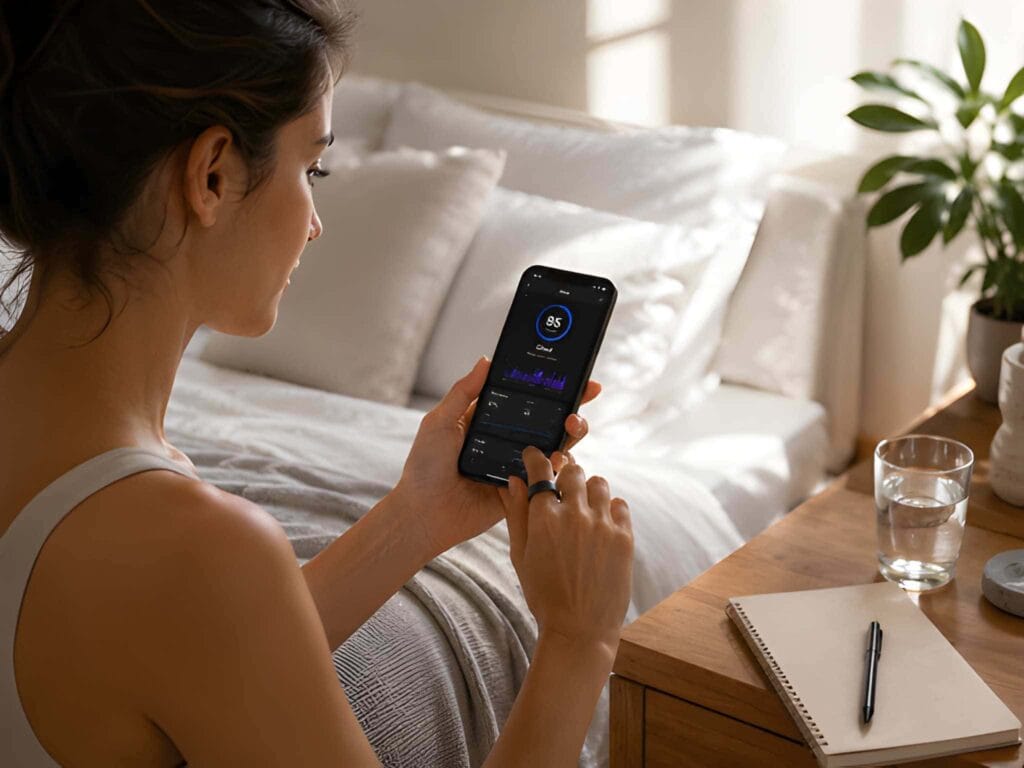
A smart ring or smartwatch can collect sleep duration, resting heart rate, HRV, movement, temperature trends, and other wellness signals. The value comes from repeated patterns—not one morning’s readiness or recovery score.
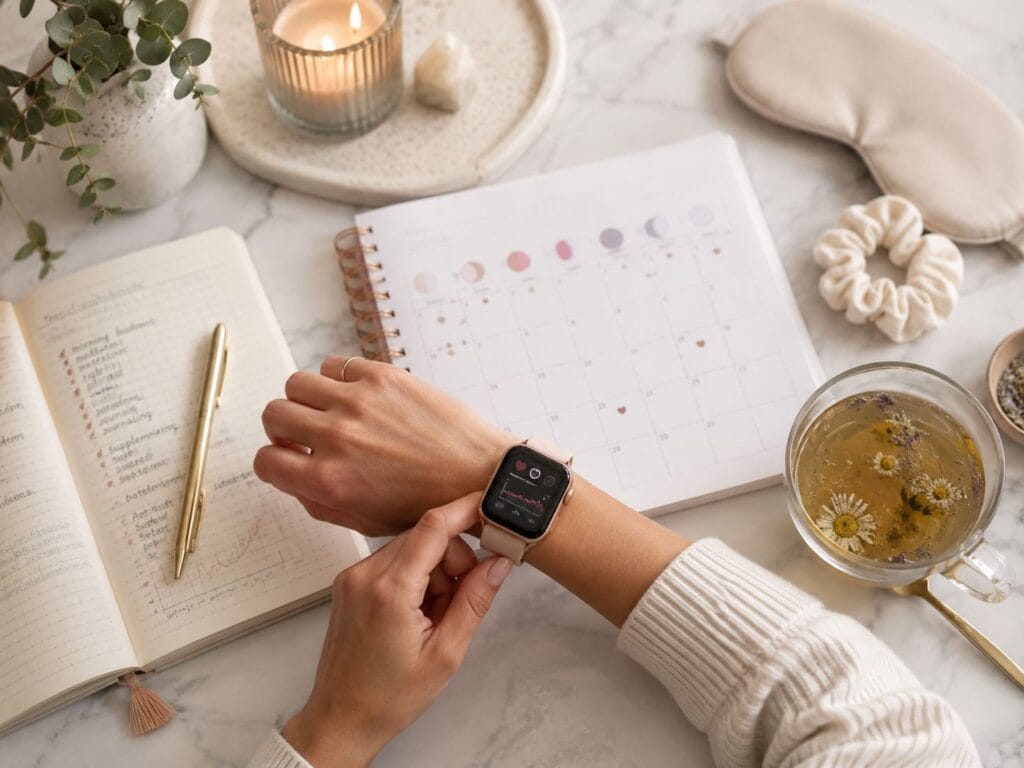
Wearable temperature and cardiovascular data can reflect changes across the menstrual cycle for some users. However, the size and meaning of those changes vary. A ring does not directly measure estrogen or progesterone, and its predicted cycle phase should not be treated as a universal instruction to train harder, eat differently, or cancel plans.
Review trends once or twice per week instead of allowing the device to define how you feel each morning. Useful questions include:
- Is bedtime becoming more consistent?
- Does late caffeine repeatedly coincide with shorter sleep?
- Do temperature or resting-heart-rate changes repeat around similar cycle dates?
- Does the wearable confirm a pattern you can realistically change?
For a lower-cost watch option, see our Amazfit Active research-based review. For a screen-free ring comparison, read Ultrahuman Ring AIR vs Ring PRO.
MindReset verdict: worth considering when you enjoy data and have a clear reason to track it. Skip the purchase when the main attraction is fear of an undetected health problem or the promise of “perfect hormones.”
2. Cycle-Tracking Apps and Temperature Wearables
Best for: recognising personal cycle and symptom patterns
Main limitation: prediction is not direct hormone measurement
Best low-cost option: a simple diary may be enough
A cycle tracker can help organise dates and self-reported symptoms such as discomfort, sleep disruption, headaches, cravings, mood changes, temperature sensations, and energy.
Some wearables add overnight temperature trends, resting heart rate, HRV, and sleep data. These signals may improve period predictions or make recurring patterns easier to notice, but they remain indirect measurements.
Do not assume that a predicted follicular phase means high energy or that a predicted luteal phase requires lower productivity. Use your own repeated observations rather than a social-media cycle chart.
A generic cycle tracker or smart ring should also not be treated as contraception. Fertility and contraceptive decisions require a service specifically intended for that use, suitable eligibility, and exact adherence to its instructions.
Privacy matters. Menstrual, pregnancy, sexual-health, fertility, and symptom information can be highly sensitive. Before entering it into an app, check:
- what data the company collects;
- whether information is shared with advertising or analytics partners;
- how to export and delete the account;
- whether cloud storage is required;
- whether advanced predictions require a subscription.
MindReset verdict: start with a basic symptom log. Upgrade to a wearable only when passive temperature and sleep data will answer a specific question.
3. Thermal Comfort Tools for Perimenopause, Menopause, and Hot Nights
Best for: making heat, cold, or temperature swings easier to manage
Start with: room and clothing changes
Skip if: the product claims to balance hormones or treat menopause
Perimenopause and menopause can involve hot flushes, night sweats, sleep disruption, and changes in temperature comfort. A product may help with comfort without treating the underlying cause.
Begin with inexpensive changes:
- keep the bedroom cooler;
- use breathable, adjustable bedding;
- wear light sleep clothing;
- keep a fan or cool drink nearby;
- note whether alcohol, caffeine, hot drinks, spicy meals, or room heat are personal triggers.
The NHS provides further practical guidance on managing menopause and perimenopause symptoms.
A wrist-based thermal wearable may be worth considering after basic environmental changes when rapid access to warming or cooling sensations is the main use case. It should be judged on comfort, battery life, noise, app requirements, return policy, and whether the sensation is strong enough for the user.
Read our Embr Wave 2 research-based review before paying premium-wearable prices.
MindReset verdict: useful as a comfort tool for some users, not as a hormone treatment. Persistent or disruptive symptoms deserve proper clinical support; established medical and non-medical treatment options are available.
4. Pelvic Floor Biofeedback Trainers
Best for: guided exercise and visual feedback
Main limitation: the device cannot determine the correct exercise plan for every symptom
Skip self-treatment if: exercise causes pain or worsens symptoms
Pelvic floor trainers use sensors and an app to provide feedback during muscle contractions. The main advantage is visibility: users can see whether the device detects a contraction and follow structured exercise sessions.
The main risk is assuming that every pelvic floor problem needs stronger contractions. Some users may need relaxation, coordination, breathing work, or an individually assessed programme rather than repeated squeezing.
Seek qualified pelvic-health support when symptoms include pain, heaviness, a bulging sensation, persistent leakage, difficulty emptying the bladder or bowel, postpartum complications, or pain during sex.
For product costs, privacy, app use, and buyer limitations, read our Perifit Care research-based review.
MindReset verdict: potentially useful for motivated users who want guided feedback and already understand what type of exercise is appropriate. Not a substitute for assessment when symptoms are significant or unclear.
5. Breathwork, HRV, and Biofeedback Devices
Best for: making a short breathing or relaxation routine more structured
Start with: a free timer or paced-breathing app
Skip if: the device is marketed as treatment for anxiety, trauma, or nervous system dysfunction
Breathing tools, HRV biofeedback devices, and tactile wearables may help some users repeat a short routine more consistently. Their value is behavioural: the product provides timing, feedback, or a physical reminder.
A device is not required. Try a simple routine first:
- Sit comfortably.
- Breathe gently without taking unusually large breaths.
- Allow the exhale to be slightly longer than the inhale if comfortable.
- Continue for two to five minutes.
- Stop if you feel dizzy, uncomfortable, or short of breath.
A paid tool becomes easier to justify when the free routine works but reminders, app guidance, or measurable feedback would improve consistency.
Our Apollo Neuro research-based review examines the device as an optional tactile routine tool rather than a treatment.
MindReset verdict: optional, not essential. Buy for routine support, not for claims about vagus stimulation, emotional healing, cortisol control, or automatic nervous-system regulation.
6. Light and Sleep-Environment Tools
Best for: strengthening a consistent morning and evening routine
Start with: outdoor morning light and reduced evening brightness
Main risk: buying an expensive lamp before fixing basic timing and screen habits
Light exposure is part of the sleep-wake routine, but “female light biohacking” does not require a unique hormonal protocol.
Start with practical steps:
- seek outdoor light after waking when practical;
- keep wake time reasonably consistent;
- reduce unnecessary brightness late in the evening;
- avoid using a bright screen as the only light source in a dark room;
- make the bedroom cooler, darker, and quieter where possible.
A lamp or sunrise alarm may be useful when dark mornings, work schedules, or room design make natural light difficult. Light therapy deserves extra caution for people with eye conditions, bipolar disorder, migraine or light sensitivity, or medications that increase photosensitivity.
For broader room changes, use our sleep-friendly bedroom setup guide.
MindReset verdict: improve timing and the environment first. Purchase a device only when there is a clear gap that ordinary light exposure cannot solve.
Which Female Biohacking Products Should You Skip?
The most expensive mistakes usually promise control over complex biological processes without showing how the product measures or changes them.
| Product or claim | Why to be cautious | Better first step |
|---|---|---|
| Hormone-balancing supplement stacks | “Balance” is rarely defined, ingredients may interact with medication, and the product may distract from proper assessment | Discuss significant symptoms with a qualified professional |
| Detox teas and aggressive cleanses | Often rely on laxative, diuretic, or vague liver-cleansing language | Regular meals, hydration, fibre, and evidence-based care |
| Universal cycle-syncing programmes | Assume every user follows the same energy, mood, and performance pattern | Track personal patterns before changing routines |
| Extreme fasting plans | Can become difficult to sustain and may be unsuitable in several health and life situations | Use a normal eating pattern suited to personal needs and professional advice |
| Unvalidated home hormone monitors | May provide impressive charts without clinically useful interpretation | Use appropriate medical testing when hormone assessment is genuinely needed |
| “Nervous system healing” wearables | Turn ordinary vibration, sound, heat, or breathing guidance into unsupported treatment claims | Judge the product on comfort, routine support, and verified features |
| Anti-ageing protocols aimed at women’s fear | Often package normal ageing and menopause as failure | Prioritise sleep, strength, nutrition, preventive care, comfort, and realistic goals |
Hidden Costs, Privacy, and Subscription Risks
The purchase price is only part of a female wellness tool’s cost.
- Subscriptions: advanced cycle, sleep, coaching, or trend features may require monthly payment.
- Accessories: sizing kits, replacement chargers, straps, cases, gels, probes, or consumables may cost extra.
- Battery degradation: rings and small wearables often have sealed batteries that cannot be replaced by the user.
- App dependence: a useful physical device may lose value if the company closes, changes the app, or moves features behind payment.
- Sensitive data: cycle, pregnancy, fertility, sexual-health, menopause, and symptom information deserves careful privacy review.
- Returns: intimate products may have stricter return rules once opened.
Before buying, confirm the subscription, return window, warranty, regional app availability, battery policy, data deletion process, and whether the advertised feature is available now rather than “coming soon.”
Who Should Buy a Female Biohacking Tool?
A tool may be worth considering when you:
- have one clearly defined use case;
- will use the device or app consistently;
- understand that trends are estimates rather than diagnoses;
- know what action you will take when a pattern appears;
- have checked subscriptions, privacy, return terms, and hidden costs;
- are comfortable ignoring an occasional poor score.
Who Should Avoid or Delay the Purchase?
Delay the purchase when you:
- are seeking an explanation for concerning medical symptoms;
- expect the product to fix hormones, fertility, menopause, anxiety, or sleep disorders;
- already feel compelled to check health data repeatedly;
- do not know which problem the device is supposed to solve;
- cannot afford the subscription or eventual replacement cost;
- are buying mainly because an influencer described normal body changes as dysfunction.
A Simple 7-Day Test Before Buying Anything
Before spending money, collect one week of basic information using paper or a free note app.
- Day 1: Write down the single problem you want to solve.
- Day 2: Record bedtime, wake time, and how rested you feel.
- Day 3: Note relevant cycle, temperature, comfort, or pelvic symptoms without trying to interpret them.
- Day 4: Try one free change, such as outdoor morning light, a cooler bedroom, or two minutes of paced breathing.
- Day 5: Identify one trigger or friction point that appeared more than once.
- Day 6: Check whether a product would genuinely reduce that friction.
- Day 7: Choose one tool, continue with free changes, or seek appropriate professional support.
The goal is not to diagnose yourself in seven days. It is to prevent a vague wellness concern from becoming an unnecessary purchase.
What We Could Verify
- Wearable sensors can record temperature, heart-rate, HRV, sleep, and movement trends that may change across the menstrual cycle.
- Consumer wearables estimate patterns indirectly and do not directly measure reproductive hormone levels.
- Current Oura women’s health features include cycle, pregnancy, and menopause-related insights and integrations with other apps.
- Menopause and perimenopause can involve hot flushes, night sweats, sleep difficulties, and mood or concentration changes.
- Cooling the bedroom, using lighter clothing or bedding, and identifying personal triggers are recognised comfort strategies.
- Consumer wellness tools are not replacements for individual medical, fertility, pelvic-health, or menopause care.
What We Could Not Verify
- that universal cycle-syncing schedules improve performance or wellbeing for all women;
- that a wearable can accurately determine estrogen or progesterone levels without appropriate testing;
- that recovery scores identify the correct workout, diet, or work schedule for an individual;
- that thermal wearables treat menopause symptoms rather than provide temporary comfort;
- that a pelvic floor device is appropriate for every pelvic symptom;
- that a biofeedback or vibration device treats anxiety, trauma, burnout, or nervous system dysfunction;
- that supplement stacks marketed for women provide reliable “hormone balance.”
Final Verdict: Start With the Problem, Not the Product
The best female biohacking tool is not automatically a smart ring, hormone monitor, pelvic trainer, thermal wearable, or biofeedback device. It is the simplest tool that helps with a clearly defined problem and leads to a realistic decision.
For sleep and recovery patterns, consider a wearable. For cycle awareness, begin with a symptom log. For hot nights, improve the bedroom before buying premium hardware. For pelvic floor concerns, make sure the exercise approach is appropriate. For calming routines, prove that a free practice helps before paying for a gadget.
Skip products that sell fear, promise hormone balance, medicalise normal variation, or make vague claims about detoxification and nervous system healing.
MindReset recommendation: choose one use case, test one low-cost change, and buy one tool only when it removes a specific obstacle.
FAQ
What is female biohacking?
Female biohacking is a non-medical term for using habits, personal observations, and optional wellness technology to understand patterns involving sleep, cycle timing, temperature comfort, activity, and daily routines.
What is the best first biohacking tool for women?
Start with the problem rather than a product. A sleep wearable may suit someone focused on sleep patterns, while a free cycle journal may be enough for symptom awareness. Environmental changes may be more useful than a device for hot nights.
Can a smart ring measure hormones?
Most smart rings do not directly measure reproductive hormone levels. They use indirect signals such as temperature trends, heart rate, HRV, sleep, and user-entered cycle information to estimate patterns.
Should workouts be changed for every menstrual-cycle phase?
Not automatically. Some users notice repeatable changes, while others do not. Training decisions should consider personal symptoms, sleep, performance, health, goals, and professional guidance rather than a universal cycle chart.
Can a period app be used as birth control?
A generic calendar or period-prediction app should not be treated as contraception. Contraceptive use requires a service specifically authorised for that purpose, suitable eligibility, and exact adherence to its instructions.
Are menopause cooling wearables worth buying?
They may provide temporary comfort for some users, but should follow lower-cost steps such as cooling the bedroom, adjusting bedding, using a fan, and identifying personal triggers. They do not treat the underlying cause of symptoms.
Are pelvic floor trainers safe for everyone?
No single exercise tool suits every pelvic floor concern. Users with pain, leakage, heaviness, prolapse symptoms, postpartum complications, or sexual pain should seek appropriate assessment rather than relying only on an app-guided trainer.
Which female biohacking products should be avoided?
Be especially cautious with hormone-balancing supplements, detox products, extreme fasting plans, universal cycle-syncing programmes, unvalidated hormone monitors, and devices claiming to heal or reset the nervous system.