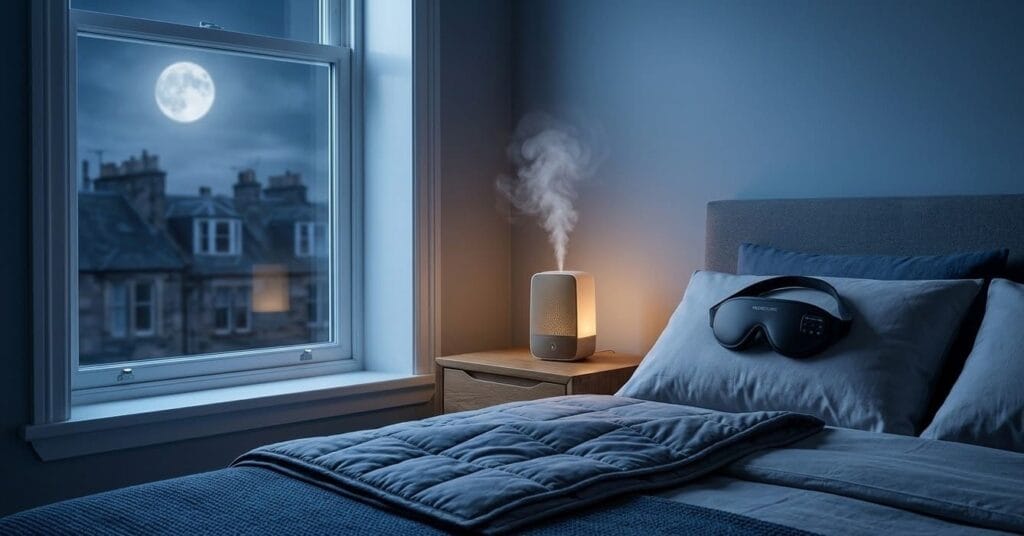
Sleep Crisis: What to Fix First in Your Bedroom Routine
A sleep crisis can feel like several bad nights stacking on top of each other: you wake up tired, feel foggy during the day, lose focus, and start worrying about the next night before it even begins. This page is not medical advice and does not diagnose insomnia, anxiety, sleep apnea, depression, or any sleep disorder.
The practical goal is simpler: identify the most obvious sleep disruptors in your room and routine. Start with light, noise, comfort, temperature, air quality, and phone use before buying more advanced sleep technology.
MindReset.org may earn a commission if you buy through our links. This does not increase your price and does not affect our editorial judgment.
As an Amazon Associate, we earn from qualifying purchases.
Research note: We have not personally tested every product mentioned on this page. This guide is based on product specifications, public information, buyer-use logic, and comparison with similar sleep-environment tools.
Sleep note: Sleep tools may support a better bedroom environment, but they do not treat insomnia, anxiety, sleep apnea, depression, chronic fatigue, PTSD, ADHD, or any medical condition. If sleep problems continue, or if snoring, breathing pauses, gasping, chest pain, or severe daytime sleepiness are present, speak with a qualified healthcare professional.
Sleep supports normal recovery, attention, memory, and mood regulation. But this page should not imply that a gadget can remove toxins, prevent disease, or force deep sleep. A better buyer question is: what is making your sleep harder than it needs to be?
For many people, the answer is not one dramatic problem. It is a stack of small issues: too much light, sudden noise, dry air, phone use in bed, inconsistent timing, or a room that never really signals “night mode.”
A useful sleep setup does not need to be expensive. It should make your bedroom darker, quieter, more comfortable, and easier to repeat every night.
Today, your bedroom cannot simply be a room with a bed. It must become a true sleep capsule, a space where the chaos outside breaks against the walls of your sensory isolation. Creating this architecture of perfect sleep requires a conscious approach. You must turn the moment before sleep into a sacred ritual, where every detail contributes to reducing cortisol levels and preparing the nervous system for a total reset. Your salvation lies in the combination of accurate data and the right physical tools.
From data to action: how trackers guide your recovery
Sleep trackers such as Ultrahuman or Circular can be useful if you want to notice sleep timing, wake patterns, and routine changes. But sleep data should not become another source of pressure.
The numbers are only useful when they lead to simple actions: dimming the room earlier, reducing late screens, managing noise, improving comfort, or keeping a more consistent wake time. A tracker is a feedback tool, not a recovery treatment.
The architecture of the perfect sleep consists of responding to this data by changing your environment. When your device shows that your nervous system is disturbed even at night, you can’t just close your eyes and wait for a miracle. You need physical intervention.
You need tools that, in a forceful but gentle way, make your brain switch from survival mode to regeneration mode. To do this, we created a home sleep capsule based on three fundamental elements: proprioceptive stimulation, sensory deprivation, and microclimate control.
Weighted Blankets: Optional Comfort for Pressure and Stillness
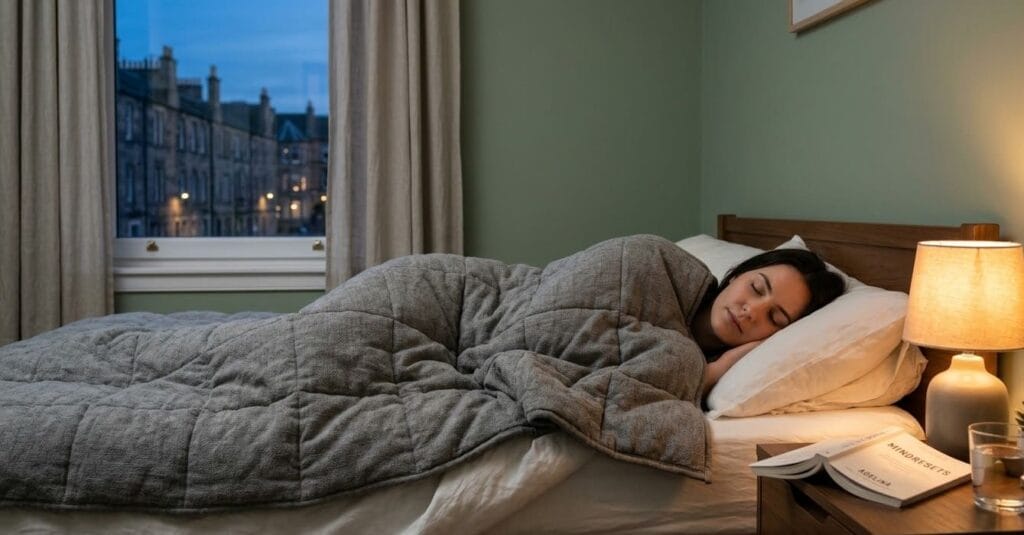
A weighted blanket may help some people feel more physically settled in bed because it adds steady pressure across the body. For buyers, the key question is comfort: does the weight feel calming, or does it feel too hot, heavy, or restrictive?
Do not buy a weighted blanket because of hormone claims or promises about anxiety, cortisol, or deep sleep. Buy it only if you like the feeling of gentle pressure and want a simple comfort tool for your evening routine.
Best for: people who like a heavier blanket feel, colder bedrooms, and users who want a low-tech comfort cue before sleep.
Skip if: you overheat easily, dislike pressure, have breathing concerns, mobility limitations, or any medical condition where extra blanket weight may be unsafe.
Sleep Masks With Audio: Light and Sound Control in One Tool
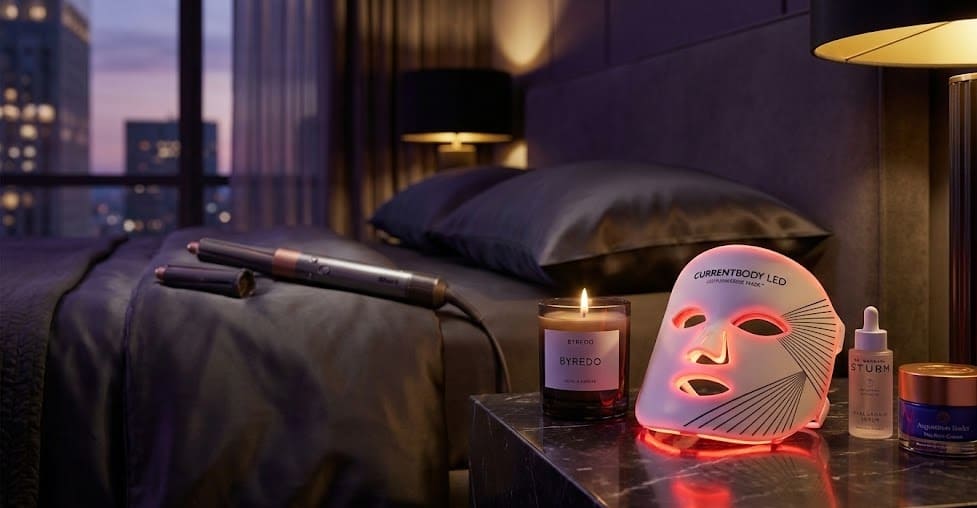
A sleep mask with built-in audio can be useful when light and sound are both part of the problem. The mask blocks visual distractions, while the audio layer can play white noise, rain sounds, calm music, or a sleep story without keeping your phone screen active.
This does not mean the mask can force deep sleep or treat insomnia. The real value is practical: fewer light leaks, less bedroom noise, and a more repeatable wind-down cue.
Best for: travel, shared rooms, streetlight, partner reading light, and people who already use sleep audio.
Skip if: you dislike wearing a mask, hate earbuds or speakers near your ears, sleep better in silence, or already have a dark and quiet room.
Smart Humidifiers: Air Comfort for Dry Bedrooms

Dry bedroom air can feel uncomfortable, especially in winter, heated rooms, or air-conditioned spaces. A humidifier may help the room feel less dry, but it should be treated as an air-comfort tool, not a medical device.
A smart humidifier can be useful if you want automatic humidity control, timer settings, and a more consistent bedroom environment. Some models also support aroma pads or essential oils, but fragrance is personal and can irritate some users.
Best for: dry rooms, winter heating, air-conditioned bedrooms, and people who want automatic humidity control.
Skip if: your room already feels damp, you are sensitive to fragrance, you do not want regular cleaning, or you expect a humidifier to solve serious sleep problems.
How to Build a Simple Sleep Crisis Setup
Do not build a complicated sleep capsule. Start with the problem that is most obvious in your room.
If light is the problem, start with blackout. If noise is the problem, use a mask with audio or a sound machine. If dry air is the problem, consider a humidifier. If your phone is the problem, move it away from the bed before buying another device.
For a broader room setup, read our sleep-friendly bedroom setup guide. If you want a buyer-focused list of bedroom upgrades, compare our sleep sanctuary gadgets guide.
Final Verdict: Fix the Bedroom Before Buying More Sleep Tech
A sleep crisis does not always need another advanced gadget. Often, the first move is to make the bedroom easier to sleep in: darker, quieter, cooler, more comfortable, and less connected to your phone.
Use trackers for pattern awareness, not pressure. Use weighted blankets only if the pressure feels comfortable. Use audio masks if light and noise are real problems. Use humidifiers only when the air is genuinely dry.
Bottom line: start with one clear problem and one practical fix. A better sleep environment is built through simple repeatable changes, not through dramatic recovery promises.