Table of Contents
Deep physical tension does not always disappear after one night of sleep. For many people, tension builds slowly through sitting, screen time, stress, poor posture, hard training, shallow breathing, and not enough real recovery.
This guide is for people who want practical tools for deep tension release without buying into exaggerated wellness claims.
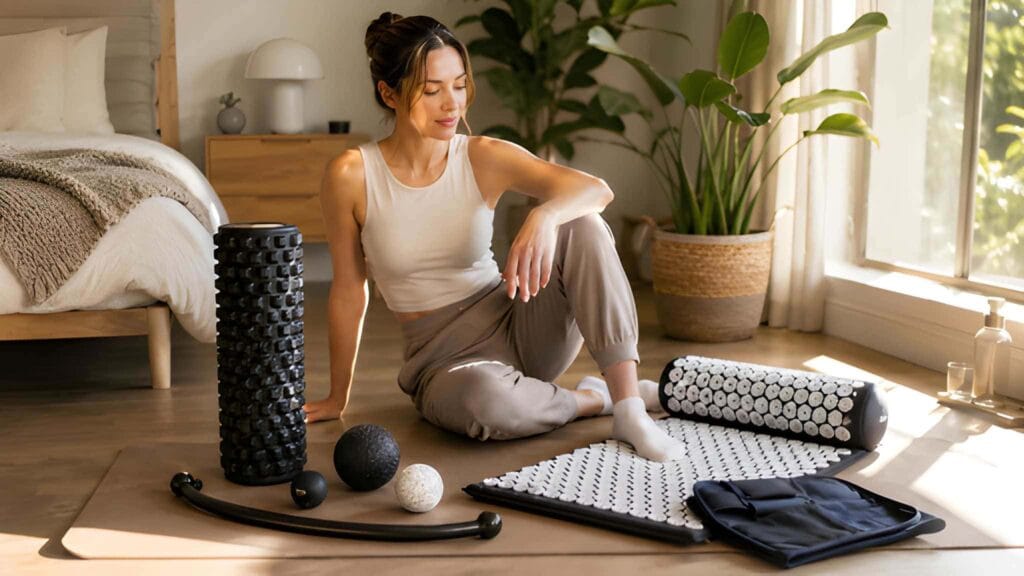
We look at psoas release tools, acupressure mats, foam rollers, trigger point tools, massage balls, cold-compression caps, and optional face/jaw tension tools. The goal is simple: help you decide what is worth buying, what is better for advanced users, and what is mostly unnecessary.
Affiliate disclosure: MindReset.org may earn a commission if you buy through our links. This does not increase your price and does not affect our editorial judgment. As an Amazon Associate, we earn from qualifying purchases.
Research note: We have not personally tested every product in this guide. This article is based on product specifications, public documentation, available user feedback, comparison with similar tools, and claim-safety review. We do not make medical treatment claims.
Health note: These tools are intended for general comfort, relaxation, mobility support, and body awareness. They are not medical treatments unless clearly stated and appropriately regulated. For a broader comparison, see our guide to somatic recovery tools. If you have persistent pain, numbness, recent injury or surgery, migraine, neurological symptoms, severe anxiety, or a diagnosed condition, seek qualified advice before using deep-pressure, traction, heat, or cold-compression tools.
Quick Verdict: The Best Deep Tension Release Tools
If you are new to deep tension release, start with simple tools first: a foam roller, massage balls, or a basic trigger point massager. They are usually cheaper, easier to use, and less intense than specialized psoas tools or high-pressure acupressure mats.
If your main issue is hip flexor or psoas tightness, a tool like Pso-Rite or Thrival may be worth considering. These are not gentle comfort tools. They are best for people who understand firm pressure and are willing to use them carefully.
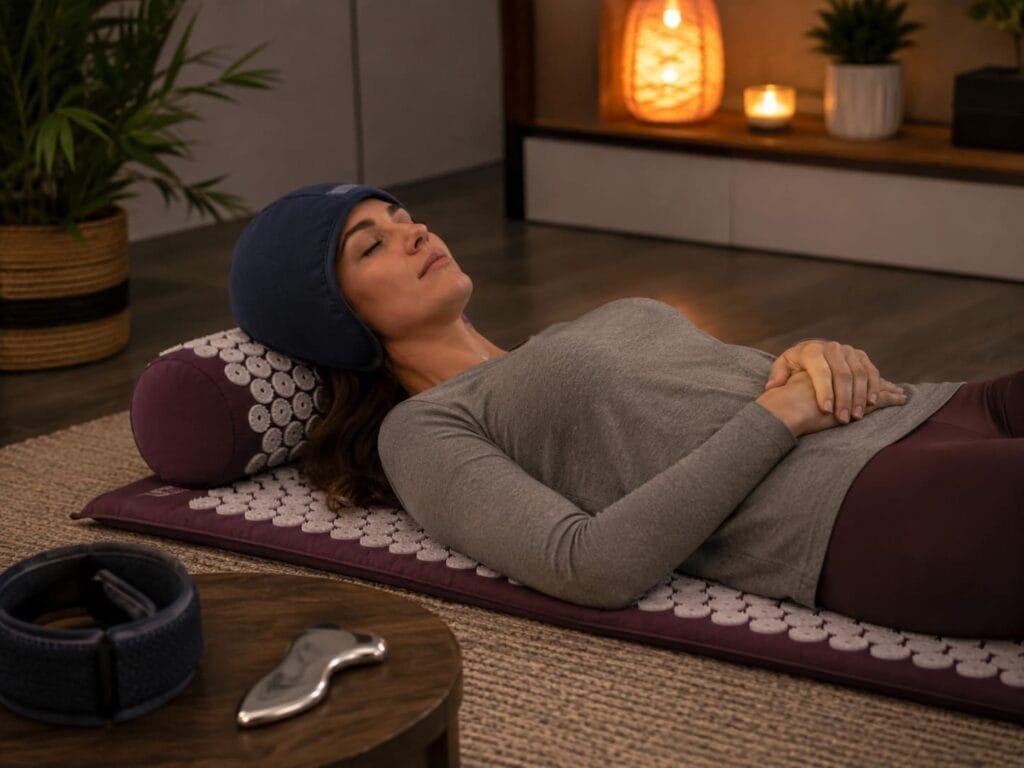
If you want an evening recovery ritual, an acupressure mat such as Pranamat or Shakti may make sense. These mats can create strong sensory input and may help some users wind down, but they are not magic sleep or stress cures.
If your problem is headache comfort, light sensitivity, or forehead pressure after screen-heavy days, a cold-compression cap such as TheraICE fits the use case better than face rollers or beauty-style tools.
Best Deep Tension Release Tools: Decision Table
| Use case | Best option | Why it makes sense | Skip if |
|---|---|---|---|
| Beginner full-body release | Foam roller | Affordable, simple, broad use | You need precise pressure |
| Hip flexor / psoas pressure | Pso-Rite or Thrival | More targeted than a foam roller | You dislike intense pressure |
| Back and shoulder trigger points | Body Back Buddy or Thera Cane-style tool | Helps reach tight spots without twisting | You want passive relaxation |
| Budget precision release | Massage balls or lacrosse balls | Cheap and easy to control | You need a softer surface |
| Evening wind-down | Pranamat or Shakti Mat | Strong sensory routine for people who like pressure | You have sensitive skin |
| Headache comfort / light blocking | TheraICE-style cold-compression cap | Cold, compression, and darkness in one tool | You need medical migraine care |
| Jaw or face tension | Stainless steel gua sha | Optional low-cost face/jaw tool | You want deep muscle release |
| Neck traction / cervical devices | Professional advice first | Neck tools carry more risk | You have pain, tingling, or nerve symptoms |
How to Choose the Right Tool
Before buying anything, ask one question:
Where is the tension actually showing up?
If your whole body feels stiff after sitting, start with a foam roller.
If your hips feel locked after long workdays, a psoas release tool may be more relevant.
If your shoulders, upper back, and neck feel tight, a trigger point cane or massage ball may be more useful than an acupressure mat.
If your issue is evening overstimulation, an acupressure mat may be better as a ritual than as a “pain relief” solution.
If your tension is connected to headaches, eye strain, or light sensitivity, a cold-compression cap may fit better than a muscle tool.
Research on self-myofascial release suggests that foam rolling and roller massage may have short-term benefits for range of motion and perceived post-exercise soreness, but the evidence is still mixed and does not support exaggerated recovery claims.
1. Pso-Rite Muscle Release Tool

Best for: targeted psoas and hip flexor pressure
Category: firm deep-pressure tool
Best buyer: experienced users who want focused pressure around the hip flexor/psoas area
Skip if: you are sensitive to pressure, unsure where to place it, pregnant, recovering from surgery, or dealing with abdominal/pelvic pain
The Pso-Rite is one of the better-known tools marketed for the hip flexor and psoas region. Its shape is designed to apply firm, localised pressure in areas that are difficult to approach with a standard foam roller, although users should not assume that it precisely isolates or “releases” the psoas muscle.
This tool makes the most sense for people who already understand deep-pressure work and want something more specific than a roller. It is not the first tool we would recommend for total beginners.
The main advantage is precision. Instead of rolling across a large area, you can use the shape of the tool to The main advantage is precision. Instead of rolling across a large area, the shape allows more focused pressure around the hip flexor region, glutes, and selected back areas.
The main downside is intensity. Used too aggressively, it can feel harsh. More pressure is not always better. Start slowly, use short sessions, and avoid pressing directly into painful or sensitive areas.
Buy if: you want a firm psoas-focused tool and already know you tolerate deep pressure.
Avoid if: you want something soft, passive, or beginner-friendly.
MindReset verdict: useful for the right person, but not a casual relaxation gadget.
2. Thrival Deep Tissue Pro

Best for: adjustable psoas and trigger point pressure
Category: adjustable deep tissue tool
Best buyer: users who want more control than a fixed psoas tool
Skip if: you prefer simple, low-intensity recovery tools
Thrival-style adjustable psoas tools solve one common issue with fixed deep-pressure tools: not every body fits the same shape. Adjustable width can make the tool more flexible for different areas and different users.
This can be useful for hip flexors, glutes, back tension, and general trigger point work. It may also be a better choice if you are unsure whether a fixed psoas tool will match your body comfortably.
The trade-off is complexity. Adjustable tools can feel less intuitive than a simple foam roller or massage ball. You need to experiment carefully and avoid forcing pressure into areas that feel sharp, strange, or nerve-like.
Buy if: you want a more flexible alternative to a fixed psoas tool.
Avoid if: you want the simplest possible recovery setup.
MindReset verdict: a strong alternative to Pso-Rite if adjustability matters to you.
3. TriggerPoint GRID Foam Roller

Best for: everyday muscle and fascia rolling
Category: foam roller
Best buyer: beginners and regular exercisers who want one practical recovery tool
Skip if: you need precise pressure on tiny trigger points
A foam roller is still one of the most practical deep tension release tools for most people. It is simple, durable, and useful for large muscle groups such as calves, quads, glutes, upper back, and lats.
The TriggerPoint GRID style is popular because the textured surface gives more variation than a completely smooth roller. It can feel more targeted without becoming as intense as a psoas release tool.
For most beginners, this is a better first purchase than an expensive or highly specialized tool. You can use it before training, after long sitting, during a short work break, or as part of an evening recovery routine.
The limitation is precision. A foam roller is not the best tool for small trigger points around the shoulder blade, jaw, foot, or deep hip area. For that, massage balls or a trigger point cane may work better.
Buy if: you want one reliable tool for general body tension.
Avoid if: you already have a roller or need very targeted pressure.
MindReset verdict: probably the strongest first buy for most beginners.
4. Body Back Buddy or Thera Cane-Style Trigger Point Tool

Best for: back, shoulder, and hard-to-reach trigger points
Category: trigger point massager
Best buyer: people with upper-back tension from desk work or screen-heavy days
Skip if: you want a passive tool that does the work for you
A trigger point cane is one of the most underrated tools for people who carry tension in the shoulders, upper back, and between the shoulder blades.
The big advantage is reach. Instead of twisting your arm behind your back or leaning awkwardly into a wall, you can use the hooks and knobs to apply pressure to specific areas.
This type of tool is not glamorous, but it is practical. It is especially useful for desk workers, drivers, gamers, creators, and anyone who spends long hours in a forward-head posture.
The risk is overdoing it. Do not attack every tight spot aggressively. Use gentle pressure, breathe normally, and stop if you feel sharp pain, tingling, numbness, or symptoms traveling down the arm.
Buy if: your tension is mostly in your shoulders, traps, or upper back.
Avoid if: you want a soft massage experience.
MindReset verdict: one of the best practical upgrades for screen-related upper-body tension.
5. Massage Balls or Lacrosse Ball Set

Best for: budget precision release
Category: budget trigger point tool
Best buyer: anyone who wants a cheap, simple, precise tool
Skip if: hard pressure feels too intense
Massage balls are the cheapest way to add precision to your recovery routine. A ball can target the feet, glutes, hips, chest, shoulders, and upper back more accurately than a foam roller.
They are especially useful against a wall. This gives you more control than lying directly on the floor, which can be too intense for beginners.
A basic lacrosse ball can work, but softer massage balls may be better if you are sensitive to pressure. Spiky balls can feel stimulating, but they are not automatically better.
This is also the best “try before upgrading” option. If massage balls help, then a more advanced trigger point tool may be worth considering later.
Buy if: you want a low-cost tool for precise pressure.
Avoid if: you need a soft, passive recovery experience.
MindReset verdict: the best budget choice on the list.
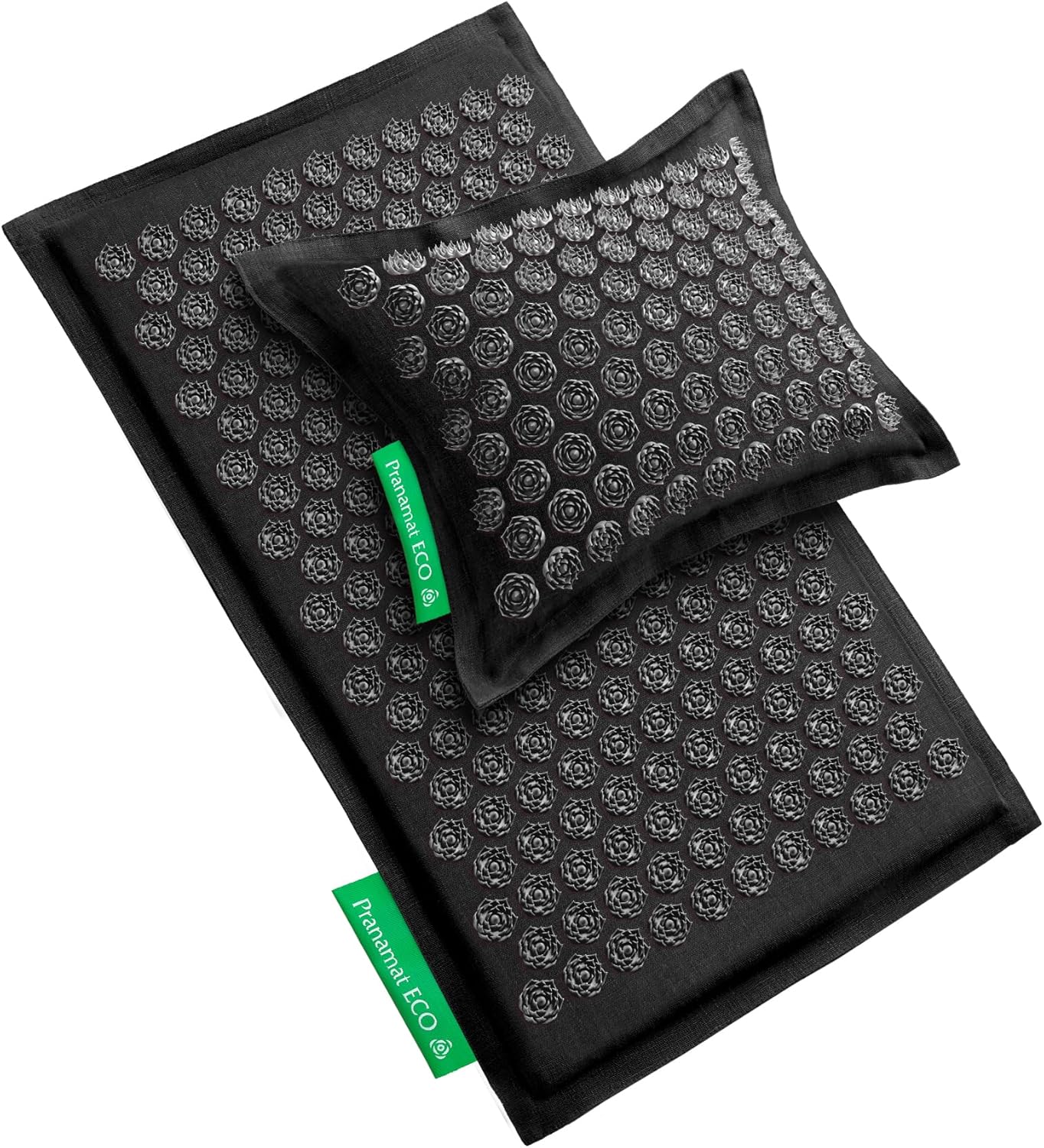
6. Pranamat ECO Acupressure Set
Best for: premium acupressure recovery ritual
Category: acupressure mat
Best buyer: people who enjoy strong sensory input and want a higher-end mat
Skip if: you have very sensitive skin or dislike prickly pressure
Pranamat is the premium acupressure option in this guide. It fits people who want a more polished mat-and-pillow setup and care about materials, design, and the ritual side of recovery.
An acupressure mat is not the same as a foam roller. You are not rolling tissue or targeting specific trigger points. Instead, you lie still while the small pressure points create a strong skin-level sensory input.
Some people find this uncomfortable at first, then relaxing after a few minutes. Others simply hate it. That is why acupressure mats are not universal tools.
Pranamat makes the most sense for evening decompression, short screen breaks, or a wind-down routine before bed. Use it as a habit support tool, not as a cure for pain, anxiety, insomnia, or stress.
Buy if: you want a premium acupressure mat for a repeatable recovery ritual.
Avoid if: you want targeted deep muscle release.
MindReset verdict: premium, useful for the right user, but not necessary for everyone.
7. Shakti Mat

Best for: stronger acupressure at different intensity levels
Category: acupressure mat
Best buyer: people who want a pressure-based relaxation ritual and can choose an appropriate intensity
Skip if: you are sensitive to discomfort
Shakti is another strong acupressure option, especially if you want to choose between different intensity levels. That matters because acupressure mats can feel very different depending on spike density, sharpness, body weight, clothing, and session length.
For beginners, a lower-intensity version is usually the smarter choice. You can always build tolerance later. Starting too intense is the easiest way to quit after one session.
A Shakti-style mat may help you create a simple evening routine: lie down, breathe slowly, reduce phone use, and give your body one clear signal that the workday is over.
Again, the mat is not magic. The benefit usually comes from the full ritual: stillness, reduced stimulation, slow breathing, and repeating the habit.
Buy if: you want an acupressure mat with intensity options.
Avoid if: you want something soft or medical-grade.
MindReset verdict: a good alternative to Pranamat if intensity choice matters more than premium materials.
8. TheraICE Headache Relief Cap

Best for: cold compression, light blocking, and headache comfort
Category: cold-compression cap
Best buyer: people who want a simple comfort tool for screen-heavy days, forehead pressure, or light sensitivity
Skip if: you need medical migraine treatment or have unexplained severe headaches
A cold-compression cap is different from the other tools on this list. It is not a muscle release tool. It is more of a comfort and sensory-control tool.
TheraICE-style caps combine cold or heat, gentle compression, and light blocking. That makes them useful for people who feel overloaded after long screen sessions or want a dark, cooling reset.
This type of tool may be helpful as part of a recovery routine, but it should not be treated as a replacement for medical care. If you have frequent migraines, sudden severe headaches, neurological symptoms, or headache patterns that are changing, speak to a healthcare professional.
The main advantage is simplicity. Put it in the freezer, use it for a short session, and pair it with quiet, darkness, or slow breathing.
Buy if: cold, compression, and darkness help you settle after screen-heavy days.
Avoid if: your headaches are severe, new, frequent, or medically unexplained.
MindReset verdict: useful comfort tool, but keep the claims realistic.
9. Stainless Steel Gua Sha

Best for: optional jaw, face, and neck-area tension routine
Category: face/jaw tension tool
Best buyer: people who want a low-cost, easy-to-clean tool for light facial massage
Skip if: you want deep muscle release or full-body recovery
A stainless steel gua sha is the most optional tool in this guide. It does not belong in the same category as psoas tools, foam rollers, or trigger point canes.
However, it can make sense for people who hold tension in the jaw, temples, or face. Stainless steel is easy to clean and can feel cooling when used gently.
The key word is gently. Gua sha should not be used aggressively. Do not scrape hard. Do not use it over irritated skin, open skin, active inflammation, or areas that feel painful.
For MindReset readers, this is a small add-on tool, not a core deep tension release solution.
Buy if: you want a simple tool for a light face/jaw relaxation routine.
Avoid if: you want serious muscle release or structural change.
MindReset verdict: optional, low-cost, but not essential.
What We Would Skip
Not every tension-release product belongs on this page. Some products may still be useful, but they are either too niche, too medical-looking, too claim-heavy, or too far from the core buyer intent.
Neck traction devices
Cervical traction tools can look tempting if you have “tech neck,” but the neck is not an area for aggressive experimentation. If you have neck pain, tingling, numbness, dizziness, headaches, or symptoms traveling down the arm, get professional advice before using traction-style devices.
Craniosacral “still point” tools
Some users may enjoy gentle head and neck tools, but claims about deep parasympathetic shifts or whole-body nervous system reset are difficult to verify. We would not make this a core buyer recommendation.
Scalp massage helmets
Head massagers can feel pleasant, but they are expensive, bulky, and often over-positioned. For this specific guide, they distract from the main purpose: practical deep tension release tools.
Beauty-style ice rollers
Ice rollers can feel refreshing, but they overlap heavily with skincare. For headache comfort or screen-heavy recovery, a cold-compression cap is a cleaner recommendation.
Multiple gua sha tools
One gua sha option is enough. Two or three versions turn the page into a beauty-tool list instead of a deep tension release guide.
Best Tool by Budget
| Budget level | Best choice | Why |
|---|---|---|
| Under $20 | Massage balls or lacrosse balls | Cheapest way to test precision pressure |
| Under $40 | Basic foam roller or gua sha | Useful if you want simple recovery tools |
| Under $80 | TriggerPoint GRID or trigger point cane | Better for regular use |
| $80–$150 | Thrival, Shakti, or similar premium tool | More specific or ritual-based |
| $150+ | Pranamat or premium acupressure sets | Best for people who value materials and design |
Prices change often, especially on Amazon. Always check current availability, return policy, and whether the product has a direct brand store before buying.
Who Should Buy Deep Tension Release Tools?
These tools may be useful if:
- you sit for long hours
- your hips, back, shoulders, or jaw feel tight
- you want a recovery routine that does not require another app
- you already stretch but still feel physically tense
- you want a simple evening wind-down habit
- you prefer physical tools over digital wellness subscriptions
- you want to spend less on massage appointments
- you understand that comfort tools are not medical treatment
The best buyer is someone who wants practical habit support, not a miracle fix.
Who Should Avoid or Be Careful?
Be careful with deep-pressure, acupressure, cold-compression, or traction-style tools if you:
- are pregnant
- recently had surgery
- have unexplained pain
- have numbness, tingling, or weakness
- have a diagnosed spine, nerve, vascular, or skin condition
- bruise easily
- use blood-thinning medication
- have severe or changing headaches
- have migraine symptoms that require medical care
- feel worse after using pressure tools
If a tool creates sharp pain, nerve-like symptoms, dizziness, nausea, numbness, or symptoms that spread, stop using it.
For persistent, worsening, or worrying back pain, check NHS guidance on when to seek medical advice for back pain instead of relying only on self-massage tools.
What We Could Verify
We could verify that the most useful product categories for this page are practical and buyer-relevant:
- psoas release tools
- adjustable deep tissue tools
- foam rollers
- trigger point canes
- massage balls
- acupressure mats
- cold-compression headache caps
- optional face/jaw massage tools
We could also verify that many current product listings use strong wellness language. That is why this guide avoids promising anxiety relief, cortisol reduction, nervous system healing, trauma release, or guaranteed pain relief.
We could assess the listed product formats, intended pressure areas, adjustability, portability, materials and features published by manufacturers or sellers, current buyer positioning, and practical differences between rollers, balls, canes, acupressure mats, cold-compression caps, and specialised pressure tools. We could not independently verify long-term durability, comfort for every body type, pressure accuracy, seller consistency, material quality across every Amazon listing, or whether any tool will reduce a specific person’s pain or symptoms. Prices, availability, product versions, sellers, warranties, and return terms may change.
What We Could Not Verify
We could not verify that any single tool will work for every reader.
We also could not verify:
- long-term durability across all products
- real-world comfort for every body type
- whether a specific tool will reduce your pain
- whether any product improves sleep quality
- whether claims about cortisol, vagus nerve activation, or nervous system reset are reliable
- whether Amazon listings will keep the same price, stock, or seller quality
- whether a product is safe for your personal health situation
Use this guide as a buying filter, not as medical advice.
How to Use These Tools Without Overdoing It
Deep tension release should not feel like punishment.
Start with short sessions:
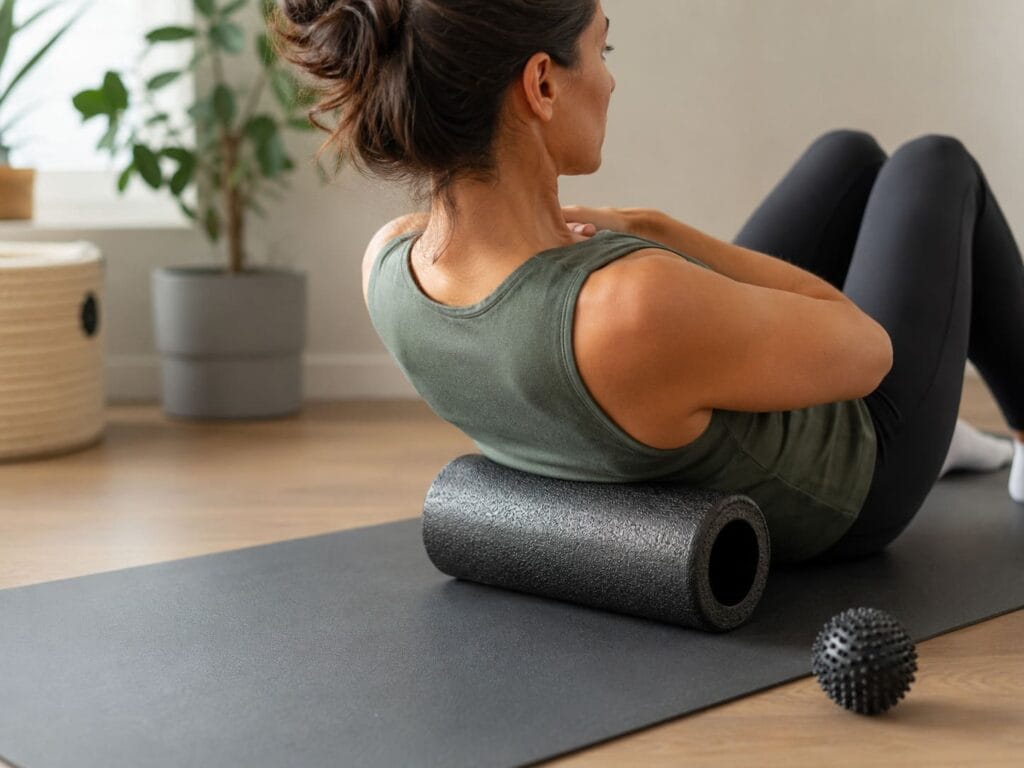
- Foam roller: begin with brief, controlled passes over larger muscle areas.
- Massage ball: use light pressure against a wall before trying more body weight on the floor.
- Psoas or hip-pressure tool: begin with very short, gentle use and avoid pressing deeply into the abdomen.
- Acupressure mat: start over clothing and use a lower-intensity setup when available.
- Cold-compression cap: follow the current product instructions and protect the skin from excessive cold exposure.
Do not chase maximum intensity. A tool that leaves you sore, irritated, or nervous to use is not the right tool for your routine.
The best recovery routine is repeatable. It should make your day feel easier, not turn recovery into another performance task.
Best First Setup for Most People
If you are building your first deep tension release setup, keep it simple:
- Foam roller
- Massage ball set
- Trigger point cane
- Optional acupressure mat
- Optional cold-compression cap
This gives you broad coverage without buying five expensive niche gadgets.
Only add a psoas tool if you specifically want hip flexor or psoas-focused pressure.
Only add gua sha if jaw or facial tension is a real issue for you.
Only add premium acupressure if you know you enjoy that kind of strong sensory input.
Final Verdict: Buy Tools That Support the Routine
The best deep tension release tool is not the most expensive one. It is the one you will use safely and consistently.
For most people, a foam roller, massage balls, and a trigger point cane are enough to start. If you need more targeted hip work, look at Pso-Rite or Thrival. If you want a premium evening ritual, Pranamat or Shakti may be worth considering. If screen-heavy days leave you craving darkness and cooling pressure, a TheraICE-style cap may fit better than another massage gadget.
Skip products that sound too dramatic. Your body does not need a miracle claim. It needs a repeatable recovery routine, realistic tools, and enough quiet space to stop carrying the whole day in your muscles.
Next Step
After releasing deep physical tension, your recovery continues at night.
Or download the free MindReset Nervous System Reset Toolkit for a simple printable routine you can use during evening recovery.
FAQ
What is the best tool for deep tension release?
For most beginners, a foam roller or massage ball set is the best first tool. They are affordable, easy to control, and useful for many areas of the body.
Are psoas release tools worth it?
Psoas release tools can be worth it if you specifically want firm pressure around the hip flexor or psoas area. They are not ideal for beginners who dislike intense pressure.
Are acupressure mats good for tension release?
Acupressure mats may help some people create a relaxing wind-down routine, but they do not work for everyone. They are better for sensory relaxation than precise muscle release.
Should I buy Pranamat or Shakti?
Choose Pranamat if you want a premium acupressure set with a more design-focused feel. Choose Shakti if intensity options matter more to you. Both should be treated as recovery ritual tools, not medical treatments.
Is a trigger point cane better than a foam roller?
A trigger point cane is better for hard-to-reach areas like the upper back and shoulders. A foam roller is better for larger muscle groups and general recovery.
Can these tools help with anxiety?
These tools may help some people feel calmer as part of a relaxation routine, but they should not be marketed as anxiety treatments. If anxiety is persistent or severe, speak with a qualified professional.
Can I use deep tension tools every day?
Some gentle tools can be used regularly, but deep-pressure tools should be used carefully. Start with short sessions and avoid overworking the same area every day.
What should I avoid buying?
Avoid tools with exaggerated claims, unknown sellers, poor return policies, unclear materials, or aggressive promises about healing, trauma release, cortisol, anxiety, or nervous system repair.
Are neck traction tools safe?
Neck traction tools should be used carefully and are not ideal for casual experimentation. If you have neck pain, tingling, numbness, dizziness, or symptoms going down the arm, get professional advice first.
What is the best budget setup?
A foam roller plus massage balls is the best budget setup for most people. Add a trigger point cane later if your main tension is in your upper back or shoulders.