Table of Contents
MyMerino duvet review: this research-based guide looks at whether an organic merino wool duvet from Sleep & Beyond makes sense for people who want a more breathable, natural-material bedding setup without turning their bedroom into a complicated wellness project.
Affiliate disclosure: MindReset.org may earn a commission if you buy through our links. This does not increase your price and does not affect our editorial judgment.
Research note: We have not personally tested this product yet. This guide is based on product specifications, public documentation, available research, user feedback, and comparison with similar bedding and sleep tools.
Sleep note: Bedding can support comfort, temperature regulation, and a calmer bedtime routine, but it is not a treatment for insomnia, anxiety, depression, chronic fatigue, night sweats, allergies, or any medical condition. If sleep problems are severe or persistent, speak with a qualified clinician.
Quick Verdict: Is the MyMerino Duvet Worth It?
The MyMerino duvet is worth considering if you want a natural wool duvet/comforter rather than a synthetic-fill option. Its strongest buyer case is simple: organic merino wool may feel more breathable and temperature-balanced than many polyester duvets, especially for people who dislike the trapped-heat feeling of synthetic bedding.
This is not a miracle sleep product. It will not fix a poor sleep schedule, noisy room, late-night scrolling, alcohol, caffeine, stress, or an uncomfortable mattress. But if your current duvet often feels too hot, too clammy, too synthetic, or too heavy in the wrong way, a wool duvet can be a sensible bedroom upgrade.
Best for: natural-material bedding, temperature-sensitive sleepers, people building a cleaner sleep setup, and buyers who prefer wool and organic cotton over polyester fill.
Skip if: you want the cheapest duvet, need a very fluffy down-like look, dislike wool products, want easy machine washing without care rules, or expect verified medical sleep outcomes.

Who Should Buy the MyMerino Duvet?
The MyMerino duvet makes most sense for buyers who already care about bedding materials. If you are comparing organic cotton, wool, latex, down, down-alternative comforters, and lower-toxin bedroom upgrades, this product fits that decision path.
- You want a duvet with wool fill instead of polyester or synthetic down alternative.
- You often feel too warm, clammy, or uncomfortable under synthetic bedding.
- You prefer natural materials such as merino wool and cotton close to your body.
- You are building a calmer bedroom setup and want fewer artificial-feeling textiles.
- You are willing to pay more for bedding materials and long-term comfort rather than the cheapest duvet.
Who Should Avoid It?
This duvet is not the right choice for every bedroom. Wool has a different feel from down or microfiber, and some buyers may prefer a lighter, puffier, easier-care comforter.
- Skip it if you want the lowest-cost duvet for a guest room or short-term use.
- Skip it if you want a very fluffy hotel-style down look.
- Skip it if you are sensitive to wool smell or dislike the feel of wool bedding.
- Skip it if you need bedding that can be washed frequently with no special care.
- Skip it if your sleep problem is mainly caused by pain, medication, shift work, untreated sleep apnea, or another health issue. Bedding alone will not solve that.
Buyer Decision Table
| Buyer question | Short answer |
|---|---|
| Is MyMerino better than a synthetic duvet? | It may be better if you want natural wool fill, moisture management, and a less synthetic feel. |
| Is it the cheapest bedding upgrade? | No. It is better treated as a premium natural-material duvet. |
| Is it best for hot sleepers? | It may suit some temperature-sensitive sleepers, but personal comfort varies. |
| Does it cure poor sleep? | No. It can support comfort, but it is not a medical or sleep-disorder treatment. |
| Is it good for a cleaner bedroom setup? | Yes, if you are intentionally replacing synthetic bedding with wool and cotton. |
| Should couples consider it? | Yes, but only if both people like wool bedding and agree on warmth level. |
| What should you check before buying? | Size, warmth level, care instructions, return policy, warranty, shipping region, and whether you prefer wool over down. |
What Is the MyMerino Duvet?
The MyMerino duvet is positioned as a natural wool bedding option for people who want a more breathable sleep environment. Instead of relying on synthetic fill, it uses merino wool with a cotton cover, which places it closer to the organic bedding category than a basic polyester duvet.
The key buyer idea is not “luxury for luxury’s sake.” It is material choice. Many people start looking at wool bedding because their current duvet traps heat, feels clammy, or does not handle seasonal temperature changes well.
Wool bedding usually feels different from a down comforter. It can be flatter, more structured, and less puffy. Some people like that grounded feel. Others prefer the loft and airiness of down or down alternative.
Why Merino Wool Matters in a Duvet
Merino wool is commonly used in performance clothing because it can help manage moisture and temperature. In bedding, the same general idea matters: the duvet should keep you comfortable without creating a trapped, sweaty microclimate.
This is the main reason wool duvets appeal to people who dislike synthetic bedding. Polyester fill can feel warm and easy to maintain, but some users find it less breathable. Wool is not automatically perfect for everyone, but it is a serious alternative for buyers who want a more natural sleep layer.
Do not buy a wool duvet because you expect a guaranteed sleep transformation. Buy it because the material profile fits your body, bedroom temperature, and comfort preferences.
MyMerino vs Synthetic Duvet
A synthetic duvet is usually cheaper, easier to find, and often easier to wash. That can make it a good choice for children’s rooms, guest beds, rentals, or buyers who simply need an affordable duvet quickly.
The trade-off is feel. Some synthetic duvets trap heat, build up moisture, or feel less breathable to people who sleep warm. If this is your main complaint, MyMerino becomes more interesting.
MyMerino is more about comfort quality than bargain price. The buyer question is not “can I buy a cheaper duvet?” You can. The real question is whether a wool duvet solves a comfort problem your current bedding creates.
MyMerino vs Down Duvet
Down duvets are popular because they feel light, lofty, and soft. If you love the classic cloud-like hotel bedding look, down may be more appealing than wool.
Wool duvets usually feel less fluffy and more grounded. That can be a benefit or a downside depending on your preference. Some people like the slightly settled feel. Others want more loft and visual puff.
Down can also raise questions around sourcing, allergens, and moisture if not cared for well. Wool has its own care rules too. The best choice depends on whether you value loft, breathability, natural sourcing, maintenance, or price most.
Comfort, Weight, and Bedroom Feel
A wool duvet can feel more substantial than expected. That does not mean it is a weighted blanket. It simply means wool has a different drape and density from synthetic fill or down.
Some users may find that gentle weight comforting. Others may prefer a lighter duvet. This is why return policy matters, especially if you have never slept under wool bedding before.
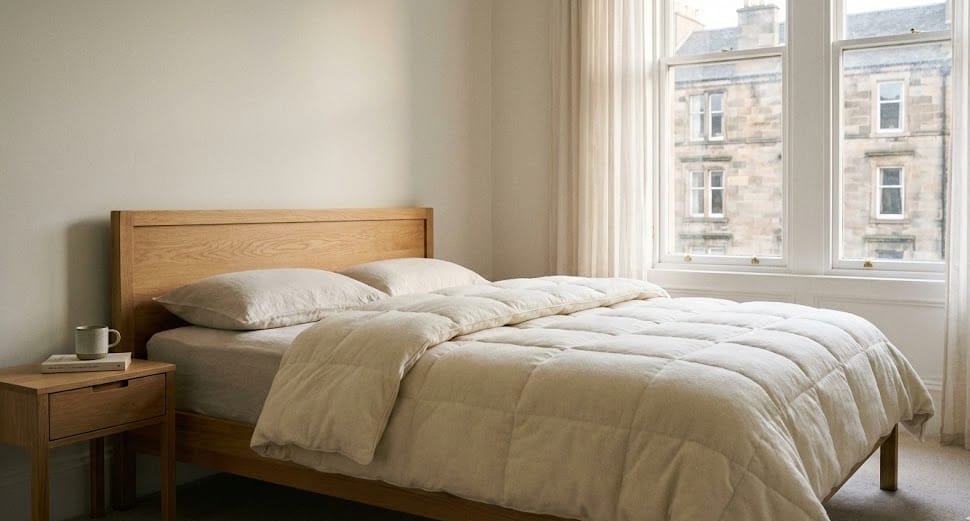
For a MindReset-style bedroom setup, the appeal is practical: fewer artificial-feeling materials, a more breathable sleep layer, and a calmer visual environment. But the duvet should still be judged like any bedding product: comfort first, marketing second.
Care and Maintenance: What to Check Before Buying
Wool bedding is not always as simple as tossing a synthetic duvet into a hot wash. Before buying, check the brand’s current care instructions for washing, airing, spot cleaning, drying, and duvet cover use.
This matters because poor care can affect shape, comfort, smell, and long-term durability. A wool duvet may last a long time when cared for properly, but it is not maintenance-free.
Also check whether you need a separate duvet cover. A cover can protect the duvet, reduce washing frequency, and help the bed match your room, but it adds cost.
Hidden Costs and Practical Checks
Before ordering, look beyond the product photo. Bedding is personal, and small details decide whether the purchase becomes useful or annoying.
- Size: check whether the duvet fits your mattress and cover.
- Warmth: check whether it is suitable for your season and room temperature.
- Care: read washing, drying, airing, and spot-cleaning instructions.
- Return policy: important if you are new to wool bedding.
- Duvet cover: check whether you need to buy one separately.
- Shipping region: check availability, delivery cost, and returns in your country.
If your mattress surface also feels too firm, too hot, or too synthetic, the duvet alone may not solve the whole bedroom comfort problem. In that case, compare it with our Sleep & Beyond myWoolly Latex Topper review before deciding which layer matters more.
Pros and Cons
Pros
- Natural wool-based alternative to synthetic duvets.
- May suit people who want a more breathable bedding setup.
- Good fit for organic bedding and lower-synthetic bedroom upgrades.
- Useful pairing with organic cotton sheets, wool toppers, and calmer bedroom design.
- More intentional than buying a random budget duvet.
Cons
- Likely more expensive than basic synthetic comforters.
- Not as fluffy-looking as many down or down-alternative duvets.
- Wool feel and scent may not suit everyone.
- Care instructions may be stricter than basic bedding.
- We have not verified long-term comfort or durability through hands-on testing.
What We Could Verify
We could verify the product positioning as a MyMerino duvet/comforter from Sleep & Beyond through the product information available to us, and we could verify the broad material claim used in the original page: merino wool paired with a cotton cover.
We could also verify the broader buyer logic: wool bedding is commonly marketed and reviewed for breathability, moisture management, and temperature regulation compared with many synthetic or down-style alternatives.
What We Could Not Verify
We could not verify long-term comfort, warmth level in different seasons, real-world temperature regulation, wool scent, shrinkage risk, cleaning difficulty, customer support quality, return handling, shipping experience, or durability after months of nightly use.
We also could not verify whether this duvet improves sleep quality for a specific person. Bedding can reduce discomfort, but sleep depends on many factors: schedule, light exposure, room temperature, noise, stress, health conditions, medication, caffeine, alcohol, and mattress comfort.
Alternatives to Consider
If MyMerino feels too expensive, a basic cotton-covered down-alternative comforter may be enough. You will not get the same natural wool profile, but it may solve the immediate problem at a lower price.
If you love a fluffy hotel look, compare down or premium down-alternative duvets instead. If you sleep warm, compare wool, alpaca, bamboo, Tencel, or other breathable bedding options.
If your main issue is the mattress surface, a topper may matter more than the duvet. If your bedroom is bright or noisy, a sleep mask, blackout curtains, or sound machine may be the smarter first purchase.
For a wider sleep setup, use our Sleep & Recovery guides to compare bedding, evening routines, sound tools, light exposure, and recovery products.
FAQ
Is the MyMerino duvet good for hot sleepers?
It may suit some hot sleepers because wool is often chosen for moisture and temperature management. But comfort varies by person, room temperature, mattress, sheets, sleepwear, and season. Check the warmth level and return policy before buying.
Is wool better than synthetic fill?
Wool may be better if you want a natural, breathable, less synthetic bedding layer. Synthetic fill may be better if you want lower cost, easier washing, and a lighter price-risk purchase.
Does this duvet help with insomnia?
No duvet should be treated as an insomnia treatment. A better duvet may reduce overheating or discomfort, but persistent insomnia should be discussed with a qualified clinician.
Does wool bedding smell?
Some wool products can have a natural scent, especially when new. Whether this is noticeable or unpleasant depends on the product and the user. If you are sensitive to material smell, check customer feedback and the return policy.
Should I buy the duvet or a topper first?
Buy the duvet first if your main problem is the blanket layer: overheating, clamminess, or synthetic feel. Consider a topper first if your main problem is mattress firmness, surface comfort, or pressure points.
Final Verdict: Should You Buy the MyMerino Duvet?
The MyMerino duvet is a strong option to consider if you want a natural wool duvet for a calmer, more breathable bedroom setup. It is not the cheapest bedding upgrade and it is not a medical sleep solution, but it fits buyers who are intentionally moving away from synthetic bedding.
Buy it if you want merino wool, cotton, a more natural feel, and a duvet that may help reduce the trapped-heat feeling of cheaper synthetic bedding.
Skip it if you want a low-cost duvet, a very fluffy down-style look, easy no-thought washing, or guaranteed sleep results.
The better way to judge it is simple: does your current duvet make sleep less comfortable? If yes, MyMerino is worth checking. If your duvet is already comfortable and your sleep problem comes from schedule, light, noise, stress, or health issues, start there first.