Table of Contents
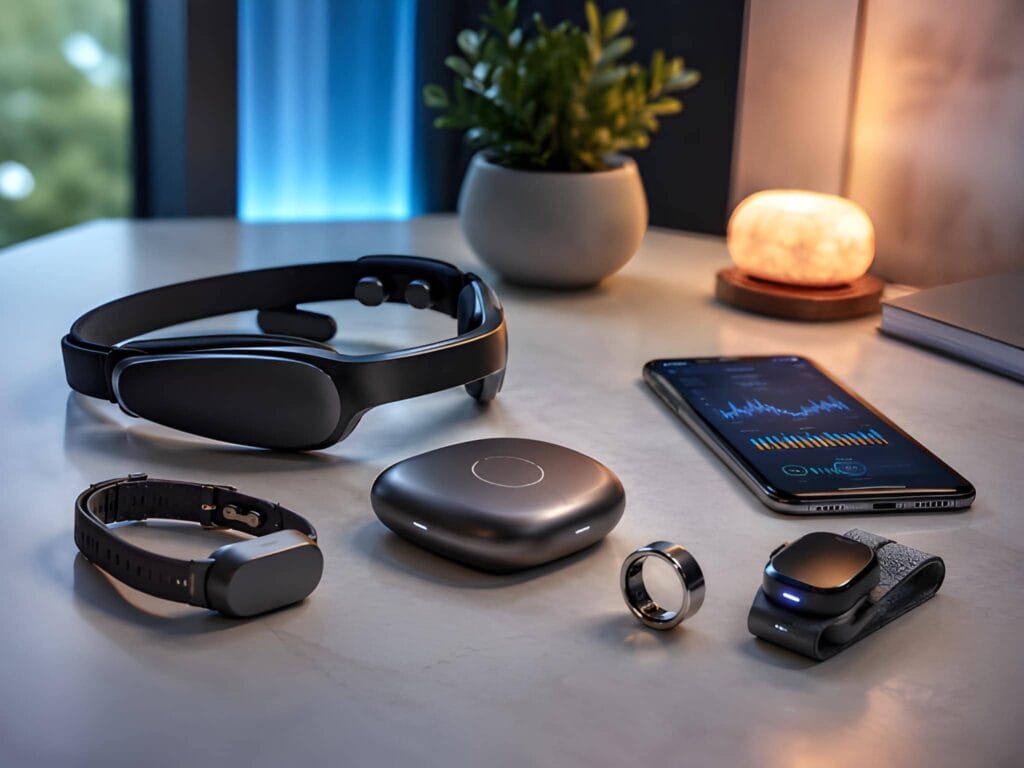
Consumer neurotechnology now ranges from meditation headbands that measure brain activity to HRV sensors, focus-training systems, tactile wearables, and developer-grade EEG headsets.
The problem is that these products are often grouped together as if they do the same thing. They do not. Some measure electrical brain activity. Some estimate changes in blood oxygenation. Some provide HRV biofeedback. Others deliver vibrations without measuring your brain at all.
This guide compares six of the best neurotechnology devices for focus, meditation, biofeedback, and recovery routines. It explains what each product actually measures or delivers, what ongoing costs to expect, and when a simpler tool may be the better purchase.
Affiliate disclosure: MindReset.org may earn a commission if you buy through our links. This does not increase your price and does not affect our editorial judgment.
Research note: We have not personally tested every product included in this comparison. This guide is based on official product specifications, public documentation, available research, user feedback patterns, subscription terms, and comparison with similar devices.
What we assessed: sensing technology, type of feedback, practical use case, setup time, app dependence, membership costs, portability, session length, buyer fit, and whether the device provides measurement, stimulation, or both.
What we could not independently verify: long-term comfort, app stability, battery degradation, customer support quality, real-world durability, consistency of sensor readings, or meaningful benefits for every user.
Health note: These are consumer wellness, biofeedback, or performance tools. They are not substitutes for diagnosis, therapy, medication, or professional treatment for ADHD, anxiety, depression, insomnia, trauma, panic attacks, neurological disorders, or other health conditions.
Availability note: Product versions, subscriptions, included features, warranties, prices, and regional availability may change. Confirm the current offer on the official brand website before buying.
Quick Verdict: Which Neurotechnology Device Should You Buy?
Muse S Athena is the best overall choice for buyers who want guided meditation feedback, cognitive-effort data, and sleep features in one headband. It combines EEG and fNIRS, but some advanced features require Muse Premium.
Sens.ai is the most comprehensive premium system. It combines assessments, personalised training missions, biofeedback, and brand-described neurostimulation. The high purchase cost and recurring membership make it unsuitable for casual experimentation.
Mendi is the best straightforward focus-training option. It uses fNIRS to provide visual feedback linked to changes in oxygenated blood flow in the prefrontal cortex. It also avoids a required monthly or annual subscription.
Neurosity Crown is best for developers, researchers, and data-focused users. Its 8-channel EEG, raw data access, app, and software development tools offer more flexibility than a conventional meditation gadget.
Apollo Neuro is best for people who want passive tactile routines rather than brain measurement. It delivers programmable vibrations but does not directly measure EEG, fNIRS, or HRV.
HeartMath Inner Balance Coherence Plus is the most accessible biofeedback starting point. It measures pulse timing through an ear sensor and converts the data into real-time HRV coherence feedback.
Neurotechnology Decision Table
| Best use case | Device | What it uses | Ongoing cost | Skip if |
|---|---|---|---|---|
| Meditation, cognitive feedback, and sleep | Muse S Athena | EEG, fNIRS, PPG, motion sensors | Optional Premium membership | You only need basic meditation guidance |
| Premium at-home training system | Sens.ai | Assessments, biofeedback, personalised programs, neurostimulation | Annual membership after trial | You want a low-cost or subscription-free tool |
| Visual focus-training feedback | Mendi | fNIRS | No required subscription | You want sleep tracking or full EEG data |
| EEG data, research, and development | Neurosity Crown | 8-channel EEG | Check current software terms | You want a simple guided meditation app |
| Passive vibration routines | Apollo Neuro | Programmable tactile vibrations | SmartVibes renewal after included year | You specifically want biometric measurement |
| Breathing and HRV biofeedback | HeartMath Inner Balance | PPG ear sensor and HRV feedback | Lifetime app access included | You dislike ear-clip sensors |
What Counts as a Neurotechnology Device?
“Neurotechnology” is often used too loosely. A product should not be treated as a brain-training device merely because its advertising mentions focus, stress, sleep, or the nervous system.
The products in this guide fall into four different categories:
- EEG devices: measure electrical activity from the scalp. Muse and Neurosity use EEG.
- fNIRS devices: use near-infrared light to estimate changes in oxygenated blood flow near the surface of the brain. Muse S Athena and Mendi use fNIRS.
- HRV biofeedback devices: measure beat-to-beat timing and provide feedback during breathing or coherence practice. HeartMath fits this category.
- Tactile stimulation wearables: deliver physical vibration patterns without directly measuring brain activity. Apollo fits this category.
Sens.ai combines several training and assessment approaches inside one proprietary system, which makes it harder to compare directly with a single-purpose EEG or HRV sensor.
Are Consumer Neurotechnology Devices Proven?
The evidence depends on the technology, product, outcome, and quality of the research.
A 2025 review of consumer-grade neurofeedback combined with mindfulness found modest average benefits, but the studies used different devices, protocols, populations, and outcome measures. Muse appeared frequently in the included trials, but that does not prove that every user will benefit from buying a Muse headband.
Read the review through PubMed.
HRV biofeedback has a broader research base than most branded consumer neurotechnology products. Reviews have reported encouraging results for stress-related outcomes, while also calling for better-controlled and more standardised research.
Product-specific evidence is thinner for Mendi, Sens.ai, Neurosity Crown, and Apollo Neuro. Brand studies, registered trials, technical specifications, testimonials, and general research on the underlying technology should not be treated as interchangeable forms of proof.
The safe buyer conclusion is simple: these devices may support a structured practice, but none should be presented as a guaranteed way to treat symptoms, change brain chemistry, eliminate stress, or create permanent cognitive improvement.
How to Choose the Right Neurotechnology Device
Choose measurement or intervention
Muse, Mendi, Neurosity, and HeartMath collect physiological data and turn it into feedback. Apollo primarily delivers vibrations. Sens.ai combines measurement with training and stimulation features.
Do not buy a vibration wearable when what you really want is detailed brain data. Do not buy an EEG headset when you only want a guided breathing routine.
Choose the feedback you will understand
Raw EEG data can be interesting but difficult to interpret. A simplified score is easier to use but hides much of the underlying complexity.
Muse and HeartMath provide a more guided experience. Neurosity provides more flexibility and technical access. Mendi uses a visual training task. Sens.ai builds a proprietary training plan around its assessments.
Calculate the real subscription cost
The hardware price is only part of the purchase.
- Muse offers an optional Premium tier for advanced features.
- Sens.ai includes a trial membership that converts to an annual plan unless cancelled.
- Apollo bundles one year of SmartVibes with current wearable offers, followed by a renewal cost.
- Mendi advertises no required subscription fees.
- HeartMath includes lifetime access to the full Inner Balance app with the current sensor.
Consider comfort and setup friction
A sophisticated device is useless when you avoid wearing it. Headbands require consistent sensor contact, correct positioning, charging, and an available phone or computer. Ear sensors are simpler but less discreet. Passive wearables are easier to start but provide less objective feedback.
The 6 Best Neurotechnology Devices
1. Muse S Athena: Best Overall Neurotechnology Headband
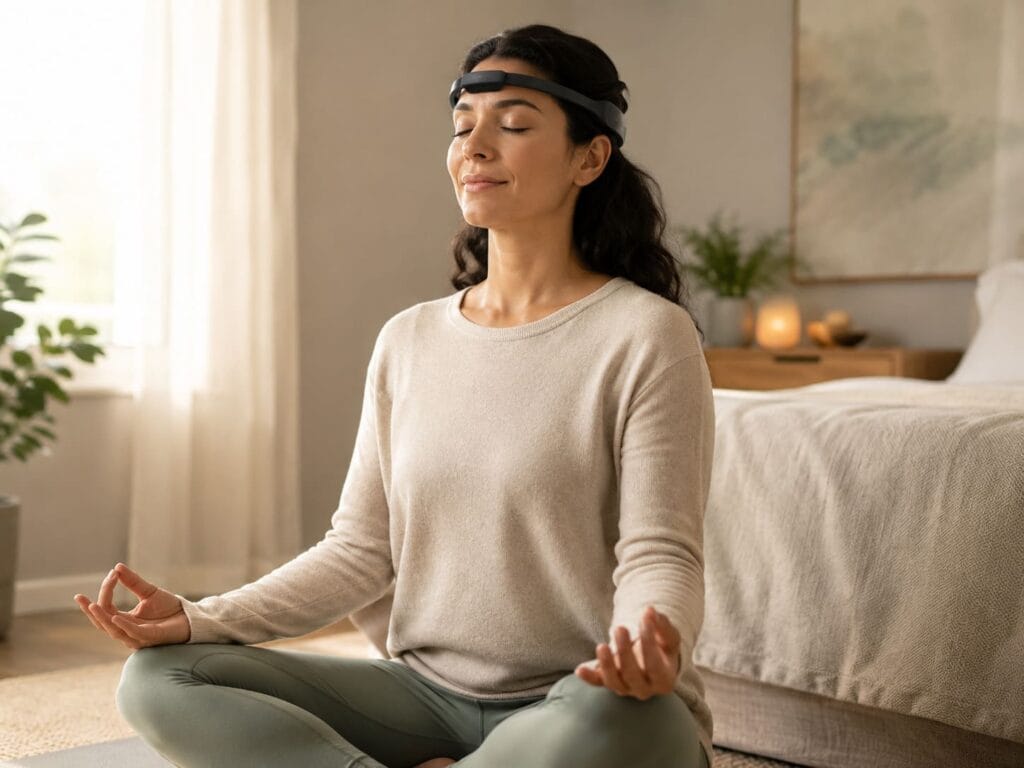
Muse S Athena is the current premium headband in the Muse range. It combines EEG with fNIRS, PPG, and motion sensing in a soft fabric design intended for meditation, cognitive training, and overnight sleep use.
During meditation, Muse converts measured activity into guided feedback that responds when attention appears to drift. The exact feedback depends on the selected session and app feature.
Athena’s main advantage is range. It can support guided meditation sessions, cognitive-effort tracking, sleep-stage estimates, movement tracking, and several premium sleep features.
The main drawback is complexity. Buyers who only want basic EEG-assisted meditation may get better value from Muse 2. Several advanced features, including parts of the cognitive and sleep experience, are connected to Muse Premium.
Best for: guided meditation, buyers interested in both EEG and fNIRS, sleep tracking, and users who prefer a polished consumer app.
Skip if: you dislike sleeping in a headband, want raw research-grade access, need a subscription-free system, or only require basic meditation audio.
Read our detailed Muse meditation headband review before choosing between Muse 2 and Muse S Athena.
2. Sens.ai: Best Premium At-Home Brain Training System
Sens.ai is positioned as a comprehensive home system rather than a single-purpose meditation headband. The company combines assessments, personalised training missions, biofeedback, and frequency-adapted neurostimulation inside one membership platform.
The strongest reason to consider Sens.ai is integration. Instead of asking the buyer to interpret a collection of isolated metrics, the platform builds sessions around its own assessments and tracked results.
The main barrier is cost. The headset is substantially more expensive than most consumer meditation devices, and the included trial membership converts to an annual subscription unless cancelled.
That makes Sens.ai difficult to justify as a first experiment. It is more appropriate for a committed buyer who understands the recurring cost and plans to follow the training schedule consistently.
Best for: high-budget buyers, structured at-home training, users who want assessments and personalised sessions in one ecosystem.
Skip if: you want transparent raw data, a low-cost introduction, occasional use, or a device without recurring fees.
3. Mendi: Best Subscription-Free fNIRS Focus Trainer
Mendi uses functional near-infrared spectroscopy to estimate changes in oxygenated blood flow in the prefrontal cortex. The device turns that signal into a simple visual training task inside the Mendi app.
This makes Mendi easier to understand than a dashboard filled with EEG frequency bands. You wear the headband, open the training task, and receive visual feedback during a short session.
Mendi’s strongest commercial advantage is the lack of a required subscription. The buyer pays for the hardware and retains access to the core training system without an annual membership fee.
The limitation is narrowness. Mendi focuses mainly on one forehead measurement area and one style of visual neurofeedback. It is not a sleep tracker, full-head EEG system, or passive wearable.
Best for: buyers interested in fNIRS, brief visual training sessions, focus routines, and avoiding recurring subscriptions.
Skip if: you want EEG frequency data, sleep tracking, passive monitoring, or a multi-sensor research headset.
4. Neurosity Crown: Best for EEG Data and Development
The Neurosity Crown is an 8-channel EEG headset designed for focus tracking, calm feedback, application development, experimentation, and access to real-time brainwave data.
Unlike a conventional meditation wearable, Crown provides developer tools and access to raw or processed EEG information. That makes it useful for people building brain-responsive music, productivity systems, research prototypes, or custom applications.
The Crown also includes consumer-facing focus and calm features, but its strongest value is flexibility rather than a highly guided wellness program.
This flexibility creates a steeper learning curve. Buyers who do not understand what they want to do with the data may receive less practical value than they would from Muse or HeartMath.
Best for: developers, researchers, technical users, quantified-self enthusiasts, and buyers who want EEG access beyond a closed meditation app.
Skip if: you need beginner guidance, sleep tracking, a simple breathing tool, or a low-cost first device.
5. Apollo Neuro: Best for Passive Tactile Routines
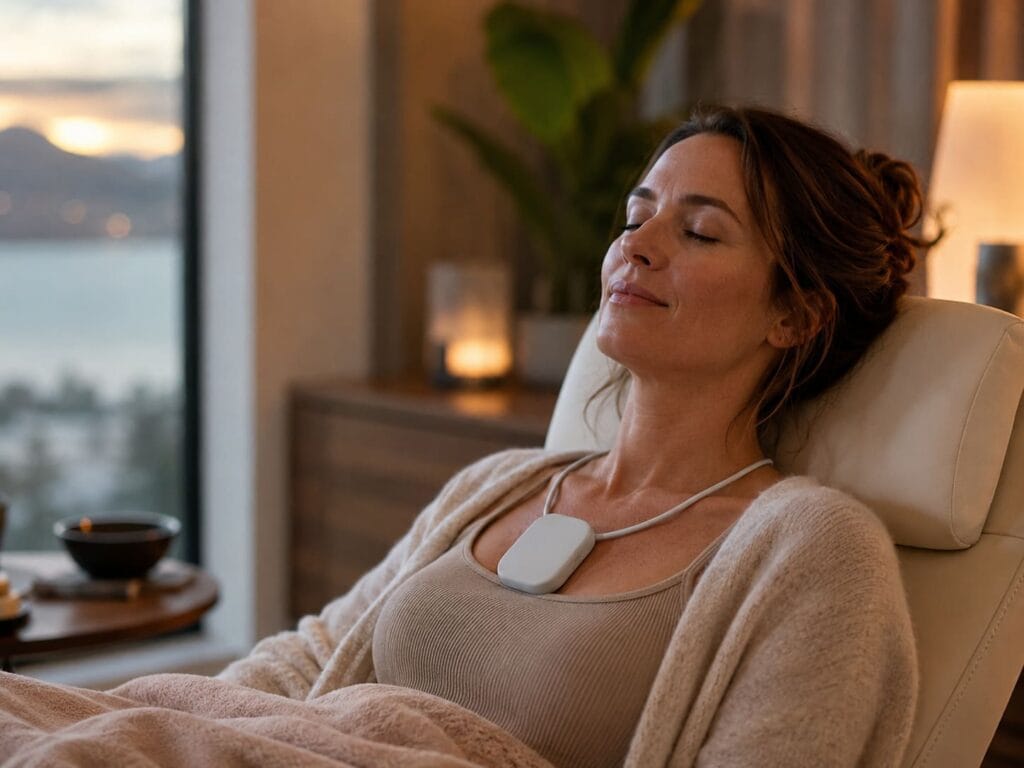
Apollo Neuro is different from the four products above. It does not measure EEG or fNIRS and should not be presented as a brainwave tracker.
The wearable attaches to the wrist, ankle, or another supported band position and delivers programmable vibration patterns through the Apollo app. Users select routines intended for different parts of the day, such as relaxation, focus, energy, social situations, or sleep.
The benefit is low effort. Once a routine begins, the user does not need to watch a screen or interpret a graph. The downside is that the device provides much less objective feedback about what is happening.
Current Apollo bundles include one year of SmartVibes membership. Buyers should check the renewal price and determine which functions remain available without an active membership.
Best for: buyers who prefer passive vibration routines, dislike headbands, and want a wearable that can run during ordinary activities.
Skip if: you expect EEG, HRV measurement, direct vagus nerve stimulation, clinical treatment, or subscription-free ownership.
See the full costs and limitations in our Apollo Neuro review.
6. HeartMath Inner Balance Coherence Plus: Best HRV Biofeedback Entry Point
HeartMath Inner Balance Coherence Plus uses an optical ear sensor to measure pulse timing. The app analyses beat-to-beat variation and converts the pattern into a real-time coherence score.
The product is built around paced breathing, emotional self-regulation practice, and immediate feedback rather than brainwave measurement.
Inner Balance is less futuristic than an EEG headset, but its simplicity is an advantage. The user can quickly see whether breathing and attention changes are affecting the displayed HRV pattern.
The current Coherence Plus sensor includes lifetime access to the full HeartMath app, avoiding the recurring subscription required by several competing systems.
Best for: beginners, breathing practice, HRV biofeedback, short daily sessions, and buyers who want a lower-complexity system.
Skip if: you specifically want EEG or fNIRS, dislike an ear clip, or expect continuous passive tracking throughout the day.
Read our HeartMath Inner Balance review for a closer look at the app and sensor.
Why We Removed Oura, WHOOP, Flowtime, Sensate, and Flow
The original article included too many products that served unrelated purposes.
- Oura and WHOOP: useful recovery wearables, but primarily passive sleep, strain, and recovery trackers rather than neurofeedback systems.
- Flowtime: removed because Mendi and Muse provide clearer current product positioning and direct brand partnerships for MindReset.
- Sensate: removed to avoid duplicating passive vibration-focused use cases already represented by Apollo.
- MindPlace Kasina: better suited to a dedicated light-and-sound meditation comparison rather than this core neurotechnology guide.
- Flow tDCS: removed because it is a regulated medical product in some markets and should not be sold as a casual wellness “brain reset.”
- Generic Amazon EEG devices: removed because the original article did not clearly identify the manufacturer, model, support, data access, or evidence.
For Oura-style products, use our smart rings for sleep comparison. For light-and-sound devices, see the dedicated light and sound meditation device guide.
Hidden Costs and Subscription Risks
- Premium memberships: advanced app features may disappear when a subscription ends.
- Automatic renewal: trial memberships may convert into annual plans unless cancelled.
- Replacement parts: bands, headbands, sensors, cables, and charging accessories can wear or become lost.
- Phone compatibility: app updates and operating-system changes may affect older hardware.
- Data lock-in: some devices provide only proprietary scores rather than exportable raw data.
- Fit problems: hair, head shape, movement, skin contact, or sleep position may affect sensor consistency.
- Return limits: direct-brand trial periods and regional return conditions differ.
- Abandoned-device risk: expensive hardware has little value when the daily setup is too inconvenient.
Should You Buy Direct or Through Amazon?
For the six products in this guide, we prioritise direct brand links.
- The official site is more likely to show the current model and bundle.
- Subscription terms are usually clearer.
- Promo codes and trial periods may apply only to direct purchases.
- Warranty and customer support remain directly connected to the manufacturer.
- Amazon listings may contain older models, regional stock, or third-party sellers.
Amazon can remain a backup option when the official brand does not ship to the reader’s region. It should not automatically replace a better direct offer.
What We Would Buy First
For most beginners, we would start with HeartMath Inner Balance or Muse. Both provide understandable feedback and a clearly defined practice rather than an open-ended technical platform.
For focused visual training without a required subscription, Mendi is the most straightforward option.
For a developer or researcher, Neurosity Crown provides greater technical flexibility. For a high-budget buyer committed to a structured ecosystem, Sens.ai offers the broadest package.
Choose Apollo Neuro only when you specifically prefer vibration routines and understand that it is not a brainwave or HRV measurement device.
Who Should Buy a Neurotechnology Device?
- People who already practise meditation or breathing and want measurable feedback.
- Buyers who understand the difference between EEG, fNIRS, HRV, and tactile stimulation.
- Data-oriented users willing to follow a consistent training routine.
- People prepared to pay for subscriptions when the selected system requires them.
- Developers or researchers with a clear use case for EEG data.
Who Should Avoid These Devices?
- Anyone expecting a guaranteed medical or mental-health result.
- Buyers looking for an instant solution requiring no consistent practice.
- People who already feel overwhelmed by health data and daily scores.
- Users unwilling to wear a headband, ear clip, or tactile device regularly.
- Anyone who has not checked contraindications for stimulation-based products.
- Buyers responding mainly to futuristic marketing rather than a clear use case.
What We Could Verify
- Muse S Athena combines EEG and fNIRS and includes meditation, cognitive, and sleep features.
- Sens.ai includes a trial membership that converts to an annual membership if not cancelled.
- Mendi uses fNIRS and advertises no required subscription fees.
- Neurosity Crown uses an 8-channel EEG system and provides app and developer access.
- Apollo Neuro delivers wearable vibration routines and current bundles include one year of SmartVibes.
- HeartMath Inner Balance Coherence Plus measures pulse timing and translates HRV patterns into coherence feedback.
What We Could Not Verify
We could not verify that any selected device reliably treats anxiety, ADHD, depression, insomnia, burnout, trauma, panic attacks, cognitive decline, or another medical condition.
We also could not verify that consumer scores match clinical EEG, polysomnography, laboratory fNIRS, or professional HRV assessment for every user and situation.
Long-term comfort, app stability, battery degradation, customer support, sensor durability, data export quality, and daily adherence can only be judged after extended real-world use.
FAQ
What is the best neurotechnology device for beginners?
HeartMath Inner Balance is the simplest biofeedback starting point. Muse provides a broader guided experience when meditation and sleep features matter. Mendi is suitable when the main goal is short visual focus-training sessions.
Which neurotechnology device has no required subscription?
Mendi advertises no required subscription. HeartMath currently includes lifetime access to the full Inner Balance app. Always verify the current terms before purchasing.
What is the difference between EEG and fNIRS?
EEG measures electrical activity through sensors on the scalp. fNIRS uses near-infrared light to estimate changes in oxygenated blood flow near the brain’s surface. They measure different physiological signals and should not be treated as interchangeable.
Is Apollo Neuro a vagus nerve stimulator?
Apollo Neuro delivers programmable vibrations through a wearable. It should not be described as directly electrically stimulating the vagus nerve, and it does not measure EEG or HRV itself.
Can consumer neurofeedback treat ADHD or anxiety?
Consumer neurofeedback devices should not be presented as treatments for ADHD, anxiety, or another condition. Research results vary, and a commercial device is not a substitute for qualified assessment or professional care.
Should I buy a neurotechnology device from Amazon?
Use the official brand offer when it provides the current model, clear subscription terms, a verified trial period, and direct warranty support. Amazon is more useful as a regional backup or when no direct purchase option exists.
Final Verdict
Muse S Athena is the best overall neurotechnology device for buyers who want guided brain-sensing meditation, cognitive feedback, and sleep features in one consumer system.
Choose Sens.ai for the broadest premium training ecosystem, but only after calculating the annual membership cost.
Choose Mendi for straightforward fNIRS focus training without a required subscription. Choose Neurosity Crown when raw EEG access, development tools, and experimentation matter more than beginner guidance.
Choose Apollo Neuro for low-effort vibration routines, not for biometric measurement. Choose HeartMath Inner Balance for breathing-based HRV biofeedback with a simpler setup and lifetime app access.
The best neurotechnology device is not the one making the biggest claim. It is the one that clearly explains what it measures, what it does not measure, what it costs after the first year, and how it fits into a routine you will genuinely follow.