
Table of Contents
In the quiet, early hours of the morning, long before the sun rises or the first message appears on a screen, a very specific kind of heaviness often settles over us. This is not the satisfying, simple tiredness that comes after a day of physical work or a long walk in nature. Rather, it is a deep, lingering mental fatigue that sleep alone cannot wash away. If you find yourself waking up feeling just as tired as when your head hit the pillow, you are far from alone.

Today, we navigate a world defined by endless demands, where the lines between our work, our responsibilities, and our personal time have completely vanished. For so many of us, the simple act of opening our eyes brings an immediate wave of quiet worry—a heavy reminder of the tasks, conversations, and duties waiting to be handled.
To truly understand this feeling is to look closely at the invisible weight carried by almost everyone today. We are constantly plugged in, perpetually available to others, and always trying to catch up. In this environment of endless noise and demands, finding a moment of genuine stillness feels not just difficult, but entirely impossible. Yet, deep down, the mind desperately needs a quiet space to process, to rest, and to simply breathe.
It is within this shared experience of emotional and physical exhaustion that the practice of returning to the present moment becomes a vital necessity. By embracing online meditation and mindfulness, people are discovering gentle, accessible ways to pause the rushing momentum of their days. This report explores the roots of our everyday tension, the heavy toll of constantly rushing, and the profound relief offered by an online meditation class.
Mental Health and Anxiety: Discover Relief from Daily Stress

To truly empathize with how tired we feel, we must look at the environments where we spend our days. The shift toward working from home or being constantly connected was supposed to offer freedom. Instead, for a vast majority, it simply moved the pressure of the outside world directly into our living rooms and bedrooms. The natural breaks that once allowed our minds to rest—the walk to a train, the quiet drive home, the simple act of leaving a building—have largely disappeared.
A kitchen table now serves as a place for difficult conversations; a quiet corner becomes a space for constant problem-solving. Without these physical boundaries, the day slowly bleeds into the night, leaving us tethered to our screens and obligations.
Recent shared experiences show a staggering reality: a vast majority of the workforce feels completely overwhelmed, struggling to keep their heads above water. The causes are deeply human. We face unmanageable workloads, teams stretching to cover too much ground, and the quiet, persistent worry about the future.
Many of us look at our daily schedule, seeing back-to-back virtual commitments, and realize with a sinking feeling that we have barely had time to think, let alone rest. This creates a quiet guilt. We step away from our tasks not feeling accomplished, but merely surviving. There is a deep worry that hums in the background, a fear of never doing quite enough, even when we are trying our absolute best.
This chronic rushing alters how we feel every single day. In any given interaction, you are likely speaking to someone who is also silently struggling with their mental health and navigating invisible anxiety. It leads to collective impatience, a loss of joy, and a pervasive sense of emotional weight. We may encounter situations where everything feels terribly urgent, even when it truly is not. The mind becomes trapped in a loop of trying to fix things, unable to distinguish between a genuine emergency and a routine request.

The Deep Ache of Exhaustion
It is incredibly important to understand the difference between having a difficult week and falling into the depths of true, heavy exhaustion. When we are merely under pressure, we may feel rushed and irritated, but we still hold onto the hope that once the current project is finished, the stress will finally fade. We are still emotionally connected to our lives, even if we are rushing through them.
True exhaustion, however, feels like a chilling numbness. It happens when the mind and body slowly shut down their protective systems because the burden has been carried for far too long without any relief. Our natural motivation vanishes, replaced by a hollow apathy. Tasks that once brought a sense of pride or comfort now feel entirely meaningless. You might look at a simple, everyday chore—like folding laundry or answering a message from a friend—and feel a wave of sheer impossibility wash over you.
| How We Experience the Day | Ordinary Daily Tension | Deep, Lingering Exhaustion |
| How We Feel | Over-engaged, quick to react, constantly worrying, and highly responsive to every new demand. | Emotionally flat, detached, deeply cynical, and struggling to care about the outcomes of our efforts. |
| Our Physical Energy | Tired at the end of the day, but a quiet evening or a long sleep generally helps us feel a bit better. | Chronically deeply tired; waking up feels just as exhausting as going to sleep, no matter how long we rest. |
| Our Thoughts | Scattered, attempting to juggle too many things at once, racing thoughts about immediate to-do lists. | Foggy, unable to hold a gentle focus, making frequent mistakes on simple, routine tasks we usually know well. |
| Our Connections | We may be short-tempered with our loved ones, but we still want to be around them. | Actively pulling away from friends and family, isolating ourselves, and avoiding any supportive conversations. |
The physical signs of this deep depletion are impossible to ignore. When the body cannot get us to slow down through gentle nudges, it begins to send louder signals. We frequently experience tight, aching shoulders, a jaw that stays clenched long into the night, and a stomach that feels constantly unsettled. Sleep becomes fragile and unrefreshing. These are not random inconveniences; they are the desperate, quiet pleas of a body begging for a moment of peace.

Welcome to a Mindful Space: Learn to Meditate Anywhere
Beyond the pressures of our tasks, the modern world itself is incredibly loud. We often face a situation where our senses are simply given more information than they can comfortably hold. Historically, human beings were used to the slow, rhythmic sounds and sights of the natural world. Today, we are forced to navigate a relentless, artificial storm of information.
Think about the sheer volume of things demanding your attention before the morning is even over. The sudden, sharp noise of an alarm; the harsh glare of a screen in a dark room; the overlapping voices in a bustling home; or the isolating silence of an empty room, interrupted only by the sharp sound of notifications. Each of these moments demands a piece of your energy. Throughout the day, we are bombarded by bright colors designed specifically to capture our attention, and endless streams of fast-moving text.
| What Surrounds Us | Everyday Examples of Overload | How It Makes Us Feel Inside |
| What We Hear | Multiple overlapping digital alerts, distant traffic, compressed audio from endless virtual calls. | A sudden racing heart, an inability to hear our own thoughts, and a feeling of being completely scattered. |
| What We See | Glaring overhead lights, flickering screens, endlessly scrolling through fast-moving pictures and news. | Tired, aching eyes, physical tension in the face, and a feeling of our mind being entirely “scrambled.” |
| What We Feel | Uncomfortable, restrictive clothing worn while sitting for hours; a lack of grounding, comforting touch. | A sense of feeling trapped, shallow and rapid breathing, and a restless need to escape the room. |
This sensory storm means our minds have to work incredibly hard just to filter out the background noise. By the late afternoon, this inner filter is worn thin. The result is a state of deep sensory fatigue, where even the sound of a loved one asking a simple question can feel overwhelmingly heavy. We feel constantly on edge, unable to soften.
When we reach this profound level of tiredness, our instinct is often to seek an escape. The weekend arrives, and we might collapse onto the sofa, hoping to rest by scrolling through a phone or watching television. Yet, when Monday morning returns, the exhaustion is still there, completely untouched. There is a quiet, devastating realization that passive distraction will not cure this depth of fatigue. The mind, though the body is sitting still, is still running a marathon.
This is exactly why discovering a truly mindful space is so deeply welcome. True recovery requires an active, gentle soothing of our inner selves. We need a method to release our tight grip on our racing thoughts. We require a dedicated, quiet environment where nothing is demanded, nothing is expected, and no performance is required. We do not need a difficult routine overseen by a strict professor. We do not need complex rules. We simply need to feel safe, supported, and understood.
This overwhelming need for accessible, gentle relief has led so many to discover the beauty of an online meditation class. For someone already struggling to manage their daily obligations, the thought of traveling to a physical studio, finding a parking spot, and sitting with strangers can feel like just another heavy task.
Online platforms remove these barriers entirely. Whether you are resting in a quiet countryside home or seeking peace in the busy heart of Los Angeles, you can simply open your laptop and find a sanctuary. There is nowhere you have to be, and nothing you have to prove. You can learn to meditate anywhere.

The Online Meditation Course: A Resource for Your Practice
While finding a few minutes of quiet on your own is a wonderful start, people who are deeply tired often find great comfort in a structured, gently guided path. Randomly listening to different audio clips can sometimes feel a bit confusing. A well-structured meditation course provides a logical, comforting journey. It holds your hand, moving step-by-step from the most basic, simple comforts to a deeper understanding of your own mind.
This specific curriculum is carefully designed not to add more pressure to your life, but to help you actively reduce stress naturally. It is built on the deep understanding that you are likely starting from a place of feeling overwhelmed, and it moves at a pace that honors your energy.
The course is divided into very gentle, digestible modules. Reviews beautifully highlight that the teaching is delivered smoothly and profoundly, ensuring that a beginner never feels lost or inadequate.
| The Gentle Journey | What the Lessons Focus On | How It Helps You Feel Better |
| Starting Simple | Understanding how the mind and body connect, and learning to notice the good things without forcing it. | Removes the pressure of “doing it perfectly.” Helps you recognize when you are carrying too much physical tension. |
| Moving Forward | Waking up from autopilot, handling everyday emotions, and learning to sit comfortably with your thoughts. | Helps you stop sleepwalking through your days. Gives you practical ways to manage the heavy feelings without being swept away. |
| Looking Inward | Trusting your own intuition, noticing self-doubt, and finding a quiet confidence inside yourself. | Empowers you to break the cycle of being harsh with yourself. Fosters a deep, quiet trust in your own inner wisdom. |
| Living Mindfully | Finding steady happiness, bringing peace into your daily tasks, and protecting your well-being. | Transforms your newly found inner quiet into a steady anchor, allowing you to navigate the heavy days with more grace. |
In the early stages of this journey, the focus is placed heavily on simple, everyday comforts. For example, you learn about cultivating gratitude. In this context, gratitude is not about toxic positivity. It is not about ignoring the genuine difficulties of your life or pretending you are not tired.
Rather, it is a gentle technique to rest your mind. It teaches you to notice the small, quiet moments of stability—the warmth of a cup of tea, the softness of a blanket, the sound of rain on the window—that exist alongside the chaos. This subtle shift provides a crucial, comforting tool when the waters of daily life become rough.
As the classes continue, you learn to navigate deeper waters. You explore how to pause before reacting. Instead of immediately feeling panic over a sudden change in plans, you learn a simple technique: to take a single, deeper breath, observe the rising worry, and choose a softer response. This is a profoundly practical tool that can change the entire feeling of your day.
To support this gentle learning, the course provides a welcoming website. The aim is to make the experience as easy as possible, ensuring that technology does not become another source of frustration. With a simple membership, you gain the freedom to personalize your approach, utilizing a free trial to ensure the environment feels truly supportive of your needs.
A Supportive Community: Join a Hybrid Class
While the journey of finding inner peace is deeply personal, it does not have to be lonely. One of the most beautiful aspects of an online meditation class is the quiet connection it creates. When you register to join an online space, you are not just watching videos; you are quietly entering a warm community of people who are all seeking the same gentle relief.
This community feels completely different from the loud, demanding nature of social media. There is absolutely no requirement to present a perfect, polished version of yourself. In a hybrid setup or when connecting via zoom, participants often join with a shared, silent understanding of their mutual exhaustion.
They are a gathering of tired parents, overwhelmed workers, and anxious individuals, all bringing their heavy days into a shared digital room. Simply seeing others on the screen, knowing that they too have carved out twenty minutes to sit in peace, can inspire a profound sense of comfort. It gently breaks the illusion that you are alone in your struggles.
For a beginner, this environment is remarkably safe. If the thought of being seen feels like too much, you can simply turn your camera off. You can use zoom video conferencing just to listen to the soothing voice of a compassionate instructor and feel the quiet presence of the group.
As you feel more comfortable, you might choose to participate more actively, perhaps leaving a small note of thanks in the chat. This slow, self-paced integration provides vital meditation support, ensuring that when you face a difficult day, you remember that a supportive group is walking the exact same path.
Schedule Your Session: Every Monday, Tuesday, and Friday
The true, lasting benefits of mindfulness do not come from trying incredibly hard for one long hour and then giving up. Instead, they blossom from a gentle, consistent return to the practice, day after day. Building a habit requires immense patience and a willingness to start very small. For someone whose schedule is already overflowing, the thought of adding a rigid thirty-minute daily task can feel impossible. Therefore, your approach must be highly flexible and deeply forgiving.
It often helps to connect your new habit to a quiet moment you already have. Every monday, before you open your messages to face the week, you might commit to just five minutes of breathing. This small, achievable step sets a quiet, deliberate tone for the days ahead. On a busy tuesday, your practice might simply be taking three slow breaths before answering a phone call. By the time the week is ending, you may find yourself naturally softening your shoulders without even thinking about it. The goal is never perfection; the goal is a gentle, steady return to yourself.
Many people find a deep sense of joy in practicing twice a day—once in the quiet morning to prepare the mind, and once in the evening to wash away the emotional weight of the day. A friday evening session can become a beautiful, deeply cherished ritual. It creates a clear, intentional boundary that marks the end of your obligations and the beginning of your personal rest. During these moments of transition, a brief exercise—simply feeling the air move in and out of your chest—can work wonders in settling the body.
The beauty of following a structured course is that it provides a reliable schedule without the pressure. Knowing that an online meditation class is waiting for you, or that an instructor has shared a new thought, creates a warm, inviting routine. If you miss a day, or even a whole week, there is no penalty, no disappointment. The space is always open, ready to welcome you back. This inherently forgiving structure helps every participant build a routine that can survive the inevitable chaotic periods of life.
Guided Meditation Practice Sessions: Deepening Your Mindfulness

When you first hear the word meditation, you might hold a common worry that the aim is to completely erase all your thoughts. This misunderstanding creates an immediate barrier. A tired person sits down, closes their eyes, and is instantly flooded by a tidal wave of uncompleted tasks, old conversations, and worries. The immediate assumption is one of failure—the belief that they are simply “bad” at finding peace.
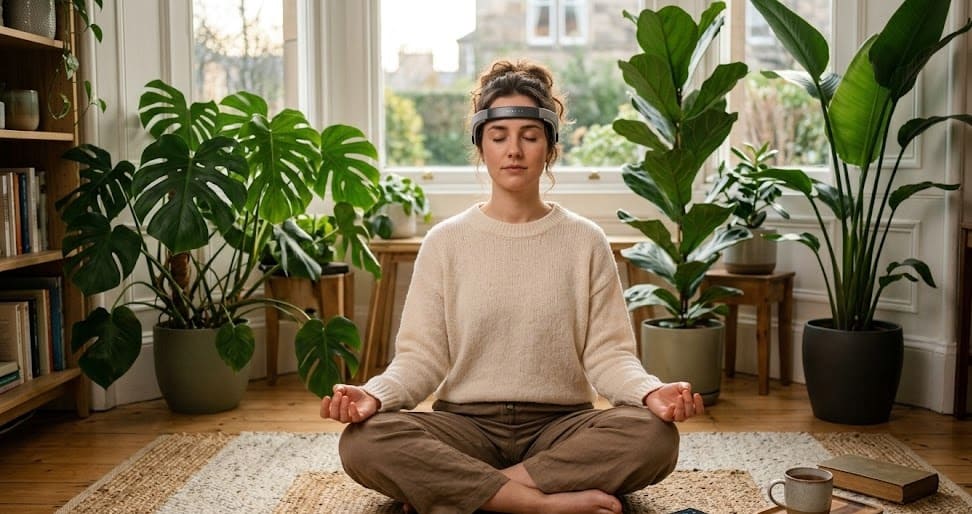
However, the gentle reality of this practice is entirely different. It is not an act of fighting your thoughts. It involves sitting quietly and choosing to watch your thoughts flow by, like leaves on a stream, rather than jumping in and fighting the current. When a thought appears—and it will, thousands of times—you simply notice it without judging yourself, and gently guide your focus back to the steady, reliable rhythm of your breath.
In our classes, learn to embrace this simple pivot in perspective. It transforms your inner world from a place of struggle into a sanctuary of rest. By maintaining a gentle focus on a single thing—the rise and fall of your chest, or a calming sound—you begin to release the physical tension stored deep within your muscles.
As your body slowly realizes it is safe and not under immediate threat, your racing heart begins to slow down. Your tight, shallow breathing expands into a deeper, more nourishing rhythm. Over time, attending online meditation events and using these practice sessions helps clear away the immense overload that builds up throughout the day.
As you continue to update your routine and engage with free meditation resources or your chosen course, you will notice subtle, yet extraordinary shifts. The suffocating blanket of fatigue begins to lift, revealing a lighter, softer mind. The tension that once felt permanent begins to melt away. The benefits of the classes begin to spill over, quietly improving your overall well-being.
Science continuously supports what so many have felt in their own lives. Consistent engagement with a mindful practice has been shown to naturally reduce the physical strain on your heart, simply by allowing the body to step out of its constant state of alarm. It can promote better, deeper sleep, allowing your mind to finally engage in genuine rest. Your memory and ability to concentrate improve, not because you are trying harder, but because your brain is no longer wasting vast amounts of energy holding onto worry.
Most importantly, the emotional landscape within you begins to transform. You develop a beautiful capacity to manage the heavy days. When an unexpected difficulty arises, your immediate reaction is no longer a spike of blind panic. Instead, there is a tiny moment of space. In that space, you remember to take a breath. You remember the inner quiet you cultivated during your online session. You respond with gentle wisdom rather than frantic fear.
This is the ultimate promise of embracing online meditation and mindfulness. It does not magically erase the difficulties of the world; the endless emails will still arrive, and the demands of daily life will continue. However, the way you carry these demands is fundamentally changed. You are no longer being battered by the storm, but rather learning to find a quiet shelter within it. You discover a wellspring of peace and joy that does not depend on everything around you being perfect.
The journey away from exhaustion and toward a softer, more vibrant life is entirely possible for you. It requires only the willingness to pause, to take a deeper breath, and to seek out a supportive environment. The digital world, which so often causes the very fatigue we seek to escape, has beautifully provided the exact tool we need to heal.
By choosing to join an online class, to listen to a guided meditation, and to sit in a shared, quiet space, you take a profound step toward reclaiming your own mind. It is a gentle path, a deeply welcoming space, and a beautiful return to yourself. Use the link to access the course, and discover the relief that is waiting for you today.
Explore More Paths to Healing
If you feel that this specific approach isn’t quite what your mind needs right now, that is completely okay. Healing is a deeply personal journey, and there is no single right answer. When you feel ready, you can gently explore a wider library of wellness and personal growth programs. Take your time, listen to your body, and discover a path that feels naturally supportive for you here: