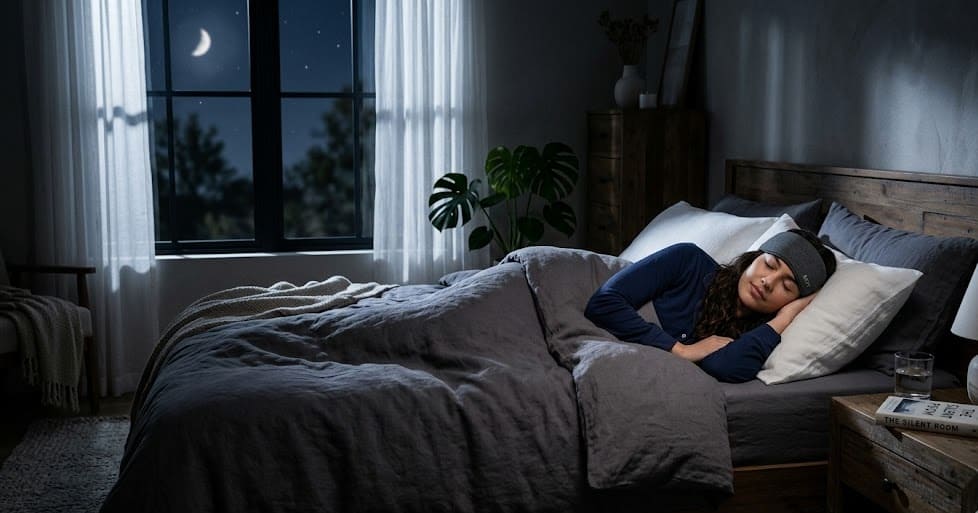
In this exhaustive Musicozy vs AcousticSheep analysis, we explore the ultimate acoustic relief for exhausted nervous systems. The modern landscape of human health is increasingly defined by a pervasive and devastating deficit in restorative rest. The relentless pace of contemporary life, compounded by digital hyper-connectivity and environmental noise pollution, has precipitated a global crisis of sleep deprivation.
In the United States alone, insufficient sleep carries an estimated economic burden exceeding $411 billion annually, contributing to unplanned work absences, diminished productivity, and severe health complications. The National Sleep Foundation recommends nine hours of sleep for optimal recovery in certain adults, with a baseline requirement of seven to nine hours of sleep each night for the general adult population. Many users consider the Musicozy their top pick among wireless headphones for sleeping.
In response to this epidemic of exhaustion, acoustic technology has evolved rapidly, yielding a highly specialized market of sleep headphones and earbuds designed to facilitate nervous system down-regulation and ensure a peaceful sleep. For those who have tried sleeping with traditional audio devices, the realization quickly dawns that standard headphones and earbuds are fundamentally unsuited for the nocturnal environment. The pursuit of the best sleep requires purpose-built technology.
This comprehensive report evaluates the current state of sleep audio technology, dissecting the engineering, physiological efficacy, and consumer value of the best sleep headphones on the market. By analyzing factors such as active noise cancellation, physical ergonomics for side sleepers, and audio quality, this analysis identifies the best headphones for sleep in 2026. This evaluation is designed to be the ultimate list of the best solutions for those seeking restorative slumber. In compiling this data, organizations that independently review everything we recommend have been consulted to ensure absolute objectivity. With its built-in bluetooth sleep mask design, it blocks out light perfectly.
The Neurobiology of Insomnia: Why Sleeping With Headphones Can Help

To fully grasp the transformative power of a set of sleep headphones, one must first examine the neurobiology of insomnia and the physiological mechanics of sleep disruption. Sleep is not merely the absence of wakefulness; it is a highly active, complex neurological state necessary for cognitive maintenance, emotional regulation, and physical cellular repair. During deep sleep, memories are consolidated, the immune system is bolstered, and metabolism is regulated. Conversely, when individuals are deprived of sleep quality, they face heightened emotional reactivity, decreased motor function, and a statistically significant increase in the risk of chronic diseases such as obesity, diabetes, and cardiovascular dysfunction.
The autonomic nervous system (ANS) is responsible for regulating involuntary physiological processes, including heart rate, blood pressure, and respiratory rate. In individuals experiencing acute or chronic stress, the sympathetic branch of the ANS—responsible for the “fight or flight” response—remains hyperactive during the pre-sleep period. This state of elevated arousal manifests cognitively as racing thoughts and physically as an inability to drift off to sleep.
A certified sleep science coach will frequently note that establishing a controlled auditory environment is a primary intervention for this type of sensory overload. When individuals are exposed to erratic, unpredictable environmental sounds—ranging from urban traffic to a partner’s snoring—the brain’s threat-detection mechanisms are triggered, pulling the sleeper out of deep sleep and into lighter sleep stages, or waking them entirely.
Sleeping with headphones acts as both a physical barrier to block sound and a profound psychological tool for nervous system down-regulation. Through the delivery of continuous, predictable audio streams, sleep headphones provide the brain with a non-engaging acoustic focal point. This steady auditory input masks disruptive external noises and facilitates a transition away from the “thinking mind,” encouraging the physiological relaxation necessary for deep, restorative sleep.
Why Standard Headphones Fail Side Sleepers
When choosing the best sleep headphones, consumers are immediately presented with two divergent architectural paradigms: in-ear wireless earbuds and fabric-based sleep headbands. The physiological demands of sleep—specifically the pressure exerted on the head and ears during side sleeping—dictate the absolute success or failure of these designs.
Traditional wireless headphones and standard earbuds are fundamentally unsuited for the nighttime environment. The rigid plastic, extended stems, and bulky housings of standard devices create intense pressure points against the cartilage of the ear when pressed into a pillow. For the roughly 60% of the adult population who sleep on their side, a device specifically designed for sleep is not a luxury, but a strict ergonomic necessity. A frequent comment among patients seeking relief is, “I sleep on my side, and standard earbuds feel like stones pressing into my skull.” Similarly, another user might note, “If I sleep on your back, any headphone works, but rolling over causes instant pain.”
The market has bifurcated into two highly specialized solutions to address this anatomical challenge:
- Ultra-Low-Profile Earbuds: Devices like the Soundcore Sleep A30 Special and the Ozlo Sleepbuds utilize micro-engineering to shrink the battery, driver, and housing into a package that fits entirely within the concha of the ear, preventing any protrusion beyond the ear canal.
- The Sleep Headband: Devices such as the AcousticSheep SleepPhones, Musicozy sleep headphones, and the Snoozeband embed ultra-thin, flat speakers within a soft, stretchable fabric loop that doubles as a sleep mask. Because the speakers are flat and padded, they distribute pressure evenly, ensuring that side sleepers remain comfortable throughout the night.
If you want to find the best solution for your individual anatomy, you must critically evaluate your dominant sleep position. For the absolute best sleep headphones for side sleepers, low-profile earbuds or padded headbands are the only viable options.
Earbuds vs Headbands: Choosing the Best Headphones for Sleep
In the realm of in-ear sleep technology, Anker’s Soundcore division has established a dominant, almost monopolistic presence in the mid-to-premium tier. The Soundcore Sleep A20 and the newer Soundcore Sleep A30 Special represent the bleeding edge of miniaturized acoustic engineering, yet they target entirely different consumer pain points.
The Soundcore Sleep A30 Special: The Ultimate Weapon Against Snoring
The Soundcore Sleep A30 Special is widely regarded as the top pick for individuals sharing a bed with a snoring partner. The emotional and relational toll of a partner’s snoring cannot be overstated; it breeds resentment, fractures relationships, and guarantees chronic sleep deprivation for the non-snoring partner.
Snoring primarily generates low-frequency acoustic energy, typically falling within the 20-200Hz range. Passive noise isolation—the physical sealing of the ear canal with silicone or memory foam—is reasonably effective at blocking high-frequency sounds like birds chirping or distant sirens. However, low-frequency sound waves possess long wavelengths that easily penetrate physical barriers, rendering standard earplugs largely ineffective against a heavy snorer.
To combat this, the Soundcore Sleep A30 Special employs active noise cancellation (ANC). ANC utilizes external microphones to detect incoming ambient noise and generates an inverted acoustic wave to neutralize the sound before it reaches the eardrum. Furthermore, the A30 Special introduces a revolutionary adaptive snore-masking technology. The charging case contains an integrated microphone that constantly monitors the ambient room environment; upon detecting the specific rhythmic frequency of snoring, it automatically signals the earbuds to adjust their noise-masking audio volumes to neutralize the disruption.
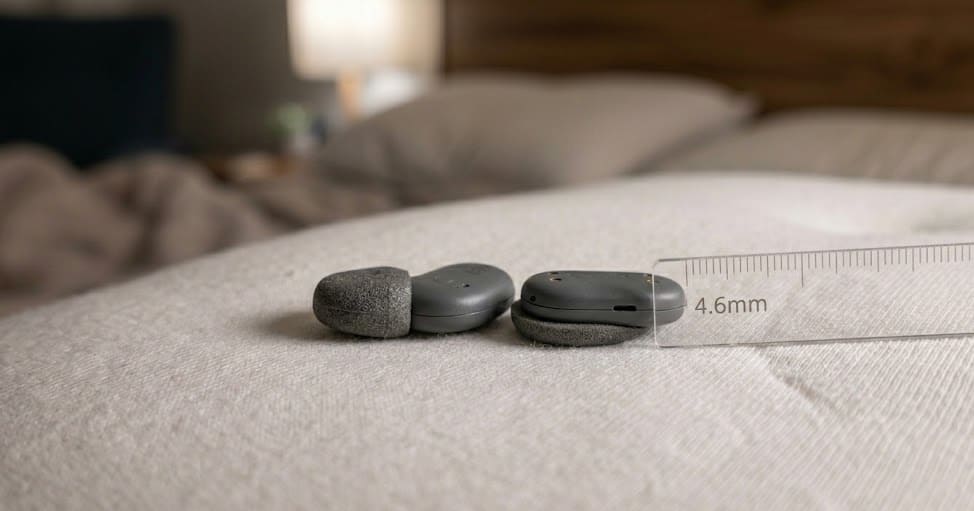
In rigorous testing, the Soundcore Sleep A30’s ANC performed exceptionally well in the critical 20-200Hz range. Even without any audio playing, the earbuds were able to nearly silence a partner’s light snoring entirely. When paired with the companion app’s AI Brainwave Audio and Spatial Audio, the user is enveloped in a soundscape that completely isolates them from environmental chaos. The physical ergonomics of the A30 also cater excellently to side sleeping; the buds feature a 4.6mm slim profile, making them 7% smaller than their predecessor, and utilize memory foam tips that mold comfortably to the ear canal.
The Soundcore Sleep A20: Passive Isolation and Unmatched Endurance
While the A30 represents the pinnacle of anti-snore technology, the Soundcore Sleep A20 earbuds remain highly relevant, frequently earning the title of the best value sleep earbuds. The A20 relies entirely on a passive dual-seal ear tip design to block out noise. While it cannot electronically erase the low-frequency rumble of a heavy snorer, its 30dB of passive physical blocking significantly reduces the volume of environmental disturbances.
Where the A20 vastly outperforms the A30 is in battery life. Without the drain of ANC processing, the A20 stands as an endurance champion. It consistently lasts up to 14 hours in Sleep mode and 10 hours with standard Bluetooth playback. The charging case adds an astonishing 80 hours of runtime, making it ideal for travel or for those who frequently forget to charge their devices.
Interestingly, the A20 possesses an unexpected advantage: a complete lack of touch controls. While this might seem like a downgrade, sleep specialists note that physical touch controls on earbuds often lead to accidental inputs in the middle of the night as the sleeper tosses and turns against a pillow. The A20 avoids this entirely, ensuring that the audio experience remains uninterrupted throughout the night.
The Sleep Headband: A Solution for Sleeping with Headphones
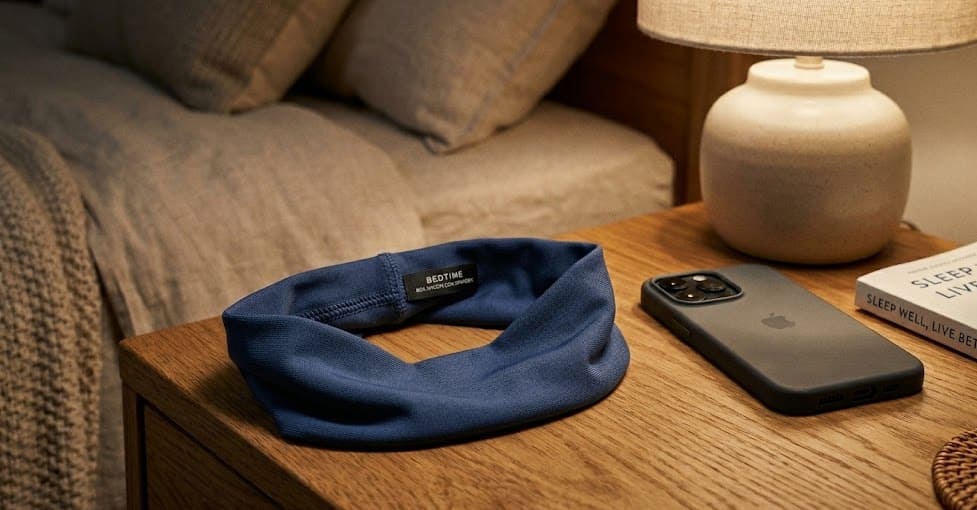
For a massive demographic of users, the physical sensation of any object inserted into the ear canal is fundamentally intolerable. Even the softest silicone or memory foam can cause cartilage fatigue, leading to soreness and inflammation upon waking. For these individuals, the sleep headband is the only viable path to a peaceful sleep.
A sleep headband embeds two ultra-thin, disc-shaped speakers within a wide band of stretchable fabric. Because the speakers are flat and cushioned by layers of textile, they distribute pressure evenly across the outer ear rather than concentrating it inside the ear canal. This allows users to sleep comfortably on their side without experiencing pressure-induced pain. While headband audio quality is decent, it is physically impossible for them to match the high-fidelity acoustic performance or active noise cancellation of sealed earbuds.
The fabric enclosure inevitably muffles high-end treble and dampens bass response. Furthermore, because they sit on top of the ear rather than sealing it, they suffer from sound leakage and offer minimal physical noise isolation. Outside sounds like traffic or a partner’s breathing can still creep in. However, for listening to podcasts, audiobooks, or white noise to drift off to sleep, the sound quality is more than sufficient. The consensus among reviewers is that the sound quality is decent enough for spoken word and ambient noise, and the sheer comfort makes up for any acoustic deficiencies.
AcousticSheep SleepPhones Review: The Premium Sleep Headband
No exhaustive analysis of sleep audio technology is complete without examining AcousticSheep, the company that effectively invented the sleep headphones on the market. Founded in 2007 by Dr. Wei-Shin Lai, a family physician, and her husband Jason Wolfe, a video game developer, AcousticSheep was born out of clinical necessity.
As a family doctor in Erie, Pennsylvania, Dr. Lai was frequently awakened by late-night on-call phone calls, leaving her with racing thoughts and an inability to fall back asleep. Finding traditional bulky headphones and hard earbuds intolerable for side sleeping, she sought a better solution. She designed the first prototype of “SleepPhones” directly at her kitchen table, manually soldering wires and sewing flat speakers into a soft fleece headband. This grassroots innovation exploded into a multi-million dollar international enterprise, earning AcousticSheep numerous Consumer Electronics Association Innovation Awards.
Today, the AcousticSheep SleepPhones Wireless remains a premium benchmark in the headband category, retailing between $99.95 and $149.95 depending on the charging configuration (standard USB vs. induction charging). AcousticSheep differentiates itself through superior material customization, offering their headbands in two distinct fabrics: a warm, plush “Fleece” designed for cooler climates, and a lighter, moisture-wicking “Breeze” fabric designed specifically for hot sleepers who tend to overheat at night.
Musicozy Sleep Headphones Review: The Best Budget Alternative
In the highly competitive market of fabric-based sleep audio, the Musicozy sleep headphones have emerged as a dominant force, particularly for consumers seeking an affordable alternative to premium tech. Retailing for roughly $26, the Musicozy won’t break the bank, yet it delivers a feature set that rivals significantly more expensive competitors. For users who are hesitant to spend hundreds of dollars on a sleep device, the Musicozy is the undisputed top pick.
The Musicozy utilizes Bluetooth 5.2 (and up to Bluetooth 5.4 in their eye mask variants), ensuring a stable, lag-free wireless connection with a range of up to 8 meters. The device is powered by a 150mAh lithium-polymer battery, which charges from empty to full via a modern USB Type-C port in just 1 to 2 hours. This efficient power management yields over 10 hours of continuous playback—with some models exceeding 14 to 16 hours—guaranteeing that the device will easily last throughout the night, far exceeding the lifespan of many premium ANC earbuds.
From a textile engineering perspective, the Musicozy headband is constructed from an 80% Nylon and 20% Spandex blend. This specific material composition is critical for sleep architecture; the human body must lower its core temperature by 1 to 2 degrees Fahrenheit to enter deep sleep. Heavy, insulating fabrics can trap heat against the forehead, causing night sweats and waking the user.
The Musicozy’s breathable, sweat-absorbent design mitigates thermal retention, allowing users to sleep comfortably even in warmer climates. Furthermore, the electronic control pod and speakers are easily removable, rendering the fabric headband entirely machine washable—a crucial hygiene factor for a garment worn tightly against the skin for eight hours of sleep each night.
Snoozeband: The Evolution of the Bluetooth Sleep Mask
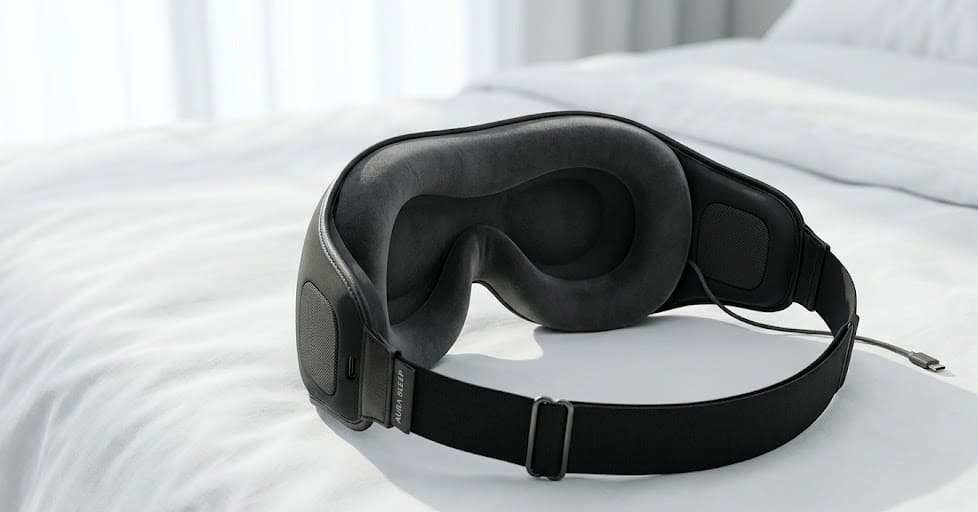
While the standard headband design is highly effective, the UK-based brand Snoozeband has pushed the form factor further by hybridizing the sleep headband with the blackout sleep mask. For individuals highly sensitive to both noise and ambient light, achieving a peaceful sleep requires addressing visual sensory input as aggressively as auditory input. A dark room is essential for the production of melatonin, the hormone that regulates the sleep-wake cycle. Even the faint glow of a streetlamp or a digital clock can disrupt this process.
The Snoozeband ecosystem includes several distinct models tailored to different sleep positions and sensory preferences:
- Snoozeband Original & 2.0: These function as traditional headbands. The Original features a stretchy one-piece cotton/polyester blend, while the 2.0 incorporates an adjustable velcro strap and ultra-lightweight fabric for enhanced thermal regulation. Both offer 10-12 hours of battery life and ultra-thin speakers that are incredibly comfy for side sleepers.
- Snoozeband Deluxe: This model transitions into a full “Kokoon style” sleep mask. It features dense cloud-like padding that lays flat against the eyes, completely blocking out light. Notably, the Deluxe model integrates built-in standard sleep sounds directly into the hardware, allowing for offline listening without a paired Bluetooth device. It offers up to 13 hours of battery life.
- Snoozeband MAX: The flagship model, the MAX, addresses the primary complaint of traditional sleep masks: pressure on the eyelids. It features deep, 3D eye cups that provide 100% blackout capability while leaving a physical void over the eyes, allowing for rapid eye movement (REM) without friction against the fabric. The MAX boasts a massive 20-hour battery life, premium offline sleep sounds, and fully adjustable, removable speakers with a mere 1.5cm depth.
The integration of offline audio in the Snoozeband Deluxe and MAX is a critical technological leap. For individuals attempting to minimize radio frequency exposure or those who wish to leave their smartphones outside the bedroom to improve sleep hygiene, the ability to play built-in white noise, rainstorms, and nature soundscapes directly from the mask’s internal memory is a profound advantage.
While some reviewers note that the white noise tracks loop somewhat abruptly on earlier models, the overall utility of the Snoozeband as an all-in-one sensory deprivation tool makes it a formidable contender for the best sleep headphones of 2026.
Structured Comparison: Sleep Headbands and Masks
| Feature | Musicozy Sleep Headphones | AcousticSheep SleepPhones | Snoozeband MAX |
| Form Factor | Stretch Headband | Stretch Headband | 3D Eye Cup Sleep Mask |
| Fabric Type | 80% Nylon / 20% Spandex | Fleece or Breeze fabrics | Premium padded fabric |
| Battery Life | 10 – 14+ hours | 10 – 12 hours | Up to 20 hours |
| Light Blocking | Partial (if pulled down) | Partial (if pulled down) | 100% Blackout (3D Cups) |
| Offline Audio | No (Bluetooth only) | No (Bluetooth only) | Yes (Premium built-in sounds) |
| Speaker Adjustability | Yes (Manual sliding) | Yes (Manual sliding) | Yes (1.5cm depth) |
| Price (Approximate) | ~$26.00 | $99.95 – $149.95 | £184.00 (Bundle) |
The Psychological Imperative: Why We Need Audio Sanctuaries
Beyond the physical specifications of battery life, Bluetooth codecs, and driver sizes, the true efficacy of sleep headphones lies in the profound psychological relief they offer. Insomnia and sleep anxiety operate on a vicious, self-perpetuating feedback loop. An individual goes to bed, hears a disruptive noise (a car door slamming, a partner breathing heavily, a dog barking), and experiences an immediate spike in cortisol and adrenaline.
The brain registers the environment as “unsafe” for vulnerability (sleep). The individual then becomes anxious about not sleeping, staring at the ceiling as the hours tick by. This secondary anxiety further stimulates the sympathetic nervous system, ensuring that deep sleep remains physiologically impossible.
A set of sleep headphones acts as a circuit breaker for this devastating anxiety loop. As a certified sleep science coach will attest, the simple ritual of putting on a Musicozy headband or inserting Soundcore earbuds signals to the brain that the transition to rest has begun. This behavioral conditioning is a core tenet of Cognitive Behavioral Therapy for Insomnia (CBT-I).
By replacing chaotic, unpredictable environmental noise with a steady, controllable auditory stream—be it a guided meditation, an audiobook, or the drone of brown noise—the user reclaims absolute agency over their sensory environment. The sensory overload is mitigated, the nervous system begins its necessary down-regulation, and the mind is finally granted permission to drift off to sleep.
Making the Choice: Choosing the Best Device for Your Needs
When choosing the best sleep device, consumers must bypass marketing jargon and conduct a brutally honest assessment of their sleeping environment and anatomical quirks. The headphones are great only if they actually solve the specific problem at hand.
- Assess Your Noise Environment: If you sleep next to a heavy snorer, or if you live above a busy urban street, standard headbands will fail you. You require the active noise cancellation of the Soundcore Sleep A30 Special. If your environment is only mildly noisy, and you simply need a distraction from racing thoughts, the passive blocking of the Soundcore Sleep A20 or the gentle audio masking of a Musicozy will suffice.
- Assess Your Sleep Position: Be realistic about how you sleep. If you spend 80% of the night on your side, do not purchase standard, rigid wireless headphones. They will cause immense pain. You must limit your search to ultra-low-profile earbuds (like the Ozlo Sleepbuds) or soft fabric headbands (like the AcousticSheep SleepPhones).
- Assess Your Battery Needs: Do you routinely sleep for nine hours, or do you struggle to get six? If you are a long sleeper, the 7.5-hour battery life of an ANC earbud might wake you up with a “low battery” warning at 5:00 AM. In this case, the 14-hour battery of the Soundcore A20 or the 20-hour battery of the Snoozeband MAX is the superior choice.
- Assess Your Budget: The price disparity in this market is massive. You can spend $349 on Ozlo Sleepbuds or $26 on a Musicozy. Both will play white noise and help you fall asleep. The premium price tags pay for miniaturization, active noise cancellation, and biometric tracking. If you simply want to listen to a podcast comfortably, the budget options are entirely adequate.
Many users have reported that after years of suffering, the simple addition of a sleep headband transformed their lives. “I tried sleeping without them on vacation, and I realized how dependent I had become on the peaceful sleep they provide,” one user noted. “The sound quality is decent, the headphones are comfy, and I finally get the rest I need.”
Conclusion: Musicozy or AcousticSheep for Peaceful Sleep?
The pursuit of the best sleep is no longer a passive endeavor; it requires active, intelligent curation of the bedroom environment. The analysis clearly indicates that the phrase “one size fits all” is entirely inapplicable to sleep technology. The anatomical variance of the human ear canal, the specific physical demands of side sleepers, and the exact decibel and frequency level of localized noise pollution dictate that consumers must select their hardware with extreme precision.
For those plagued by the low-frequency rumble of a snoring partner or urban traffic, investing in active noise cancellation is non-negotiable. The Soundcore Sleep A30 Special stands as the undisputed champion in this arena, utilizing intelligent algorithms to neutralize threats to your rest. If the physical sensation of an earbud is intolerable, the headband form factor provides immediate, soothing relief.
The AcousticSheep SleepPhones offer a premium, clinically inspired heritage , the Snoozeband MAX delivers an uncompromising blackout experience with offline audio , and the Musicozy proves that achieving a peaceful sleep does not require a massive financial investment, remaining a highly affordable and effective alternative.