Table of Contents
Micro-Movements for Focus
Most people think focus is only a mental problem. More discipline. More coffee. Better apps. Another productivity system.
But your body is part of your focus system too.
When you sit still for hours, your posture collapses, your breathing becomes shallower, your eyes stay locked on the screen, and your body slowly shifts into a low-energy state. Micro-movements are a simple way to interrupt that pattern before it turns into brain fog, stiffness, and low-quality work.
This is not a workout. It is not a miracle biohack. It is a practical desk reset: small movements used at the right time to help your body and mind stay more alert during long work sessions.
Evidence note: Research on micro-breaks shows more consistent benefits for reducing fatigue and supporting well-being than for reliably improving task performance. Use these movements as practical breaks from prolonged sitting, not as a guaranteed focus hack or a treatment for pain, fatigue, or concentration problems.
Quick Verdict: Do Micro-Movements Really Help Focus?
They can be useful, especially when your focus fades after long, uninterrupted sitting. Micro-breaks may reduce fatigue and make it easier to return to a task, but they do not guarantee better concentration or performance for every person.
Micro-movements are short, low-effort movement breaks that help you change physical state without leaving your workday. They may support better alertness, reduce desk stiffness, and make it easier to return to focused work.
They will not fix poor sleep, burnout, medical fatigue, or a chaotic schedule. But if your brain starts to feel dull after sitting too long, micro-movements are one of the simplest fixes to try first.
Start with this rule: every 30–60 minutes, stand up or move for 30–90 seconds.
What Are Micro-Movements?
Micro-movements are small movement breaks you can do during normal work. They are short enough to fit between emails, calls, writing sessions, study blocks, or creative work.
Examples include:
- standing up for one minute;
- walking across the room;
- rolling your shoulders;
- stretching your chest;
- doing calf raises;
- gently moving your neck;
- extending your legs under the desk;
- looking away from the screen;
- walking while taking a call.
The key is consistency, not intensity. You are not trying to exercise hard. You are trying to stop your body from staying frozen in the same position for too long.
Why Stillness Can Hurt Mental Energy
Deep work often requires sitting. The problem is not sitting for a while. The problem is sitting without interruption for hours.
Long static work can create a chain reaction: tight shoulders, stiff hips, shallow breathing, eye strain, lower physical energy, and a growing sense of mental heaviness. You may still be technically “working,” but the quality of attention drops.
This is where people often make the wrong move. They force more concentration with caffeine, pressure, or another productivity tool.
Sometimes the better reset is physical:
Stand up.
Move.
Breathe.
Look away from the screen.
Return to one clear task.
That small interruption can be enough to break the downward slide. A systematic review and meta-analysis found that micro-breaks showed more consistent benefits for reducing fatigue and supporting well-being than for improving task performance, which varied by task and break type. Read the full study in the NIH PubMed Central archive.

Why Movement Is a Mind Reset
Your brain and body are not separate systems. Physical state affects mental state.
Movement changes your position and interrupts prolonged sitting. Some people also feel more alert after a short physical break, although the effect varies with the task, break length, sleep, workload, and general health.
This is why a short walk can sometimes help when you feel stuck. The problem may not be motivation alone; you may simply need a brief physical break before returning to the task.
Regular exercise remains important, but short movement breaks address a different problem: long periods of uninterrupted sitting during the workday.
The MindReset Micro-Movement Toolkit
You do not need a gym, special clothes, or a complicated routine. Use these simple movements during your workday.
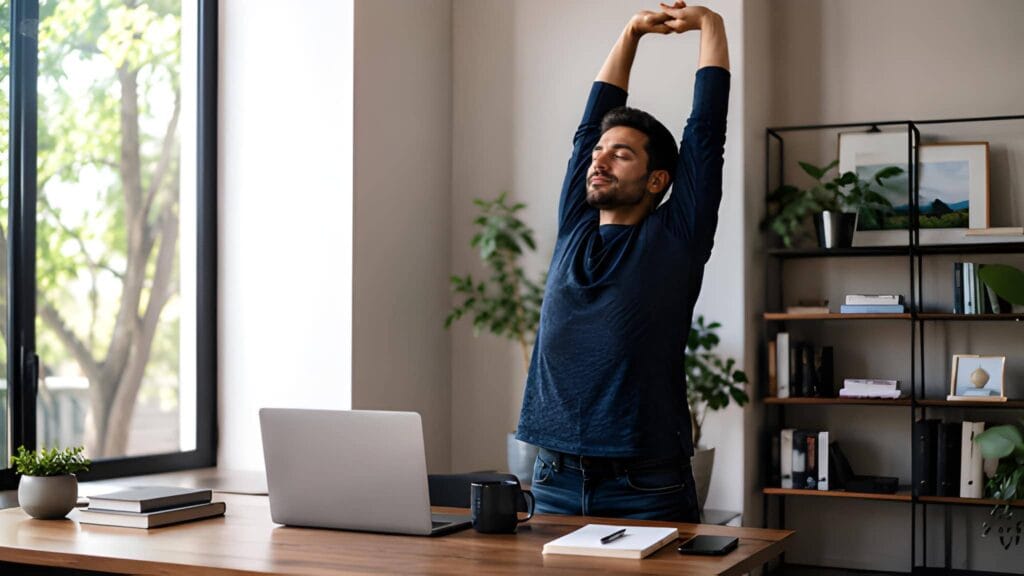
1. The Executive Stretch
Every 30–60 minutes, stand up and reach your arms toward the ceiling. Interlock your fingers if comfortable. Gently stretch upward while taking one slow breath.
This opens the chest, changes posture, and breaks the collapsed desk position.
Do not force the stretch. Keep it easy.
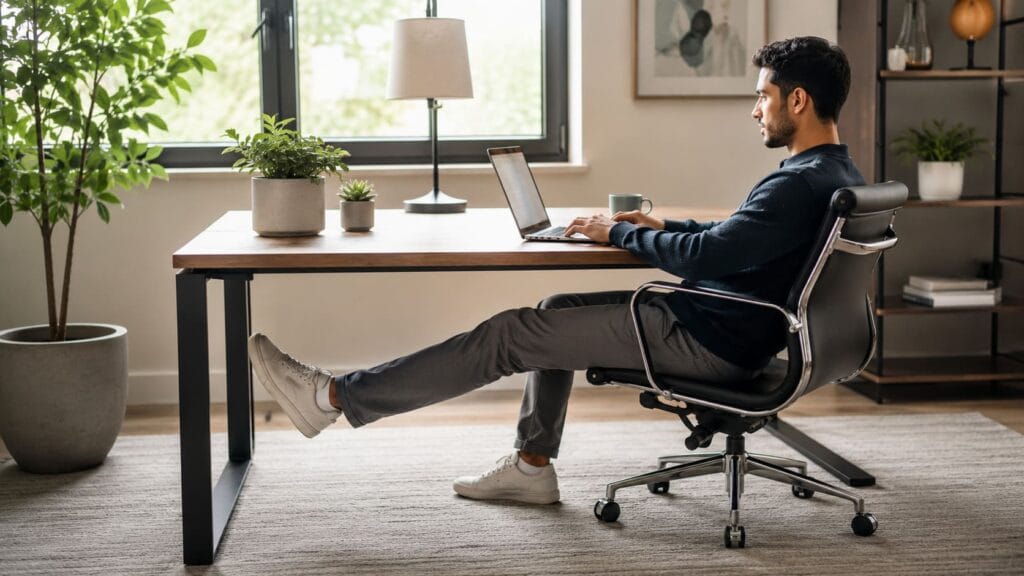
2. Seated Leg Extensions
While seated, slowly straighten one leg under your desk. Hold for five seconds, then lower it. Repeat with the other leg.
This is useful during calls, reading, or low-intensity work. It adds movement without disrupting the task.
3. Shoulder Roll and Neck Reset
Roll your shoulders backward five times. Then gently tilt your head from side to side.
Keep the movement slow. The goal is to release tension, not to crack your neck or push into pain.
This works well after laptop work, writing, editing, or long scrolling sessions.
4. Calf Raises
If you are standing, rise slowly onto your toes and lower back down. Do 10–15 gentle calf raises.
This is a simple movement to use while reading a long email, waiting for a page to load, or listening during a call.
5. The Eye-Movement Reset
Your eyes need breaks too.
Use the 20-20-20 rule: every 20 minutes, look at something about 20 feet away for around 20 seconds.
This helps interrupt continuous near-screen focus. It is especially useful when screen-heavy work leaves your eyes feeling tired or uncomfortable. The U.S. National Eye Institute recommends the 20-20-20 rule: every 20 minutes, look at something about 20 feet away for 20 seconds. See the NEI guide on keeping your eyes healthy during screen use.
Which Micro-Movement Should You Use First?
| What you notice | First movement to try | Why it fits | Skip or modify if |
|---|---|---|---|
| Mental dullness after sitting | Stand and walk for 60–90 seconds | Creates a clear physical break before restarting work | Standing or walking is uncomfortable or unsafe |
| Tight shoulders from laptop work | Shoulder rolls and a gentle chest stretch | Changes the fixed upper-body position | The movement causes pain, tingling, or dizziness |
| Restless or stiff legs | Seated leg extensions or calf raises | Adds movement without requiring a full break | You have balance problems or recent lower-body surgery |
| Tired or dry eyes | The 20-20-20 screen break | Interrupts continuous near-screen focus | Symptoms persist despite regular breaks |
| You cannot restart one task | The 3-minute focus reset | Combines movement, a screen break, and one defined next action | The real problem is sleep loss, illness, pain, or severe fatigue |
Start with the smallest movement that matches the problem you notice. Do not turn a one-minute desk break into a complicated exercise program.
The Movement Snacks Philosophy
Do not wait for a full workout to move.
Think of micro-movements as movement snacks: small physical resets spread through the day. They are not a replacement for exercise, sleep, or proper recovery. They are a way to stop long work blocks from turning your body into a chair-shaped statue.
The best movement snack is the one you will actually do.
A perfect routine that you ignore is useless. A short movement break that you repeat consistently is more practical than an elaborate routine you abandon. The CDC workplace guide includes short activity breaks that can be performed individually, at a desk, and with little or no equipment. See the CDC Physical Activity Breaks for the Workplace guide.
A Simple 3-Minute Focus Reset
Use this when your mind feels stuck.
Minute 1: Stand up and walk slowly.
Minute 2: Roll your shoulders, stretch your chest, and move your neck gently.
Minute 3: Look away from the screen, take a few slow breaths, and choose one next task.
Then return to work.
Do not open social media. Do not check five tabs. Do not turn the reset into procrastination.
The reset works because it is short, physical, and clean. For a calmer version of this reset, combine movement with simple breathing exercises like box breathing or 4-7-8 breathing.
What Should You Buy First?
Most people do not need to buy anything.
Start free:
- use a timer;
- stand between tasks;
- walk during calls;
- stretch beside your desk;
- look away from the screen;
- take short movement breaks after focused work blocks.
After that, consider tools only if they solve a real problem.
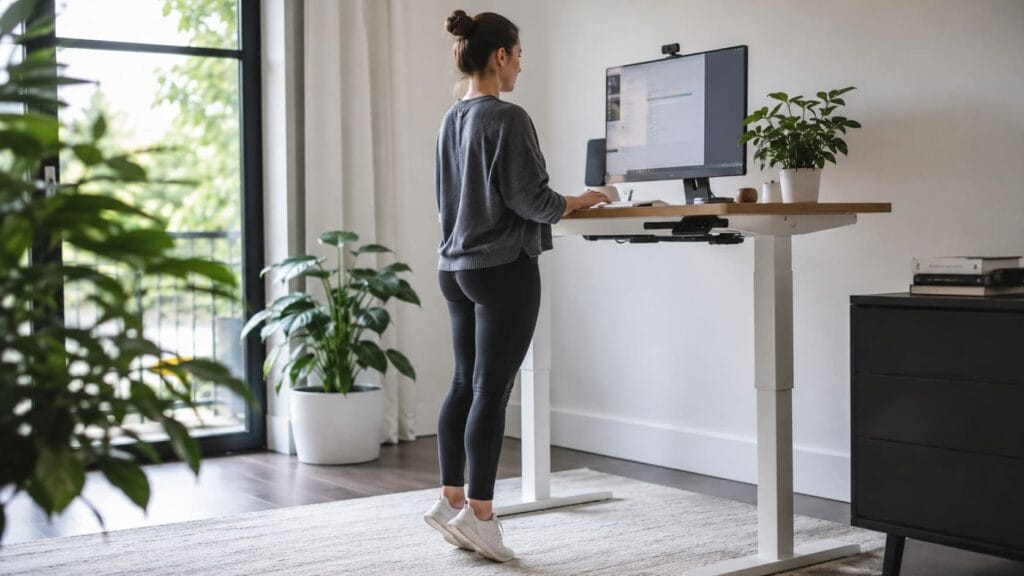
A standing desk may help if you want to alternate between sitting and standing. A walking pad may help if you already have enough space and a stable work setup. A simple desk timer may help if you forget to move.
But do not buy expensive gear before building the basic habit. If long sitting leaves you with body tension, our somatic recovery tools guide compares simple options for posture support, relaxation, and physical reset routines.
What to Skip
Skip anything that makes the routine harder than it needs to be.
You probably do not need:
- a complicated productivity app;
- painful posture correctors;
- extreme stretching during work;
- a walking pad you do not have room for;
- a standing desk if you will still stand frozen for hours;
- any product that promises to “unlock focus” without changing your behavior.
Micro-movements work best when they are boring, repeatable, and easy.
Who Should Try Micro-Movements?
Micro-movements are a good fit if you:
- work at a desk;
- study for long periods;
- write, code, edit, design, or create content;
- feel stiff after screen sessions;
- lose focus after sitting too long;
- want a low-effort reset between tasks;
- dislike intense exercise during the workday.
They are especially useful for remote workers, students, creators, writers, and anyone who spends most of the day in front of a screen.

Who Should Be Careful?
Keep movements gentle if you have pain, dizziness, balance issues, recent surgery, or a medical condition that affects movement.
Stop if something hurts. This guide is for general wellness and productivity support only. It is not medical advice. If fatigue, pain, dizziness, or focus problems are severe or persistent, speak with a qualified healthcare professional.
Final Verdict
Micro-movements are not magic. They are a simple way to keep your body involved in mental work.
If your focus fades after long sitting, do not immediately blame your motivation. Your body may need a reset.
Stand up. Move for a minute. Breathe. Look away from the screen. Return to one clear task.
Start with one movement break every 30–60 minutes. Keep it easy enough to repeat tomorrow.
Next step: physical movement works best when your day also has better light timing, breathing resets, and fewer digital distractions.