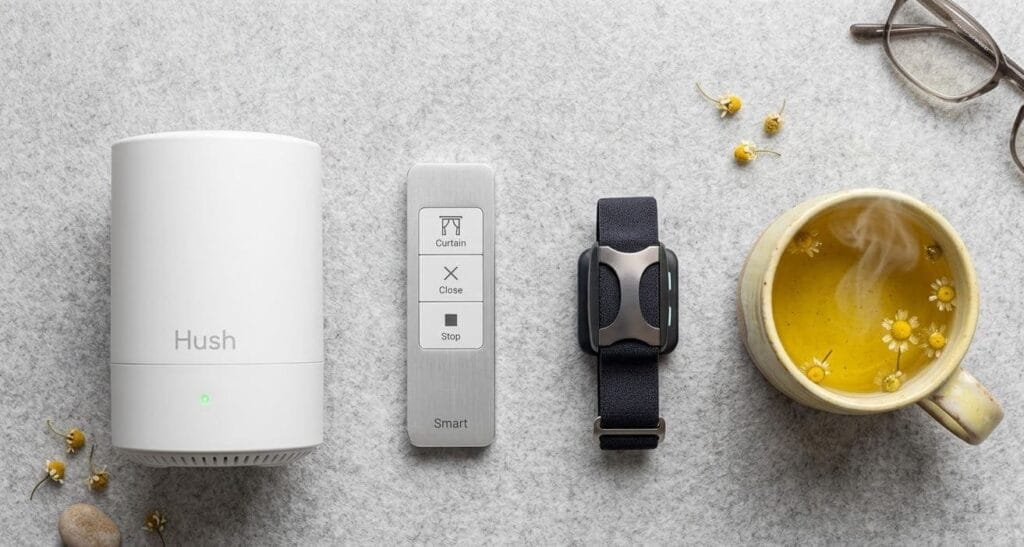
How the City Steals Your Peace: Urban Noise, Light, and Sensory Overload
Urban life can be useful, exciting, and full of opportunity — but it can also make your home feel less calm. Traffic noise, sirens, bright streetlights, crowded transport, thin walls, and constant alerts can make it harder to switch off at the end of the day.
This guide looks at practical home tools that may help reduce urban sensory overload: heavy curtains, acoustic panels, white noise machines, and simple room changes. The goal is not to “fight the city.” The goal is to make your home feel quieter, softer, and easier to recover in.
Affiliate disclosure: MindReset.org may earn a commission if you buy through our links. This does not increase your price and does not affect our editorial judgment.
Amazon disclosure: As an Amazon Associate, we earn from qualifying purchases.
Research note: We have not personally tested every product mentioned on this page. This guide is based on product specifications, public information, buyer-use logic, and comparison with similar acoustic and bedroom-environment tools.
Wellness note: Noise-reduction tools, curtains, white noise machines, and acoustic panels may make a room feel more comfortable, but they do not treat anxiety, insomnia, depression, PTSD, ADHD, tinnitus, or any medical condition. If noise sensitivity, sleep problems, panic, or stress symptoms are severe or ongoing, speak with a qualified healthcare professional.
A modern city can overload the senses in small ways: background traffic, bright signs, neighbours, construction, crowded spaces, and the feeling that there is always something happening nearby. You may not notice each sound consciously, but the room can still feel less restful.
For buyers, the useful question is simple: which part of the environment bothers you most? Street noise needs a different fix than hallway noise. Bright windows need a different fix than a hard, echoey room. A white noise machine will not solve thin curtains, and smart curtains will not fix noise coming through a shared wall.
Quick answer: start with the most obvious problem. If the room echoes, add soft materials. If the window is the weak point, use heavier curtains. If sudden sounds wake you up, try sound masking. If the phone keeps pulling you back into city noise, move it away from the bed or sofa.
Why how the city steals your peace becomes noticeable even with closed windows
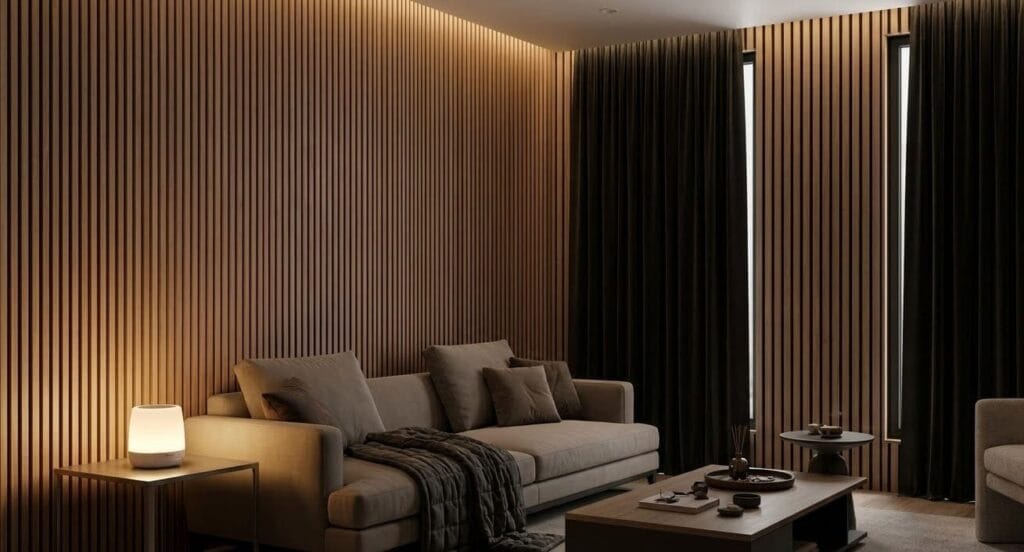
Closed windows do not always stop city noise. Sound can still come through glass, frames, vents, doors, floors, ceilings, and shared walls. Some rooms also make noise feel sharper because they have hard floors, bare walls, and little soft material to absorb reflections.
Earplugs can be useful, especially for travel or occasional noise, but they are not the only option. If you dislike pressure in the ears or need to hear alarms, pets, children, or household sounds, room-level fixes may be more practical.
Acoustic panels, rugs, curtains, upholstered furniture, and fabric wall decor can reduce echo and make a room feel less harsh. They are not the same as professional soundproofing, but they can help with the reflective, empty-room feeling that makes city apartments feel more intense.
Best for: echoey rooms, home offices, bedrooms with hard surfaces, and apartments where every small sound feels sharper than it should.
Skip if: the main issue is very loud traffic, low-frequency vibration, or noise coming through a specific window or door gap. In that case, fix the weak point first.
Mass and absorption: smart curtains as a barrier
Windows are often one of the weakest points in a city apartment. They can let in streetlight, traffic noise, voices, sirens, and early morning brightness. Heavy blackout curtains or thicker layered curtains can help reduce light and soften some outside sound.
Smart curtain systems are useful mainly for automation. They can close at a set time, support a darker evening routine, and reduce the need to remember another manual step. But they are not magic soundproofing. The fabric, window fit, curtain length, and wall coverage matter more than the word “smart.”
Best for: street-facing bedrooms, evening light control, sunrise light leaks, and people who want an automatic wind-down cue.
Skip if: you expect curtains to block heavy traffic completely, your noise comes mainly through walls, or you do not want to install tracks, motors, or curtain hardware.
White Noise Machines: When Masking Works Better Than Blocking

Sometimes you cannot block every sound. If you live near traffic, shared walls, a railway, nightlife, or noisy neighbours, a white noise machine can create a steady background layer that makes sudden sounds less noticeable.
White noise, pink noise, brown noise, fan sounds, rain sounds, and nature sounds can all work differently for different people. The best choice is the sound you can tolerate every night without feeling irritated.
Brown noise is often described as deeper and softer than white noise, but it is not automatically better. Some people like it for low, steady masking. Others prefer a fan, rain, or simple white noise.
Best for: sudden background sounds, hallway noise, light traffic, shared buildings, and people who dislike total silence.
Skip if: constant sound annoys you, you sleep better in silence, or the noise is so loud that it needs a building-level fix rather than masking.
How to Build a Simple Urban Calm Setup at Home
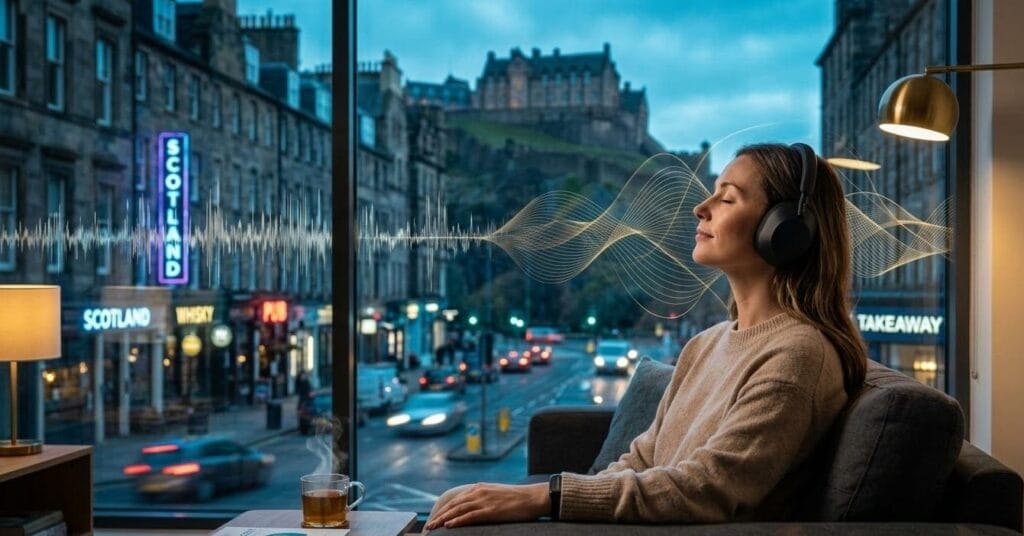
Think in layers. One product rarely solves urban overload by itself. A better setup combines small changes: soft materials for echo, heavy curtains for windows, sound masking for sudden noise, and fewer digital triggers in the evening.
For more detail on sound and home environments, read our acoustic ecology guide. If your main issue is bedroom noise, compare our bedroom noise sleep tools guide.
Apollo Neuro and other wearables may be useful for some routines, but they should not be treated as the first fix for a noisy room. Start with the environment: what can you soften, block, mask, remove, or automate?
Simple setup: add a rug or soft furnishings, use heavier curtains, place a white noise machine where it masks the worst sound, and keep the phone away from your evening rest area.
What to Skip
Skip products that promise silence, nervous-system protection, anxiety relief, perfect sleep, or complete mental reset. Home noise tools can make a room feel more comfortable, but they cannot remove every city sound or treat a medical condition.
Also skip buying smart curtains or white noise machines before identifying the real source of the problem. If the sound comes through a door gap, fix the gap. If the room echoes, add soft materials. If the phone keeps pulling you into city noise, remove the phone before buying another gadget.
Final Verdict: Make the City Softer at Home
City life will not become silent just because you buy a gadget. But your home can feel less harsh if you fix the right weak points.
Start with the room: add soft materials, reduce window light, use heavier curtains where they make sense, and try white noise only if sudden sounds are the main issue. Keep expectations realistic: these tools may reduce distraction and make the space feel more comfortable, but they will not create perfect silence.
Bottom line: identify the sound or sensory trigger first, then buy the smallest tool that solves that problem. A calmer home is built through layers, not through dramatic promises.