
Table of Contents
Analog Digital Detox Tools Decision Table
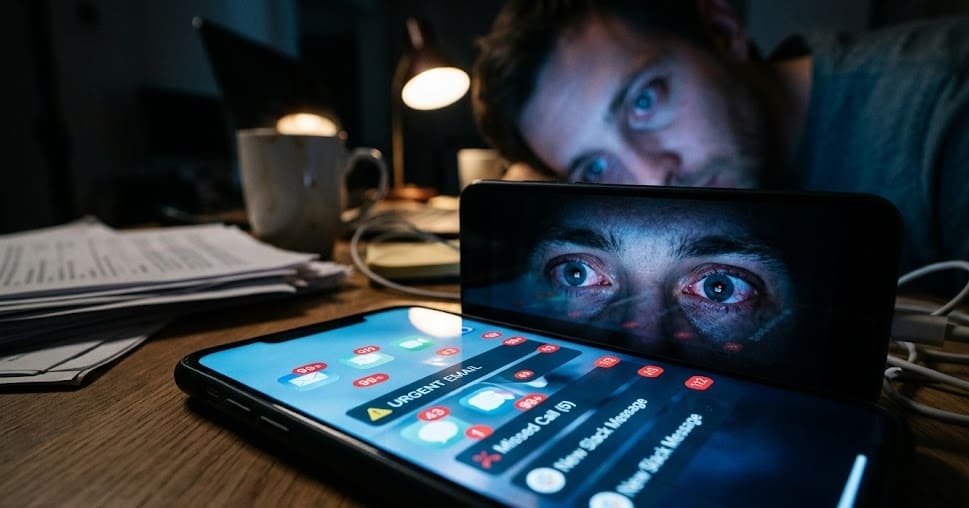
The goal is not to reject technology or disappear from modern life. It is to remove unnecessary screen exposure from the parts of the day where notifications, feeds, messages, and automatic checking create the most friction.
This guide compares nine practical analog alternatives for mornings, focused work, evening decompression, and bedtime. It also explains which products are worth buying, which can be replaced with items you already own, and which “digital detox” tools quietly return you to another app.
Affiliate disclosure: MindReset.org may earn a commission if you buy through our links. This does not increase your price and does not affect our editorial judgment.
Research note: We have not personally tested every product category or product mentioned in this guide. The recommendations are based on product roles, public specifications, practical use cases, available research, and comparison with lower-cost alternatives.
What we assessed: the phone function replaced, ease of use, screen dependence, charging or app requirements, portability, privacy, durability, hidden costs, buyer fit, and the likelihood that the tool will be used consistently.
What we could not independently verify: that any watch, lockbox, journal, timer, planner, mat, book, or lamp treats anxiety, phone addiction, insomnia, burnout, attention problems, dissociation, or nervous-system dysfunction.
Wellness note: Reducing optional screen exposure may support a calmer routine, but it is not a substitute for professional support when phone use, sleep disruption, anxiety, low mood, compulsive behaviour, or another concern significantly affects daily life.
Quick Verdict
Start with an alarm clock, analog timer, and a charging location outside the bedroom. These three changes replace common phone functions without requiring an expensive lifestyle redesign.
Add a phone lockbox when intention alone is not enough and you need a physical barrier during meals, work blocks, family time, or bedtime.
Choose an analog watch when checking the time regularly turns into checking messages, news, email, or social media.
Choose a paper planner when opening a calendar or task app repeatedly leads to unrelated phone use.
Choose a wellness journal when you benefit from short prompts and reflection but do not want to write in another app.
Use a printed book and warm lamp when the main problem is evening scrolling rather than daytime phone use.
Skip buying more digital detox products when the real problem is missing rules, unclear boundaries, or notifications that could be disabled for free.
Who Is This Digital Detox Guide For?
- You pick up your phone to check one thing and remain there much longer than intended.
- Your phone is the first object you use in the morning and the last one you use at night.
- You want fewer notifications without giving up essential calls, maps, banking, or communication.
- You need physical replacements for alarms, timers, notes, calendars, reading, or reflection.
- You prefer practical environmental changes over strict willpower challenges.
- You want a screen-free evening routine that can continue after the initial motivation disappears.
This guide is less useful for someone who already keeps the phone outside the bedroom, has notifications under control, and uses screens deliberately rather than automatically.
Our digital mindfulness guide covers the free software and behaviour changes to try before buying additional equipment.
Digital Detox Tools Decision Table
| Phone behaviour | Best replacement | Why it helps | Skip if |
|---|---|---|---|
| Checking the time becomes scrolling | Analog watch | Shows time without alerts or apps | You rarely need to check the time |
| Phone remains beside the bed | Physical alarm clock | Removes the strongest practical excuse for bedroom phone use | A medical, care, or emergency need requires the phone nearby |
| You override app limits | Phone lockbox | Adds physical friction rather than another software warning | You need immediate access for safety or work |
| Timers lead to notifications | Analog timer | Supports work or breaks without opening the phone | Sound or ticking is distracting |
| Calendar checks become browsing | Paper planner | Keeps visible priorities away from apps | Your schedule changes constantly across a team |
| You need evening reflection | Wellness journal | Provides a screen-free place for notes and prompts | Writing increases rumination or pressure |
| You scroll because the evening feels empty | Printed book | Provides a ready alternative with a clear stopping point | Reading activates rather than settles you |
| You want a screen-free body routine | Movement mat | Creates a visible place for stretching or quiet movement | The mat will remain unused or create clutter |
| The room makes paper activities difficult | Warm reading lamp | Makes books and journaling easier to choose | You already have suitable adjustable lighting |
1. Analog Watch: Check the Time Without Checking the Phone

An analog watch is useful when opening the phone to check the time regularly exposes you to messages, alerts, headlines, and app icons.
It does not need to be mechanical, expensive, oversized, or marketed as a mindfulness product. A simple quartz watch performs the same digital-detox function with less maintenance and usually lower cost.
A mechanical watch may still appeal to buyers who enjoy visible craftsmanship, automatic movements, winding, or a more substantial physical object. That is a design preference, not a treatment for stress, anxiety, dissociation, or overthinking.
Before buying, compare:
- case diameter and thickness;
- total weight;
- strap material and replacement cost;
- quartz, automatic, or manual movement;
- water-resistance rating;
- warranty and return policy;
- whether the design is comfortable enough for daily wear.
Best for: people who repeatedly unlock the phone only to check the time.
Skip if: you want health tracking, notifications, GPS, workout metrics, or another smartwatch function.

2. Physical Alarm Clock: Move the Phone Out of the Bedroom
A physical alarm clock solves one of the most common objections to moving a phone away from the bed: “I need it as my alarm.”
The best alarm clock for a digital detox is usually the least demanding one. Look for:
- a display that can dim fully or become very dark;
- simple controls that work without an app;
- a gradual or adjustable alarm volume;
- battery backup if power interruptions are common;
- no compulsory Wi-Fi, subscription, or account;
- controls that can be used without turning on a bright room light.
Place the phone outside arm’s reach, preferably outside the bedroom. Keep emergency access, caregiving responsibilities, security needs, and individual circumstances in mind rather than following an absolute rule.
Best for: bedtime scrolling and morning checking.
Skip if: another essential function requires the phone nearby and cannot be replaced safely.
3. Phone Lockbox: Add Physical Friction
A phone lockbox is useful when screen-time reminders and app limits are easy to dismiss. It changes access physically rather than asking the same device to control itself.
There are three main formats:
| Type | Best use | Main limitation |
|---|---|---|
| Open charging box | Creating a visible family charging location | Does not prevent access |
| Manual key box | Meals, work, or evening boundaries | The key remains immediately available |
| Timed lockbox | Defined focus or bedtime periods | Can create a safety problem if emergency access is not planned |
Choose ventilation if the phone will charge inside. Confirm that the box fits the phone, case, charger, and any other devices placed inside.
Do not lock away the only available method of contacting emergency services, receiving essential medical alerts, supporting dependants, or managing urgent work responsibilities.
Best for: predictable no-phone windows where software controls have failed.
Skip if: the box turns ordinary phone use into a punishment or creates anxiety about emergency access.
4. Analog Timer: Work Without a Phone Countdown
An analog timer replaces countdown apps during focused work, study, cooking, stretching, journaling, cleaning, or short screen-free breaks.
A visible dial can make the remaining time easier to understand without checking a screen. The buyer decision is mostly sensory:
- Is the ticking distracting?
- Is the alarm too loud?
- Can the remaining time be read from across the room?
- Does it require batteries?
- Can it be paused or only reset?
- Is the maximum duration suitable for the routine?
Best for: people who open a phone timer and become distracted by other apps.
Skip if: ticking, bright colors, or a sharp alarm creates more irritation than structure.
5. Paper Planner: Replace Calendar Checking and To-Do Apps
A paper planner works best as a visible daily interface, not as a duplicate of every digital calendar entry.
Use it for:
- the three most important tasks;
- fixed appointments;
- one short shopping or preparation list;
- a shutdown note for tomorrow;
- work blocks that should remain phone-free.
A complex planner can become another abandoned productivity product. Undated pages may be better when schedules are irregular or missed dates create pressure.
Best for: reducing repeated calendar and task-app checking.
Skip if: multiple people must see live changes or the planner would create a second conflicting system.
6. Wellness Journal: Create a Screen-Free Reflection Routine

A wellness journal provides a physical place for thoughts, observations, practical decisions, and short check-ins. It does not need to contain deep therapeutic prompts or require long entries.
Useful evening prompts include:
- What needs action tomorrow?
- What can wait?
- What kept pulling my attention today?
- Which notification or app created no real value?
- What is one screen-free activity I will prepare for tomorrow?
Writing may help some users organize a thought or create distance from an unfinished task. It does not guarantee that anxiety disappears, the mind “declutters,” or sleep improves immediately.
Stop or simplify the exercise when journaling becomes repetitive rumination, forced positivity, symptom monitoring, or another task that must be completed perfectly.
Our best wellness journals guide compares guided prompts, gratitude formats, CBT-style journals, blank notebooks, and productivity planners.
7. Printed Book: Replace Evening Scrolling
A printed book gives the evening a prepared activity with no notifications, autoplay, recommendations, comments, or endless feed.
The right book for a screen-free routine is not necessarily educational or ambitious. Familiar fiction, short stories, essays, travel writing, crafts, photography, or another low-pressure subject may be easier to continue when tired.
Prepare the book before the phone-free period begins. A replacement that remains on another shelf will usually lose to a phone already in the hand.
Best for: people who scroll because they have not prepared another evening activity.
Skip if: reading becomes stimulating, frustrating, or another achievement goal before sleep.
8. Movement Mat: Create a Physical Screen-Free Zone

A mat creates a visible location for stretching, mobility work, breathing, lying down, or another brief activity that does not require entertainment from a screen.
The mat itself does not ground the nervous system, release stored trauma, detoxify the body, or send a guaranteed safety signal to the brain. Its practical value is simpler: it protects the body from the floor and defines a place where the phone does not need to follow.
Choose according to:
- surface grip;
- cushioning and joint comfort;
- material odor;
- weight and storage;
- cleaning instructions;
- latex sensitivity when natural rubber is used.
Our organic yoga mat guide compares natural rubber, cork, PVC, TPE, material claims, grip, maintenance, and buyer fit.
9. Warm Reading Lamp: Make the Analog Option Easier
A book or journal is difficult to choose when the room is either brightly lit or too dark for comfortable reading. A small adjustable lamp can support the analog routine by making the prepared alternative easier to use.
Look for:
- low-glare positioning;
- adjustable brightness;
- a warm-looking evening setting;
- physical controls that do not require an app;
- stable placement beside the chair or bed;
- enough light for the page without illuminating the entire room.
A lamp does not need “sleep technology,” a subscription, Wi-Fi, simulated neuroscience, or a complicated sunrise program to make paper activities more convenient.
What Is Not Truly Analog?
Smart rings
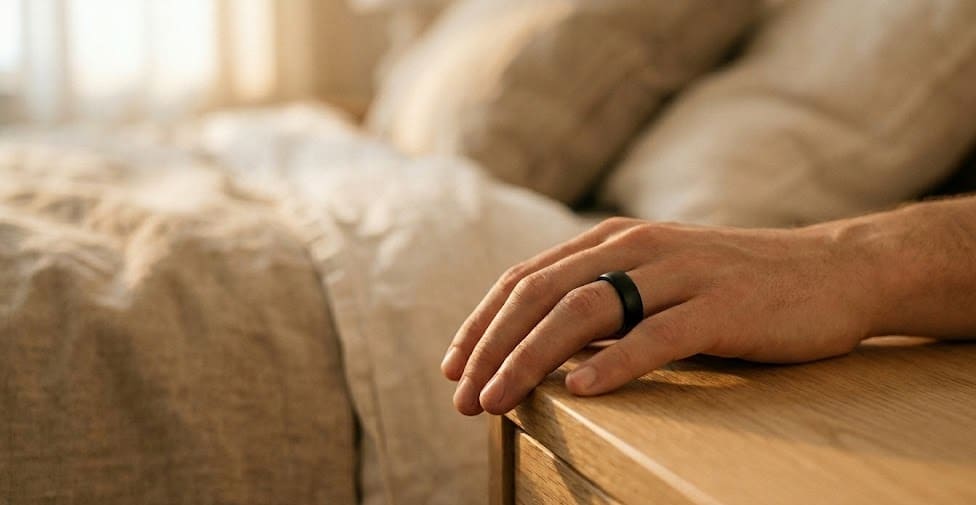
A smart ring has no wrist display and may interrupt the day less than a smartwatch. It is still a digital wearable that requires sensors, charging, syncing, software, an account, and a companion app.
A smart ring can fit a lower-notification lifestyle, but it is not an analog detox tool. It may also increase checking when sleep, stress, readiness, or recovery scores become another source of worry.
Our smart ring buyer guide compares subscriptions, regional availability, sizing, app ecosystems, battery life, and data-anxiety risks.
Infrared blankets, light mats, and electronic wellness devices
These products may provide a screen-free session after setup, but they still use electricity, controls, charging, or an app. They should be evaluated as recovery devices rather than analog replacements for a phone function.
E-readers
An e-reader can be a lower-distraction compromise when it has no social apps or notifications. It remains a screen-based device, so it belongs between a printed book and a general-purpose tablet rather than in the fully analog category.
Digital detox apps
App blockers and focus modes can be useful because they cost little and require no additional object. Their weakness is that every restriction remains on the same device that contains the distraction.
Use software first. Add physical tools only where the software boundary repeatedly fails.
Hidden Costs and Buying Mistakes
Buying a complete analog lifestyle at once
A watch, planner, journal, timer, lockbox, lamp, mat, and stack of books can quickly become an expensive pile of unused intentions.
Replace one phone function first. Add the next item only after the previous change remains useful for at least several weeks.
Replacing screen clutter with physical clutter
Every new tool needs a permanent location. Products hidden in drawers cannot compete with a phone that is always accessible.
Buying an object without changing notifications
An analog watch will not help when the phone continues to vibrate on the desk. A journal will not replace scrolling when every social notification remains active.
Using the phone to manage the detox tool
Some clocks, lamps, timers, lockboxes, and wellness products require apps for basic controls. Check whether the product still works normally without Wi-Fi, an account, or ongoing phone access.
Ignoring accessibility
Physical books, tiny watch faces, manual controls, handwriting, and mechanical timers are not accessible to every user. Voice controls, digital reminders, larger displays, and phones may remain useful accommodations rather than problems to remove.
Expecting a cure
Digital detox tools cannot guarantee improved sleep, reduced anxiety, restored attention, healed burnout, or nervous-system regulation. Their practical role is to reduce access and make an alternative behaviour easier.
A Practical 24-Hour Digital Detox Routine
| Time | Phone boundary | Analog replacement |
|---|---|---|
| On waking | Do not open feeds or email immediately | Alarm clock, analog watch, paper note with the first task |
| Breakfast | Keep the phone away from the table | Printed book, newspaper, conversation, or no replacement |
| Focused work | Use scheduled checking windows | Analog timer and paper task list |
| Lunch | Place the phone in a bag, drawer, or charging station | Short walk, meal, or printed reading |
| Late afternoon | Review essential messages once | Update the paper planner for tomorrow |
| Evening | Move the phone to its charging location | Movement mat, book, hobby, or journal |
| Before bed | Keep the phone outside arm’s reach | Warm lamp, brief journal entry, physical alarm clock |
This routine does not require a full day without technology. Essential calls, directions, work, banking, healthcare, accessibility, and family responsibilities remain available.
The more realistic goal is to create several predictable periods when the phone is not the default tool for every ordinary action.
What We Could Verify
- CDC sleep guidance recommends turning off electronic devices at least 30 minutes before bedtime.
- Research has found that smartphone notifications can disrupt attention even when the user does not open the notification.
- A physical alarm clock can replace the alarm function that keeps many phones beside the bed.
- An analog watch can show the time without presenting notifications or apps.
- A physical timer can support a defined work or break period without opening a phone.
- A lockbox can add a physical barrier that software limits do not provide.
- A paper planner can display appointments and priorities without requiring another screen check.
- The U.S. Department of Veterans Affairs describes therapeutic journaling as structured writing about personal thoughts, feelings, and experiences.
- Smart rings remain digital devices that generally depend on charging, software, syncing, and phone apps.
What We Could Not Verify
- That a heavy mechanical watch treats anxiety, dissociation, mental fatigue, or overthinking.
- That watching a mechanical second hand changes how the brain processes time.
- That a phone lockbox cures smartphone addiction.
- That an analog timer restores attention or dopamine function.
- That a wellness journal permanently transfers stress from the mind to paper.
- That lying on a natural mat tells the brain that danger has ended.
- That smart rings can take responsibility for monitoring a user’s physical safety.
- That a digital detox automatically heals burnout, improves mental health, or restores the nervous system.
- That buying more analog products produces better outcomes than changing phone settings and routines for free.
Frequently Asked Questions
What are the best digital detox tools?
The most useful starting tools are usually a physical alarm clock, analog timer, phone charging station, or phone lockbox. Choose according to the phone function or habit that creates the most unwanted screen time.
Do I need to stop using my smartphone completely?
No. A practical digital detox preserves essential communication, work, maps, banking, healthcare, accessibility, and safety functions while reducing unnecessary checking and entertainment.
Is an analog watch better than a smartwatch?
An analog watch is better when the only required function is telling the time without notifications. A smartwatch is more suitable when health tracking, workouts, GPS, messages, safety features, or accessibility tools matter.
Does a phone lockbox work?
It creates physical friction and may support planned no-phone periods. It does not resolve the reason a person uses the phone compulsively, and it must not block necessary emergency access.
Should I keep my phone outside the bedroom?
Moving it outside the bedroom can remove easy access to bedtime scrolling and morning checking. Individual emergency, caregiving, medical, security, and accessibility needs may justify keeping it nearby with notifications restricted.
Is a smart ring a digital detox tool?
Not fully. A smart ring has no visible screen on the finger, but it still requires electronic sensors, charging, software, and a phone app to view most data.
Can journaling replace evening phone use?
It can provide a prepared screen-free alternative for reflection or planning. It is less useful when writing increases rumination, becomes another obligation, or is used as a substitute for needed support.
How many digital detox products should I buy?
Begin with one product that replaces one repeated phone function. Add another only after the first change remains useful and the new tool solves a separate problem.
Final Verdict
The best digital detox tools are ordinary objects that replace a clearly identified phone function.
An alarm clock removes the need for a phone beside the bed. An analog watch replaces time checking. A timer supports focused work. A lockbox adds physical friction. A planner replaces repeated calendar checks. A journal, printed book, mat, and reading lamp create ready alternatives for quieter evenings.
Do not buy these products because they are marketed as grounding, healing, dopamine-restoring, nervous-system-regulating, or life-changing. Buy them only when their physical function makes an intended behaviour easier.
MindReset recommendation: disable unnecessary notifications, create a fixed charging location, and replace one phone function before purchasing a complete analog toolkit.
A simple alarm clock and timer may create more practical change than an expensive collection of wellness products that still requires a companion app.