
Table of Contents
Affiliate disclosure: MindReset.org may earn a commission if you buy through our links. This does not increase your price and does not affect our editorial judgment. As an Amazon Associate, we earn from qualifying purchases.
Discover the best wellness journals for mental health.
A wellness journal is not a cure for anxiety, depression, burnout, trauma, or sleep problems. But it can be a useful offline tool for self-reflection, emotional check-ins, gratitude, habit tracking, and building a calmer daily routine.
If your mind feels overloaded by screens, notifications, work pressure, and constant input, writing on paper can give you one quiet place to slow down and sort your thoughts.
This guide helps you choose the right wellness journal without falling for exaggerated mental health claims. We compare guided journals, gratitude journals, mood tracking journals, wellness planners, therapy-style notebooks, and premium leather journals so you can decide what is worth buying and what is better to skip.
Research note: We have not personally tested every journal in this guide. Recommendations are based on product information, public documentation, available user feedback, and comparison with similar journals.
Mental health note: Wellness journals can support self-reflection, emotional awareness, gratitude, habit tracking, and calmer routines. They are not a replacement for therapy, medical care, crisis support, or professional mental health treatment. If you are dealing with severe anxiety, depression symptoms, panic attacks, trauma, self-harm thoughts, or persistent distress, speak with a qualified professional.
Quick Verdict: What Wellness Journal Should You Buy?
If you want the easiest starting point, choose a simple guided journal with short daily prompts. This is the lowest-friction option for people who do not want to stare at a blank page.
If you want emotional check-ins, choose a mood tracking journal with weekly reflection pages. This can help you notice patterns in sleep, stress, energy, and daily habits.
If you want structure, choose a wellness planner instead of a blank notebook. A planner gives you space for routines, goals, habit tracking, and reflection in one place.
If you want a premium offline ritual, a leather journal or high-quality paper notebook can make writing feel more intentional. It will not do the emotional work for you, but it may help you come back to the habit more consistently.
Skip journals that promise to fix anxiety, heal trauma, cure depression, rewire your brain, or replace therapy. A good wellness journal supports a routine. It does not replace professional care.
Wellness Journal Decision Table
| Need | Best journal type | Why it helps | Skip if |
|---|---|---|---|
| Simple daily reset | Guided prompt journal | Easy to start and repeat | You hate structured questions |
| Mood awareness | Mood tracking journal | Helps you notice emotional patterns | Tracking makes you overthink |
| Gratitude habit | Gratitude journal | Quick positive reflection | Forced positivity annoys you |
| Burnout routine | Self-care planner | Combines habits, reflection, and planning | You only want free writing |
| Therapy support | CBT-style worksheet journal | Helps structure thoughts between sessions | You need urgent professional care |
| Premium gift | Leather or premium paper journal | Feels durable and intentional | You only need function |
| Digital detox | Paper notebook | Keeps reflection offline | You prefer app-based tracking |
Why Use a Paper Wellness Journal?

Digital tools can be useful, but they also come with distractions. A journaling app sits on the same device as email, messages, social media, news, shopping, and notifications.
A paper wellness journal creates a cleaner boundary.
For a wider offline reset setup, compare these analog digital detox tools.
You open the notebook, write, and close it. There are no pop-ups, no algorithm, no tabs, and no infinite scroll. That is the main advantage.
The value is not magic. It is attention. A physical journal gives your mind a small, repeatable space where you can slow down, name what is happening, and decide what needs attention.
For a practical overview of structured reflective writing, see the U.S. Department of Veterans Affairs guide to therapeutic journaling. It explains different journaling approaches and also advises stopping the exercise when writing causes intense or persistent distress.
A good journal can help you:
- process the day
- track your mood
- notice stress patterns
- build gratitude
- plan calmer mornings
- create evening reflection
- reduce screen time before bed
- prepare for therapy sessions
- turn vague thoughts into clearer language
The best journal is not the most beautiful one. It is the one you will actually use.
Guided Journals: Best for Beginners
A guided journal is the easiest place to start if you do not know what to write.
Instead of a blank page, it gives you short prompts. These might include:
- What am I feeling today?
- What do I need less of?
- What went well?
- What felt heavy?
- What is one thing I can do tomorrow?
- What am I grateful for?
- What thought keeps repeating?
This structure matters because many people stop journaling when the page feels too open. A guided journal removes that pressure.
Guided journals are best for people who want a simple daily check-in, not a deep writing session. Five to ten minutes is enough.
Buy if: you want low-friction daily reflection.
Skip if: prompts feel fake, repetitive, or restrictive.
Gratitude Journals: Best for a Short Daily Reset
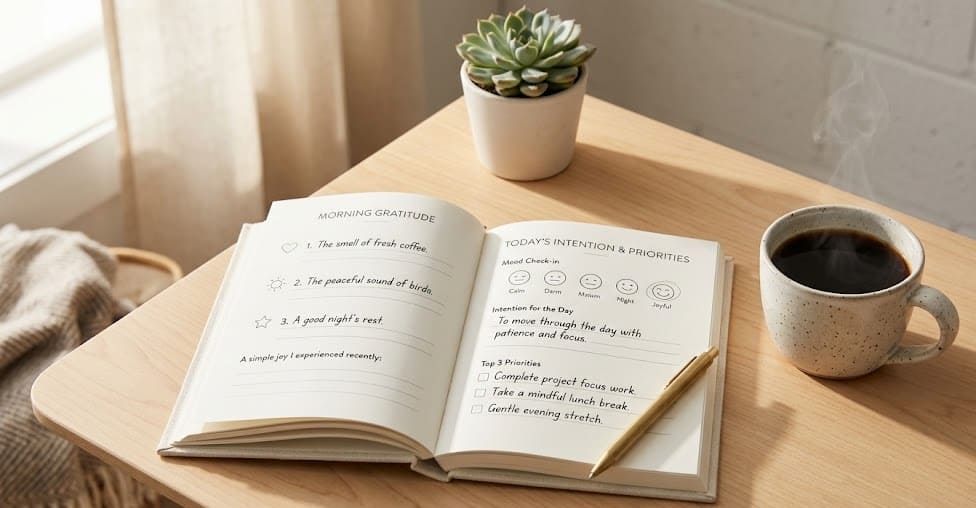
A gratitude journal is one of the simplest wellness journal formats. The goal is not to pretend everything is perfect. The goal is to train your attention to notice what is still good, useful, kind, stable, or meaningful.
For some people, this works well. A short morning or evening gratitude practice can help shift attention away from constant problem scanning.
For others, gratitude prompts can feel forced. If you are going through a genuinely difficult period, a journal that only asks for positive thoughts may feel irritating or dishonest.
A good gratitude journal should leave room for real life. It should not pressure you into fake positivity.
Buy if: you want a quick daily ritual that takes less than five minutes.
Skip if: you dislike positivity-focused prompts or want deeper emotional reflection.
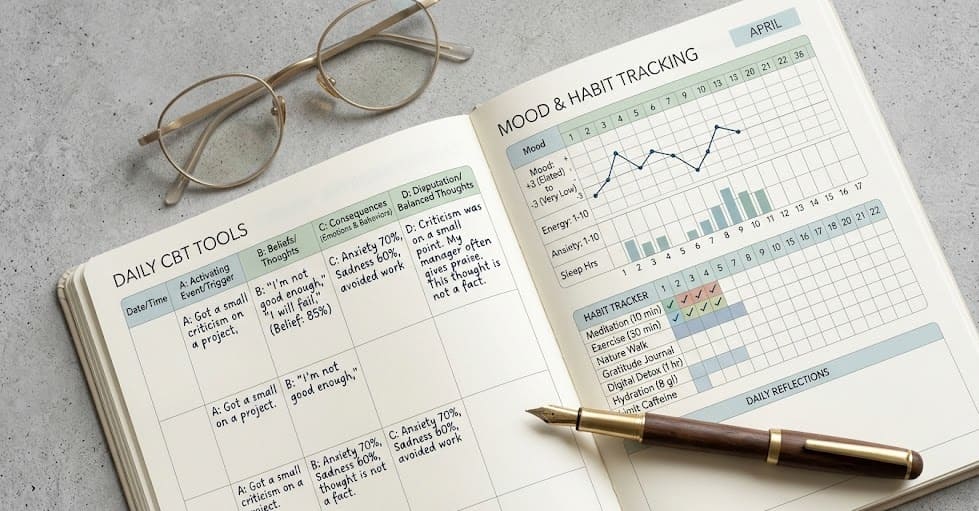
Mood Tracking Journals: Best for Emotional Awareness
A mood tracking journal helps you notice patterns over time.
This can be useful if you often feel “off” but cannot identify why. Tracking sleep, stress, energy, screen time, food, movement, work pressure, and social interactions may help you understand what affects your mood.
The key is to keep it simple. If mood tracking becomes obsessive, it stops being helpful.
A good mood tracking journal should help you ask practical questions:
- Did I sleep enough?
- Did I spend too long on screens?
- Did I move today?
- Did work drain me more than usual?
- Did I avoid something important?
- What helped me feel more stable?
- What made the day harder?
Mood tracking is best when it leads to small adjustments, not self-judgment.
Buy if: you want to spot patterns in mood, sleep, stress, and habits.
Skip if: tracking makes you anxious or overly self-critical.

Self-Care Planners: Best for Burnout Routines
A self-care planner is different from a normal journal. It usually combines reflection with planning.
This can include:
- morning priorities
- evening reflection
- weekly check-ins
- habit tracking
- sleep notes
- meal planning
- movement reminders
- gratitude prompts
- energy tracking
- screen-time boundaries
This format works well for people who feel scattered. Instead of writing long emotional entries, you can build a practical reset routine.
A self-care planner is especially useful for burnout recovery routines, digital detox habits, and sleep-friendly evenings.
The risk is overloading the page. If a planner has too many boxes, trackers, and goals, it can become another task that makes you feel behind.
Buy if: you want structure and routine support.
Skip if: you already feel overwhelmed by checklists.
Therapy-Style Journals: Best for Structured Reflection
Some journals are designed around therapy-inspired prompts, CBT-style worksheets, or structured thought reframing.
These can be useful between therapy sessions or when you want a more organized way to examine thoughts, emotions, and recurring patterns.
A therapy-style journal may include:
- thought records
- emotion labels
- trigger tracking
- alternative perspectives
- values exercises
- weekly reflection
- coping strategy planning
This kind of journal should be handled carefully. It can support self-awareness, but it is not therapy.
If writing makes you feel worse, stuck, panicked, or overwhelmed, stop and seek professional support.
Buy if: you want structured reflection and already feel safe doing this work.
Skip if: you need urgent mental health support or deep trauma work with a professional.

What We Would Skip
Not every wellness journal is worth buying.
Skip journals with exaggerated mental health claims
Avoid products that claim to cure anxiety, heal trauma, eliminate depression, or replace therapy. That kind of language is a warning sign.
Skip journals that are too complicated
If a journal has too many trackers, charts, ratings, goals, and prompts, it may create more pressure than clarity.
Skip journals that force positivity
Gratitude can be useful, but forced positivity can feel fake. A good wellness journal should allow honest days too.
Skip poor-quality novelty journals
A pretty cover is not enough. If the paper is bad, the layout is annoying, or the prompts are shallow, you probably will not use it for long.
Skip journals that do not match your real habit
Do not buy a 300-page deep reflection journal if you only have five minutes a day. Do not buy a tiny daily planner if you want long-form writing.
Best First Choice for Most People
For most readers, the best starting point is simple:
- A guided daily journal if you want prompts
- A mood tracking journal if you want emotional patterns
- A blank notebook if you want free writing
- A self-care planner if you want routine structure
- A premium leather journal if the ritual matters to you
Start with the lowest-friction option. You can always upgrade later.
The best wellness journal is the one you can open on a normal, tired, imperfect day.
Who Should Buy a Wellness Journal?
A wellness journal may be useful if:
- you want to reduce screen time before bed
- you feel mentally cluttered
- you want a simple daily reflection habit
- you want to track mood, sleep, or stress patterns
- you want a calmer morning or evening routine
- you prefer paper over apps
- you want to prepare thoughts before therapy
- you want a small offline ritual that feels personal
Who Should Not Rely on Journaling Alone?
Do not rely on journaling alone if you are dealing with severe distress, self-harm thoughts, panic attacks, trauma symptoms, depression symptoms, ongoing insomnia, substance misuse, or any issue that affects your ability to function.
A journal can support care. It should not replace care.
What We Could Verify
We could verify that the most useful journal categories for this page are:
- guided journals
- gratitude journals
- mood tracking journals
- self-care planners
- therapy-style journals
- blank journals
- premium leather journals
These categories match real buyer needs and help readers choose based on use case rather than hype.
What We Could Not Verify
We could not verify that any single journal will improve your mental health, reduce anxiety, improve sleep, or work for every reader.
We also could not verify:
- long-term consistency for every user
- real-world durability of every product
- paper quality across all sellers
- whether a specific journal is clinically designed
- whether product claims are supported by strong evidence
- whether Amazon listings will keep the same price, stock, or seller quality
Use this guide as a buying filter, not as a diagnosis or treatment plan.
Final Verdict: Choose the Journal You Will Actually Use
A wellness journal should make reflection easier, not heavier.
If you are new to journaling, start with short guided prompts. If you want emotional awareness, choose mood tracking. If your routine is falling apart, choose a self-care planner. If you want freedom, choose a blank notebook. If the tactile ritual matters, a premium leather journal may be worth considering.
Do not buy a journal because it promises transformation. Buy it because it fits your real daily life.
The right journal gives you a quiet place to pause, check in, and return to yourself without another screen.
Next Step
If your journaling habit is part of a wider reset, read next:
Digital Burnout Recovery Guide — for reducing screen overload and rebuilding calmer routines.
Or download the free MindReset Nervous System Reset Toolkit for a printable 7-day reset routine.
FAQ
What is the best wellness journal for beginners?
A guided journal with short daily prompts is usually best for beginners. It removes the pressure of starting from a blank page.
Are wellness journals good for mental health?
Wellness journals may support self-reflection, emotional awareness, gratitude, and routine-building. They are not a replacement for therapy or medical care.
What is the difference between a wellness journal and a gratitude journal?
A gratitude journal focuses mainly on positive reflection. A wellness journal may include mood tracking, habits, sleep, stress, goals, and daily check-ins.
Should I choose a guided journal or a blank journal?
Choose a guided journal if you want structure. Choose a blank journal if you prefer free writing and dislike prompts.
Can journaling help with anxiety?
Journaling may help some people organize thoughts and notice patterns, but it should not be treated as an anxiety treatment. For persistent or severe anxiety, speak with a qualified professional.
What should I avoid in a wellness journal?
Avoid exaggerated claims, overwhelming layouts, forced positivity, poor paper quality, and journals that do not fit your real writing habit.
Is a leather journal worth it?
A leather journal can be worth it if the tactile ritual helps you write more consistently. It is not necessary if a simple notebook already works for you.