Table of Contents
The Remote Control of Your Nervous System
Implementing the right breathing techniques for calm is the fastest biological way to interrupt a stress response in 2026. However, you carry a “remote control” for your brain everywhere you go: your breath. While most bodily functions happen automatically, breathing is the only one you can control both consciously and unconsciously. By mastering specific breathing techniques for calm, you can literally hack your Vagus nerve to switch your brain from “panic mode” to “peace mode” in seconds.
Breathing Techniques for Stress Relief: 3 Simple Breathing Exercises to Help You Manage Stress
Breathing is one of the simplest tools you can use when your body feels tense, rushed, or overloaded. You do not need a device, a subscription, or a perfect meditation setup. A simple breathing exercise can help you slow your breathing, notice your stress response, and create a calmer rhythm in a few minutes.
This guide is worth reading if you want practical breathing techniques for stress relief without turning breathwork into something complicated. You will learn 3 breathing exercises, when to use each breathing technique, how deep breathing works with the nervous system, and when a tool such as an app, HRV biofeedback device, or guided breathing routine may be useful.
Health note: This article is for general wellness education only. Breathing exercises are not a substitute for medical care, diagnosis, or treatment. If breath holds, deep breathing, or any type of breathing exercise makes you dizzy, uncomfortable, or short of breath, stop and return to normal breathing.
Article Outline
- What makes breathing useful for stress relief?
- How does stress change your breathing pattern?
- What is the easiest breathing exercise to start with?
- How does box breathing help you manage stress?
- What is the 4-7-8 breathing technique?
- When should you use deep breathing exercises?
- What is diaphragmatic breathing or belly breathing?
- Is alternate nostril breathing useful for relaxation?
- Can coherent breathing support HRV and calm?
- When is a breathing tool, app, or biofeedback device worth using?
- How do you build a simple breathing routine?
- What should you remember before you start?
What Makes Breathing Useful for Stress Relief?
Breathing is closely linked to how your body reacts to stress. When stress levels rise, your breathing may become faster, shallower, or more chest-based. You may not notice it at first, but your body often shifts into a more alert state before your mind catches up.
A calm breathing practice gives you something simple to control. You cannot always change the stressful situation in front of you, but you can change the rhythm of your breathing. Slowing down your breathing may support relaxation, help you pause before reacting, and give your nervous system a more stable signal.
This is why breathing techniques for stress are popular in meditation, sport, coaching, therapy-adjacent wellness, and performance routines. The goal is not instant stress relief in a magical way. The goal is to use simple breathing techniques as a practical reset when you need to reduce stress and return to a steadier state.
How Does Stress Change Your Breathing Pattern?
When you are relaxed, your breathing pattern usually feels slower and easier. You may breathe more deeply into the lower ribs and belly without thinking about it. During stress, the body often does the opposite. Breathing quickly, shallow breathing, and chest breathing become more common.
This matters because your breathing pattern can reinforce how you feel. If your body is already tense and your breathing stays fast, the stress response may feel stronger. If you slow your breathing and make the exhale longer, you may create a more settled rhythm.
The point is not to force perfect breathing. In fact, trying too hard can make some people feel more tense. A good breathing exercise should feel simple, repeatable, and safe. If a breathwork technique feels uncomfortable, choose a gentler method and avoid long breath holds.
What Is the Easiest Breathing Exercise to Start With?
The easiest breathing exercise is simple breathing with a longer exhale. It works well because you do not need to count complicated patterns. You simply breathe in through the nose, breathe out slowly, and allow the exhale to last a little longer than the inhale.
Try this simple breathing exercise for one minute. Inhale gently for about 3 or 4 seconds. Exhale slowly for about 5 or 6 seconds. Keep your shoulders relaxed and let the breathing stay smooth. This is one of the simple breathing exercises that can help you manage stress without needing a timer or special setup.
This form of breathing is useful during work breaks, before a difficult conversation, after scrolling too long, or when you want to lower stress before bed. It is not dramatic, but that is the point. The best breathing method is often the one you will actually use.
How Does Box Breathing Help You Manage Stress?
Box breathing is a structured breathing technique that uses four equal parts: inhale, hold, exhale, hold. A common box pattern is 4 seconds in, 4 seconds hold, 4 seconds out, and 4 seconds hold. The “box” name comes from the equal sides of the pattern.
Box breathing can be useful when your mind feels scattered because the counting gives you something specific to focus on. Instead of thinking about the stress, you follow the breathing pattern. This can make the exercise feel more controlled and less vague than general relaxation advice.
Use box breathing when you need calm focus rather than sleepiness. It can fit before meetings, writing sessions, travel, work pressure, or any moment when you want to pause and reset. If breath holds feel uncomfortable, shorten the count or skip the hold. A breathing exercise should support calm, not create pressure.
What Is the 4-7-8 Breathing Technique?
The 4-7-8 breathing technique is another structured method. The basic pattern is to inhale for 4 seconds, hold for 7 seconds, and exhale for 8 seconds. This 4-7-8 rhythm is often used as a relaxation tool because the exhale is longer than the inhale.
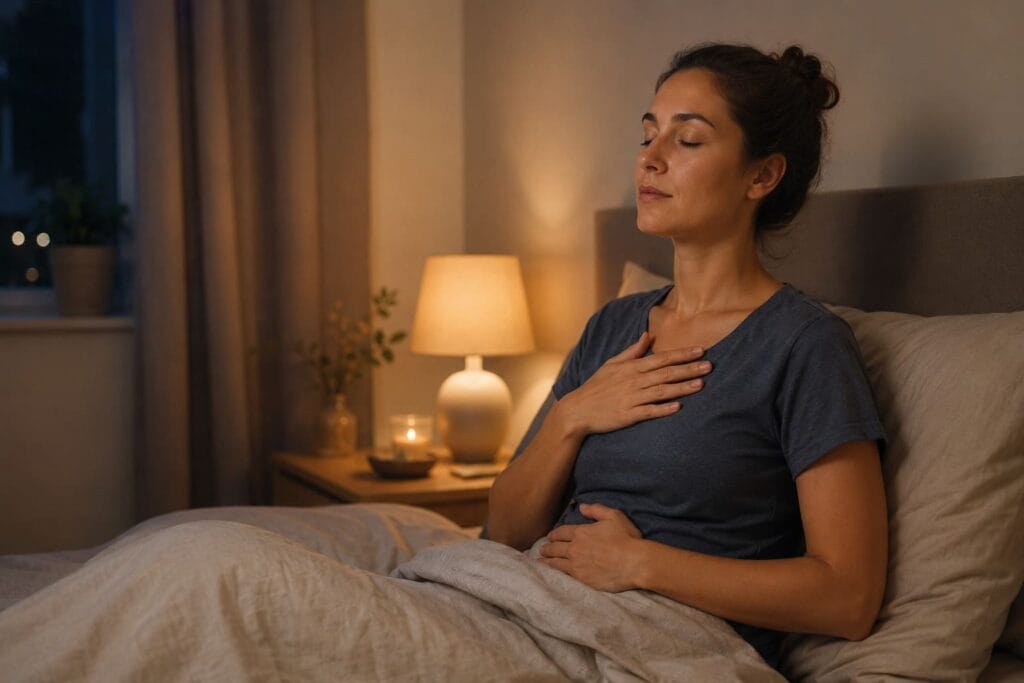
4-7-8 breathing may be better for evening wind-down than for daytime productivity. The slow rhythm encourages you to stop rushing and settle into a quieter pace. For some people, 4-7-8 breathing feels calming before sleep, especially when combined with dim light, no phone, and a consistent routine.
However, the 4-7-8 breathing technique is not perfect for everyone. A 7-second hold can feel too long if you are new to breathwork or already tense. Start gently. You can try 3-4-6 or 4-4-6 first, then move toward 4-7-8 when it feels natural.
When Should You Use Deep Breathing Exercises?
Deep breathing exercises are useful when your breathing has become shallow and tight. The goal is not to take the biggest breath possible. The goal is to breathe more deeply in a controlled, comfortable way that reduces unnecessary tension.
A simple deep breathing routine can look like this: sit upright, place one hand on your lower ribs, inhale through the nose, and exhale slowly through the mouth or nose. Let the ribs expand gently. Avoid lifting your shoulders. This makes deep breathing feel grounded instead of forced.
Deep breathing works best when used before stress becomes overwhelming. For example, you can use it between tasks, before opening your inbox, after a commute, or during an evening reset. If you wait until you are already overloaded, it may still help, but it will be harder to stay patient with the exercise.
What Is Diaphragmatic Breathing or Belly Breathing?
Diaphragmatic breathing is often called belly breathing because the lower belly and lower ribs move more than the upper chest. It is a type of breathing that encourages a slower, fuller rhythm. Many people use it for relaxation, meditation, and stress management routines.
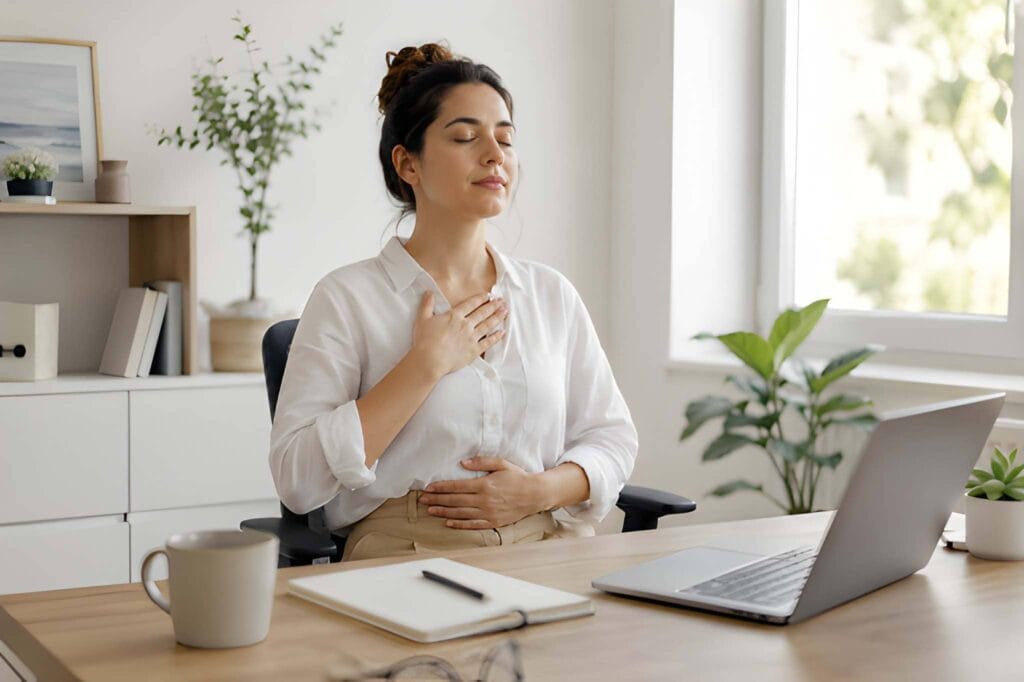
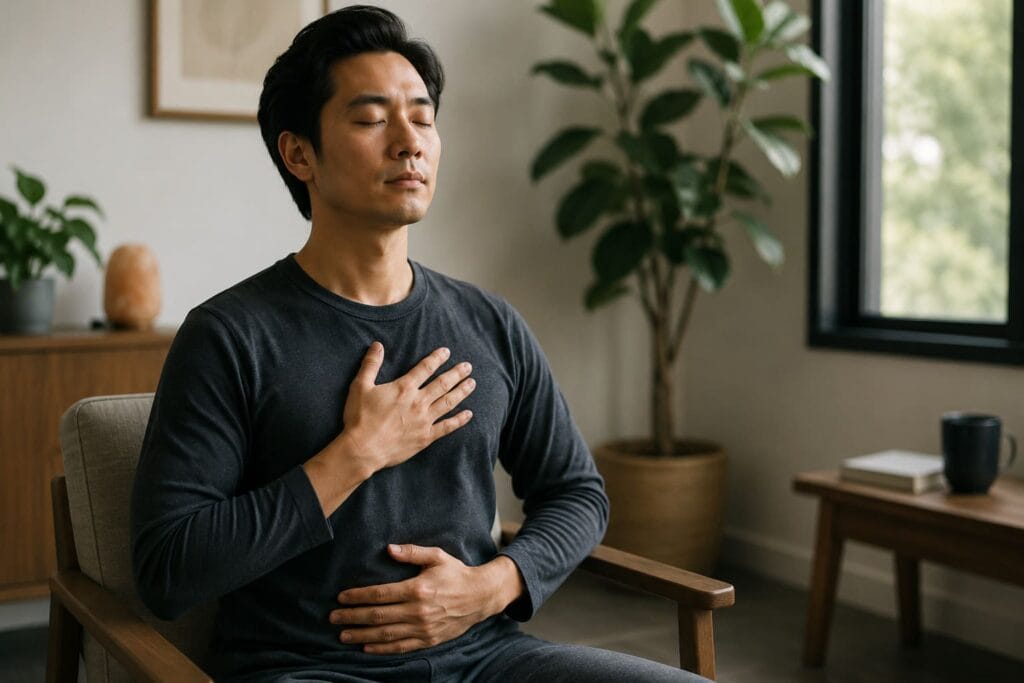
To try belly breathing, place one hand on your chest and one hand on your belly. Breathe in through the nose and allow the lower hand to move slightly. Exhale slowly and let the belly soften. Do not push the belly out aggressively. Keep the breathing smooth and natural.
This breathing practice is useful because it teaches awareness. You start to notice the difference between chest breathing and slower nasal breathing. Over time, this can make it easier to catch shallow breathing during the day and shift back toward a calmer pattern.
Is Alternate Nostril Breathing Useful for Relaxation?
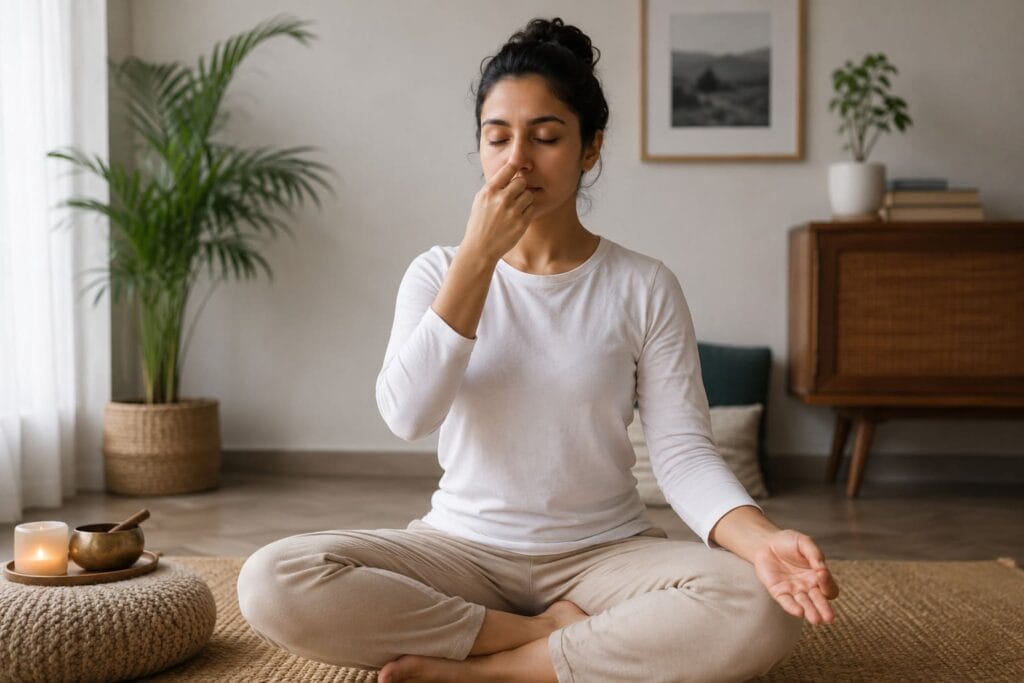
Alternate nostril breathing is a yogic breathing practice where you breathe through one nostril at a time. The usual pattern is to close one nostril, inhale through the other, switch sides, and exhale through the opposite nostril. Then you repeat the cycle.
This breathing technique can feel calming because it requires attention. You are not just breathing; you are following a sequence. That makes it harder to scroll, rush, or multitask. It can be a good option if normal breathing exercises feel too boring.
Alternate nostril breathing is not necessary for everyone. If it feels awkward, skip it. Simple breathing, box breathing, or 4-7-8 breathing may be easier to use consistently. The best breathwork techniques are not the most exotic ones. They are the ones that fit your real life.
Can Coherent Breathing Support HRV and Calm?
Coherent breathing usually means breathing at a slow, steady rhythm, often around five to six breaths per minute. This type of breathing is commonly used in HRV-focused routines because it may support a more balanced breathing and heart rate pattern during practice.
HRV stands for heart rate variability. In simple terms, it reflects variation in time between heartbeats. Some wellness tools use HRV biofeedback to show how your breathing pattern affects your body in real time. This can make breathwork feel more measurable instead of purely subjective.
Coherent breathing is a good middle ground between free breathing and advanced techniques. You can use a timer, a breathing app, or a visual pacer. Inhale slowly, exhale slowly, and keep the rhythm comfortable. If you want a more data-driven routine, this is where a tool may become useful.
When Is a Breathing Tool, App, or Biofeedback Device Worth Using?
Breathing is free, and for many people that is enough. But a tool can help if you struggle with consistency, lose focus, or want feedback. A breathing app can guide timing. A wearable can remind you to pause. An HRV biofeedback device can show whether your breathing practice is becoming more balanced.
This is where breathing connects naturally with self-regulation tools. If you like the idea of slow breathing but want real-time feedback, an HRV biofeedback device may be worth comparing. If you want passive support during the day, a calming wearable may fit better. If your breathing practice is part of meditation, a meditation feedback device may be more useful than a simple timer.
The key is not to buy a device because breathing is “hard.” The key is to choose a tool only when it solves a real problem. If you already use simple breathing exercises every day, you may not need anything else. If you keep forgetting, guessing, or quitting, guided support may be worth it.
How Do You Build a Simple Breathing Routine?
A breathing routine should be short enough to repeat. Start with two minutes, not twenty. Pick one breathing exercise and attach it to something you already do. For example, use box breathing before work, 4-7-8 breathing before bed, or coherent breathing during an afternoon reset.
Do not rotate too many techniques at once. Different breathing methods can be useful, but too much choice creates friction. Choose one daytime breathing technique and one evening breathing exercise. Use them for a week before adding anything new.
A simple routine could look like this: morning nasal breathing for one minute, box breathing before a stressful task, and 4-7-8 breathing during your wind-down routine. That is enough. The goal is not to become a breathwork expert. The goal is to reduce stress, support calm, and build a repeatable reset habit.
What Should You Remember Before You Start?
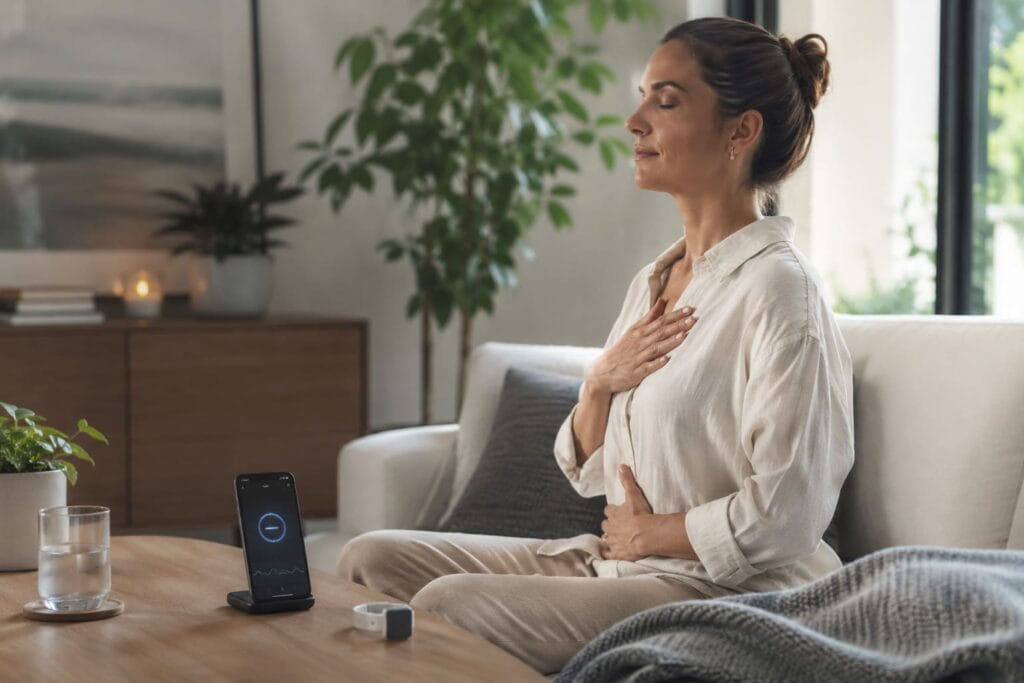
Breathing techniques for stress relief work best when they are simple, comfortable, and consistent. If you force the exercise, chase perfect numbers, or treat every session like a performance, you miss the point. Calm breathing should feel like support, not another task to fail.
Start with simple techniques. Try longer exhales, box breathing, diaphragmatic breathing, or 4-7-8 breathing. Notice which one fits your body and your day. Some people prefer structure. Others prefer slow, natural breathing. Both can be valid.
If you want more guidance, consider a breathing app, HRV biofeedback tool, or calming wearable after you understand the basics. Breathing is the foundation. Tools are optional. The smart path is to learn the free skill first, then decide whether technology would actually improve your routine.
Key Takeaways
If any exercise makes you dizzy or uncomfortable, stop and return to normal breathing.
Breathing is a simple tool that may help you pause, reduce stress, and return to a calmer rhythm.
Stress often changes your breathing pattern, leading to shallow breathing, chest breathing, or breathing quickly.
Simple breathing with a longer exhale is the easiest breathing exercise to start with.
Box breathing is useful for calm focus during the day.
4-7-8 breathing may fit better into an evening relaxation or sleep routine.
Deep breathing exercises and diaphragmatic breathing can help you notice and correct shallow breathing.
Alternate nostril breathing and coherent breathing are useful options if you want a more structured breathing practice.
A breathing app, HRV biofeedback device, or calming wearable can help if you want guidance, reminders, or measurable feedback.
You do not need to master every breathing technique. Choose one or two simple breathing exercises and use them consistently.