The Myth of the Multitasker
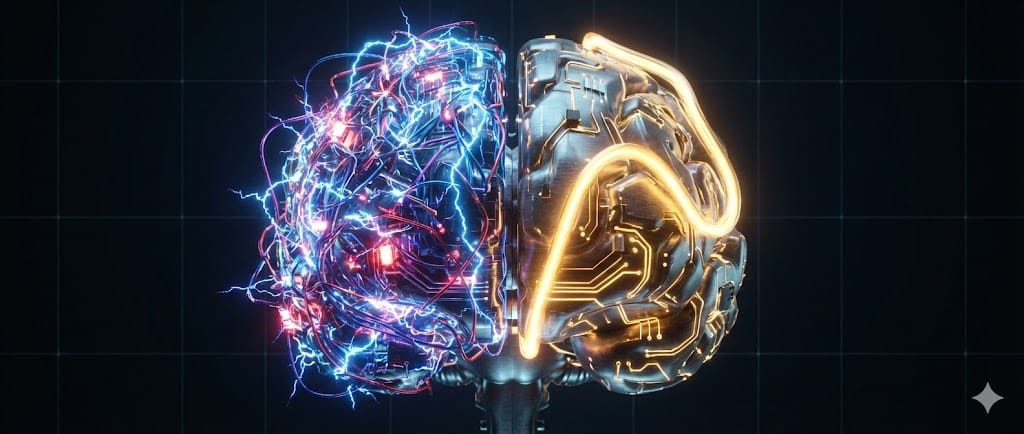
The debate of single-tasking vs multitasking is settled science in 2026. While multitasking is often worn as a badge of honor, multitasking is often worn as a badge of honor. We answer emails during meetings, check Slack while writing reports, and scroll through news while eating. But here is the scientific truth: your brain cannot actually multitask. It can only “task-switch”—rapidly jumping from one thing to another. In the battle of single-tasking vs multitasking, the latter is a silent killer of quality and mental energy.
The “Switching Cost” Phenomenon

Every time you switch your attention, your brain pays a “penalty.” It takes an average of 23 minutes to return to a state of deep focus after a single interruption. When you “multitask,” you are essentially keeping your brain in a constant state of recovery. This leads to a 40% drop in productivity and a significant increase in errors. Over time, this chronic fragmentation of attention leads to “brain fog” and high levels of the stress hormone cortisol.
Why Single-tasking is the New Superpower
Single-tasking is the practice of dedicating your entire cognitive capacity to one task at a time. By eliminating the “switching cost,” you allow your brain to enter a “Flow State“—the peak human performance level where time seems to disappear and creativity peaks. In an era of infinite distractions, the ability to focus on one thing is the ultimate competitive advantage.

The Mind Reset Single-tasking Protocol
- The “One-Tab” Rule: When working on a high-priority task, close every browser tab and application that isn’t directly related to that task.
- Time Blocking: Dedicate specific 90-minute blocks to “Deep Work” where notifications are silenced and your phone is out of sight.
- The “Next Step” Anchor: Before you take a break, write down exactly what the very next small step is. This makes it easier to re-engage without the mental friction of “Where was I?”
- Batching Low-Value Tasks: Instead of answering emails as they arrive, set two 30-minute periods a day to process them all at once.
The Biology of “Attention Residue” Why do you feel exhausted even when you haven’t finished anything? Research coins the term “attention residue.” When you switch from Task A to Task B, your brain remains cognitively “stuck” on Task A. This residue occupies valuable processing power, lowering your IQ for the next task. By actively choosing single-tasking vs multitasking, you clear this residue. You allow your brain to close the loop on one task completely before opening another. This preserves your mental energy for the entire day rather than burning out by noon, creating a sustainable Mind Reset workflow.
Tools to Aid Single-Tasking
Willpower alone is often not enough to resist the urge to multitask. This is where your environment comes in.

Dumb Devices:
Switching to a distraction-free writing tool like the Rocketbook forces you to disconnect from digital notifications, allowing your brain to enter a state of deep, uninterrupted focus.
Conclusion
The choice between single-tasking vs multitasking is a choice between quality and chaos. By embracing the power of one, you protect your mental health and produce work that truly matters. Your brain wasn’t built for a million tabs—it was built for one great idea at a time.
Analog Timers: Using a physical timer (like a productivity cube) creates a visual anchor for your “Deep Work” session. It commits you to a single task for a set time block. Embracing single-tasking vs multitasking is the most powerful upgrade you can give your brain in a distracted world.
Recommendation: If you find it hard to stop the urge to check notifications while working, you might be overstimulated. Try our Dopamine Detox Guide to reset your focus baseline.