
Table of Contents
“Dopamine detox” sounds powerful. It also sounds more scientific than it really is.
You cannot remove dopamine from your brain. You do not need to “cleanse” your nervous system from pleasure. And a weekend without your phone will not magically reset your motivation.
But the idea behind the trend still points to a real problem: many people are exhausted by constant stimulation. Notifications, short videos, endless scrolling, news feeds, online shopping, gaming, and snackable content can train your day around quick hits of novelty. The result is not a broken brain. It is often a messy environment, weak digital boundaries, poor recovery, and too many easy escape routes.
This guide gives you a more practical alternative: a digital reset.
Instead of trying to “detox dopamine,” the goal is simple: reduce the most distracting inputs, rebuild your attention, and make normal life feel easier to choose again.
Quick verdict: Skip extreme dopamine detox rules. Build a repeatable digital reset routine that protects your mornings, evenings, attention, sleep, and real-world priorities.

What Is a Dopamine Detox, Really?
A dopamine detox is usually described as taking a break from highly stimulating activities such as social media, video games, porn, junk food, online shopping, or constant entertainment.
The problem is the name.
Dopamine is not a toxin. It is a normal brain chemical involved in motivation, learning, reward, movement, and attention. You cannot fast from dopamine the way you might fast from food. Your brain still uses dopamine when you go for a walk, read a book, complete a task, talk to someone, or look forward to dinner.
So when people say “dopamine detox,” what they usually mean is this:
They want to stop chasing quick stimulation long enough to feel in control again.
That is a reasonable goal. It just needs better language and a better method.
A practical digital reset is not about punishing yourself. It is about changing your environment so your attention is not constantly pulled away from what matters.
Why the Dopamine Detox Trend Is Overhyped
The overhyped version of dopamine detox usually makes three big claims:
- Your dopamine receptors are damaged by modern life.
- A short detox will reset your baseline.
- Boredom will make simple activities feel rewarding again.
That may sound convincing, but it is too simplistic.
Modern digital platforms are designed to be engaging. Infinite scroll, autoplay, algorithmic recommendations, notifications, streaks, and variable rewards can make it harder to stop. But that does not mean your brain needs a dramatic “dopamine cleanse.”
A better explanation is this: your habits and cues may be working against you.
If your phone is next to your bed, you will probably check it in the morning. If YouTube autoplay runs while you eat, meals become screen time. If every difficult task is followed by a social media check, your brain learns that discomfort means “escape.”
That is not a moral failure. It is a design problem.
And design problems need design solutions.

What to Do Instead: Use a Practical Digital Reset
A digital reset is a short, structured break from your most distracting digital habits.
The aim is not to remove all pleasure. The aim is to remove the automatic behaviors that keep stealing your focus.
You do not need to sit in an empty room for 48 hours. You do not need to avoid music, books, exercise, friends, or healthy food. You do not need to make your life miserable to prove discipline.
A useful reset should help you answer four questions:
- What digital habits are costing me the most?
- When do I lose control most often?
- What do I need to remove, block, or replace?
- What routine do I want after the reset ends?
That last point matters. A reset without a follow-up system is just a pause. The old habits usually return.
Who Should Try a Digital Reset?
A digital reset may be useful if you often feel mentally scattered, overstimulated, or pulled into your phone before you even decide what you want to do.
It can also help if you notice patterns like:
- checking your phone first thing in the morning;
- losing 30–90 minutes to short videos or social feeds;
- opening apps automatically during stress or boredom;
- struggling to read, work, study, or complete simple tasks;
- staying up late because of scrolling;
- feeling irritated when you cannot check your phone;
- using digital noise to avoid difficult feelings or decisions.
This is not about becoming anti-technology. Your phone, laptop, apps, and entertainment are not evil. The goal is to make them tools again, not the default setting for every spare moment.

Who Should Avoid Extreme Dopamine Detox Rules?
Avoid harsh dopamine detox rules if they turn into shame, fear, or obsessive restriction.
You should be careful with extreme versions if you are already dealing with anxiety, depression, eating problems, compulsive behavior, or major life stress. In those cases, the answer is not usually a self-punishing weekend challenge. Support, structure, and professional help may be more appropriate.
Also avoid plans that tell you to remove all enjoyable activities. Healthy pleasure is not the enemy. Sleep, movement, food, music, conversation, sunlight, nature, hobbies, and rest are part of a stable life.
The target is not pleasure.
The target is compulsive, low-value stimulation that keeps taking more from you than it gives back.

The 24-Hour Digital Reset Plan
This is a simple one-day reset. It is easier to complete than a dramatic weekend detox and more useful for real life.
Step 1: Choose Your Main Problem App
Do not start by deleting everything.
Choose the one digital habit that causes the most damage right now. For many people, it is one of these:
- TikTok, Instagram Reels, or YouTube Shorts;
- Reddit or endless forum browsing;
- news checking;
- mobile games;
- online shopping;
- late-night Netflix or YouTube;
- checking messages every few minutes.
Write it down:
“My main reset target is: ________.”
This makes the reset specific. “Use my phone less” is vague. “No short-form video for 24 hours” is clear.
Step 2: Remove Easy Access
Willpower is weak when the trigger is one tap away.
For 24 hours, remove easy access to the main problem app or habit.
Use one or more of these:
- delete the app for the day;
- log out;
- move it off your home screen;
- block the website;
- turn your phone to grayscale;
- disable non-essential notifications;
- put your phone in another room while working;
- use a physical alarm clock instead of your phone.
The goal is not to make access impossible. The goal is to add enough friction that you have time to choose.
Step 3: Protect the First Hour of the Day
The morning sets the tone.
For one day, do not check social media, news, email, or messages during the first hour after waking unless there is a real emergency or work requirement.
Instead, use a simple low-input routine:
- drink water;
- open curtains or step outside;
- shower;
- make your bed;
- write down the top three things for the day;
- take a short walk;
- read a few pages of a physical book;
- prepare breakfast without watching anything.
This is not magic. It just prevents your attention from being hijacked before your day has started.
Step 4: Replace the Scroll
If you remove a habit and replace it with nothing, your brain will search for the old habit.
Create a short replacement menu before the reset starts.
Good replacement options include:
- walking without headphones;
- journaling for five minutes;
- cleaning one small area;
- stretching;
- preparing a simple meal;
- reading a physical book;
- doing a puzzle;
- calling or messaging one real person intentionally;
- sitting outside;
- planning the next day on paper.
The replacement should be easy, visible, and realistic.
Do not choose something heroic. Choose something you will actually do.
Step 5: Create Two Check-In Windows
A digital reset does not mean ignoring real life.
Set two planned check-in windows, for example:
- 12:30–12:45;
- 18:00–18:20.
During those windows, you can check essential messages, email, banking, logistics, or family communication.
Outside those windows, avoid casual checking.
This keeps the reset practical. You are not disappearing. You are taking back control from automatic checking.
Step 6: Make the Evening Screen-Light
The evening matters because late-night scrolling often damages the next day.
For one night, create a screen-light routine:
- no short-form video after dinner;
- no phone in bed;
- no news before sleep;
- no “one more video” autoplay;
- charge your phone outside the bedroom if possible;
- use a book, journal, calm music, or an offline activity instead.
The goal is not perfect sleep optimization. The goal is to stop turning your bedroom into a second social media office.

What You May Notice During the Reset
You may feel restless. You may reach for your phone automatically. You may feel bored, irritated, or unsure what to do with quiet time.
That does not mean your brain is “healing” in a dramatic biological sense.
It means your habit loop is being interrupted.
Most people underestimate how often they use digital stimulation to avoid small discomforts: waiting, thinking, uncertainty, tiredness, loneliness, frustration, or boredom.
A good reset makes those patterns visible.
That is the real value.
Not dopamine cleansing. Awareness.
Once you can see the pattern, you can redesign it.
The 7-Day Digital Reset Routine
After the 24-hour reset, use a lighter seven-day plan.
This is where the change becomes more useful.
Day 1: Remove the Worst Trigger
Delete, block, or restrict the app that wastes the most time.
Day 2: Fix Your Morning
No social media, news, or inbox checking for the first hour.
Day 3: Fix Your Bedroom
Remove the phone from the bed area. Use a real alarm clock if needed.
Day 4: Add One Offline Block
Spend 30–60 minutes on an offline task: walking, cleaning, reading, cooking, planning, or a hobby.
Day 5: Reduce Notifications
Turn off non-essential alerts. Keep only calls, key people, calendar, banking, and work-critical tools.
Day 6: Create a Scroll Rule
Choose one rule:
- no scrolling while eating;
- no scrolling in bed;
- no short-form video before work;
- no social media before noon;
- no news after dinner.
Day 7: Review and Keep What Worked
Write down:
- What felt better?
- What was hardest?
- Which app pulled me back most strongly?
- Which rule should stay for the next 30 days?
This final review is the difference between a reset and a temporary challenge.
Better Tools Than Willpower
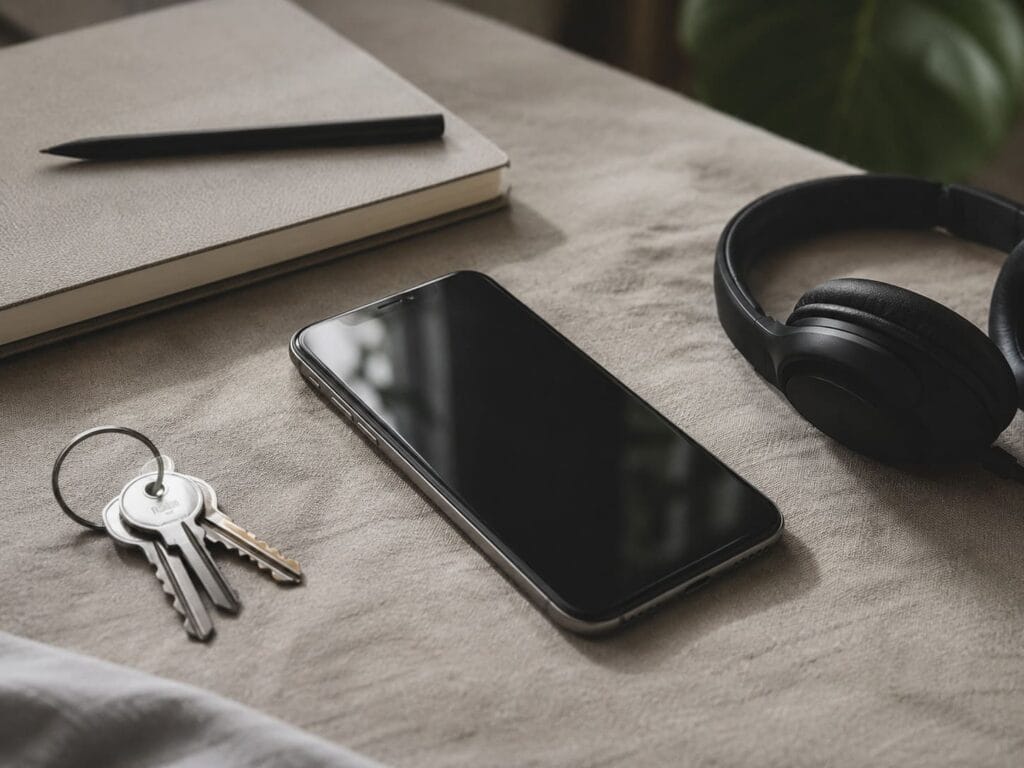
If you want this to stick, use tools that change the environment. For more low-tech replacements, see our guide to digital detox tools that support analog recovery without turning your life into a punishment routine.
Physical Alarm Clock
A separate alarm clock helps keep your phone out of bed. This one change can reduce morning scrolling and late-night checking.
App Blockers
Use blockers for your worst apps during work, sleep, or morning hours. Do not block everything. Block the patterns that create the most damage.
Grayscale Mode
Grayscale makes your phone less visually rewarding. It will not solve everything, but it adds useful friction.
Notebook or Brain Dump Pad
Keep a notebook nearby. When you want to check your phone because your mind feels noisy, write down the thought instead.
Analog Replacement Objects
A book, puzzle, sketchpad, resistance band, or simple household task gives your hands something to do without opening a feed.
The point is not to become old-fashioned.
The point is to stop giving every spare second to an algorithm.
What a Healthy Digital Life Looks Like After the Reset
A successful digital reset does not mean you never use social media again.
It means you use digital tools with more intention.
A healthier setup may look like this:
- phone stays out of the bedroom;
- notifications are limited;
- mornings are protected;
- short-form video has a time boundary;
- meals are screen-light;
- work blocks are protected from casual checking;
- boredom is not treated as an emergency;
- entertainment is chosen, not automatic.
This is a realistic goal.
You do not need a perfect minimalist lifestyle. You need a digital environment that does not constantly push you away from your own priorities.

Common Mistakes to Avoid
Mistake 1: Turning the Reset Into Self-Punishment
If your plan feels miserable, you probably made it too extreme.
A reset should give you more control, not make life feel like a prison.
Mistake 2: Removing Everything at Once
Do not try to quit every app, every snack, every show, every game, and every comfort at the same time.
Start with the biggest leak.
Mistake 3: Having No Replacement Plan
Empty time often turns back into screen time.
Prepare offline options before the reset starts.
Mistake 4: Going Back Without Rules
If you finish the reset and reinstall everything with no limits, the old pattern usually returns.
Keep one or two rules permanently.
Mistake 5: Believing Motivation Will Magically Return
A digital reset can create space. It does not automatically build a meaningful life.
Use the space for something specific: better sleep, focused work, exercise, reading, family time, creative work, or planning.
Simple Digital Reset Checklist
Use this checklist before your next reset:
- Choose one main problem app or habit.
- Remove easy access for 24 hours.
- Turn off non-essential notifications.
- Keep your phone away during the first hour of the day.
- Set two planned check-in windows.
- Prepare three offline replacement activities.
- Keep your phone out of bed.
- Review what worked after 24 hours.
- Keep one rule for the next seven days.
Small rules beat dramatic promises.
FAQ
Is dopamine detox real?
Not in the literal sense. You cannot remove dopamine from your body, and dopamine is not a toxin. A better way to think about it is a temporary break from compulsive high-stimulation habits.
Can a digital reset improve focus?
It may help some people focus better by reducing distractions, notifications, and automatic checking. The benefit comes from better boundaries and fewer interruptions, not from “detoxing” dopamine.
How long should a digital reset last?
Start with 24 hours. If that feels useful, try a seven-day lighter version with clear rules around mornings, evenings, notifications, and your worst app.
Should I delete all social media?
Not necessarily. Delete or block the app that causes the most damage first. For some people, strict deletion helps. For others, scheduled use is more realistic.
Is boredom good for you?
Boredom is not magic, but it can reveal how often you reach for stimulation automatically. Quiet time can make space for planning, reflection, reading, movement, or real rest.
What should I do when I want to scroll?
Pause for 30 seconds, name the trigger, and choose a replacement: walk, journal, stretch, clean one small thing, drink water, or complete a short task. The goal is to interrupt the automatic loop.
Final Verdict: Skip the Detox Myth, Keep the Reset
Dopamine detox is an overhyped phrase.
But a digital reset is useful.
You do not need to fear dopamine. You do not need to quit pleasure. You do not need to prove discipline by making life dull.
You need fewer automatic triggers, stronger boundaries, better mornings, calmer evenings, and a clear plan for your worst digital habit.
Start with one day. Remove one major trigger. Protect your first hour. Keep your phone out of bed. Replace the scroll with something real.
That is not a dopamine detox.
That is a practical Mind Reset.