
Table of Contents
The Anatomy of the Fried Nervous System and biological reset
MindReset.org may earn a commission if you buy through our links. This does not increase your price and does not affect our editorial judgment.
For the burned-out professional, the symptoms are no longer abstract feelings of stress; they are deeply physiological realities. The internal hardware is trapped in a permanent state of sympathetic overdrive—a perpetual, exhausting “fight or flight” loop where cortisol and adrenaline saturate the bloodstream, commanding the body to prepare for a physical threat that never actually arrives.
The downstream consequences of this biological gridlock are severe and pervasive. Decision fatigue morphs from a minor afternoon inconvenience into a paralyzing inability to process basic information. Sleep architecture is decimated, characterized by fragmented rest and the notorious three-in-the-morning wake-up, where the brain violently cycles through unresolved tasks and manufactured catastrophes.
Traditional coping mechanisms have proven entirely inadequate. The evening glasses of alcohol to forcefully numb the racing thoughts, the excessive caffeine consumption to violently drag the brain through the afternoon slump, and the mindless, numbing scroll of digital interfaces to detach from reality are not just ineffective solutions. They are actively accelerating the structural degradation of the nervous system.
For years, the proposed solution to this modern epidemic has been wrapped in esoteric fluff, religious dogma, or overly simplistic wellness advice. The exhausted, data-driven professional is frequently told to “just breathe,” “find their center,” or adopt complex, spiritually demanding meditation practices. To a highly analytical, skeptical mind running entirely on fumes, these suggestions are not only unhelpful; they are infuriating.
A brain that has been structurally rewired and physically damaged by a decade of corporate stress cannot simply “quiet down” on command. The hardware is malfunctioning, and it requires a definitive, mechanical, and biological intervention.
Recent clinical research has entirely reframed this conversation, completely divorcing the concept of nervous system recovery from mysticism. By stripping away the spiritual terminology, neuroscience has revealed that specific protocols can trigger a hard, biological “factory reset” for a fried nervous system. This intervention is not about achieving enlightenment; it is about cellular repair, structural brain rewiring, and the immediate, undeniable restoration of energy and focus. The human body possesses a latent, built-in mechanism to completely overhaul its response to stress, provided the correct biological switches are forcefully flipped.

Demystifying the Reset: The Clinical Blueprint
The most compelling, undeniable evidence for this rapid biological reset emerges from rigorous clinical studies conducted by researchers at the University of California San Diego (UCSD). This research analyzed participants engaging in intensive, seven-day retreat programs led by Dr. Joe Dispenza and Encephalon Inc.. The medical researchers approached these week-long events not as spiritual gatherings, but as tightly controlled biological experiments involving over 33 hours of guided focus, neural reprogramming, and open-label placebo healing practices.
The primary objective of this expansive study was to measure the molecular, cellular, and neurological changes that occur when an individual is completely removed from their high-stress environment and systematically forced into a sustained parasympathetic state. The findings, meticulously documented through fMRI functional connectivity scans, whole blood plasma proteomics, metabolomics, and real-time cellular assays, shattered previous academic assumptions regarding the timeline of neuroplasticity. The clinical data proved that profound, structural changes to the brain and body do not require years of monastic discipline or endless therapy; they can be forcefully initiated in just seven days.
By extracting the dense, academic medical jargon from this research, four non-negotiable biological shifts emerge. These are the literal, physical mechanisms of the “factory reset,” translating directly into profound stress relief, massive energy restoration, and the immediate elimination of destructive daily habits.
Miracle-Gro for the Brain: The BDNF Factor Surge
Chronic, unmanaged stress physically damages brain architecture. Prolonged exposure to cortisol literally shrinks the regions of the brain responsible for memory retention, emotional regulation, and executive decision-making. The UCSD study identified a massive, undeniable upregulation in Brain-Derived Neurotrophic Factor (BDNF) following the intensive reset protocol.
In highly practical terms, BDNF must be understood as “Miracle-Gro for the brain.” It is the literal biological fertilizer required to rebuild and restore neural tissue that has been scorched by years of corporate anxiety and relentless pressure. When researchers applied the blood plasma of individuals who had undergone this seven-day reset to laboratory-cultured neurons, they witnessed immediate and robust structural growth. The upregulation of BDNF activates specific signaling pathways that promote the remodeling of the hippocampus and prefrontal cortex.
For the exhausted professional, a surge in BDNF is the difference between a mind that feels like it is trudging through thick, impenetrable mud and a mind that is sharp, agile, and fiercely resilient. This biological fertilizer repairs the structural damage caused by chronic stress, allowing the brain to rapidly process complex information, adapt to new challenges, and recover from professional setbacks without triggering an emotional spiral. This molecular footprint proves beyond a doubt that the decline in cognitive sharpness often casually attributed to “aging” or “burnout” is, in fact, a reversible state of stress-induced brain atrophy.
Escaping the Anxious Loop: Physical Neurite Outgrowth
The sensation of being hopelessly trapped in an anxious thought loop—obsessively ruminating over a specific email, a fragile financial projection, or a perceived professional failure—is not a sign of weak willpower or a flawed character. It is a strictly physical reality. The human brain naturally defaults to the neural pathways that are most heavily trafficked. In a chronically stressed individual, the pathways dedicated to panic, anxiety, and worst-case scenario planning are wide, heavily paved highways, while the pathways for calm, rational problem-solving are overgrown, inaccessible dirt roads.
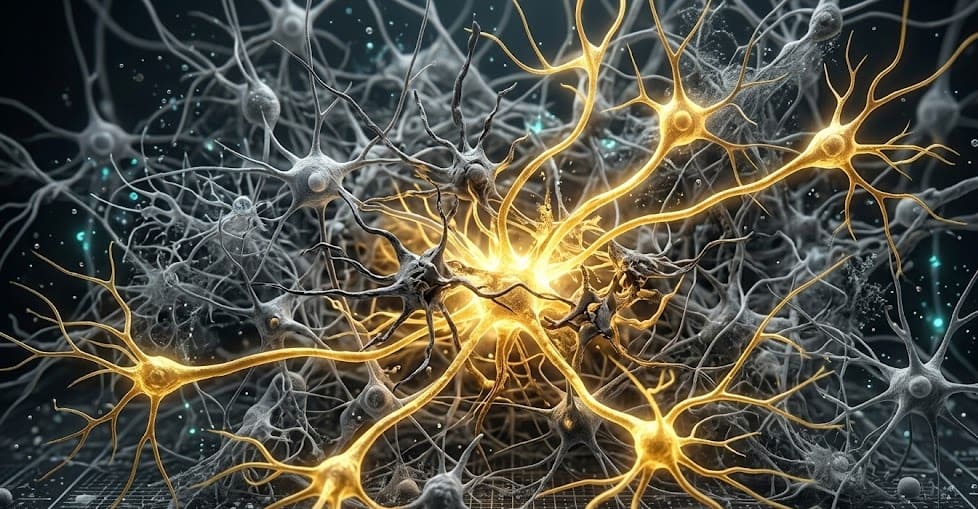
The clinical data from UCSD demonstrated that the post-reset blood plasma directly stimulated massive “neurite outgrowth” in vitro. Translated from the sterile environment of the laboratory, this means the brain literally grows new, physical connections to escape old, deeply ingrained thought loops. It is the biological equivalent of laying down brand-new fiber-optic cables in the brain to bypass damaged, outdated infrastructure.
When these new physical connections are formed, the individual is no longer a biological prisoner to their automatic stress responses. A delayed flight, a lost contract, or a highly confrontational conversation no longer triggers an involuntary cascade of panic. The brain has physically rewired its internal circuitry to route those incoming stressors through new, calm, and highly analytical pathways. This structural neuroplasticity is the foundational, physiological basis for true emotional resilience in the workplace.
The Cellular Battery Recharge: Glycolytic Metabolism Shift
The most pervasive, debilitating complaint among chronically burned-out professionals is a bone-deep, unrelenting fatigue that no amount of caffeine, stimulants, or weekend sleep can cure. This profound exhaustion occurs because the body is trapped in a desperate survival mode, highly inefficiently burning through energy reserves simply to keep the nervous system on high alert against perceived threats.
The clinical data unequivocally revealed that the intensive reset intervention triggered a profound, measurable shift in cellular metabolism. Cells treated with post-reset plasma demonstrated enhanced glycolytic, or sugar-burning, metabolism. This critical shift indicates a complete transition from a rigid, exhausted, protective state to a highly flexible, adaptive, and radically energy-rich mode.
This mechanism should be conceptualized as upgrading a device’s degraded battery to a brand-new, fully optimized power cell. The cells are no longer aggressively hoarding energy for an impending “fight or flight” emergency; they are efficiently and cleanly burning fuel to provide immediate, sustained energy throughout the day.

The Internal Pharmacy: Endogenous Opioids
When the nervous system is chronically fried, the individual naturally and inevitably reaches for external coping mechanisms to numb the physical discomfort of anxiety. This typically manifests as an escalating reliance on alcohol, junk food, or endless digital doom-scrolling—anything engineered to provide a temporary, artificial spike in dopamine and a momentary numbing of the pervasive tension.
The UCSD study uncovered one of the most powerful, liberating biological benefits of the factory reset: a highly significant increase in the blood levels of endogenous opioids. These are the body’s own naturally produced, highly potent painkillers, analgesics, and stress-relieving compounds.
By forcefully activating the body’s internal pharmacy, the physiological craving for external numbing agents is systematically eradicated. The habitual evening glass of wine or the intense craving for refined sugar is no longer biologically necessary because the body is already saturating its own internal receptors with natural, powerful mood stabilizers and analgesics.
Silencing the Internal Noise: The Default Mode Network
Beyond the cellular and molecular transformations, the functional MRI (fMRI) scans from the UCSD research demonstrated a dramatic, measurable decrease in the functional integration of the brain’s Default Mode Network (DMN) and Salience Network.
The DMN is the specific brain network entirely responsible for self-referential thinking, endless rumination, and the ego. In a highly stressed, burned-out executive, the DMN is drastically hyperactive, constantly generating a relentless stream of “what-if” scenarios, harsh self-criticism, and future-based anxiety.
The biological factory reset dramatically quiets this overactive network, producing neural patterns akin to those seen in profound flow states or even deep psychedelic experiences. The incessant, exhausting internal monologue of worry is forcefully silenced, allowing for a state of deep, uninterrupted focus and extreme present-moment awareness.
| Biological Mechanism | Academic Definition | The Human-Centric Benefit |
| BDNF Upregulation | Protein promoting hippocampal remodeling and TrkB signaling. | Miracle-Gro for the Brain: Rebuilds tissue destroyed by corporate stress. Restores sharp memory and focus. |
| Neurite Outgrowth | In vitro structural growth of dendritic connections. | Physical Rewiring: Literal new brain connections form to permanently escape anxious, repetitive thought loops. |
| Glycolytic Shift | Enhanced cellular sugar-burning metabolism. | Cellular Battery Recharge: Cells switch from exhausted survival mode to a highly efficient, limitless energy state. |
| Endogenous Opioids | Increased blood levels of natural analgesic compounds. | The Internal Pharmacy: Eradicates the craving for alcohol or junk food by producing natural, highly potent stress-relievers. |
| DMN Suppression | Decreased functional integration in the Default Mode Network. | Silencing the Noise: Shuts down the exhausting internal monologue of self-criticism and future-based anxiety. |
The Myth of Willpower and the Necessity of Mechanical Intervention
The clinical evidence proves beyond contention that a biological factory reset is possible, and the resulting benefits—new neural pathways, cellular energy, and natural stress relief—are undeniable. However, a massive, critical problem remains: the practical implementation of this science.
A burned-out, highly skeptical professional cannot simply “sit down, close their eyes, and quiet the mind.” The very architecture of their stressed brain physically prevents them from accessing the parasympathetic state required to trigger these biological changes. When the nervous system is permanently locked in a threat-response mode, attempting to meditate using pure willpower is an exercise in futility; it is akin to attempting to stop a speeding freight train with bare hands. In the silence of meditation, the anxiety violently spikes, the physical discomfort amplifies, and the individual quickly abandons the practice, confirming their deeply held bias that “this nonsense doesn’t work for me.”
This is precisely where the paradigm must violently shift from traditional, unassisted practice to modern biohacking. To access the biological reset, the body must be physically, mechanically forced into a state of safety. The nervous system requires external hardware to successfully bypass the chaotic, overactive mind.
Biohacking gadgets are not mere luxury accessories or fitness toys; they are absolute, non-negotiable “must-have” tools for anyone serious about reclaiming their cognitive health. They act as the mandatory training wheels for the nervous system, providing the exact physical stimuli and real-time biometric data needed to guarantee the biological reset is actually occurring.
To execute this biological overhaul effectively, two distinct categories of devices are absolutely required: a wearable neurostimulator to mechanically induce physical calm, and a biometric smart ring to prove the internal biology is actively changing.
Mechanical Tranquility: The Mandate for Wearable Neurostimulators
The most agonizing and difficult phase of resetting a fried nervous system is the initial transition from chaos to calm. The brain is actively screaming that a threat is imminent, making stillness feel not just difficult, but biologically dangerous. To bypass this evolutionary alarm system, science leverages the vagus nerve—the primary biological superhighway of the parasympathetic (rest and digest) nervous system.
Vagal activity is involved in autonomic regulation, but product-specific effects on heart rate, blood pressure, and stress hormones require clinical evidence. While traditional methods to stimulate the vagus nerve involve complex, frustrating breathing exercises, a severely burned-out professional requires a passive, automated, mechanical solution.

Apollo Neuro: Forcing the Body into Absolute Safety
The Apollo Neuro stands entirely alone as the premier device in the category of wearable neurostimulators. Apollo Neuro is marketed as a wellness wearable. Any PTSD-related research should be cited precisely without implying an approved PTSD treatment.
Worn on the wrist, ankle, or clipped to clothing, the Apollo device does not merely passively track stress like a traditional smartwatch; it actively, physically intervenes. It utilizes targeted, low-frequency haptic vibrations (referred to within the ecosystem as “Vibes”) that perfectly mimic the biological rhythms of deep safety, such as a gentle heartbeat or the physical sensation of being held. These highly precise vibratory patterns physically stimulate the vagus nerve through the skin, entirely hijacking the body’s stress response and forcefully initiating a shift out of the “fight or flight” mode.
For the corporate executive, this device functions as an immediate, external off-switch for panic. Whether walking into a highly hostile board meeting, attempting to decompress after a grueling fourteen-hour workday, or waking up with a racing heart in the middle of the night, the device provides an immediate, mechanical anchor to reality. It acts as the necessary “training wheels” for entering a meditative state, allowing the chaotic mind to finally quiet down simply because the physical body has been mechanically reassured that it is not under attack.
Synthesizing the Real-World Experience: The Price of Salvation
When analyzing the extensive real-world feedback from long-term users of the Apollo Neuro across various forums, a clear pattern of minor, logistical friction points emerges. Skeptics and new users frequently express intense frustration with the device’s battery life; because it relies on continuous haptic motors rather than passive sensors, frequent use of the intensive relaxation modes can drain the battery within a day or two, demanding a strict charging routine.
Furthermore, users attempting to wear the device to bed often note that the physical strap can feel restrictive, or that the audible hum of the vibration in a completely silent room takes a period of behavioral adjustment. Additionally, upon unboxing, some note that the casing feels surprisingly lightweight and plastic-like for a premium, high-priced intervention.
However, interpreting these highly specific physical quirks as reasons to dismiss the technology is a catastrophic misunderstanding of its fundamental value proposition. The Apollo Neuro is not a passive fitness tracker designed to sit invisibly on the wrist for a week; it is an active, therapeutic, medical-grade mechanical intervention. It aggressively consumes power and makes a faint noise precisely because it is physically doing the heavy lifting for a completely compromised nervous system.
Yes, the device demands a dedicated charging routine, perhaps requiring the user to plug it in while answering morning emails. Yes, the vibration is a distinct physical sensation that requires a few nights of acclimation. Apollo may provide a tactile relaxation cue, but this article cannot verify that it stops panic attacks or cortisol spikes.
When the alternative is another agonizing, sleepless night staring at the ceiling, another highly productive day lost to impenetrable brain fog, or a dangerous reliance on pharmaceutical interventions, plugging a plastic device into the wall every forty-eight hours becomes a microscopic, almost laughable price to pay. The Apollo Neuro is a strictly non-negotiable investment; attempting a biological reset without this mechanical assistance is an unjustified compromise with one’s own comfort and a conscious, voluntary agreement to continue suffering.

The Biological Dashboard: Validating the Reset with Smart Rings
While the Apollo Neuro provides the essential mechanical intervention to forcibly induce calm, the highly analytical, deeply skeptical professional requires hard, irrefutable proof that the biological reset is actually working. Vague, subjective feelings of “being slightly more relaxed” are entirely insufficient for this demographic. The user must see the physiological changes happening in real-time on a digital dashboard to remain committed to the process.
This is precisely where advanced biometric tracking becomes indispensable. The ultimate, undisputed metric for nervous system recovery is Heart Rate Variability (HRV). HRV measures the micro-fluctuations in time between individual heartbeats; a higher HRV indicates a highly resilient, flexible nervous system that can easily bounce between intense stress and deep relaxation, while a low HRV indicates a rigid, exhausted system locked in survival mode.
To continuously track this biological factory reset without adding more stress, a dedicated smart ring is the required form factor. Unlike bulky, luminous smartwatches that actively disrupt sleep architecture and serve as constant distraction devices vibrating with incoming corporate notifications, smart rings are completely unobtrusive, hyper-accurate data collection tools that monitor the body’s internal state silently, twenty-four hours a day. In the current biohacking market, establishing this dashboard necessitates a ruthless comparative analysis between the two leading standards: the Ultrahuman Ring Air and the Circular Ring.
Ultrahuman Ring Air: The Subscription-Free Data Engine
The Ultrahuman Ring Air has rapidly positioned itself as a highly aggressive, disruptive competitor in the biometric space, primarily appealing to users who harbor a deep, ideological hatred for recurring financial SaaS models.
The most significant, undeniable advantage of the Ultrahuman ecosystem is that it requires absolutely zero monthly subscription fees. The user pays for the physical hardware once and immediately gains unfettered, lifetime access to a deeply analytical application that meticulously tracks HRV, sleep architecture, and highly unique metrics like caffeine permissible windows and circadian rhythm alignment. For the data-hungry professional who wants to monitor every granular aspect of their biological reset without being permanently tethered to a corporate subscription model, Ultrahuman presents a highly compelling, almost irresistible offering.
Synthesizing the Real-World Experience: The Firmware Reality
An expert, unvarnished analysis of the Ultrahuman user base reveals a highly specific set of challenges directly related to the rapid, aggressive pace of the company’s software development. Extensive real-world application reveals distinct behavioral patterns in the hardware, particularly following major firmware updates. Recently, updates designed to overhaul battery management inadvertently introduced severe, aggressive battery drain; users widely reported charging the ring to full capacity, only to watch it completely die in under eight hours.
Customer support frequently advises users to switch to “Chill Mode” to preserve battery life, a workaround that actively pauses vital daytime tracking. Furthermore, users note that auxiliary features, such as raw step counts or specific workout tracking, can occasionally drift into inaccuracy or require manual correction.
While these software growing pains have caused undeniable, vocal frustration in community forums , they must be viewed accurately through the lens of early-stage, highly aggressive technological development. The reality of the Ultrahuman Ring Air is that it demands a slightly more hands-on, patient relationship from the user. It may occasionally require mid-day charging cycles during firmware rollouts or a willingness to engage with their admittedly highly responsive customer support team for a rapid hardware replacement.
Yet, for the individual who values data ownership above all else, this is an incredibly minor trade-off. This device is not designed for casually counting steps; it is a dedicated, clinical nervous system monitor. Navigating occasional software bugs or utilizing “Chill Mode” during a busy workday is a fleeting inconvenience that is entirely overshadowed by the deep, subscription-free biological visibility it provides. The financial freedom of the platform completely justifies the occasional technical maintenance required.
Circular Ring: The Uncontested Gold Standard of Precision
For the professional who demands flawless, frictionless execution and is more than willing to pay a premium to completely eliminate technological headaches, the Circular Ring remains the uncontested, absolute gold standard of biometric tracking.
Circular has spent years meticulously refining its algorithms, resulting in an application experience that is breathtakingly accurate, deeply intuitive, and profoundly reliable. Its ability to seamlessly track long-term HRV trends, predict systemic illness days before physical symptoms appear, and measure the exact, granular quality of deep and REM sleep is simply unparalleled in the consumer market. For the exhausted executive undergoing a critical biological reset, the Circular Ring acts as the ultimate unbiased dashboard, proving beyond a shadow of a doubt that the cellular and neurological interventions—the BDNF surges and the glycolytic shifts—are actually succeeding.
Synthesizing the Real-World Experience: The Micro-Tax on Health
The market resistance to the Circular ecosystem is fiercely predictable and almost entirely centers on two specific factors: the mandatory monthly subscription fee (historically around $5 to $6 per month) required to access one’s own data, and the inevitable, inescapable degradation of the lithium-ion battery. Because the battery inside the ring is microscopic, the immutable laws of physics dictate that after two to three years of continuous, daily charging cycles, the battery life will diminish from a robust four days to well under forty-eight hours, eventually requiring the user to navigate automated AI chatbots to secure a complete hardware replacement.
For the highly compensated, burned-out professional, hyper-fixating on these complaints represents a catastrophic, almost embarrassing miscalculation of value. Complaining about a nominal monthly fee for a clinical-grade device that actively monitors the life-saving recovery of a destroyed nervous system is akin to complaining about the cost of a compass while hopelessly lost in a desert. The subscription should absolutely never be viewed as an annoyance; it is a negligible, entirely justified micro-tax on optimal health, peak performance, and longevity.
Similarly, the finite, two-year lifespan of the battery is simply the reality of modern micro-electronics functioning at the absolute limit of current engineering. If a device provides two to three years of flawless, life-altering biometric data that allows an individual to permanently escape a debilitating state of chronic anxiety and sleep deprivation, the eventual need to replace the hardware is financially irrelevant.
The insights gained in those three years will have already saved the user an unquantifiable fortune in future medical bills, lost corporate productivity, and profound emotional distress. The Circular Ring is not a lifelong heirloom to be passed down; it is a consumable clinical tool, and it executes its vital job with flawless perfection.

The Ultimate Biohacking Stack: Comparative Hardware Analysis
| Biohacking Standard | Primary Friction Points (The Reality) | The Expert Verdict (The Value) |
| Apollo Neuro (Wearable Stimulator) | Battery drains rapidly with heavy use; strap can be noticeable during sleep; plastic casing feels light. | Non-Negotiable Baseline: The minor hassle of frequent charging should be weighed against the device’s role as a wearable that may support a relaxation routine for some users. |
| Ultrahuman Ring Air (Smart Ring) | Occasional firmware bugs cause severe battery drops; requires reliance on “Chill Mode”; tracking can drift. | The Subscription-Free Choice: Ideal for the data-hungry user who tolerates software updates in exchange for zero monthly fees and lifetime data access. |
| Circular Ring (Smart Ring) | Mandatory monthly subscription fee; battery naturally degrades to <48 hours after two years of use. | The Flawless Gold Standard: The absolute mandatory choice for executives who demand frictionless reliability and correctly view subscription fees as a necessary micro-tax on optimal health. |
The Cost of Zeros: The Terrifying Reality of Inaction
Understanding the profound biological mechanisms of the factory reset—the miraculous BDNF surges, the physical neurite outgrowth, the hyper-efficient glycolytic shifts, and the endogenous opioid release—and recognizing the required mechanical tools to achieve it, brings the professional to a critical, unavoidable crossroads.
The greatest risk in this scenario is absolutely not the financial investment required to procure a neurostimulator or a premium biometric ring. The greatest, most terrifying risk is the devastating, compounded cost of inaction. When a skeptical mind delays this biological intervention, they are not simply maintaining the status quo or treading water; they are actively, consciously allowing physiological damage to compound at an alarming rate.
Every single day that the nervous system remains locked in a state of sympathetic dominance is a day where cortisol continues to physically erode the structure of the brain’s memory centers. Every night of fragmented, disrupted sleep is a night where the cellular engines fail to recharge, violently accelerating biological aging and massively increasing the risk of chronic, systemic inflammation. The professional who chooses to tough it out, relying on grit, willpower, and excessive caffeine, is consciously agreeing to a tragic trajectory of rapid cognitive decline, emotional numbness, and inevitable physical collapse.
The Fear Of Missing Out (FOMO) here is not about missing a fleeting tech trend or a new productivity hack; it is the visceral fear of missing out on a normal, vibrant, functional life. It is the terrifying reality of missing the opportunity to experience a mind that is sharp, quiet, and deeply energized. It is the fear of watching peers who have aggressively adopted this biological framework operate with effortless, staggering clarity while one continues to drown in a suffocating sea of decision fatigue and burnout. Every minute spent debating whether to invest in this biological reset is a minute where the heavy, destructive toll of stress further entrenches itself in the physical architecture of the body.
The era of viewing stress relief as a soft, spiritual endeavor or a weekend luxury is permanently over. The exhaustive clinical data from the UCSD research definitively proves that resetting a fried nervous system is a hard, measurable, and highly predictable biological process.
However, knowledge of this biology is entirely useless without the mechanical means to actively implement it. A brain destroyed by corporate stress requires physical, external intervention. The Apollo Neuro is not a luxury; it is the necessary external hardware required to manually override the “fight or flight” response. Simultaneously, a biometric smart ring—whether the aggressively subscription-free Ultrahuman or the flawlessly accurate Circular —is the mandatory dashboard required to prove this unseen biological repair is occurring.
The minor logistical inconveniences associated with these devices—charging routines, occasional software updates, or nominal subscription fees—must be viewed exactly for what they are: microscopic, entirely irrelevant friction points on the path to total physiological salvation. To reject these life-saving tools over such trivialities is a catastrophic error in judgment.
The biological factory reset is entirely within reach, the blueprint has been validated by neuroscience, and the mechanical tools to execute it are readily available. For the exhausted, burned-out professional, the immediate adoption of this framework is not merely a strategy for better productivity; it is an urgent, absolute, and non-negotiable mandate for survival.