
Table of Contents
The best AI smart glasses 2026 buyers can consider fall into three very different categories: screenless AI glasses with cameras and audio, performance smart sunglasses for sports, and AR or display glasses that place digital information in front of the eyes.
Ray-Ban Meta Gen 2 is the most balanced everyday option. Oakley Meta HSTN offers a more active design, while Oakley Meta Vanguard is built for running and cycling. Meta Ray-Ban Display adds an in-lens screen, and products such as XREAL One Pro and Rokid Max 2 focus more heavily on movies, gaming, and virtual monitors.
The right pair depends on what you actually want to replace. Audio smart glasses can reduce how often you pull out a phone for calls, music, photos, or simple AI questions. Display glasses add more information but may also introduce greater visual distraction, weight, compatibility requirements, and battery demands.
Affiliate disclosure: MindReset.org may earn a commission if you buy through our links. This does not increase your price and does not affect our editorial judgment.
Research note: We have not personally tested every pair of smart glasses in this guide. Our recommendations are based on current manufacturer specifications, official documentation, app requirements, regional availability, product roles, safety information, and comparison across AI, audio, sports, and AR categories.
What we assessed: camera capability, open-ear audio, display type, AI assistant, phone compatibility, battery life, charging case, water resistance, prescription options, fit, privacy, regional availability, hidden costs, and the tasks each product can realistically perform.
What we could not independently verify: long-term comfort, battery degradation, app stability, firmware reliability, AI accuracy, repair turnaround, customer-support quality, camera performance in difficult conditions, microphone performance in real-world wind, or durability after months of daily use.
Safety and privacy note: Smart glasses are not medical devices or guaranteed digital-detox tools. Cameras, microphones, cloud processing, voice assistants, displays, and notifications can create privacy, distraction, situational-awareness, and data-security concerns. Do not rely on AI output for medical, legal, financial, navigation, or safety-critical decisions without verification.

Best AI Smart Glasses 2026: Quick Verdict
Best overall: Ray-Ban Meta Gen 2. Choose it for the most mature mix of everyday styling, camera capture, open-ear audio, Meta AI, prescription options, and an eight-hour advertised battery.
Best active everyday option: Oakley Meta HSTN. It combines the Meta AI platform with Oakley styling, IPX4 water resistance, prescription availability on selected models, and up to eight hours of typical use.
Best smart glasses for sports: Oakley Meta Vanguard. It adds a more secure athletic design, IP67 protection, louder open-ear audio, Garmin and Strava integration, and up to nine hours of advertised battery life.
Best AI glasses with a display: Meta Ray-Ban Display. It can show messages, translations, camera previews, and other information in the lens, but costs considerably more and has more limited regional availability.
Best AR glasses for movies and virtual screens: XREAL One Pro. It prioritizes a wide wearable display rather than cameras, social capture, or a voice-first AI assistant.
Best alternative display glasses: Rokid Max 2. It offers high-resolution micro-OLED displays and adjustable vision settings but depends on compatible source equipment for the full experience.
Skip every option if you dislike wearing heavier frames, are uncomfortable with cameras and microphones, need a guaranteed medical or productivity result, or already find wearable notifications distracting.
Best Smart Glasses in 2026: Buyer Decision Table
| Smart glasses | Best for | Main advantage | Skip if |
|---|---|---|---|
| Ray-Ban Meta Gen 2 | Everyday AI, camera, calls, music, prescription lenses | Mature feature set and traditional eyewear styling | You want an in-lens display |
| Oakley Meta HSTN | Active everyday use | Oakley fit, Prizm options, Meta AI, eight-hour advertised battery | You dislike the bolder frame design |
| Oakley Meta Vanguard | Running, cycling, outdoor sports | IP67, sports integrations, louder audio, secure design | You need ordinary prescription eyewear or subtle styling |
| Meta Ray-Ban Display | Messages, translation, navigation cues, visible AI output | Integrated display and Neural Band controls | Price, availability, visual distraction, or display comfort are concerns |
| XREAL One Pro | Movies, gaming, portable virtual monitors | Large 57-degree display field and up to 171-inch virtual screen | You want standalone camera-based AI glasses |
| Rokid Max 2 | AR entertainment with vision adjustment | High-resolution micro-OLED panels and up to 120Hz | You want a simple all-day pair of glasses |
| Rokid AI Glasses Style | Lightweight voice-first AI and camera use | Low advertised weight and long manufacturer-rated battery | You want Meta’s mature software ecosystem |
What Types of Smart Glasses Are Available?

Screenless AI and audio smart glasses
Ray-Ban Meta, Oakley Meta, and similar audio smart glasses use cameras, microphones, open-ear speakers, touch controls, and an AI assistant without projecting information onto the lens.
They are best for hands-free photos, videos, calls, music, voice notes, translation, simple questions, and selected phone functions.
AI glasses with a small display
Meta Ray-Ban Display and some Rokid glasses can show short messages, captions, translations, navigation cues, camera framing, or AI responses inside the wearer’s field of view.
This adds utility but also increases price, visual complexity, power use, and the possibility of distraction.
AR and XR glasses for entertainment or productivity
XREAL One Pro and Rokid Max 2 operate more like wearable displays. They connect to a phone, computer, handheld console, or dedicated accessory to create a large virtual screen.
These AR glasses are useful for movies, gaming, and portable workspaces. They are not direct replacements for camera-first Meta smart glasses.
Performance smart sunglasses
Oakley Meta Vanguard is designed around running, cycling, weather exposure, secure fit, sports metrics, and open-ear audio rather than ordinary office or prescription use.
1. Ray-Ban Meta Gen 2: Best AI Smart Glasses Overall

Ray-Ban Meta Gen 2 is our best overall pick because it combines a mature software platform with frames that still resemble ordinary Ray-Ban glasses.
The glasses use a 12MP ultra-wide camera, open-ear speakers, microphones, touch controls, and Meta AI. The current generation records up to 3K Ultra HD video and is rated for up to eight hours of typical use.
The charging case provides up to 48 additional hours under the manufacturer’s stated conditions. Continuous audio, calls, camera use, livestreaming, AI requests, temperature, settings, and battery age can reduce real-world runtime.
Ray-Ban Meta Gen 2 is available in several familiar designs, including Wayfarer, Skyler, and Headliner. New Blayzer Optics and Scriber Optics versions are designed more specifically for prescription wearers.
Best for: everyday photos and video, calls, music, voice assistance, live translation, reminders, and users who want a less technical-looking pair of smart glasses.
Main limitations: no visual display, continued dependence on a compatible phone and Meta AI app, camera privacy concerns, regional feature differences, and limited battery under continuous use.
Skip if: you want visible navigation, text, subtitles, large virtual screens, or a device that functions independently from a phone and cloud services.
2. Oakley Meta HSTN: Best for Active Everyday Use
Oakley Meta HSTN uses the same broad Meta AI concept in a frame aimed at buyers who prefer Oakley styling and a more active fit.
The manufacturer lists up to eight hours of typical use, five hours of continuous audio playback, and up to 19 hours on standby. Actual battery life depends heavily on camera use, calls, music, AI requests, connectivity, temperature, and settings.
HSTN models are rated IPX4 for splashes rather than full water immersion. Selected configurations support prescription lenses and include Prizm, polarized, or Transitions options.
Best for: walking, commuting, travel, casual exercise, music, camera capture, and buyers who want Oakley styling without the specialist sports design of Vanguard.
Main limitations: the one-size fit will not suit every face, IPX4 is not waterproof, open-ear audio leaks more sound than sealed earbuds, and the frame remains more noticeable than ordinary glasses.
Skip if: Ray-Ban styling fits your face better, you need the strongest weather protection, or you mainly want AR display glasses.
3. Oakley Meta Vanguard: Best Smart Glasses for Sports

Oakley Meta Vanguard is the strongest fit for runners, cyclists, and outdoor athletes who want camera capture and audible performance information without looking at a phone.
It is rated IP67 for dust and water resistance and lists up to nine hours of moderate use or six hours of continuous audio or calling. The fully charged case is advertised to provide up to 36 additional hours.
Garmin and Strava integrations can surface selected workout information through the Meta ecosystem. This may reduce how often an athlete looks at a wrist or cycling computer, but AI output and audio cues should never replace attention to traffic, terrain, weather, or other people.
Best for: running, road cycling, trail use, outdoor filming, audible metrics, and users who need better environmental protection than lifestyle AI glasses provide.
Main limitations: higher price, larger athletic styling, increased weight, limited prescription suitability, potential wind and audio limitations, and distraction during high-speed activity.
Skip if: you need subtle everyday glasses, primarily work indoors, or already have a reliable sports watch and action camera.
4. Meta Ray-Ban Display: Best AI Glasses With a Display

Meta Ray-Ban Display is the clearest step beyond audio-only Meta glasses. It adds an in-lens display for messages, translations, music controls, camera previews, navigation information, and selected app interactions.
The glasses are paired with Meta Neural Band, which uses electrical signals from hand and wrist muscles to interpret subtle gestures. A compatible phone and Meta AI mobile app are still required.
The US launch price was $799 including the Neural Band. Availability, supported features, demonstrations, prescription options, and retail channels remain more limited than for Ray-Ban Meta Gen 2.
Best for: buyers who specifically want glanceable text and visual AI output without wearing a full XR headset.
Main limitations: high price, regional availability, visual distraction, learning gesture controls, more complex hardware, potential eye discomfort, and greater dependence on the Meta ecosystem.
Skip if: open-ear audio and camera capture are enough or you want a large cinematic display for gaming and movies.
5. XREAL One Pro: Best AR Glasses for Movies and Work
XREAL One Pro is designed as a wearable display rather than an everyday camera and voice-assistant platform.
Its manufacturer lists a 57-degree field of view and a virtual image measuring up to 171 inches under specified viewing conditions. The glasses use micro-OLED displays and XREAL’s spatial-computing hardware to stabilize a virtual screen.
The primary use cases are movies, gaming, connected handheld consoles, private viewing, and portable work screens. A compatible phone, computer, console, adapter, or XREAL accessory is still required.
Best for: travellers, gamers, mobile cinema, Steam Deck or console users, and people who want a large virtual monitor.
Main limitations: not truly standalone, no equivalent to the Ray-Ban Meta camera and AI workflow, possible eye fatigue, cable or accessory requirements, prescription inserts, and reduced awareness while viewing immersive content.
Skip if: you want glasses for walking around, hands-free social capture, calls, or an always-available AI assistant.
6. Rokid Max 2: Best Alternative Display Glasses
Rokid Max 2 is another display-first option for entertainment and portable productivity.
The manufacturer lists 1920 × 1200 resolution per eye, micro-OLED panels, and refresh rates reaching 120Hz in supported modes. When used with Rokid’s spatial-computing setup, the company advertises a virtual display measuring up to 300 inches.
Integrated diopter adjustment may help some users who would otherwise require separate prescription inserts, although it does not correct every prescription or eye condition.
Best for: movies, gaming, virtual screens, and users who value built-in vision adjustment.
Main limitations: source-device dependence, additional accessories, narrower everyday use, potential fit and focus issues, and no mature Meta-style camera and social ecosystem.
7. Rokid AI Glasses Style: Lightweight Voice-First Alternative
Rokid AI Glasses Style takes a different approach from Rokid Max 2. It removes the display and competes more directly with Ray-Ban Meta as a camera, audio, and voice-first pair of smart glasses.
Rokid lists a frame weight of approximately 38.5 grams, a 12MP camera, up to 12 hours of battery life under its test conditions, prescription-ready frames, and support for voice-based AI services.
Best for: buyers who prioritize low weight, long manufacturer-rated battery life, camera capture, and alternatives to Meta AI.
Main limitations: newer ecosystem, less established long-term support, regional availability, uncertain app maturity, and fewer years of consumer feedback than Ray-Ban Meta.
New Smart Glasses to Watch in Late 2026
Meta Glasses
Meta announced a separate Meta Glasses collection in June 2026 with Adventurer, Fury, and Kylie frame styles. It launches with a newer Meta AI platform and a large range of colour and lens combinations.
The collection is too new for us to rank above established Ray-Ban Meta or Oakley Meta products based on long-term comfort, reliability, support, or real-world battery performance.
Android XR audio glasses
Google says the first Gemini-powered Android XR audio glasses are expected in fall 2026, with display versions planned later. The platform is intended to work with Android and iOS phones.
They are not a current purchase recommendation until final hardware, prices, supported countries, privacy controls, battery specifications, and return policies are available.
XREAL AURA
XREAL AURA is an upcoming wired pair of Android XR glasses scheduled for late 2026. It may become important for buyers who want Android XR applications and a wearable display, but it should not be compared as though it were already a mature retail product.
How to Choose the Right Pair of Smart Glasses
Choose the function before the brand
- Camera and calls: Ray-Ban Meta or Oakley Meta.
- Running and cycling: Oakley Meta Vanguard.
- Visible messages and translation: Meta Ray-Ban Display.
- Movies and gaming: XREAL One Pro or Rokid Max 2.
- Low-weight Meta alternative: Rokid AI Glasses Style.
Check phone compatibility
Most smart glasses still depend on a phone, companion app, Bluetooth, Wi-Fi, location permissions, cloud services, and a user account. Confirm the exact compatible-device list rather than assuming every Android phone or iPhone will support every feature.
Confirm AI features in your country and language
Live translation, visual recognition, third-party messaging, reminders, sports integrations, and early-access functions may vary by country, language, app version, and account.
Treat battery claims as best-case guidance
Typical-use battery ratings are not the same as continuous music, video recording, calls, livestreaming, AI use, navigation, or display use. Battery capacity also declines over time.
Try the frame before buying
Smart glasses are heavier and thicker than ordinary frames. Pressure at the nose, temples, ears, or side of the head can make otherwise impressive technology unusable.
Confirm prescription support
Prescription compatibility differs between models, lens types, countries, and retailers. A frame may technically accept prescription lenses while still excluding stronger prescriptions, prisms, progressives, or certain lens treatments.
For lower-tech alternatives that do not place cameras, microphones, or AI on the face, see our analog digital detox tools guide.
Hidden Costs, Privacy, and Buying Risks
Prescription lens cost
Prescription, polarized, Transitions, progressive, and premium lens options can add substantially to the advertised frame price.
Replacement cases and accessories
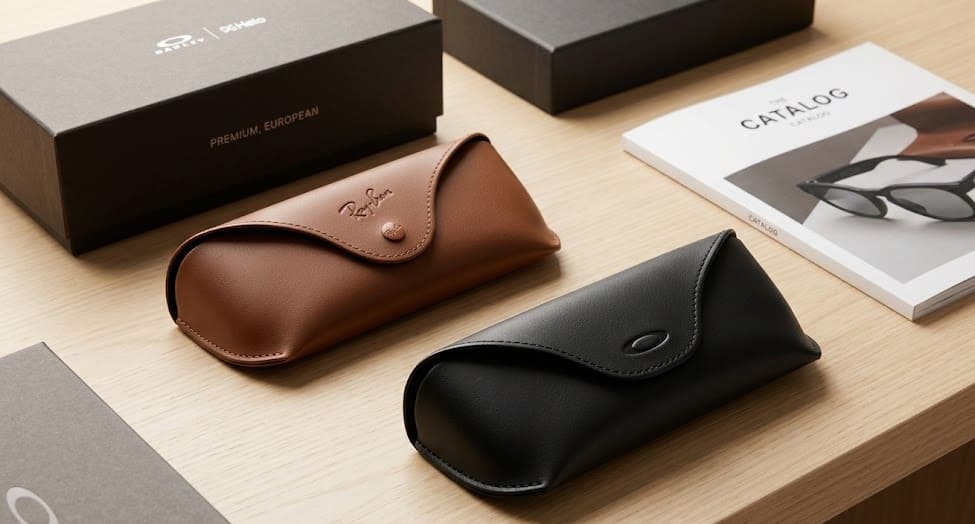
Charging cases are part of the battery system. Losing or damaging the case may create a larger expense than replacing an ordinary glasses case.
Cloud and account dependence
AI functions can change when software, service terms, supported countries, third-party apps, or company policies change. A pair of glasses may continue functioning as eyewear while losing some smart features.
Camera and microphone privacy
People around you may not notice the camera or understand when the glasses are recording. Follow local rules and ask permission in private, sensitive, professional, school, healthcare, or workplace environments.
AI accuracy
An AI assistant can misunderstand speech, misidentify an object, produce an incorrect translation, invent information, or overlook context. Important information should be checked through a reliable source.
Distraction and situational awareness
Open-ear audio does not guarantee that a user will hear every vehicle, warning, person, or environmental sound. A visible display can also draw attention away from traffic, steps, obstacles, tools, or other people.
International purchase risks
Before ordering through an overseas retailer, confirm currency conversion, shipping, customs charges, return shipping, regional warranty service, prescription support, and whether the device’s AI features work in your country.
Vistaexpert states that its products include a 24-month legal conformity warranty. That does not remove the need to verify the exact return, shipping, prescription, and service terms for the selected product and destination.
Who Should Buy AI Smart Glasses?
- You regularly take first-person photos or short videos.
- You want open-ear calls and music without wearing earbuds.
- You use voice assistants and understand their accuracy limits.
- You want to reduce some simple phone interactions rather than replace the smartphone completely.
- You have confirmed fit, prescription compatibility, phone compatibility, and regional AI support.
- You accept the privacy trade-offs of cameras, microphones, accounts, apps, and cloud processing.
- You have a clear use case such as sport, travel, content creation, translation, gaming, or portable displays.
Who Should Avoid Them?
- You are buying them to treat stress, anxiety, burnout, neck pain, posture, trauma, attention problems, or nervous-system dysfunction.
- You dislike being recorded or carrying always-available cameras and microphones.
- You are uncomfortable creating another large technology account and permission footprint.
- You need guaranteed all-day battery under continuous use.
- You experience migraines, visual discomfort, balance symptoms, or motion sensitivity with wearable displays.
- You need specialist prescription lenses that the selected frame cannot support.
- You already find smartwatches, earbuds, notifications, or quantified data distracting.
- You expect smart glasses to replace a phone, laptop, action camera, sports watch, and headphones simultaneously.
What We Could Verify
- Ray-Ban Meta Gen 2 uses a 12MP camera, supports 3K video, and is advertised for up to eight hours of typical use.
- The Ray-Ban Meta Gen 2 charging case is advertised to provide up to 48 additional hours.
- Oakley Meta HSTN is advertised for up to eight hours of typical use and carries an IPX4 rating.
- Oakley Meta Vanguard is advertised for up to nine hours of typical use, carries an IP67 rating, and supports Garmin and Strava integrations.
- Meta Ray-Ban Display is a retail product rather than only a prototype and includes an in-lens display and Meta Neural Band.
- XREAL lists a 57-degree field of view and up to a 171-inch virtual display for One Pro.
- Rokid lists 1920 × 1200 resolution per eye and refresh rates up to 120Hz for Max 2.
- Google has announced Gemini-powered Android XR audio glasses for fall 2026.
- Meta announced a separate Meta Glasses collection in June 2026.
- Most current AI glasses still require a compatible phone, app, account, and internet-connected services for major features.
What We Could Not Verify
- That AI glasses correct posture or prevent tech neck.
- That screenless smart glasses lower cortisol or regulate the autonomic nervous system.
- That looking toward the horizon through smart glasses produces a therapeutic neurological effect.
- That open-ear audio reduces anxiety, trauma responses, or hypervigilance.
- That AI glasses create a genuine digital detox rather than moving phone functions to another device.
- That Prizm, Transitions, or polarized lenses prevent digital eye fatigue.
- That any model provides equal comfort across face shapes, head sizes, prescriptions, and all-day use.
- That advertised battery life will be achieved with continuous camera, AI, calling, music, navigation, or display use.
- That newly released 2026 products will receive reliable long-term software support.
- That buying through an international retailer will provide the same return and warranty experience in every country.
Frequently Asked Questions
What are the best smart glasses in 2026?
Ray-Ban Meta Gen 2 is the strongest general-purpose option. Oakley Meta Vanguard is better for serious sport, Meta Ray-Ban Display is better for visible AI information, and XREAL One Pro is better for large virtual screens.
What is the difference between AI glasses and AR glasses?
AI glasses generally use cameras, microphones, audio, and a voice assistant. AR glasses add a display that places digital content into or in front of the wearer’s field of view.
Do Ray-Ban Meta Gen 2 glasses have a display?
No. Standard Ray-Ban Meta Gen 2 glasses use audio, cameras, microphones, touch controls, and voice AI without an in-lens display.
Which smart glasses have the best battery life?
Battery comparisons depend on the task. Ray-Ban Meta Gen 2 and Oakley Meta HSTN list up to eight hours of typical use, while Oakley Meta Vanguard lists up to nine. Rokid advertises longer figures for selected voice-first models, but testing methods differ.
Are Oakley Meta Vanguard glasses waterproof?
They carry an IP67 dust- and water-resistance rating. That does not mean they should be treated as swimming or diving equipment, and resistance can decline with wear or damage.
Can smart glasses replace a smartphone?
Not completely. They can handle selected calls, audio, photos, videos, messages, AI questions, and translations, but still depend on a phone for setup, apps, account management, complex typing, browsing, and many visual tasks.
Are smart glasses good for a digital detox?
They may reduce how often some users take out a phone. They also add another connected device, account, battery, camera, microphone, and notification channel, so they are not a true analog detox tool.
Can smart glasses help with neck pain?
Using voice instead of repeatedly looking down at a phone may change device posture during selected tasks. Smart glasses are not an established treatment for neck pain, injury, or posture problems.
Can I get prescription AI glasses?
Several Ray-Ban Meta and Oakley Meta HSTN configurations support prescription lenses. Eligibility depends on the model, prescription range, lens type, country, and retailer.
Final Verdict

Our best AI smart glasses 2026 pick for most buyers is Ray-Ban Meta Gen 2.
It offers the most balanced mix of traditional eyewear design, camera capture, open-ear audio, Meta AI, prescription options, and battery improvements without placing a display directly in the lens.
Oakley Meta HSTN is the stronger alternative for active everyday wear. Oakley Meta Vanguard is the specialist choice for running and cycling. Meta Ray-Ban Display is the better option when visible messages, translations, and AI output matter more than price and simplicity.
XREAL One Pro and Rokid Max 2 should be treated as wearable displays for entertainment and work rather than direct substitutes for Meta AI glasses.
The largest buying risks are poor fit, prescription limitations, regional feature differences, app dependence, battery degradation, privacy, AI mistakes, distraction, and buying a product before identifying a real daily use.
MindReset recommendation: choose Ray-Ban Meta Gen 2 for general use, Oakley Meta Vanguard for serious outdoor sport, and XREAL One Pro for a portable virtual display. Skip the category when the purchase is based mainly on promises of nervous-system regulation, posture correction, stress relief, or digital healing.