Table of Contents
MindReset.org may earn a commission if you buy through our links. This does not increase your price and does not affect our editorial judgment.
Research note: We have not personally tested every yoga mat or yoga product discussed on this page yet. This guide is based on product specifications, public documentation, available research, user feedback, and comparison with similar yoga and movement products.
This article is for general informational and buyer-guidance purposes only. It is not medical advice, diagnosis, treatment, physical therapy, trauma therapy, or recovery guidance. Yoga mats, movement products, natural-material products, and wellness equipment may not be suitable for everyone. If you have pain, an injury, joint or balance concerns, physical limitations, material sensitivities, are pregnant, or are unsure whether a movement practice or product material is appropriate for you, speak with a qualified healthcare professional before using it.
The Profound Weight of Exhaustion: Finding Sanctuary on the Best Non-Toxic Yoga Mats
Burnout and severe fatigue can make ordinary tasks and demanding exercise feel difficult. Symptoms vary and can have many causes, so they should not be described as tissue-level damage, nervous-system compromise, or a physiological state that a yoga mat can correct.
A dusty gym bag or unused exercise mat can become a reminder of unmet fitness goals. Fatigue is not a character flaw, but this article cannot attribute it to high cortisol or a survival strategy orchestrated by the autonomic nervous system.
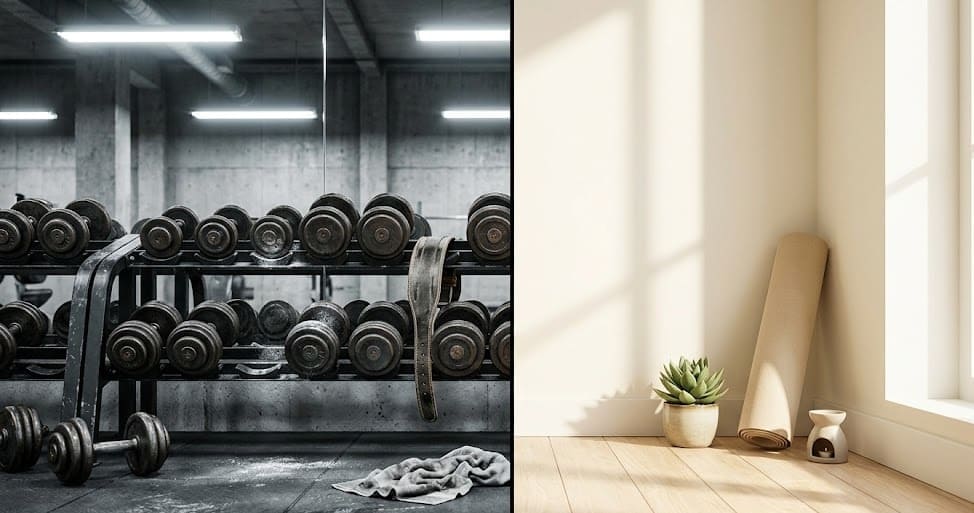
During periods of fatigue or burnout, some people may have less capacity for demanding exercise. This article did not verify dorsal-vagal shutdown, metabolic downregulation, depleted resources, or a catastrophic protective state in readers.
Severe fatigue can make demanding exercise unrealistic, and some people may prefer rest or gentle movement. A supportive mat can provide a comfortable surface for stretching, breathing, or quiet practice. Lying comfortably on a supportive mat can create a simple space for rest, stretching, breathing, or quiet movement, but the mat itself should not be presented as producing physiological healing.
High-Intensity Workouts During Periods of Fatigue: Practical Limits

The HPA axis is part of the body’s stress-response system, and chronic stress can affect wellbeing in different ways. A yoga-mat review cannot diagnose HPA-axis dysfunction, determine cortisol patterns, or establish whether a person should avoid exercise.
‘Adrenal fatigue’ is not an accepted medical diagnosis. Fatigue, sleep problems, and stress symptoms can have many causes, and this article did not verify abnormal cortisol curves, endocrine dysfunction, or impaired brain-adrenal signaling in readers.
High-intensity exercise can temporarily raise stress hormones, but tolerance and recovery vary by person, training status, sleep, nutrition, and health. Burnout symptoms are not proof of hormonal damage, and persistent fatigue warrants qualified medical assessment.
During periods of fatigue, some people may prefer rest, stretching, or gentle movement instead of high-intensity exercise. A comfortable mat may make that routine easier, but it does not regulate the nervous system or repair neuroendocrine feedback loops.
| Physiological State | Cortisol Response | Nervous System Impact | Recommended Action |
| Healthy Baseline | Normal diurnal curve (high morning, low evening). | Balanced autonomic function. | Moderate to vigorous exercise well-tolerated. |
| Acute Stress | Temporary spike in cortisol and adrenaline. | Sympathetic mobilization (fight/flight). | Physical discharge followed by rest. |
| Chronic Burnout | Dysregulated HPA axis, blunted or inverted curve. | Hyperarousal or dorsal vagal shutdown. | Zero-expectation rest, somatic grounding. |
| High-Intensity Workout in Burnout | Maladaptive cortisol dumping into depleted system. | Further sympathetic overload, delayed recovery. | Strictly avoid. |
The Neurobiology of Safety: Somatic Recovery on a Certified Organic Mat
The sympathetic and parasympathetic systems are parts of autonomic regulation, and the vagus nerve has important physiological roles. A product review cannot determine that a reader is locked in hyperarousal, in metabolic collapse, or in need of vagal repair.
Polyvagal Theory is one framework used to discuss autonomic responses, but it remains debated and should not be used here as a diagnosis or a strict three-state hierarchy. Readers comparing other wellness routines can also review our Monk ice-therapy guide.
The vagus nerve is inherently bidirectional, acting as a massive two-way street of neurological communication between the brain and the viscera. Strikingly, approximately 80 percent of its fibers are afferent, meaning they exclusively carry sensory information from the body up to the brainstem, while only 20 percent are efferent, carrying motor signals from the brain down to the organs. This profound anatomical reality highlights a fundamental truth in trauma-informed somatic therapy: what the physical body does, and the environment it rests within, matters significantly more than what the cognitive mind thinks.
Lying on a supportive mat, breathing comfortably, and noticing the room may feel grounding for some people. This article did not verify immediate brainstem safety signals, stronger vagal tone, improved HRV, or reduced systemic inflammation from the mat or routine.
somatic tracking: pendulation and titration on the yoga mat
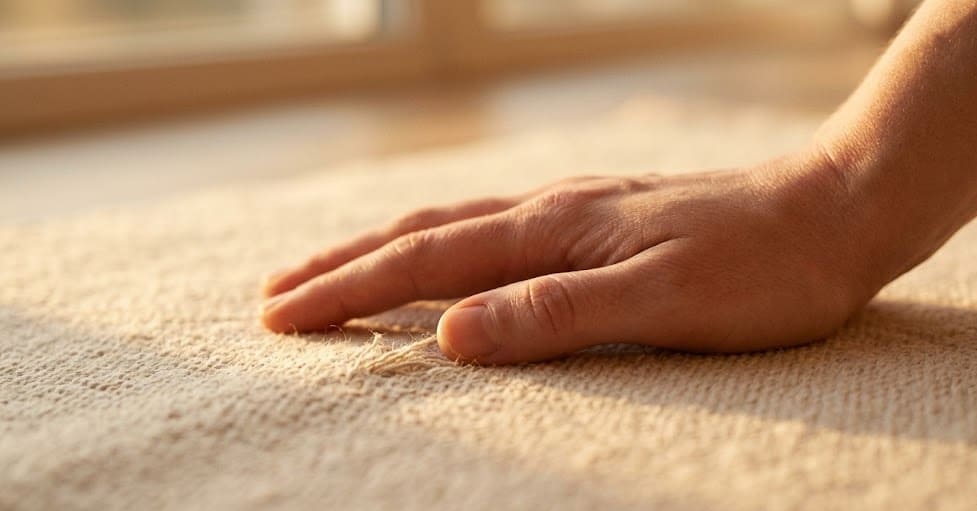
Some people use body-awareness exercises to notice sensations with less judgment. These practices are not a diagnosis or treatment, and this article did not verify that a yoga mat breaks a cycle of anxiety, chronic pain, or physiological threat responses.
The practice of somatic tracking involves paying close, uninterrupted attention to bodily sensations without any attempt to fix, change, run from, or judge them. The practitioner simply lies still on their yoga mat and observes their internal landscape, actively reminding themselves that these physical sensations, though highly uncomfortable, are not inherently dangerous and do not require an emergency response. This practice teaches the hypersensitive brain to reclassify somatic signals as safe, thereby reducing the neurological need to continuously produce a danger alarm.
Titration and pendulation are concepts used in some somatic-therapy approaches. This article does not establish that a yoga mat processes trapped trauma or changes a nervous-system window of tolerance; people using these techniques for trauma symptoms should work with a qualified clinician.
Some people use pendulation to move attention between discomfort and a neutral sensation, such as contact with the mat. It may be used as a mindfulness exercise, but the mat does not discharge trapped survival energy, prevent panic, or establish nervous-system safety.
Why Organic is Better: Avoiding PVC Yoga Mats and Toxic Mat Material
Yoga-mat materials affect grip, texture, odor, durability, cleaning, and comfort. People with material sensitivities may prefer products with clear ingredient and certification information, but a mat should not be presented as a clinical tool for nervous-system repair.
Terms such as non-toxic, eco-friendly, chemical-free, and biodegradable should not be treated as interchangeable guarantees. The U.S. Federal Trade Commission guidance on environmental marketing claims recommends checking the specific materials, certifications, qualifications, and evidence behind each claim rather than relying only on broad green language.
PVC yoga mats vary in formulation and manufacturing. Buyers concerned about additives, odor, or material transparency should review current product disclosures, certifications, and care guidance rather than assume every PVC mat contains the same substances or creates the same health risk.
Yoga-mat materials vary, and some users may experience odor, skin sensitivity, or respiratory irritation. Buyers should check current material disclosures and certifications; this article did not verify severe hormonal effects or that mat odor prevents the nervous system from resting.
Odor and texture can affect comfort and preference during a practice. This article did not verify that a mat’s smell controls parasympathetic activity, vagal tone, emotional regulation, or recovery from burnout.
Natural materials such as organic cotton and natural rubber may appeal to buyers who value breathability, texture, or material transparency. They should not be presented as a clinical intervention, as working with the body’s energetic processes, or as sending absolute physiological safety signals.
Yoga Mat Materials Comparison: From Cork Yoga Mats to Organic Latex
To make a truly informed decision for trauma and burnout recovery, one must understand exactly how different yoga mat materials interact with human physiology, sensory safety, and the broader environment.
| Mat Material | Common Chemical Components | Physiological & Sensory Impact | Environmental Impact |
| PVC Yoga Mat | Phthalates, Heavy Metals (Lead, Antimony), Azodicarbonamide. | High risk of off-gassing VOCs. Triggers olfactory threat responses in the amygdala. Endocrine disruption. | Highly toxic. Releases carcinogenic dioxins when incinerated. Rarely recyclable. |
| Synthetic Rubber (SBR/TPE) | Styrene butadiene rubber, thermoplastic elastomers, petroleum derivatives. | Less immediately toxic than PVC, but still prone to chemical odors. Lacks the grounding frequency of natural fibers. | Slow to degrade. Contributes to global microplastic pollution. Relies on fossil fuel extraction. |
| Cork / Cork Yoga Mat | Natural cork bark, often backed with varying qualities of rubber. | Naturally antimicrobial and hypoallergenic. Odorless and grounding. Provides excellent tactile sensory feedback. | Highly renewable resource. Bark is stripped without killing the tree. Fully biodegradable. |
| Organic Cotton & Natural Latex | GOTS-certified organic cotton, GOLS-certified natural Dunlop latex. | Deeply soothing to the nervous system. Zero chemical off-gassing. Promotes physical and olfactory safety. | Minimal water usage. Free of synthetic pesticides. 100% biodegradable and recyclable. |
Sleep & Beyond Natural Non-Slip Yoga Mat Review: The Best Yoga Mats for Eco-Friendly Yoga
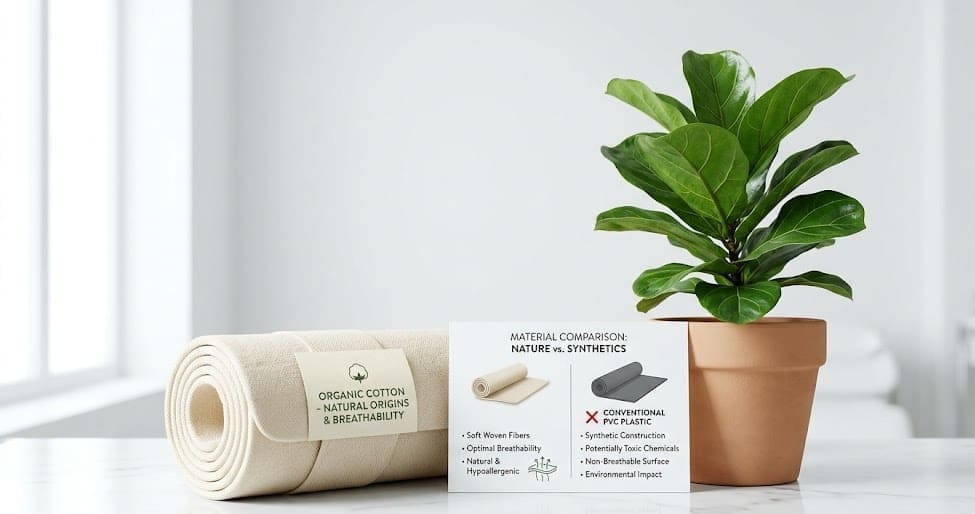
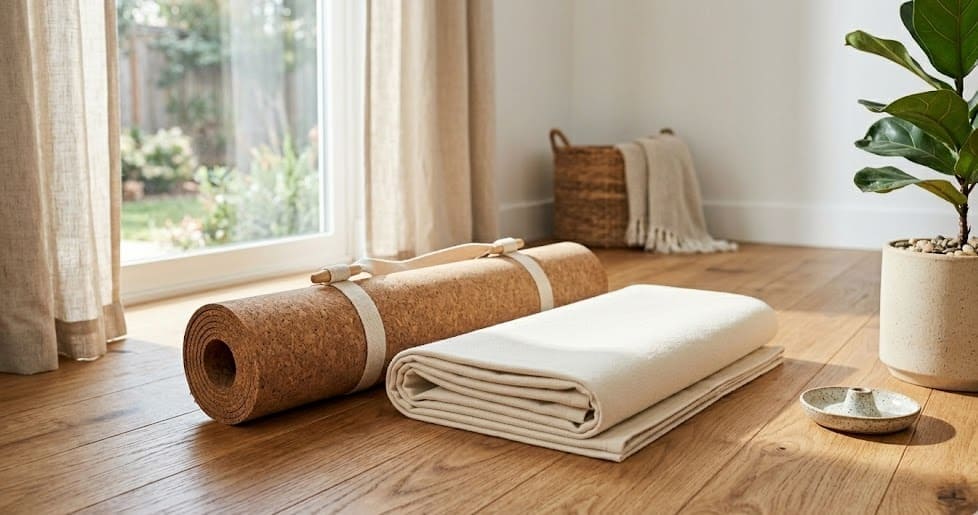
According to the product information reviewed, the Sleep & Beyond set uses organic cotton and a natural-latex backing associated with GOTS and GOLS material claims. Buyers should verify current certifications, grip, thickness, odor, and care requirements; this article did not verify the mat as a therapeutic or somatic-healing tool.
Ethically and eco-consciously made from start to finish, this mat is completely free from polyurethane foam, PVC, PER, TPE, EVA, synthetic rubbers, and toxic adhesives. For the exhausted individual, the tactile experience of resting on this mat is profoundly different from stepping onto a sticky, cold, rubbery sheet of plastic. The certified organic cotton breathes easily, wicking away moisture while providing a soft, comforting texture that feels inherently safe and resourcing against the skin.
Because the manufacturer utilizes only GOTS-approved azo-free vat dyes and deliberately skips all harsh chemical treatments, the mat is entirely odorless right out of the box. This complete absence of a chemical smell allows the hyper-vigilant olfactory system to finally relax, facilitating deeper, unregulated diaphragmatic breathing without triggering subconscious threat responses in the brain.
At a substantial 5mm thick, the mat provides joint-friendly, plush cushioning that gently supports the spine, knees, and hips during long somatic holds and restorative resting postures. Unlike many traditional cotton yoga mats that slide dangerously and distractingly across hardwood floors, the Sleep & Beyond mat intelligently integrates an anti-skid bottom made of 100% natural tree rubber. This critical non-slip yoga mat feature ensures that the foundation beneath the practitioner remains entirely stable and secure.
The set includes an organic-cotton towel, strap, and reusable cotton carrying bag. Those accessories may be convenient for storage and practice, but they do not turn the mat into a healing environment or verify recovery outcomes.
the psychological necessity of the “non-slip” foundation
A non-slip surface can reduce unwanted movement during a pose or stretch. Stability may improve comfort and confidence, but this article did not verify that minor mat movement triggers a dysregulated nervous system or forces sympathetic mobilization.
A natural-rubber backing is intended to improve grip and reduce bunching. Buyers should verify real-world grip on their floor type; the material does not provide continuous nervous-system safety or guarantee release of chronic muscle tension.
The zero-expectation routine: an antidote to fitness performance
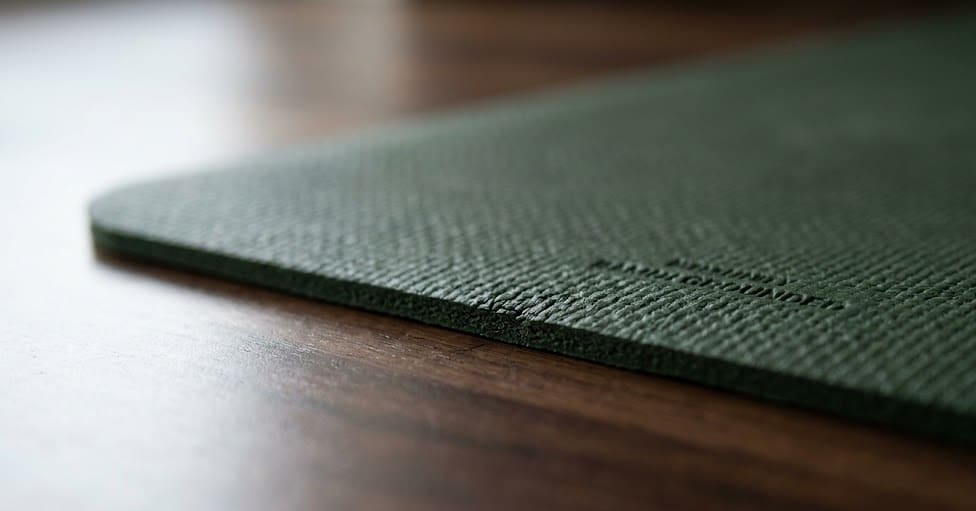
For individuals weighed down by the heavy, leaden exhaustion of chronic burnout, the mere thought of beginning a new “routine” can trigger immense psychological resistance. Therefore, this specific protocol is explicitly designed with absolutely zero expectations. There are no calories to burn, no heart rate limits to push, no metrics to track, and no complex poses to master. The singular goal is simply to exist safely on the mat. The organic cotton and natural rubber provide the secure, non-toxic container; the practitioner only needs to lie down and allow their physiology to naturally respond to the environmental safety cues.
Step one: the profound neurobiological rest of yoga nidra
Yoga Nidra is a guided relaxation practice commonly performed while lying down. A comfortable mat may make the position easier to maintain, but this article did not verify neurological repair, HPA-axis treatment, or product-specific healing effects.
Yoga Nidra may feel restful for some people, and research has explored changes in relaxation and autonomic measures. This article did not verify that a session reliably moves every user through specific brain-wave stages, repairs tissue, or heals chronic stress.
Yoga Nidra often uses a structured sequence that may include settling into position, setting an intention, and moving attention through the body. Some people find body scans relaxing, but this article did not verify release of connective-tissue tension or relief of chronic pain and headaches.
Step two: deep vagal stimulation through child’s pose
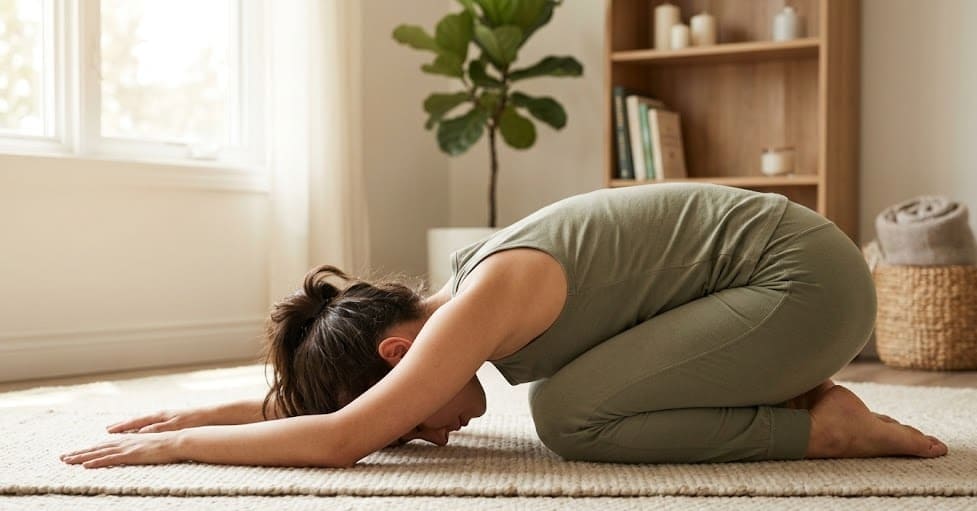
Child’s Pose involves kneeling, sitting back toward the heels, and folding the torso forward, with support as needed. Some people find the posture restful, but it is not a therapy designed to manipulate the nervous system into a specific state.
When the center of the forehead makes firm contact with the solid, supportive surface of the organic mat, it creates gentle, sustained pressure between the eyebrows. This specific compression directly stimulates vital afferent pathways connected to the vagus nerve, immediately signaling the brainstem to initiate the parasympathetic rest-and-digest response. Furthermore, folding the torso heavily over the thighs physically compresses the abdomen, which gently massages the deep visceral organs innervated extensively by the vagus nerve.
This compressed posture naturally and safely restricts shallow breathing in the upper chest, forcing the breath to expand downward into the lower back, diaphragm, and lateral ribcage. This mechanical shift in respiration immediately lowers the resting heart rate, drastically reduces defensive muscle tension, and shifts the entire body out of a sympathetic stress-driven state. Holding this exact pose on an eco-friendly yoga mat for two to five continuous minutes can serve as a powerful, non-pharmacological reset for a severely dysregulated system.
Step three: deep diaphragmatic breathing and the physiological sigh
The final part of this low-pressure mat routine is slow, comfortable breathing. Some people find that paying attention to the breath supports a calmer rest period. Slow breathing can affect heart rate and heart-rate variability, but this article did not verify trauma recovery, burnout recovery, or a specific vagus-nerve effect from this routine.
Breathing, the diaphragm, and autonomic regulation are connected, but the evidence reviewed here does not show that abdominal movement physically massages the vagus nerve or forces the parasympathetic nervous system fully online. Treat this as an optional relaxation practice, not a medical treatment for fatigue, panic, or emotional overwhelm.
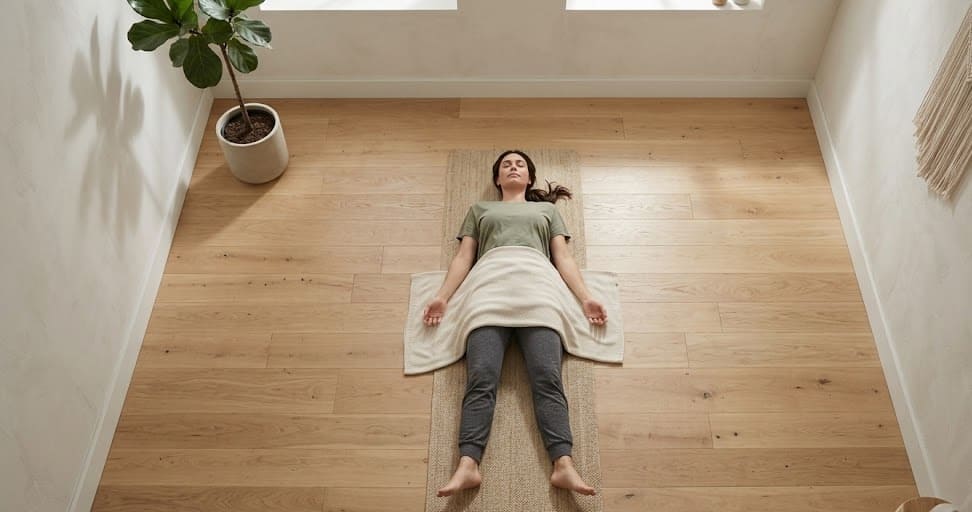
To try a gentle version on the mat, lie comfortably in Savasana, place a hand on the abdomen, and use slow breaths that do not cause strain. Some people also use a physiological sigh—two comfortable inhales followed by a longer exhale—but outcomes vary. Stop if you feel dizzy or unwell, and seek qualified guidance for persistent panic, breathing difficulty, or other health concerns.
Integrating Restorative Practices with Your Eco Friendly Yoga Mat

Leaving a mat unrolled may make a gentle practice easier to start. Natural materials and certifications may matter to buyers, but they do not establish physiological safety or recovery from multi-systemic burnout.
For individuals experiencing severe dysregulation, the sensory tools they interact with must perfectly match their current autonomic state. If the body is temporarily trapped in sympathetic hyperarousal, characterized by a rapidly racing heart, sweaty palms, and racing thoughts, grounding strategies like feeling the soft, safe texture of the organic cotton mat or engaging in slow diaphragmatic breathing can help rapidly downregulate the system.
If complete stillness feels uncomfortable, some users may prefer small, gentle movements such as turning the head or using a strap for a supported stretch. This article did not verify that these movements shift a person from a dorsal-vagal state into a ventral-vagal state.
If a posture or breathing technique feels destabilizing, stop, adjust, or return to a comfortable resting position. A supportive mat can provide a surface for practice, but it should not be presented as trauma therapy, a therapeutic sanctuary, or a way to rebuild trust with the nervous system.
Who should avoid it:
- People with pain, injury, joint issues, balance concerns, pregnancy-related concerns, physical limitations, or material sensitivities who have not confirmed suitability.
- Buyers who need medical, physical-therapy, trauma-recovery, anxiety, sleep, nervous-system, or guaranteed wellness outcomes from a yoga mat.
- Users who need verified long-term grip, cushioning, odor, durability, cleaning performance, or comfort data before purchase.
- Anyone who prefers synthetic cushioning, extra-thick support, or low-maintenance cleaning over natural-material tradeoffs.
What we could verify:
- Public product positioning and available product-page information.
- Visible buyer-facing specifications, materials, certifications, pricing, sizing, care guidance, setup requirements, product categories, and accessory requirements where available.
- The article’s comparison logic and buyer-use-case framing for natural yoga mats and movement products.
- The presence and placement of affiliate or product links used on the page.
What we could not verify:
- Long-term grip, cushioning, odor, durability, material wear, cleaning performance, customer-support quality, or real-world performance over months of daily use.
- Product-specific effects on pain, mobility, stress, anxiety, sleep, recovery, nervous-system outcomes, or physical performance.
- Whether public research on yoga, movement, natural materials, or somatic practices applies directly to the specific consumer products discussed.
- Whether every user will experience the same comfort, grip, fit, usability, or value.
Frequently asked questions (faq) regarding somatic recovery on the mat
what if I accidentally fall asleep on the mat during yoga nidra?
Falling asleep during Yoga Nidra can happen, especially when someone is tired. Other sleep-environment factors can also influence rest. Falling asleep does not establish a specific nervous-system state or prove that the practice reliably guides the brain into delta-wave sleep.
The mat’s 5 mm cushioning and organic-cotton surface may affect comfort while lying down. Falling asleep does not prove that the autonomic nervous system feels safe, and the product cannot guarantee that a user wakes restored or free from stiffness.
Why Certified Natural Materials Provide the Best Yoga Experience for Stress Relief
When the human body is experiencing the depths of burnout, its natural sensory gating mechanisms become highly sensitive and easily overwhelmed. Standard synthetic materials, such as PVC, polyurethane, or thermoplastic elastomers, continuously off-gas volatile organic compounds (VOCs) and harsh chemical odors directly into the surrounding air space. The human olfactory system immediately detects these unnatural, synthetic chemicals and signals the amygdala, keeping the body trapped in a state of low-grade, subconscious alert.
Organic cotton and natural latex may appeal to buyers who want fewer synthetic materials or less odor. They do not eliminate every possible exposure, and this article did not verify parasympathetic activation, nervous-system repair, or superior regulation of neuroception.
How often should I use the mat for somatic recovery and grounding?
There is no universal schedule for a gentle mat-based routine. Choose a duration and frequency that feel manageable, but do not interpret fatigue, panic, or an afternoon energy dip as proof of HPA-axis dysregulation or a cortisol crash.
How Do These Compare to Jade Yoga, Cork Mats, and Other Yoga Mat Brands?
While the best yoga mats on the market offer vast improvements over cheap synthetic mats, many still present sensory challenges. When looking at mats on the market made from alternative materials, brands like Jade Yoga offer options that provide excellent traction. Although a few premium mats utilize heavy rubber, they can still emit a strong odor that some hyper-sensitive individuals find distracting. To find a truly quality yoga mat, you must look beyond standard offerings. The Sleep & Beyond mat stands out because it pairs a natural base strictly with a top layer of plush, odorless organic cotton.
How do I clean and care for an organic cotton and natural rubber mat?
Maintaining an organic yoga mat requires gentle, mindful care to preserve the long-term integrity of the natural, biodegradable materials. Because the Sleep & Beyond mat is uniquely crafted using natural cotton and Dunlop latex, it should never be exposed to harsh chemical cleaners or bleach. The practitioner should simply wipe down the mat with a damp cloth after use. This simple maintenance makes it ideal for yoga and deep somatic resting. Practitioners can relax with the profound comfort knowing your yoga mat is a completely chemical free yoga mat, built to support the body’s fragile recovery process over years of gentle use.
What kind of longevity and warranty can I expect from a completely natural mat?
Natural rubber and organic cotton can age differently from synthetic materials and may require specific care. The manufacturer describes a three-year warranty, but buyers should verify the current warranty terms, exclusions, and care requirements before purchasing; the materials should not be presented as creating a healing sanctuary.
The product information describes natural rubber and organic components. Buyers should verify the current GOTS, FSC, GOLS, or other certification claims and care requirements; these material choices may inform preference but do not create a somatic-recovery environment.
Yoga blocks and mats made from EVA or other materials vary in odor and formulation. Buyers with sensitivities can review material disclosures and ventilation guidance, but this article did not verify that those odors trigger the amygdala, halt parasympathetic repair, or that natural textiles create a physiological retreat.
Final reflections on finding safety through deep, intentional rest
Persistent fatigue can have many causes and may require professional support. For buyers, the practical role of a yoga mat is to provide a stable surface for rest or movement; it should not be framed as treating HPA-axis dysfunction or producing physiological recovery.
A yoga mat can provide a stable surface, and material choice may affect comfort, odor, grip, and cleaning. This article did not verify that organic materials send therapeutic signals to the brainstem or heal the nervous system.
Gentle practices such as Yoga Nidra, breathing, and supported movement may feel calming for some people. They should not be described here as reliably producing a ventral-vagal state, functioning as a clinical intervention, restoring biological vitality, or building nervous-system resilience.