Table of Contents
Affiliate disclosure: MindReset.org may earn a commission if you buy through our links. This does not increase your price and does not affect our editorial judgment.
As an Amazon Associate, we earn from qualifying purchases.
Quick verdict: Musicozy Sleep Headphones are worth considering if you want a low-cost sleep headband for bedtime audio, podcasts, white noise, audiobooks, or meditation tracks. They make the most sense for side sleepers who dislike earbuds, but they are not the best choice if you need strong noise blocking, premium sound quality, or built-in offline sleep sounds.
Best for: side sleepers, light bedtime audio, travel, naps, guided meditation, podcasts, audiobooks, and people testing sleep headphones for the first time.
Skip if: you need active noise cancellation, strong snoring protection, high-end music quality, long-term durability guarantees, or a device designed to diagnose or treat sleep problems.
Research note: We have not personally tested every product in this comparison. This guide is based on product specifications, public documentation, available user feedback, and comparison with similar sleep headphones, sleep headbands, and sleepbuds.
Sleep note: Musicozy Sleep Headphones may support a calmer bedtime audio routine, but they do not treat insomnia, tinnitus, anxiety, sleep apnea, depression, PTSD, ADHD, or any medical condition. If sleep problems, tinnitus, or breathing issues are serious or persistent, speak with a qualified healthcare professional.
Musicozy Overview: Price, Comfort and Alternatives
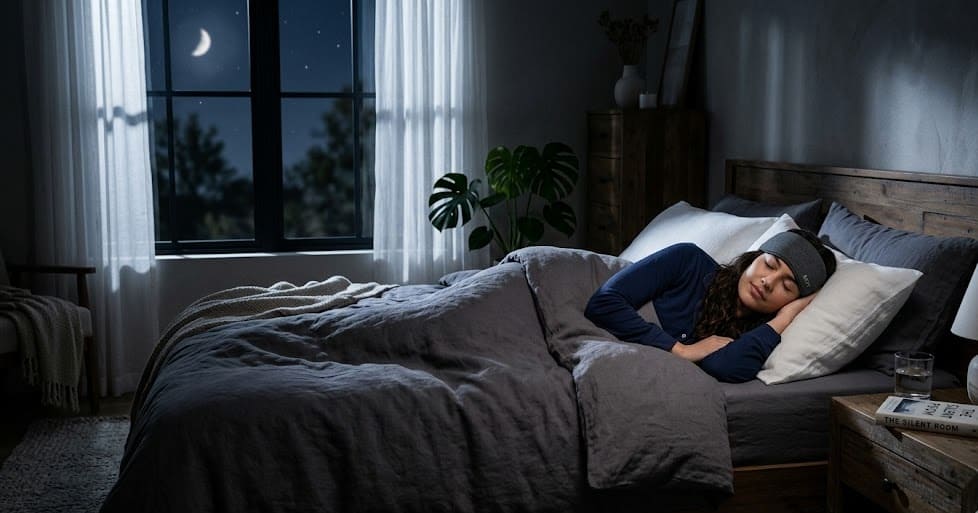
Musicozy Sleep Headphones are a budget-friendly sleep headband designed for people who want soft bedtime audio without wearing hard earbuds in bed. They may make sense if you listen to white noise, podcasts, audiobooks, meditation tracks, or calming audio while trying to sleep.
This review compares Musicozy with AcousticSheep SleepPhones, Snoozeband-style sleep masks, and low-profile sleepbuds like Soundcore or Ozlo. The goal is simple: help you decide whether a cheap fabric sleep headband is enough, or whether you should pay more for a premium sleep audio device.
| User Need | Best Option | Why | Skip If |
|---|---|---|---|
| Cheapest sleep audio | Musicozy | Low price, soft headband, Bluetooth audio | You need strong noise blocking |
| Premium sleep headband | AcousticSheep | Better brand heritage, fabric choices | Budget matters most |
| Sleep mask + audio | Snoozeband | Better light blocking, mask format | You dislike masks |
| Snoring / shared bedroom | Soundcore / Ozlo sleepbuds | Better personal sound masking | Earbuds hurt your ears |
| Podcasts / audiobooks | Musicozy | Good enough for spoken audio | You want hi-fi sound |
| Phone-free audio | Snoozeband MAX-style device | Built-in sounds on some models | You are fine using Bluetooth |
What Sleep Headphones Can and Cannot Do

Ordinary earbuds can be uncomfortable for side sleepers because a rigid housing may press against the outer ear. Sleep is important, but that does not show that a sleep headband improves recovery or reduces disease risk. Buyers comparing bedtime wearables can review our sleep and recovery tracking guide.
The buyer question is not whether headphones change autonomic activity. It is whether a design lets you listen at a comfortable volume without hard pressure points, excess heat, or unwanted alerts.
Predictable audio can mask some environmental noise, but effectiveness depends on volume, fit and the sound itself. Buyers whose main need is sound masking can compare dedicated options in our Sound Oasis S-680 review.
Sleep headphones play selected audio close to the ears and may make a bedtime audio routine more convenient. They do not create deep sleep, regulate the nervous system, or guarantee physiological relaxation.
Why Standard Headphones Fail Side Sleepers
Standard earbuds can be uncomfortable for side sleepers because a rigid housing may press into the outer ear against a pillow. Low-profile earbuds and fabric headbands address that problem differently, so fit and sleep position matter more than a universal winner.
Hard earbud housings and protruding stems may create pressure for some side sleepers, while fabric headbands keep the speakers outside the ear canal. Neither format guarantees comfort: ear shape, pillow firmness, headband tension and heat tolerance vary by user.
The market has bifurcated into two highly specialized solutions to address this anatomical challenge:
- Ultra-Low-Profile Earbuds: Devices like the Soundcore Sleep A30 Special and the Ozlo Sleepbuds utilize micro-engineering to shrink the battery, driver, and housing into a package that fits entirely within the concha of the ear, preventing any protrusion beyond the ear canal.
- The Sleep Headband: Devices such as the AcousticSheep SleepPhones, Musicozy sleep headphones, and the Snoozeband embed ultra-thin, flat speakers within a soft, stretchable fabric loop that doubles as a sleep mask. Because the speakers are flat and padded, they distribute pressure evenly, ensuring that side sleepers remain comfortable throughout the night.
Choose by fit and use case: a padded headband suits buyers who dislike in-ear devices, while low-profile sleepbuds may suit buyers who prioritize isolation or sound masking. Neither is the only viable option for every side sleeper.
Earbuds vs Headbands: Choosing the Best Headphones for Sleep
Soundcore Sleep A20 and Sleep A30 are higher-priced in-ear alternatives to a fabric headband. A20 emphasizes passive noise blocking and long manufacturer-rated battery life; A30 adds sleep-focused ANC and adaptive snore-masking features.
The Soundcore Sleep A30 Special: Premium option for snoring noise masking
The Soundcore Sleep A30 Special may be worth considering for people sharing a bed with a snoring partner, but this article did not verify effects on chronic sleep deprivation or relationship outcomes.
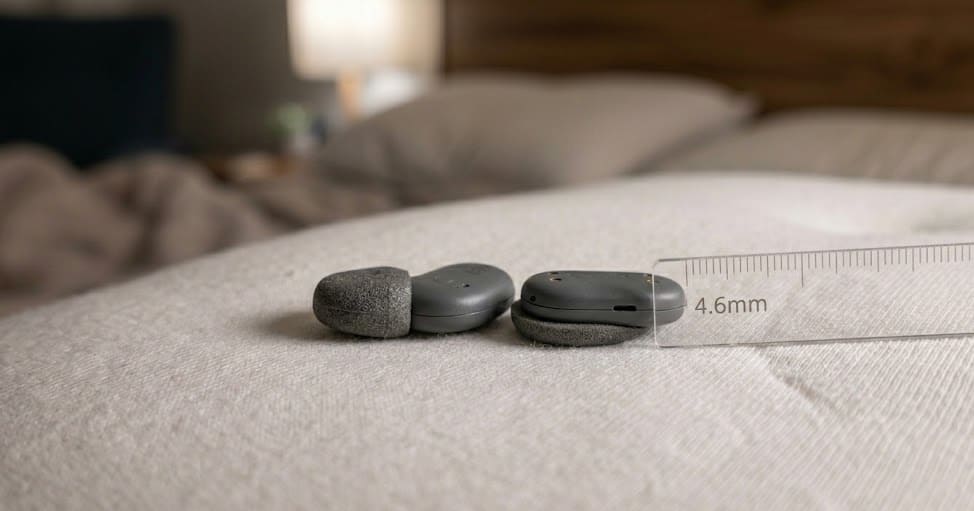
Snoring is difficult to mask consistently because its frequency and volume vary. A sealed earbud can reduce some environmental sound, but results depend on fit, the room and the noise source.
Soundcore says Sleep A30 combines sleep-focused active noise cancellation, passive isolation and adaptive snore-masking. Its charging case analyses snoring characteristics and the earbuds play masking audio; the brand notes that masking audio, rather than ANC, is the feature intended to address snoring.
MindReset did not test the Sleep A30. Soundcore lists 4.6 mm drivers, Bluetooth 5.4, a weight of about 3 g per earbud and scenario-dependent battery life; actual comfort and noise reduction will vary with fit, sound, volume and settings.
Soundcore Sleep A20: Passive Isolation and Battery Life
Sleep A20 is the lower-cost Soundcore comparison if you want passive noise blocking and built-in sleep sounds rather than ANC. It uses twin-seal tips and sound masking, so effectiveness will depend on fit and the type of noise.
Soundcore lists up to 14 hours in Sleep mode and up to 10 hours in Bluetooth mode, with additional capacity from the charging case. Those are manufacturer figures, not a guarantee of overnight runtime.
Sleep A20 supports tap gestures and app controls, including switching between Bluetooth and Sleep modes. This article did not verify whether pillow contact causes accidental inputs for a particular sleeper.
The Sleep Headband: A Solution for Sleeping with Headphones
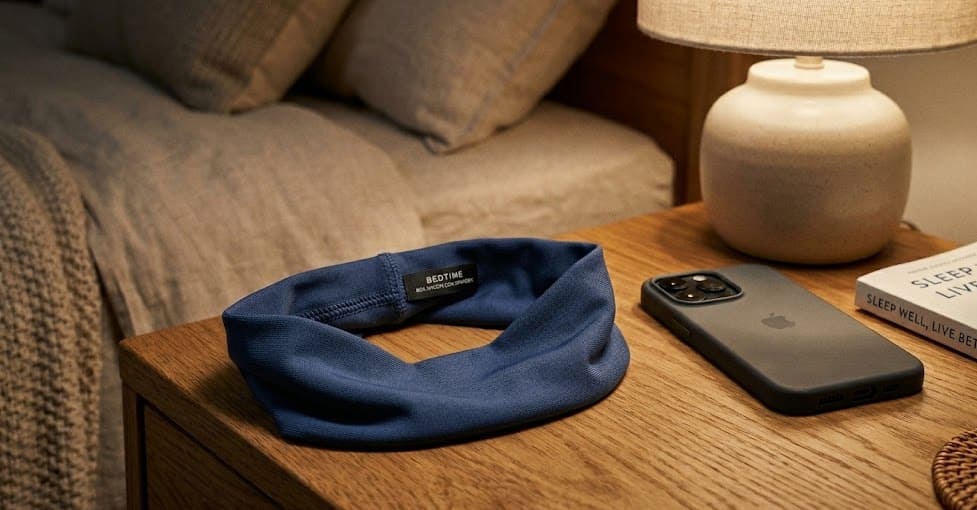
A sleep headband is worth comparing if you dislike having earbuds in your ears while lying on your side. Because fit and pressure tolerance vary, it is not the only viable option and comfort cannot be guaranteed.
Sleep headbands place small speakers inside fabric around the outer ear rather than sealing the ear canal. That can reduce hard contact points, but speaker position, headband tension, heat, sound quality and comfort vary by model and user.
The fabric enclosure inevitably muffles high-end treble and dampens bass response. Furthermore, because they sit on top of the ear rather than sealing it, they suffer from sound leakage and offer minimal physical noise isolation. Outside sounds like traffic or a partner’s breathing can still creep in. However, for listening to podcasts, audiobooks, or white noise to drift off to sleep, the sound quality is more than sufficient. The consensus among reviewers is that the sound quality is decent enough for spoken word and ambient noise, and the sheer comfort makes up for any acoustic deficiencies.
AcousticSheep SleepPhones Review: The Premium Sleep Headband
AcousticSheep SleepPhones are a premium headband alternative to Musicozy. The company’s history says family physician Wei-Shin Lai and Jason Wolfe founded AcousticSheep in 2007 after developing a softer way to listen in bed.
Current SleepPhones Wireless models place removable speakers and a Bluetooth module inside washable fabric and list a 24-hour manufacturer-rated battery. Buyers pay more than for Musicozy in exchange for size and fabric choices, a longer-established brand and a published warranty; MindReset has not compared long-term comfort or durability hands-on.
Musicozy Sleep Headphones: Budget Headband Option
Musicozy is the budget option in this comparison. Exact prices vary by model and retailer, so compare the current listing, return terms and included accessories before buying.
Musicozy sells multiple headband and eye-mask variants with different Bluetooth versions and battery claims. Current brand listings advertise up to about 14 hours on some models; treat that as a manufacturer estimate rather than a guarantee.
The buyer-relevant fabric questions are whether the band feels breathable, fits securely and allows the electronics to be removed for washing. Material composition varies by model and does not establish a sleep outcome.
Removable electronics can make the fabric easier to wash, but this article did not verify overnight comfort, heat retention or durability for every model or user.
Snoozeband: The Evolution of the Bluetooth Sleep Mask
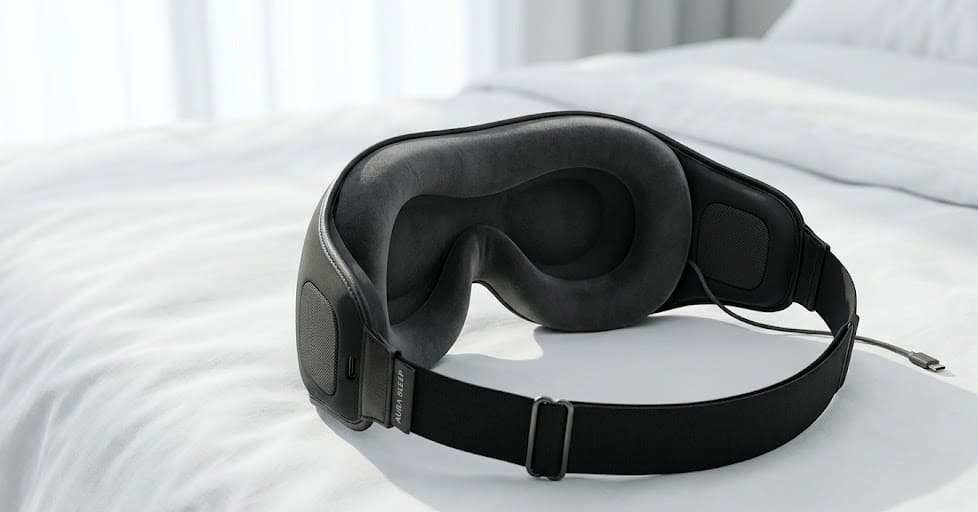
Snoozeband combines sleep audio with eye coverage, so it is the more relevant alternative when light blocking matters. Some current models also provide built-in offline sounds; blackout, fit and comfort still depend on the exact model and user.
Structured Comparison: Sleep Headbands and Masks
| Feature | Musicozy Sleep Headphones | AcousticSheep SleepPhones | Snoozeband MAX |
| Form Factor | Stretch Headband | Stretch Headband | 3D Eye Cup Sleep Mask |
| Fabric Type | 80% Nylon / 20% Spandex | Fleece or Breeze fabrics | Premium padded fabric |
| Battery Life | 10 – 14+ hours | Up to 24 hours (current Wireless listing) | Up to 20 hours |
| Light Blocking | Partial (if pulled down) | Partial (if pulled down) | 100% Blackout (3D Cups) |
| Offline Audio | No (Bluetooth only) | No (Bluetooth only) | Yes (Premium built-in sounds) |
| Speaker Adjustability | Yes (Manual sliding) | Yes (Manual sliding) | Yes (1.5cm depth) |
| Price (Approximate) | ~$26.00 | $99.95 – $149.95 | £184.00 (Bundle) |
Battery Life, Bluetooth, and Washability
Musicozy is useful because it keeps the setup simple. You connect it by Bluetooth, use it for bedtime audio, charge it by USB-C, and remove the electronics when the fabric needs washing.
The key buyer details to check are:
- battery life
- charging time
- Bluetooth version
- speaker position
- whether the control module is comfortable
- whether the fabric is washable
- whether the speakers are easy to remove and reinsert
The washable fabric matters because a sleep headband sits against the skin for hours. Removable electronics are not just a nice feature; they are important for hygiene and long-term use.
Musicozy vs Snoozeband: Do You Need a Full Sleep Mask?
Snoozeband is a better comparison if you want audio plus light blocking. Musicozy is mainly a headband with speakers. Snoozeband-style products move closer to a full sleep mask or audio mask.
Choose Musicozy if you mainly want budget Bluetooth audio.
Choose Snoozeband if light blocking matters and you want a more complete bedtime sensory setup.
The downside is that mask-style audio products can feel bulkier, warmer, or more restrictive. If you dislike anything over your eyes, Musicozy may be easier to tolerate.
When Should You Choose Soundcore or Ozlo Sleepbuds Instead?
Choose sleepbuds instead of Musicozy if your main problem is noise blocking or personal sound masking in a shared bedroom.
Musicozy does not seal the ear canal. It does not provide the same level of isolation as low-profile sleepbuds. If you need help with partner snoring, traffic, or apartment noise, sleepbuds may be the stronger category to compare.
But sleepbuds also have downsides. They cost more, need charging, may require an app, and can feel uncomfortable for people who dislike in-ear devices.
Simple rule:
- Musicozy = soft budget sleep audio.
- AcousticSheep = premium sleep headband.
- Snoozeband = sleep mask plus audio.
- Soundcore / Ozlo = sleepbuds for stronger personal sound masking.
Who Should Buy Musicozy?
Musicozy may be a good fit if you:
- want affordable sleep headphones;
- sleep on your side;
- dislike earbuds in bed;
- listen to podcasts, audiobooks, or white noise;
- want a washable fabric headband;
- do not need active noise cancellation;
- are trying sleep headphones for the first time.
It is a practical first buy if you are not sure whether sleep audio will become part of your routine.
Who Should Avoid Musicozy?
You may want to skip Musicozy if you:
- need strong noise blocking;
- sleep next to heavy snoring;
- want premium sound quality;
- dislike fabric around your head;
- sleep hot and hate headbands;
- want built-in sounds without a phone;
- prefer a premium brand and higher-end materials.
Musicozy is not the product to buy if your real problem is serious bedroom noise. In that case, compare sleepbuds, earplugs, or a dedicated white noise machine instead.
What We Could Verify
We could verify that Musicozy is positioned as a budget sleep headphone / sleep headband product with Bluetooth audio, removable electronics, washable fabric, and a soft design for bedtime listening.
We could also verify that AcousticSheep is a premium sleep headband alternative, Snoozeband is closer to an audio sleep mask category, and Soundcore / Ozlo sleepbuds belong to the stronger personal sound masking category.
What We Could Not Verify
We could not verify long-term durability, fabric stretching, real-world comfort for every side sleeper, battery degradation, Bluetooth stability over months of nightly use, or customer support quality.
We also could not verify that Musicozy improves sleep for every user. It should not be treated as a treatment for insomnia, tinnitus, anxiety, sleep apnea, or any medical condition.
Final Verdict: Is Musicozy Worth It?
Musicozy Sleep Headphones are worth considering if you want a cheap, soft, low-pressure way to listen to bedtime audio. They are best for podcasts, audiobooks, white noise, meditation tracks, and people who dislike hard earbuds while lying on their side.
They are not the best choice if you need serious noise blocking, active noise cancellation, premium audio quality, or a phone-free sleep setup. In that case, AcousticSheep, Snoozeband, Soundcore, or Ozlo may be better alternatives depending on your exact problem.
Best fit: budget buyers, side sleepers, podcast listeners, audiobook users, and people who want soft Bluetooth sleep audio.
Skip it if: you need strong snoring protection, high-end sound, offline built-in sleep sounds, or a device that works without a phone.
The simple verdict: Musicozy is a practical budget sleep headband, not a premium sleep technology system. Buy it if comfort and price matter most. Skip it if noise blocking is the real problem.