Table of Contents
Have you ever played a “relaxing” playlist and still felt mentally tired afterward? That is the illusion of relaxation: the content looks calm, but your brain may still be processing lyrics, sudden changes, looping patterns, volume shifts, ads, notifications, or emotional memories attached to the music.
This article is not about proving that one frequency can heal the mind. It is a practical guide to calmer listening: when to use music, when to use simple ambient sound, when silence is better, and how to avoid turning “relaxing audio” into another form of stimulation.
Research note: We have not personally tested every track, app, headphone, speaker, or sound machine discussed here. This guide is based on published research into binaural beats and music tuning, official hearing-safety guidance, public product information, and comparison of common listening setups. Individual responses to music, repetitive tones, background noise, and silence vary.
Wellness note: Music, ambient sound, binaural beats, white noise, and mindful listening may support a calmer environment for some people, but they do not treat anxiety, insomnia, depression, PTSD, ADHD, tinnitus, or any medical condition. If sound causes distress, worsens symptoms, or sleep problems continue, speak with a qualified healthcare professional.
Quick Verdict: What Actually Helps You Relax?
The best relaxation audio is not always the most “spiritual,” complex, or frequency-labeled track. For many people, the best option is the simplest one: low-volume ambient sound, nature sound, brown noise, soft instrumental music, or silence.
Use music when it feels pleasant and does not pull your attention. Use ambient sound when you want fewer changes. Use silence when your mind already feels overloaded. Skip any audio that promises to heal your nervous system, force brainwave changes, trigger deep sleep, or create a guaranteed mental reset.
How to Avoid the Illusion of Relaxation
The illusion of relaxation happens when audio feels relaxing in theory but keeps your attention active in practice. Lyrics, emotional songs, strong bass, sudden volume changes, podcast-style voices, autoplay recommendations, and ads can all keep the mind engaged.
A better rule is simple: relaxing audio should lower friction, not become another task. If you keep skipping tracks, checking the playlist, adjusting the volume, or thinking about the content, the audio is not helping your wind-down routine.
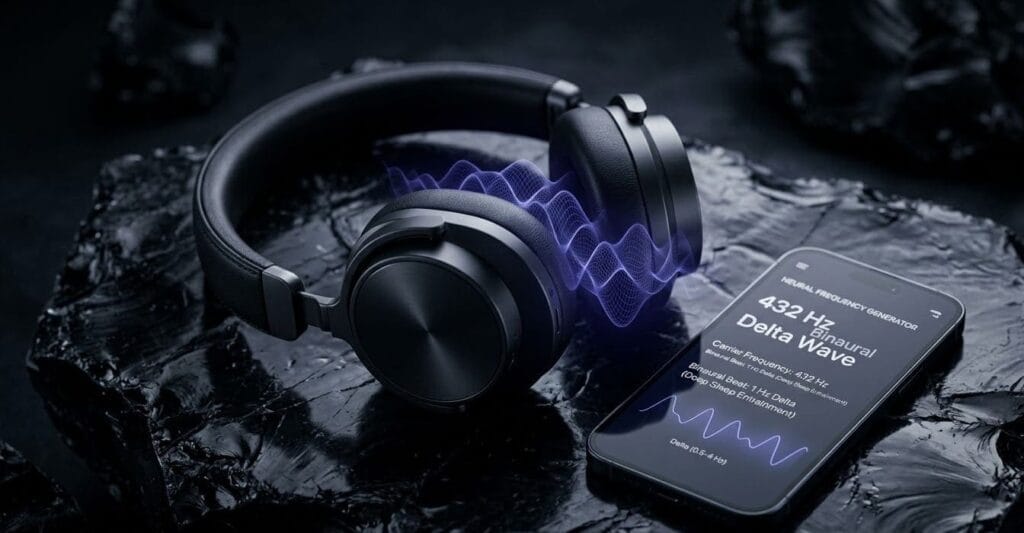
432 Hz Music: Pleasant Sound or Overhyped Claim?

Some listeners prefer music tuned or labeled as 432 Hz because it can feel softer, warmer, or less sharp to them. That is a valid personal preference. If a track helps you slow down and does not make medical claims, it can be part of a calming routine.
The problem starts when 432 Hz is sold as a universal healing frequency, a nervous-system reset, or a guaranteed way to restore the mind. Those claims are too strong for a buyer guide. The safer question is not “Is this frequency magic?” but “Does this sound feel comfortable, steady, and easy to listen to?”
Best for: people who enjoy softer instrumental tracks, ambient playlists, slow evening routines, or background music without lyrics.
Skip if: the track feels repetitive, strange, distracting, emotionally heavy, or if the marketing promises healing, detox, trauma release, or guaranteed deep sleep.
Binaural Beats: Interesting Audio Tool, Not a Brain Hack

Binaural beats are created when each ear receives a slightly different tone through stereo headphones. Some people use them for focus, meditation, relaxation, or sleep routines. They can be interesting to experiment with, but they should not be treated as a direct brain-control tool.
The buyer problem is that binaural beats are often marketed too aggressively. Phrases like “hack your brain,” “force alpha waves,” “switch off anxiety,” or “guarantee deep sleep” should be treated as red flags.
If you try binaural beats, keep the volume low, use comfortable headphones, avoid using them while driving or doing tasks that require attention, and stop if they cause discomfort, dizziness, irritation, or anxiety.
Best for: curious users who already enjoy headphone-based ambient audio and want a low-cost experiment.
Skip if: headphones bother you, repetitive tones irritate you, you are sensitive to sound, or you expect audio to solve a serious sleep or mental health problem.
Practical Listening Protocol: Keep It Simple
You do not need a complicated neuroacoustic system to create a calmer sound routine. Start with the least stimulating option that still feels pleasant.
Try this simple protocol:
- choose one playlist or sound source before bedtime;
- avoid autoplay if it keeps pulling you into new content;
- keep the volume low enough that the sound stays in the background;
- avoid lyrics if words keep your mind active;
- use a timer so audio does not run all night unless you prefer it;
- keep your phone away from the bed if it leads to scrolling;
- stop using any track that makes you tense, sad, alert, or irritated.
For more on sound and home environments, read our acoustic ecology guide. If your main issue is bedroom noise, compare our bedroom noise sleep tools guide.
For a safer baseline, the U.S. National Institute on Deafness and Other Communication Disorders explains that loud sound exposure can contribute to noise-induced hearing loss, so keep headphone volume moderate and avoid using audio as another overstimulating input.
What to Use Instead of Overstimulating “Relaxing” Audio
Different people relax with different sound environments. The best choice depends on what your brain stops chasing.
| Problem | Try First | Why | Skip If |
|---|---|---|---|
| Lyrics keep you thinking | Instrumental ambient music | Fewer words and meanings to follow | It still feels emotional or distracting |
| Sudden noises bother you | White, pink, or brown noise | Creates a steady background layer | Constant sound annoys you |
| Music feels too stimulating | Nature sounds | Can feel less structured than songs | Loops sound artificial |
| Headphones feel tiring | Small bedside speaker | Less pressure on ears | You share a room and disturb someone |
| Everything feels like too much | Silence | Removes another input | Silence makes every small noise stand out |
Related MindReset Product Guides
If free audio, silence, or an existing speaker already works, you do not need another product. When a specific obstacle remains, these MindReset guides compare the practical options:
- Sound Oasis S-680 review — for a dedicated sound machine without repeated phone browsing.
- Musicozy sleep headphones review — for low-cost bedtime audio when ordinary earbuds feel uncomfortable.
- Amazon Music Unlimited for relaxation — for ad-free playlists, downloads, hidden costs, and free alternatives.
- Open-ear headphones guide — for listeners who prefer environmental awareness over full isolation.
What to Skip
Skip audio products, apps, and tracks that promise guaranteed deep sleep, nervous-system healing, trauma release, cortisol control, serotonin activation, melatonin production, or medical-level results.
Also skip any routine that keeps your phone in your hand for another hour. If the “relaxing” audio sends you into more scrolling, the audio source has become part of the problem.
What We Could Verify
- Binaural beats are perceived when slightly different tones are presented separately to the left and right ears.
- Research into binaural beats has used varied frequencies, listening periods, outcome measures, and participant groups.
- Current evidence does not support describing binaural beats as a reliable method for forcing a specific brain state.
- Small studies have compared music tuned to 432 Hz with other tuning standards, but the evidence remains too limited for universal health claims.
- Long or repeated exposure to sufficiently loud sound can permanently damage hearing.
- Music, steady background sound, and silence can feel different depending on the listener, environment, activity, and personal associations.
What We Could Not Verify
- That 432 Hz is a universal healing frequency.
- That binaural beats reliably force alpha, theta, or delta brainwaves.
- That one track can reset the nervous system, release trauma, or control cortisol.
- That white, pink, or brown noise guarantees deeper sleep.
- That listening through headphones is more therapeutic than using a speaker.
- That a premium audio subscription or higher-resolution file creates a stronger relaxation response.
Frequently Asked Questions
Is 432 Hz music better for relaxation?
Some listeners may prefer how particular 432 Hz recordings sound, and several small studies have reported possible differences from other tuning standards. The evidence is not strong enough to establish 432 Hz as universally more relaxing or medically beneficial.
Do binaural beats change brainwaves?
Some studies report changes under particular experimental conditions, while others do not find consistent entrainment. Results vary according to frequency, duration, audio design, equipment, participants, and measurement method.
Do binaural beats require headphones?
Traditional binaural beats require separate tones to reach each ear, so stereo headphones are normally used. Monaural beats, ordinary ambient tracks, and noise recordings can be played through speakers.
Is it safe to play white noise all night?
Use a moderate volume and place the device at a comfortable distance. Continuous sound should not be used loudly enough to overpower the environment. Stop or reduce it if you notice ringing, muffled hearing, discomfort, headaches, or irritation.
Is silence better than relaxing music?
Neither option is universally better. Silence may suit someone who already feels overloaded, while steady sound may help another listener mask unpredictable environmental noise. Choose the option that creates less monitoring, track switching, and mental engagement.
Final Verdict: Choose Audio That Reduces Mental Load
Your ears do not need a perfect frequency. They need fewer irritating inputs, fewer sudden changes, and less content that keeps your mind working when you are trying to wind down.
Use music when it genuinely helps. Use ambient sound when you want fewer changes. Use binaural beats only as a cautious experiment, not as a treatment. Use silence when another input feels like too much.
Bottom line: the best relaxation audio is the one you can use quietly, consistently, and without chasing claims. If a sound makes your evening simpler, keep it. If it turns relaxation into another performance ritual, skip it.
Sources and Further Reading
- U.S. National Library of Medicine: Systematic Review of Binaural Beat Entrainment
- U.S. National Library of Medicine: Music and Binaural Beat Interventions
- U.S. National Library of Medicine: Music Tuned to 440 Hz Versus 432 Hz
- National Institute on Deafness and Other Communication Disorders: Noise-Induced Hearing Loss
- U.S. Centers for Disease Control and Prevention: Better Sleep Habits