Table of Contents
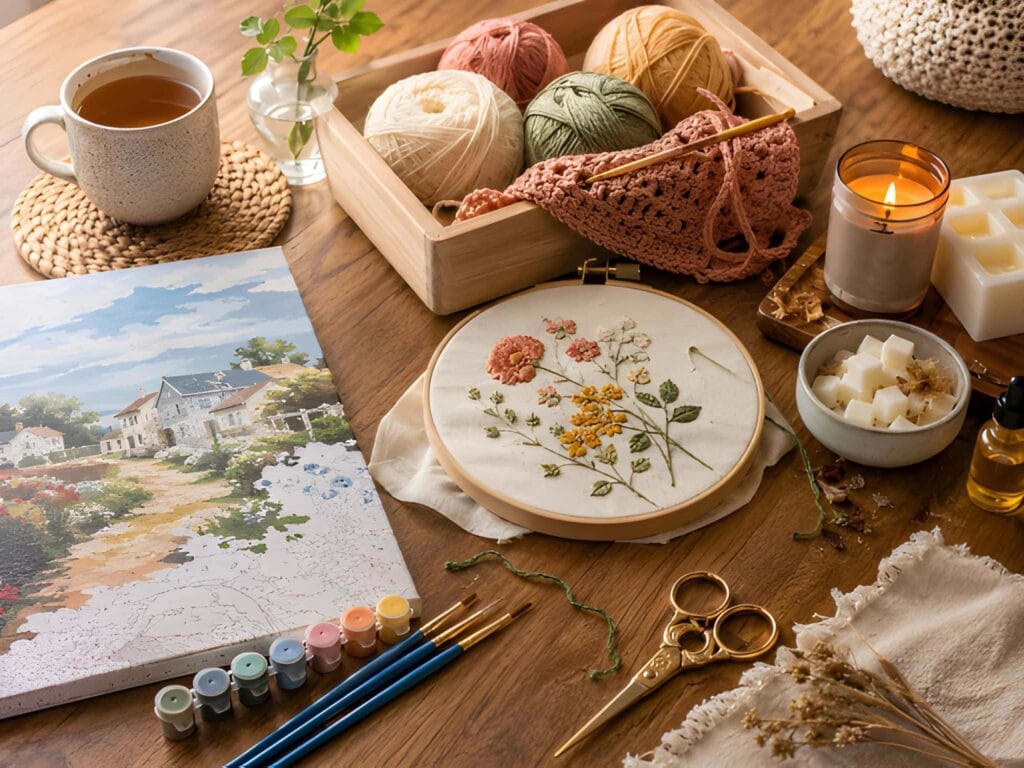
Craft kits for adults can make it easier to begin a screen-free hobby without first researching every tool, material, and technique. A good kit gives you a defined project, clear instructions, and enough structure to start creating instead of continuing to scroll.
This research-based buyer guide compares 12 DIY craft kits across several categories: miniature building, crochet, pottery, painting, metal models, cyanotype printing, needle felting, leatherwork, decorative repair, and LEGO art.
We evaluated each craft kit by skill level, project length, mess, included supplies, instruction quality, safety considerations, display value, and suitability for beginners.
Quick verdict: The best craft kit is not necessarily the most elaborate or expensive option. Choose a project that matches the time, patience, workspace, and type of finished result you actually want.
MindReset.org may earn a commission if you buy through our links. This does not increase your price and does not affect our editorial judgment.
As an Amazon Associate, we earn from qualifying purchases.
Research note: We have not personally tested every product in this guide. Recommendations are based on public product specifications, stated contents, project type, available instructions, estimated difficulty, safety requirements, customer feedback, and suitability as a screen-free hobby.
Claim note: Crafting may provide an enjoyable break from screens and routine demands, but these products are not treatments for anxiety, depression, burnout, trauma, attention disorders, or chronic stress. “Stress relief” describes a common buyer goal, not a guaranteed medical result.
Best Craft Kits for Adults: Quick Picks
| Best fit | Craft kit | Skill level | Project style | Skip if |
|---|---|---|---|---|
| Detailed miniature build | Rolife Simon’s Coffee | Intermediate | Long, precise assembly | You dislike glue or tiny pieces |
| Bookshelf display | Rolife Magic Pharmacist Book Nook | Intermediate | Miniature construction | You want a one-evening project |
| Low-mess precision work | Metal Earth 3D Model | Intermediate | Metal folding and assembly | Hand strength or sharp edges are concerns |
| Structured adult building | LEGO Art Hokusai | Beginner to intermediate | 1,810-piece wall art | You lack display space |
| Decorative repair | Kintsugi Kit | Beginner to intermediate | Ceramic repair | You require food-safe repair |
| Outdoor art experiment | Jacquard Cyanotype Kit | Beginner | Sun printing | You need predictable indoor results |
| Simple repetitive project | Diamond Art Club Kit | Beginner | Adhesive mosaic | Small loose pieces are impractical |
| Guided painting | Schipper Paint by Numbers | Beginner | Detailed painting | You prefer open-ended art |
| Learning crochet | The Woobles Crochet Kit | Beginner | Video-guided amigurumi | You do not want video tutorials |
| Small wool sculpture | Woolbuddy Needle Felting Kit | Beginner | Fiber sculpture | Sharp needles are unsuitable |
| Hands-on pottery | Sculpd Pottery Kit | Beginner | Air-dry clay | You need functional food-safe pottery |
| Functional finished item | Leather Craft DIY Kit | Intermediate | Stitching and finishing | You want a soft, low-effort hobby |
How We Chose These DIY Craft Kits for Adults
Many “best DIY” lists simply collect attractive products. We used practical buyer criteria instead.
- Clear outcome: The buyer should understand what they are making.
- Skill level: We considered whether the kit suits a beginner or requires previous crafting experience.
- Instructions: Clear instructions, diagrams, printed color instructions, or video tutorials reduce the risk of abandoning the project.
- Included materials: We checked whether the kit comes with the main supplies or requires additional purchases.
- Project duration: Some buyers want one evening of crafting; others want a multi-week hobby.
- Workspace: Clay, paint, glue, loose beads, and metal parts require different surfaces and storage.
- Safety: Sharp tools, chemicals, adhesives, small pieces, and products intended only for decoration need appropriate handling.
- Finished result: Some projects become wall art or useful objects, while others are mainly about the making experience.
No craft kit is automatically calming or beginner-friendly for everyone. A detailed miniature can feel absorbing to one person and frustrating to another.
1. Rolife DIY Miniature House — Best for a Long, Detailed Project
Rolife Simon’s Coffee is a miniature café project for adults who enjoy tiny furniture, room scenes, decorative details, and methodical assembly.
Best for: crafters who want a substantial DIY kit rather than a short evening activity.
Why it stands out: Miniature houses combine several new techniques in one project, including assembly, positioning, decoration, and sometimes wiring or lighting.
Watch out for: Tiny parts, adhesive use, detailed instructions, and a longer completion time. Check the current product listing to confirm exactly what is included in the kit and whether batteries, glue, or tools are supplied.
2. Rolife Magic Pharmacist Book Nook — Best for Bookshelf Display
A book nook is a narrow miniature scene designed to sit between books. The Rolife Magic Pharmacist model suits buyers who want the satisfaction of building a small environment and a finished object that remains visible afterward.
Best for: readers, miniature collectors, and visual learners who prefer numbered assembly stages.
Why it stands out: It combines a DIY craft kit with home decor. The confined format may also be easier to display than a full dollhouse.
Watch out for: Small decorative components, alignment, glue, and possible lighting assembly. Check whether the current version includes a dust cover or batteries.
3. Metal Earth 3D Model — Best Low-Mess Precision Kit
Metal Earth kits use thin pre-cut metal sheets that are folded and connected into a three-dimensional model. They suit adults who enjoy exact instructions and a compact project without paint, yarn, or wet clay.
Best for: patient builders who prefer mechanical assembly and display models.
Why it stands out: The project requires little workspace and usually creates less mess than painting or pottery.
Watch out for: Small tabs, sharp metal edges, repeated bending, and possible need for fine pliers or clippers. This is not the best beginner craft kit for buyers with limited hand strength or dexterity.
4. LEGO Art Hokusai — Best Structured Art Build
LEGO Art Hokusai: The Great Wave turns a famous artwork into a 1,810-piece layered display designed for adults.
Best for: buyers who enjoy detailed instructions, predictable construction, and a finished piece that can be displayed on a wall.
Why it stands out: LEGO provides a more controlled crafting experience than glue-based miniatures, pottery, or painting. Missing artistic confidence is less of a barrier because every step is defined.
Watch out for: Price, storage during the build, 1,810 small pieces, and the need for suitable wall space after completion.
5. Kintsugi Repair Kit — Best for Decorative Ceramic Repair
Kintsugi-inspired kits highlight repaired cracks with gold-colored material instead of attempting to hide them.
Best for: adults interested in repair, visible transformation, and a project with a clear before-and-after result.
Why it stands out: You can begin with an inexpensive decorative ceramic object rather than creating an item from raw materials.
Watch out for: Many consumer kits use epoxy or imitation gold rather than traditional urushi lacquer. Do not assume a repaired cup or bowl is food-safe, dishwasher-safe, microwave-safe, or suitable for hot liquids unless the manufacturer explicitly confirms it.
6. Jacquard Cyanotype Kit — Best Outdoor Art Experiment
Cyanotype is a photographic printing process that creates blue images using prepared chemicals, objects or negatives, water, and light exposure.
Best for: beginners who want to combine natural objects, photography, experimentation, and outdoor light.
Why it stands out: Leaves, flowers, lace, paper shapes, and printed negatives can all create different results. Each exposure provides a new variation rather than an identical repeat.
Watch out for: Chemical handling, stains, water use, light conditions, drying space, and weather. Follow the supplied instructions, wear suitable protection, and keep materials away from food preparation areas.
7. Diamond Art Club Kit — Best for Simple Repetition
Diamond painting uses small resin pieces placed onto a coded adhesive canvas. It follows a similar logic to paint by numbers but replaces paint with individually positioned pieces.
Best for: beginners who want a long, structured project without drawing or color-mixing decisions.
Why it stands out: The next action is always visible, making it easier to stop and restart the hobby across several sessions.
Watch out for: Thousands of tiny pieces, sorting trays, adhesive exposure, storage between sessions, and the risk of loose components around young children or pets.
8. Schipper Paint by Numbers — Best Guided Painting Kit
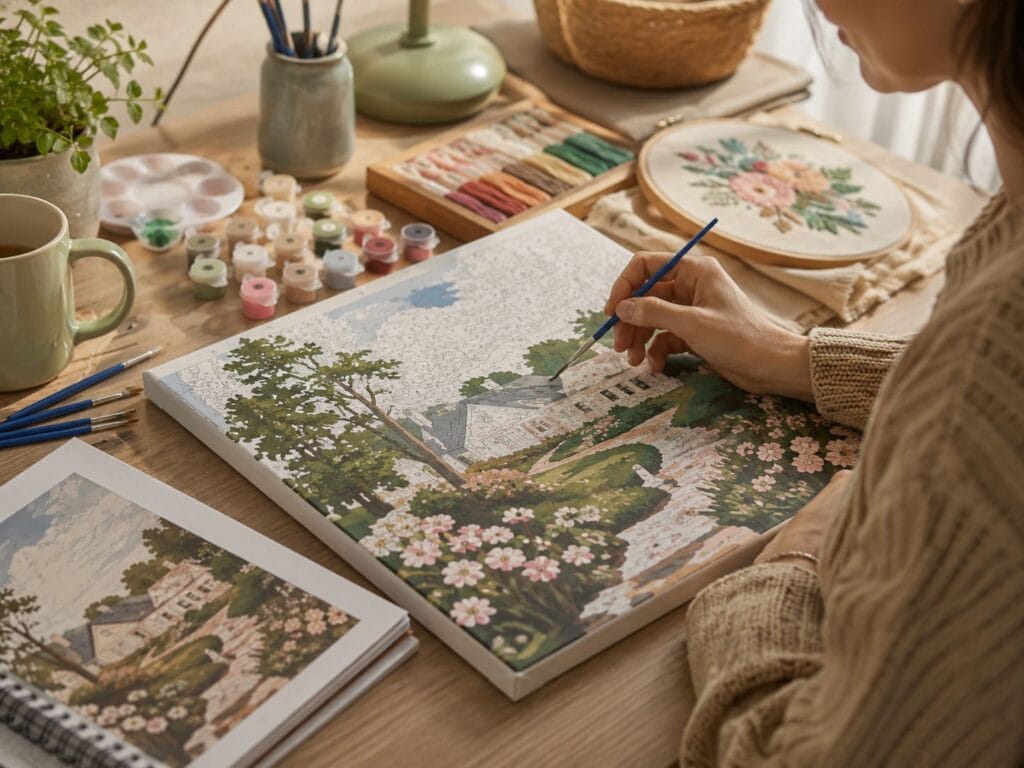
A detailed paint by numbers kit gives the buyer a predetermined image and numbered areas rather than an empty canvas.
Best for: adults who want to paint but prefer a structured path to the finished image.
Why it stands out: A strong kit can provide a sophisticated palette, clear section markings, brushes, paint, and printed color instructions.
Watch out for: Small numbered areas, drying paint, brush cleaning, workspace protection, and the possibility that older paint pots may require careful mixing or replacement.
9. The Woobles Crochet Kit — Best Beginner Crochet Kit
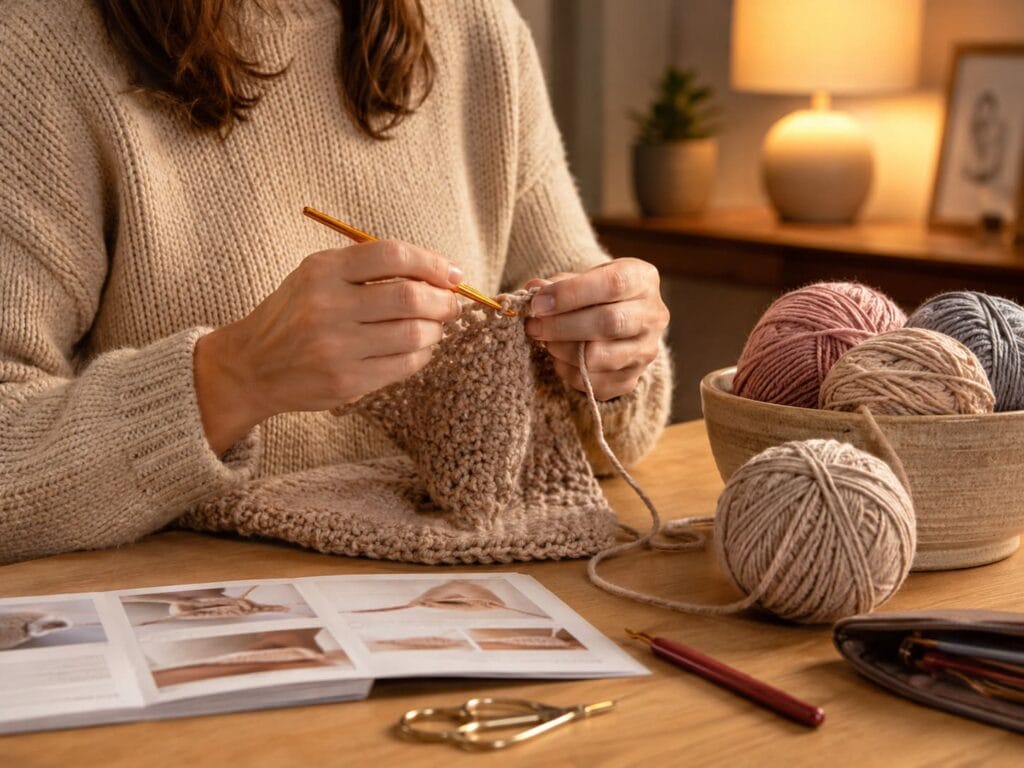
The Woobles is designed to help a beginner learn crochet by completing a small amigurumi figure. Beginner versions combine materials, a pre-started piece, and step-by-step video tutorials.
Best for: visual learners who want guided instruction rather than learning only from a written crochet pattern.
Why it stands out: A crochet kit can reduce the first barriers to a new hobby: choosing yarn, selecting the correct hook, reading a pattern, and making the first loop.
Watch out for: Video access may require a phone or computer, so this is not a completely screen-free kit during the learning stage. Some beginners may also need to replay instructions several times.
10. Woolbuddy Needle Felting Kit — Best Small Fiber Sculpture
Needle felting uses a barbed needle to repeatedly shape loose wool into a firm three-dimensional figure.
Best for: beginners and experienced crafters who prefer a small fiber craft kit with a visible result.
Why it stands out: Needle felting does not require learning knitting and crochet stitches. The shape develops directly through repeated needle work.
Watch out for: Felting needles are very sharp and can break. Use the supplied work surface or pad, keep fingers away from the needle path, and store the tools securely.
11. Sculpd Pottery Kit — Best Beginner Air-Dry Clay Kit
A Sculpd pottery kit offers air-dry clay and basic tools for creating decorative pots, trays, sculptures, or small home objects without a kiln.
Best for: beginners who want a tactile DIY experience and are comfortable working with clay, paint, dust, and drying time.
Why it stands out: Air-dry clay makes pottery-style crafting more accessible at home because no firing equipment is required.
Watch out for: Mess, surface protection, cracking during drying, paint or sealant requirements, and functional limits. Unless the manufacturer explicitly states otherwise, treat completed items as decorative rather than food-safe, dishwasher-safe, or suitable for holding water.
12. Leather Craft DIY Kit — Best Functional Finished Project
A leather making kit may include pre-cut pieces, thread, needles, hardware, and instructions for creating a wallet, card holder, passport cover, or another small object.
Best for: buyers who want to learn a new skill and finish with something practical rather than purely decorative.
Why it stands out: Leatherwork combines hand stitching, alignment, edge work, and hardware assembly in one making kit.
Watch out for: Sharp needles, punches, awls, cutting tools, leather odor, hand fatigue, and missing finishing supplies. Check whether holes are pre-punched and whether the kit provides everything you need for the advertised project.
Embroidery, Knitting, or Crochet: Which Fiber Craft Kit Should You Choose?
Fiber craft kits can look similar in a product list, but the learning experience is different.
| Craft type | Typical first project | Learning style | Common frustration |
|---|---|---|---|
| Embroidery | Decorated hoop or fabric panel | Follow a printed design with several stitches | Thread tangles and uneven tension |
| Crochet | Small figure, scarf, or square | Use one hook and repeated loops | Counting stitches and identifying loops |
| Knitting | Scarf, hat, or small accessory | Work loops across two needles | Dropped stitches and tension |
| Needle felting | Small wool sculpture | Shape wool through repeated needle work | Sharp needles and uneven shaping |
An embroidery starter kit is often a good choice for someone who enjoys decorative detail. A crochet kit is useful for learners who want video guidance and a compact finished figure. A learn-to-knit kit may suit buyers who want to continue into clothing and accessories.
Before buying a knitting kit or embroidery kit, confirm that it includes the correct needles, enough material, a beginner pattern, and instructions suited to your learning style.
How to Choose a Craft Kit by Skill Level
Complete Beginner
Look for beginner-friendly craft kits with one finished project, numbered steps, prepared materials, and clear instructions. The Woobles, paint by numbers, diamond painting, and simple air-dry pottery are the easiest entry points in this guide.
Patient Beginner
Choose a book nook, miniature house, cyanotype kit, kintsugi project, or LEGO Art set when you are comfortable following longer instructions and organizing several parts.
Intermediate Crafter
Metal models, leatherwork, detailed miniatures, and larger mixed-material projects suit people who already understand basic tool handling and can correct small mistakes without abandoning the project.
Hidden Costs and Missing Supplies
“All-in-one kits” do not always include every item needed to finish and display the project.
- Miniature kits may require glue, batteries, tweezers, or a dust cover.
- Metal models may need fine pliers or clippers.
- Kintsugi projects require an object to repair and may need gloves or surface protection.
- Cyanotype requires water, suitable exposure conditions, and drying space.
- Diamond painting may need extra storage containers.
- Paint by numbers may need better brushes or framing.
- Crochet projects may require replacement yarn after mistakes.
- Needle felting kits may need additional needles or a larger work pad.
- Pottery kits may require paint, sealant, table protection, and storage while drying.
- Leather kits may require punches, cutting tools, conditioner, or edge-finishing products.
Read the full “included in the kit” list rather than assuming the product photograph shows only supplied items.
Craft Kit Safety
Crafting something at home can involve sharp tools, chemicals, glues, paints, powders, small parts, and materials that are not food-safe.
- Read labels and supplied instructions before starting.
- Use ventilation where recommended.
- Protect work surfaces and clothing.
- Keep food and drinks away from craft chemicals.
- Store needles, blades, chemicals, resin pieces, and small hardware securely.
- Do not assume decorative clay, paint, epoxy, or repaired ceramics are suitable for food contact.
- Use protective equipment when the manufacturer requires it.
- Stop when tools or materials cause irritation, dizziness, breathing difficulty, or injury.
For broader U.S. safety guidance, see the CPSC Art and Craft Safety Guide.
What to Buy and What to Skip
| Your goal | Best starting point | Skip when |
|---|---|---|
| Learn a new skill | Crochet, leatherwork, pottery, or needle felting | You only want a finished decoration |
| Low-mess hobby | LEGO Art, book nook, or diamond painting | You dislike small loose pieces |
| Creative flexibility | Pottery or cyanotype | You want identical predictable results |
| Clear instructions | LEGO, Woobles, or paint by numbers | You prefer improvisation |
| Functional result | Leather craft kit | You do not want to use sharp tools |
| Project with friends or family | LEGO Art, pottery, painting, or cyanotype | The kit contains only one tool set |
| Screen-free stress relief | Choose the activity you already enjoy | You expect a product to treat a health condition |
What We Could Verify
- The general project type represented by each kit.
- The main materials and techniques described in current public listings.
- Whether the kits are marketed to adults or beginners.
- Publicly stated instructions, video support, and included supplies where available.
- Common safety issues associated with sharp tools, small parts, adhesives, paint, clay, and craft chemicals.
What We Could Not Verify
- Whether every Amazon seller supplies the same version or materials.
- Current stock, pricing, discounts, delivery time, or return conditions.
- Whether every advertised tool is included in each order.
- Instruction quality for every buyer and learning style.
- Real completion time for each individual.
- Long-term durability of completed projects.
- Whether a buyer will find a particular craft relaxing, frustrating, or enjoyable.
- Any product-specific effect on anxiety, stress, mood, concentration, or mental health.
FAQ
What is the best craft kit for a complete beginner?
The Woobles Crochet Kit, paint by numbers, diamond painting, and guided air-dry pottery are strong beginner options because they provide a defined project and structured instructions.
Do craft kits provide everything you need?
Some kits provide everything you need for the basic project, while others require glue, batteries, pliers, water, protective equipment, paint, framing, or finishing products. Always read the current contents list.
Are craft kits for adults good gifts?
They can be good gifts when the project matches the person’s interests, available time, workspace, dexterity, and tolerance for detailed instructions. Do not choose only by the finished product photograph.
What is the easiest fiber craft to learn?
There is no universal easiest option. Needle felting has fewer stitch rules but uses sharp needles. Crochet uses one hook but requires stitch counting. Embroidery follows a surface design, while knitting uses two needles and repeated rows.
Can craft kits reduce stress?
A structured hobby may provide an enjoyable break for some people, but a commercial craft kit cannot guarantee stress relief or treat a mental health condition. Choose a project based on enjoyment and manageable difficulty.
Are DIY kits for adults completely screen-free?
Not always. Some kits use downloadable instructions, QR codes, or video tutorials. Buyers seeking a fully offline hobby should confirm that printed instructions are included.
How do I avoid abandoning a new hobby?
Start with one small project, prepare the workspace before opening the kit, keep all parts together, and choose a defined stopping point for each session. Do not begin with the most complicated kit simply because its finished image looks impressive.
Final Verdict: Choose the Project, Not the Lifestyle Image
The best craft kits for adults remove enough setup friction to help a person begin while leaving enough real work to make the project satisfying.
Choose The Woobles or paint by numbers for stronger guidance. Choose LEGO Art or a book nook for structured assembly. Choose pottery or cyanotype for experimentation. Choose leatherwork or needle felting when learning a hands-on technique matters more than fast completion.
Do not buy a 20-hour miniature project when you want a two-hour evening activity. Do not buy an open-ended pottery kit when you need precise steps. And do not buy a craft kit as a medical solution to stress, burnout, or racing thoughts.
For more ways to create intentional offline time, read our slow living guide, our guide to stopping doomscrolling, and our creative and cognitive engagement guide.