Table of Contents
Affiliate disclosure: MindReset.org may earn a commission if you buy through our links. This does not increase your price and does not affect our editorial judgment.
Amazon disclosure: As an Amazon Associate, we earn from qualifying purchases.
Research note: We have not personally tested every product in this guide. This article is based on product specifications, public documentation, available customer feedback, and comparison with similar tools.
Sleep note: These tools may support a calmer evening routine or bedroom setup, but they do not treat insomnia, anxiety, depression, sleep apnea, chronic fatigue, or any other medical condition. If sleep problems continue, or if snoring, breathing pauses, or severe daytime sleepiness are present, speak with a qualified healthcare professional.
Deep mental recovery is not something a gadget can force. A better way to think about it is simple: your evening setup should make it easier to disconnect, reduce friction, block obvious sleep disruptors, and build a calmer routine before bed.
That is where sleep-routine tools can help. A blackout mask can reduce light. A sound machine can replace phone-based audio. Blue light glasses may reduce evening screen brightness exposure. A sleep tracker can show patterns. A nasal strip may help some people who feel blocked through the nose.
But none of these tools should be sold as a “biological reset,” “deep recovery shortcut,” or “performance hack.” If a product promises to fix your sleep, force nervous-system recovery, or replace medical care, treat that as a red flag.
This guide compares practical deep mental recovery tools for a better evening routine — and explains what to skip. If late-night scrolling is your biggest problem, start with a phone-free wind-down routine before buying more sleep gadgets.
Quick verdict
The best deep mental recovery tools are not the most dramatic ones. They are the tools that remove obvious friction from your evening routine.
For most people, the strongest first buys are a blackout sleep mask, a dedicated sound machine, and a phone-free wind-down setup. If the phone is the main issue, compare practical digital detox tools before buying more bedroom devices.
Blue light glasses can be useful if you still use screens at night, but they are not a license to scroll for two more hours. Sleep trackers can help you notice patterns, but they can also become another dashboard to obsess over.
Be especially careful with mouth tape, “forced nasal breathing” claims, hormone claims, HRV promises, cortisol language, and any product that makes sleep sound like a switch you can control instantly.
Deep mental recovery tools: quick decision table
| Tool | Best for | Why it can help a routine | What to watch | Buyer verdict |
|---|---|---|---|---|
| Blackout sleep mask | Light control, travel, shared rooms | Blocks visual distraction and supports a darker sleep environment | Fit, pressure on eyes, side-sleep comfort | Best first buy for many people |
| White noise machine | Noise masking, phone-free bedroom audio | Creates a consistent sound background without using your phone | Loop quality, volume, sound preference | Strong practical buy |
| Blue light glasses | Evening screen use | Can reduce exposure to some bright/blue-weighted light | Not a replacement for screen boundaries | Useful only with routine changes |
| Sleep tracker | Sleep pattern awareness | Shows trends around sleep timing and interruptions | Accuracy limits and sleep-data anxiety | Good for curious users, not everyone |
| Nasal strips | Occasional nasal stuffiness | May make nasal breathing feel easier for some users | Snoring, sleep apnea symptoms, skin irritation | Optional, cautious add-on |
Who should use deep mental recovery tools?
These tools make sense if your evenings are too bright, too noisy, too screen-heavy, or too unstructured.
They are also useful if you travel, share a bedroom, live in a noisy building, work late on screens, or keep your phone too close to the bed.
The best buyer mindset is practical: choose one tool that solves one problem. Do not build a complicated sleep-tech stack before fixing the basics.
Who should avoid buying more sleep gadgets?
Do not buy more tools if the real issue is medical, severe, or ongoing.
If you regularly struggle to fall asleep, wake repeatedly, feel exhausted despite enough time in bed, snore heavily, stop breathing during sleep, wake gasping, or feel unsafe driving because of sleepiness, do not treat a product guide as a solution. Speak with a qualified healthcare professional.
Also avoid buying more tools if sleep data makes you anxious. In that case, a tracker may make the problem worse by turning bedtime into a performance score.
1. Manta Sleep Mask: best for blackout and travel

A blackout sleep mask is one of the simplest deep mental recovery tools because it solves a clear problem: unwanted light.
Manta-style masks are popular because they are adjustable and designed to block light without pressing directly on the eyelids. That makes this category useful for travel, shift work, shared bedrooms, and rooms where blackout curtains are not realistic.
Best for
- bedrooms with light leaks;
- travel;
- shift workers;
- shared rooms;
- people who cannot install blackout curtains.
What to watch out for
Fit matters more than brand hype. A mask that leaks light, presses on your eyes, or moves when you sleep will not be useful.
Side sleepers should check cup shape, strap position, and whether the mask feels bulky on the pillow.
Buyer verdict
Buy a blackout sleep mask if light is one of your main sleep-environment problems.
Skip it if you already sleep in a dark room or dislike wearing anything on your face.
2. LectroFan EVO: best for phone-free sound masking

A dedicated sound machine is useful because it separates bedroom audio from your phone. For a dedicated product option, see our Sound Oasis S-680 review.
If you use your phone for rain sounds, white noise, or sleep audio, you are also keeping notifications, apps, messages, and scrolling within reach. A sound machine keeps the sound routine but removes the screen temptation.
LectroFan EVO-style devices are designed around fan sounds, white noise, and similar sound options. The real benefit is not that a sound machine “forces recovery.” The benefit is that it can create a repeatable, low-friction sound environment.
Best for
- apartment noise;
- shared homes;
- light sleepers;
- phone-free bedrooms;
- people who dislike silence.
What to watch out for
Not everyone likes white noise. Some people prefer silence, a fan, or nature sounds. Check volume control, timer settings, sound options, and whether the sounds loop in a way that annoys you.
Buyer verdict
Buy a sound machine if noise and phone-based audio are part of your bedtime problem.
Skip it if sound distracts you or if the room is already quiet enough.
3. Swanwick blue light glasses: best for evening screen users

Blue light glasses are often marketed too aggressively. They should not be presented as hormone tools, sleep-treatment devices, or a way to cancel out unlimited screen time.
A safer buyer frame is this: if you use screens in the evening, blue light glasses may reduce some bright or blue-weighted light exposure, depending on the lens.
But the stronger routine is still to dim lights, reduce screen intensity, and set a real screen cutoff. For a broader setup, compare our light environment tools before relying on glasses alone.
Best for
- evening laptop work;
- late-night screen use;
- people who cannot avoid screens completely;
- users who want a physical reminder to wind down;
- home office workers.
What to watch out for
Lens tint, comfort, style, and whether you will actually wear them matter more than the marketing copy.
Do not buy blue light glasses expecting them to fix a chaotic bedtime routine. If your phone stays in bed and you scroll for an hour, glasses are not the main solution.
Buyer verdict
Buy blue light glasses if you still need evening screen time and want one more friction tool.
Skip them if you can solve the problem better by turning screens off earlier.
4. Withings Sleep Analyzer: best for sleep pattern awareness without a wearable
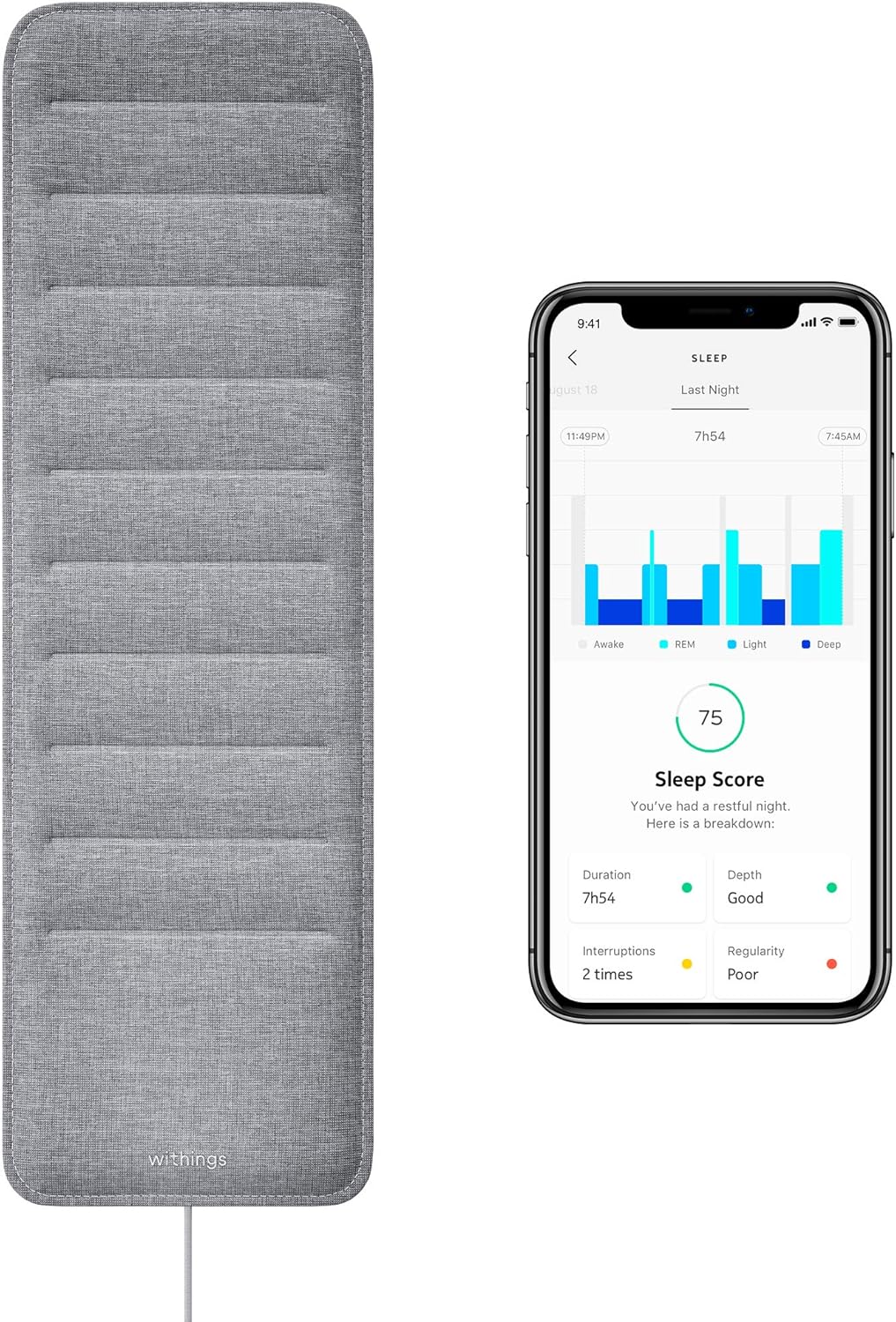
A sleep tracker can help if you want to notice patterns in your bedtime, wake time, interruptions, and routine consistency. If you prefer wearable tracking instead of an under-mattress sensor, compare our guide to the best smart rings for sleep.
The Withings Sleep Analyzer is different from a ring or watch because it sits under the mattress rather than being worn on the body. That can be useful for people who dislike sleeping with a wearable.
The key is to treat sleep tracking as pattern awareness, not a medical diagnosis or performance score.
Best for
- people who dislike wearable trackers;
- routine tracking;
- noticing sleep timing patterns;
- comparing weekdays and weekends;
- users who want passive tracking.
What to watch out for
Sleep trackers are not perfect. They estimate patterns using sensors and algorithms. They can be useful, but they can also make some users overthink sleep.
If sleep data makes you more tense, this is not the right tool.
Buyer verdict
Buy an under-mattress tracker if you want passive sleep trend awareness without wearing a ring or watch.
Skip it if you already know the problem is schedule, stress, alcohol, caffeine, noise, or phone use.
5. Nasal strips: optional tool for nasal airflow comfort

Nasal strips are a better buyer option than mouth tape for many readers because they do not seal the mouth shut. They sit on the outside of the nose and are designed to help open the nasal passages mechanically.
This does not mean nasal strips are a deep recovery hack. They are a simple, optional tool that some people try when nasal airflow feels restricted.
Best for
- occasional nasal stuffiness;
- people curious about nasal airflow comfort;
- users who do not want mouth tape;
- short-term experimentation;
- travel or seasonal congestion situations.
What to watch out for
If you snore heavily, wake gasping, suspect sleep apnea, or have ongoing breathing problems, do not use nasal strips as a substitute for medical advice.
Also watch for skin irritation from adhesive.
Buyer verdict
Try nasal strips only as a cautious, low-commitment option for nasal airflow comfort.
Skip them if you have serious snoring, breathing issues, or symptoms that need proper medical assessment.
What to skip
Skip any product that promises deep mental recovery through dramatic biological language.
Be careful with:
- mouth tape sold as a sleep transformation tool;
- claims that nasal breathing will force HRV improvement;
- products promising cortisol reduction;
- blue light glasses claiming to trigger sleep hormones;
- trackers claiming lab-grade certainty for everyday buyers;
- sound machines marketed as stress or anxiety solutions;
- any tool framed as a nervous-system reset, sleep cure, or biological off-switch.
Mouth tape deserves special caution. Some medical sources warn that mouth taping can cause problems such as skin irritation, discomfort, anxiety, and difficulty breathing, and it may be inappropriate for people who snore or have sleep apnea concerns. If you are considering it, speak with a qualified healthcare professional first.
For a safer external reference on general sleep habits, review the CDC’s sleep guidance. It focuses on practical habits such as consistent sleep timing, a quiet and relaxing bedroom, and turning off electronic devices before bedtime.
Hidden costs and limitations
Before buying, check the real cost of the setup:
- replacement mask parts or travel cases;
- sound machine power source and portability;
- whether blue light glasses fit over prescription glasses;
- tracker app requirements;
- subscriptions or premium app features;
- battery or cable placement;
- return policy;
- warranty length;
- whether the product is comfortable enough to use every night.
A tool only works if it fits your real routine. A sleep mask you remove after ten minutes, glasses you never wear, or a tracker that makes you anxious is not a useful purchase.
What we could verify
We could verify public product positioning and basic category functions.
Manta-style masks are sold around blackout and fit. LectroFan-style devices are sold around fan sounds and white noise. Swanwick-style glasses are sold around blue-light blocking. Withings Sleep Analyzer is sold as an under-mattress sleep tracking device. Nasal strips are sold as a mechanical nasal-opening product.
We could also verify that general sleep guidance often emphasizes consistent schedules, a dark and quiet room, limiting electronics before bed, and avoiding overcomplicated solutions.
What we could not verify
We could not verify hands-on comfort, long-term durability, app stability, customer support quality, exact sleep-tracking accuracy, personal fit, or whether any tool will improve your sleep routine.
We also could not verify claims about cortisol, serotonin, melatonin production, HRV improvement, parasympathetic activation, glymphatic clearance, nervous-system reset, or deep mental recovery as direct product outcomes.
Those claims should not be used as buying reasons.
Best starter setups
| Situation | Simple setup | Skip |
|---|---|---|
| Bright bedroom | Blackout mask + warmer evening lighting | Expensive sleep tech before fixing light |
| Noisy apartment | Sound machine + phone outside the bedroom | Using your phone as the sound source |
| Late screen work | Screen cutoff + dim lighting + optional blue light glasses | Scrolling longer because you bought glasses |
| Curious about patterns | Sleep tracker + weekly review | Checking sleep scores every morning with anxiety |
| Nasal stuffiness | Nasal strip + medical advice if symptoms persist | Mouth tape as a first experiment |
Better first steps before buying anything
Before buying deep mental recovery tools, try the free version first:
- charge your phone outside the bed area;
- turn screens off earlier;
- use one warm lamp in the evening;
- keep your bedroom darker;
- reduce late caffeine or alcohol;
- write down unfinished thoughts before bed;
- keep a consistent wake-up time;
- make the room quieter or use a fan.
If a free change helps, then a tool can support the habit. If the habit is not there, the product may become another unused object.
FAQ: deep mental recovery tools
What are deep mental recovery tools?
Deep mental recovery tools are practical sleep-routine products that support a calmer evening environment. Examples include blackout masks, sound machines, blue light glasses, sleep trackers, and nasal strips. They are not medical treatments.
What should I buy first?
Start with the most obvious friction point. If light is the problem, buy a blackout mask or improve curtains. If noise is the problem, try a sound machine. If your phone is the problem, build a phone-free bedroom routine before buying anything else.
Are blue light glasses worth it?
They can be useful if you still need screens in the evening, but they should not replace screen boundaries. Turning off screens earlier is usually the stronger habit.
Are sleep trackers accurate?
Sleep trackers can show useful trends, but they are not perfect. Treat the data as a rough pattern tool, not a medical-grade report.
Should I use mouth tape for sleep?
Be careful. Mouth tape can create breathing and safety concerns for some users, especially if snoring, congestion, sleep apnea, or breathing issues are present. Speak with a qualified healthcare professional before trying it.
Final verdict
Deep mental recovery is not a product you can buy. It is a routine you make easier through better environment design.
The best tools are simple: a blackout mask for light, a sound machine for noise, blue light glasses only if screen use is unavoidable, a sleep tracker only if data helps you, and nasal strips only as a cautious optional tool.
Skip the aggressive claims. You do not need a biological off-switch, forced HRV improvement, cortisol promise, or sleep-hormone marketing.
Bottom line: buy the tool that removes one real obstacle from your evening routine. Then keep the routine simple enough to repeat.