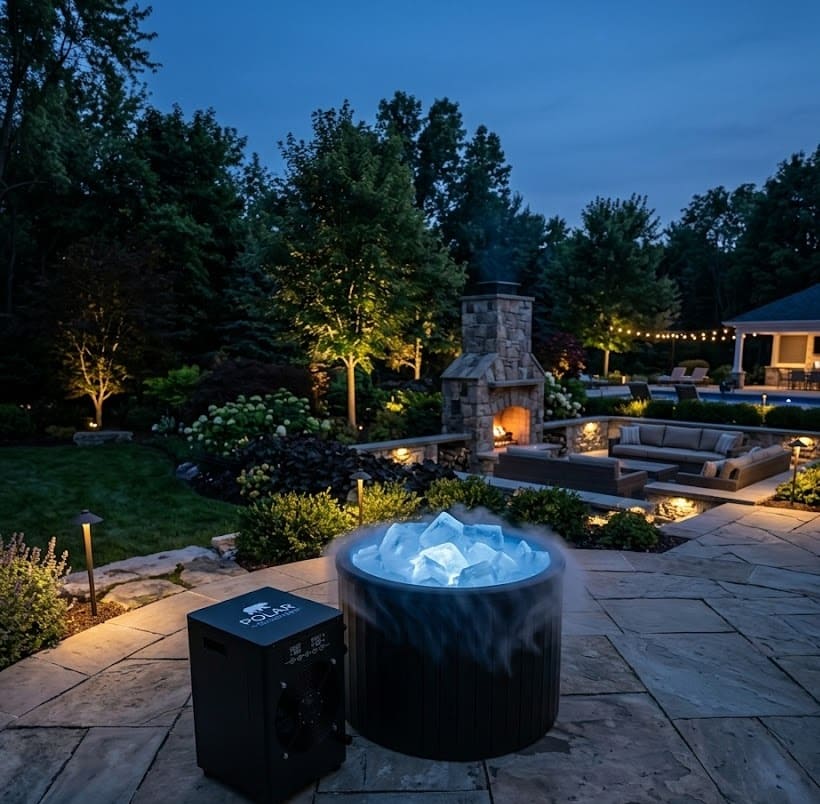
Table of Contents
Quick Summary: The Polar Recovery Chiller Ecosystem
Affiliate disclosure: MindReset.org may earn a commission if you buy through our links. This does not increase your price and does not affect our editorial judgment.
Polar Recovery sells two main ice bath chiller options: the Recovery Cube Mini Chiller for regular home use and the Polar Recovery Pro Chiller for heavier cooling needs, hot/cold control, and more demanding setups.
This review compares both chillers by cooling power, noise, setup, running costs, water care, best use case, and who should avoid each model. The goal is simple: help you decide whether the Mini is enough, whether the Pro is worth the extra money, or whether you should skip a chiller for now.
Research note: We have not personally tested the Polar Recovery Cube Mini or Pro Chiller yet. This guide is based on public product specifications, brand documentation, available user feedback, and comparison with similar cold plunge chiller systems.
Health note: Cold plunging is not suitable for everyone. Cold water can sharply increase breathing, heart rate, and blood pressure, so people with heart conditions, blood pressure issues, fainting risk, pregnancy, Raynaud’s symptoms, or other medical concerns should speak with a qualified clinician first.
For category context, compare the full Polar Recovery lineup, our Plunge Chill tub-and-chiller review, and the 1 HP chiller buyer guide before choosing a cooling setup.
Below is a clear guide to the exact automated engines and therapeutic environments that provide effortless temperature control and absolute peace of mind.
Quick Verdict: Which Polar Recovery Chiller Makes Sense?
The Polar Recovery Cube Mini Chiller is the better fit for most home users. It is cheaper, quieter, easier to place indoors or outdoors, and designed for steady daily cooling rather than aggressive commercial performance.
The Polar Recovery Pro Chiller makes more sense if you need faster cooling, hot/cold control, ozone filtration, WiFi control, or a setup for heavier use. It costs much more, so it is harder to justify unless you know you will use it often.
Skip both if you only cold plunge occasionally, want the cheapest possible ice bath setup, cannot place the unit safely with good airflow, or are not ready to manage water hygiene.
| Option | Best for | Why it makes sense | Skip if |
|---|---|---|---|
| Polar Recovery Cube Mini Chiller | Most home users | Lower price, low noise, 1/3 HP compressor, 280W power draw, 39–45 dB noise level | You need fast cooldowns, heating, ozone or WiFi |
| Polar Recovery Pro Chiller | Heavy use, premium setups, hot/cold routines | Cools to 3°C, heats to 45°C, includes ozone filtration and WiFi control | You only need basic cold water for home use |
| Ice bath without chiller | Beginners testing the habit | Cheapest starting point | You hate buying ice or want daily consistency |
| Full Polar Recovery tub + chiller bundle | Buyers starting from zero | Easier compatibility and setup | You already own a compatible tub |
Why buy an ice bath chiller instead of using ice?
An ice bath chiller solves one practical problem: consistency. Instead of buying bags of ice before every plunge, you connect the chiller to a compatible tub, set the target temperature, and let the system keep the water cold.
That matters most if you cold plunge several times per week. If you only plunge once in a while, a chiller may be overkill. If you want a daily routine with less setup, the Polar Recovery Mini or Pro can make the habit easier to repeat.
What can cold water immersion realistically support?
Cold water immersion may help some users with post-exercise soreness, perceived recovery, alertness, and routine discipline. It is not a cure, treatment, or guaranteed fix for inflammation, anxiety, insomnia, depression, chronic pain, or nervous system problems.
The evidence is still mixed and depends on the person, water temperature, timing, and training goal. A 2025 systematic review found possible time-dependent effects on inflammation, stress, sleep quality, and quality of life, but also noted that the evidence base is limited by few randomized trials, small sample sizes, and limited population diversity.
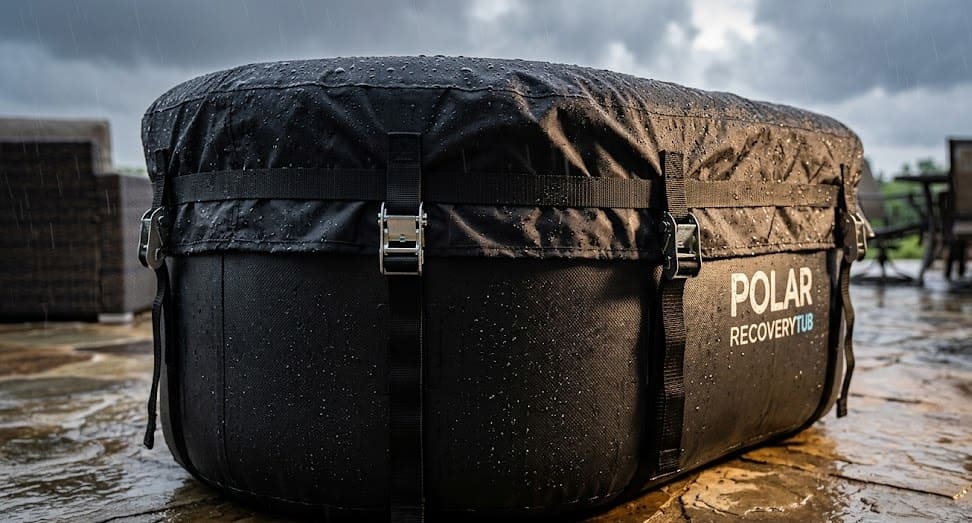
Protecting the Polar Recovery Tub™: Recovery™ Ice Bath Spaceship Cover
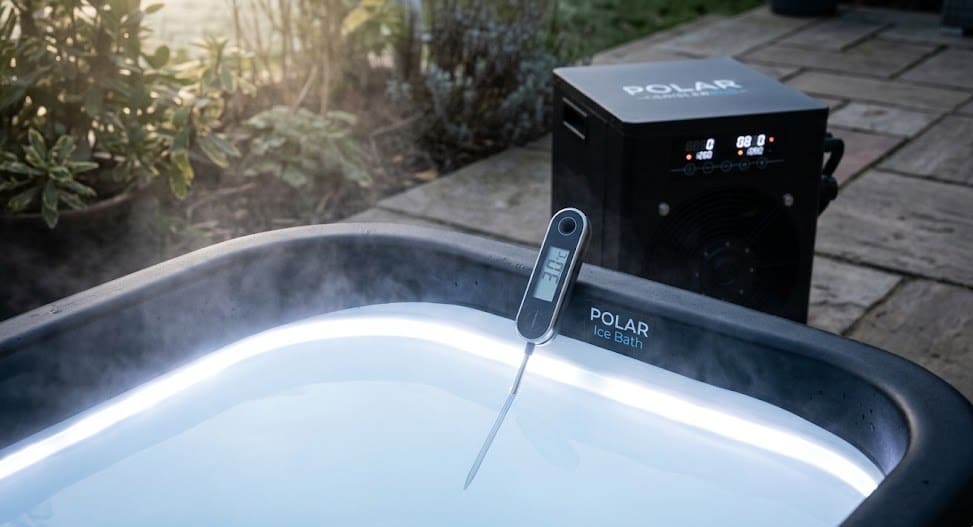
While the compressor generates the initial thermal shift, the operational efficiency of the entire apparatus relies heavily on the advanced material science of the containment vessel itself. Without exceptional thermal retention, any compressor would be forced into an infinite, high-energy duty cycle, futilely attempting to cool a constantly leaking vessel.
The modern polar recovery tub is engineered using a sophisticated, multi-layered composite matrix. The exterior features a ruggedized, military-grade drop-stitch PVC. This specific polymer is designed to aggressively resist UV degradation, physical abrasion, and the environmental wear associated with permanent outdoor deployment. This is critical for users who intend to place the unit on a patio or deck, where solar radiation can swiftly degrade lesser, unreinforced plastics.
Beneath this protective exterior shell lies a dense, proprietary layer of thermal insulation. This foam core acts as a formidable, passive barrier against ambient heat transfer. It prevents the external warmth from penetrating the basin, while simultaneously trapping the chilled interior climate.
Furthermore, the overall efficiency is massively augmented by the inclusion of a specialized thermo lid. A significant percentage of thermal bleed occurs through surface evaporation and direct contact with ambient air. When this heavy-duty, insulated upper boundary is secured, it creates a completely sealed microclimate. The thermodynamic load on the chilling unit drops precipitously once the lid is applied, allowing the compressor to remain in its highly economical, low-wattage standby state for extended periods.
Water Chiller Performance: Recovery Cube Mini Chiller vs Pro
The core metric of efficacy for any automated cooling mechanism is its thermodynamic capacity—specifically, its velocity and ability to draw down the thermal baseline of a substantial liquid volume against the relentless pressure of ambient heat. We must carefully analyze the challenge of cooling a massive reservoir from a standard ambient starting point of 15 Celsius down to the punishing, optimal therapeutic threshold.
Temperature Control: Recovery Cube Mini Chiller vs Pro Plunge at 3 Degrees
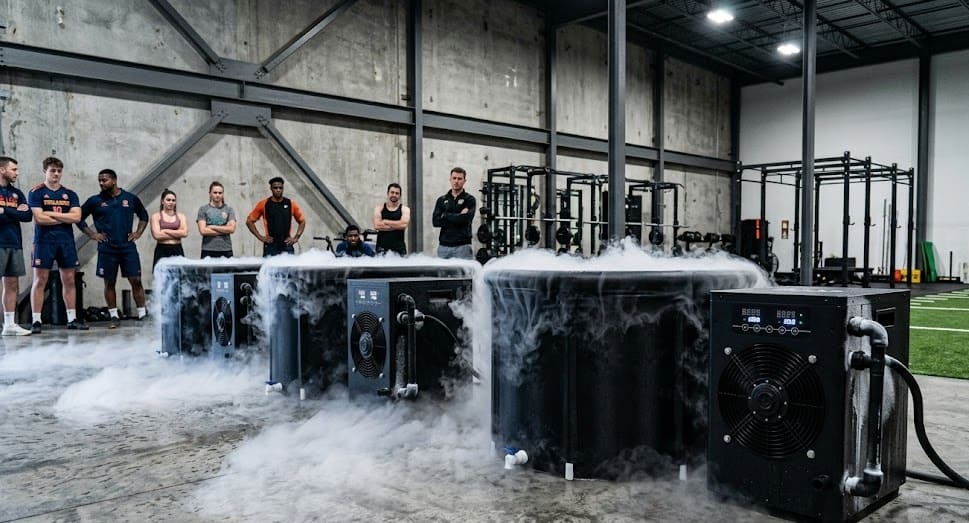
When evaluating the technical differentiation between the available tiers, the sheer power output dictates the operational use case. The premium, high-capacity engine—often paired with the polar recovery pro ice bath—is equipped with a robust, industrial-grade 1HP compressor. This unit operates at a massive 2650 watts of power. Data indicates that this high-capacity thermodynamic engine can forcefully extract heat from a 400L reservoir, dropping it to 15 Celsius in approximately 2.5 hours, and reaching the absolute lower limit in under six hours. This rapid, aggressive thermal drawdown is absolutely vital for commercial settings, high-throughput athletic facilities, or geographic locations with extremely warm climates where ambient heat continuously fights the cooling process.
Conversely, the entry-level compact tier utilizes a highly efficient 1/3 HP compressor drawing a mere 280 watts. While remarkably economical, its thermodynamic throughput is naturally lower due to the smaller displacement of the compressor. It is meticulously engineered for gradual, sustained temperature reduction rather than rapid, brute-force drawdown. In a controlled, shaded residential environment, this compact unit maintains the target climate effortlessly. However, the initial cooldown phase requires significantly more patience compared to its high-horsepower counterpart.
In simple terms, the Pro Chiller is built for faster temperature changes and heavier use. The Mini is better for steady home maintenance once the water is already cold. For most home users, that difference matters less than price, noise, placement, and whether the tub is kept covered.
| Model Tier | Compressor Power | Power Draw | Estimated Time to Cool 400L (15C to 3C) | Ideal Application Environment |
| Compact (Mini) | 1/3 HP | 280 W | 12+ Hours (Gradual Maintenance) | Shaded Residential, Indoor, Mild Climates |
| Premium (Pro) | 1.0 HP | 2650 W | Under 6 Hours | Commercial, Outdoor, High Ambient Heat |
Acoustic Engineering in Residential Habitats
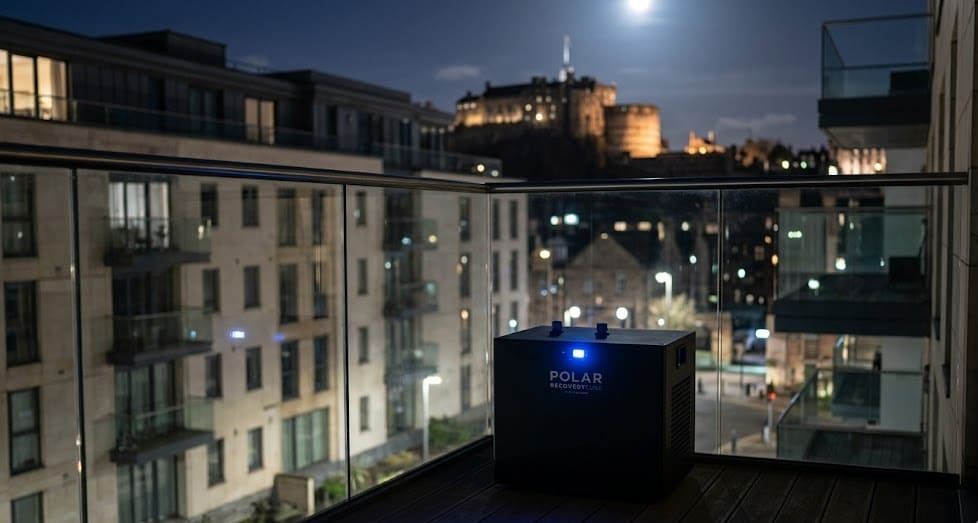
A frequently overlooked, yet profoundly critical aspect of operating continuous refrigeration machinery is the acoustic footprint. Excessive noise can instantly transform a tranquil, meditative healing space into an abrasive, highly stressful environment, particularly in densely populated residential zones.
Acoustic emissions are measured in decibels (dB), which operate on a logarithmic scale. To understand this, a ten-decibel increase represents a tenfold increase in sound intensity and a perceived doubling of volume. The engineering team behind the compact unit has achieved a remarkable feat in sound dampening. The unit operates at an incredibly low acoustic output ranging from 39 to 45 decibels.
To effectively contextualize this measurement, 40 decibels is roughly equivalent to the gentle ambient hum of a quiet library or a modern, high-end household refrigerator. This whispering, unobtrusive hum ensures that the unit can be safely positioned directly beneath a bedroom window or on a shared apartment balcony without disrupting the user’s sleep architecture or irritating close-proximity neighbors.
In stark contrast, industrial-grade competitors and budget agricultural chillers often register a harsh acoustic output between 60 and 70 decibels. A continuous 65-decibel output is comparable to a loud, animated conversation or the drone of a busy urban street. When this level of noise is subjected to a 24-hour cycle, it becomes highly disruptive and psychologically fatiguing.
Even the brand’s significantly more powerful 1HP unit manages to insulate its massive compressor effectively, maintaining an acoustic profile that prioritizes user tranquility without sacrificing the raw thermal power required for commercial applications. The meticulous use of vibration isolation mounts and dense acoustic foam lining within the chassis represents a significant leap in consumer-friendly engineering.
Running Costs: Electricity, Ice and Maintenance
A cold plunge chiller is not free to run, but it can reduce the repeated cost and effort of buying ice. The real running cost depends on your electricity rate, water volume, starting water temperature, target temperature, outdoor heat, insulation, lid use, and how often the tub is opened.
The Mini Chiller should usually cost less to run than a larger Pro-style chiller because it uses less power and is designed for steady home cooling. The trade-off is patience: it may take longer to cool a large tub from warm water to cold water.
The Pro Chiller makes more sense when faster cooling, heating, ozone filtration, WiFi control, or heavier use matters more than the lowest possible running cost. For casual users, the extra power and higher purchase price may be hard to justify.
Before buying, compare three costs: the price of the chiller, the cost of electricity, and the cost of ice if you do not buy a chiller. For some users, ice is fine. For daily or near-daily cold plunging, a chiller can become the more practical option.
Water Filter and Hygiene for Your Cold Plunge

Maintaining absolute, clinical hygiene in a stagnant pool of organic matter is a monumental engineering challenge. When a human body enters a basin, it introduces a massive biological load: sweat, natural dermis oils, exfoliated epidermis cells, and ambient environmental dust. Without rigorous intervention, this biological soup rapidly becomes a breeding ground for bacterial blooms and toxic biofilms.
The brand differentiates its hardware significantly from budget alternatives through a sophisticated, dual-pronged approach to purification. This system seamlessly combines ultra-fine mechanical physical barriers with advanced, chemical-free molecular sanitization.
The Physics of Micrometer Particulate Trapping
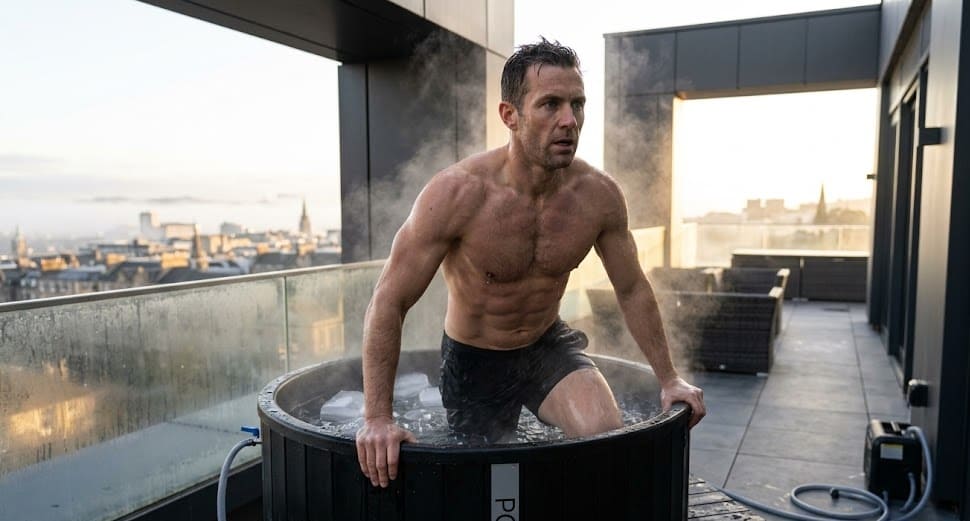
The absolute industry standard for cheap, budget aquatic cooling setups typically relies on highly porous 50-micrometer to 80-micrometer barriers. A micrometer (micron) is a unit of measurement equal to one-millionth of a meter. For vivid context, a standard strand of human hair is roughly 70 micrometers in diameter. A 50-micrometer mesh will effectively capture large, visible debris, insects, and hair. However, it operates as an open gate for finer, microscopic particulate matter. Fine ambient dust, exfoliated skin cells, and micro-organics easily pass through these cheap filters, returning to the basin. Over a short period, this microscopic accumulation leads to visually cloudy, highly viscous fluid and potential bacterial proliferation.
The sophisticated architecture under our review utilizes an incredibly stringent 20 micrometer purification cartridge. This significantly tighter, intricately pleated mesh acts as an impenetrable wall, capturing the microscopic impurities that budget models completely ignore. The end result is pristine, crystal-clear liquid that requires far less frequent draining and refilling.
However, implementing a tighter mesh is an engineering balancing act. The tighter the physical barrier, the higher the restriction on fluid flow. The triumph of this specific design is the perfect calibration of the magnetic drive pump’s hydrostatic pressure. It possesses the exact torque required to push thick liquid through a 20 micrometer barrier continuously, 24/7, without burning out the internal motor or causing destructive cavitation within the impeller housing.
Water care: filtration, ozone and cleaning limits
The Mini uses 24/7 water flow and 20-micron filtration, while the Pro Chiller adds built-in ozone filtration. This can reduce the need for constant water changes, but it does not remove the need for basic hygiene.
Users still need to shower before plunging, keep the lid on when not in use, clean or replace filters on schedule, and follow the brand’s water-care instructions. Ozone and filtration should not be treated as a medical-grade sterilization guarantee.
Maintenance Costs: Filters, Cleaning and Water Changes
A chiller does not remove maintenance. It only changes the type of maintenance. You still need to keep the tub covered, clean the tub surface, rinse or replace filters on schedule, monitor water quality, and follow the brand’s water-care instructions.
Filter cartridges, cleaning supplies, water treatment products, and replacement parts can add recurring cost over time. The exact cost depends on the model, how often you use the tub, whether more than one person uses it, and how carefully you keep the water clean.
This is one reason a chiller is best for buyers who are already committed to regular cold plunging. If you are still testing the habit, a cheaper ice bath setup may be enough before adding a dedicated chiller.
Digital Automation and IoT Integration
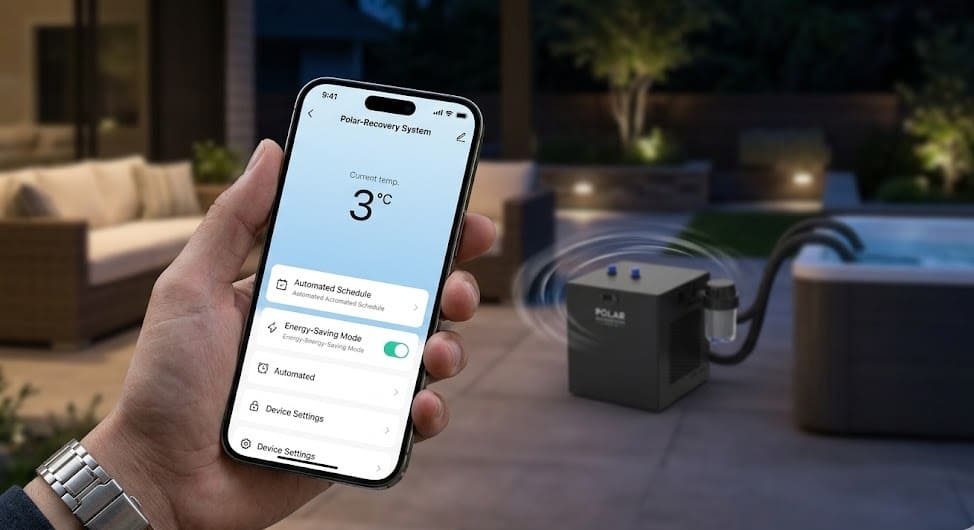
In the modern era of the Internet of Things (IoT), relying on analog, manual operation for luxury wellness hardware is rapidly becoming obsolete. The modern consumer demands absolute control over their environment from the palm of their hand. To satisfy this demand, the advanced units feature deeply integrated WiFi and Bluetooth connectivity, managed entirely through the robust Tuya application ecosystem.
This sophisticated software integration allows the user to command and monitor their aquatic environment from any global location with a cellular data connection. The Tuya interface elevates the hardware from a simple, passive cooling box into a highly sophisticated, active biohacking instrument.
The application enables precise, granular automation. Users can establish complex daily schedules, seamlessly instructing the machinery to initiate an intensive, high-draw cooling cycle at 3:00 AM. This capitalizes on off-peak, significantly cheaper overnight energy tariffs, ensuring the basin is perfectly chilled to an exact degree right out of the box by dawn.
Furthermore, the digital interface provides comprehensive, real-time diagnostic telemetry. The user can monitor the current thermal state to the decimal, instantly toggle the unit between aggressive cooling and soothing heating modes (capable of reaching 45 Celsius on the premium advanced model), and visually track system performance trends over extended periods. By completely eliminating the cognitive load of remembering to manually adjust dials or check thermometers, the digital ecosystem ensures the environment is always perfectly optimized for the user’s immediate arrival.
Competitive Matrix and Market Positioning
To truly comprehend the unparalleled value proposition offered by this hardware, one must conduct a clinical, objective comparison against other prominent entities operating within the same market space. We have meticulously evaluated three major competitors: Lumi Therapy, The Cold Pod, and the heavy-duty, permanent installations offered by brands like Chill Tubs.
Structural Mass and Logistical Portability
A primary, often fatal vulnerability of many luxury chilled tubs is their sheer, immovable mass. Competitor units wrapped in heavy galvanized steel, thick aluminum plating, or dense wood paneling often weigh in excess of 100 kilograms (roughly 220 to 350 lbs) while completely empty. This extreme weight effectively renders them permanent, static installations. Moving them requires specialized, expensive delivery teams, and their placement often necessitates costly structural reinforcement for wooden decking or patios.
The apparatus under our rigorous review relies entirely on advanced military-grade, high-strength drop-stitch PVC. This engineering choice drastically reduces the structural mass. The standard basin itself weighs a mere 3kg empty, while the significantly larger premium basin weighs only 14kg. The premium 1HP compressor weighs a manageable 40kg , and the compact unit weighs only 18kg.
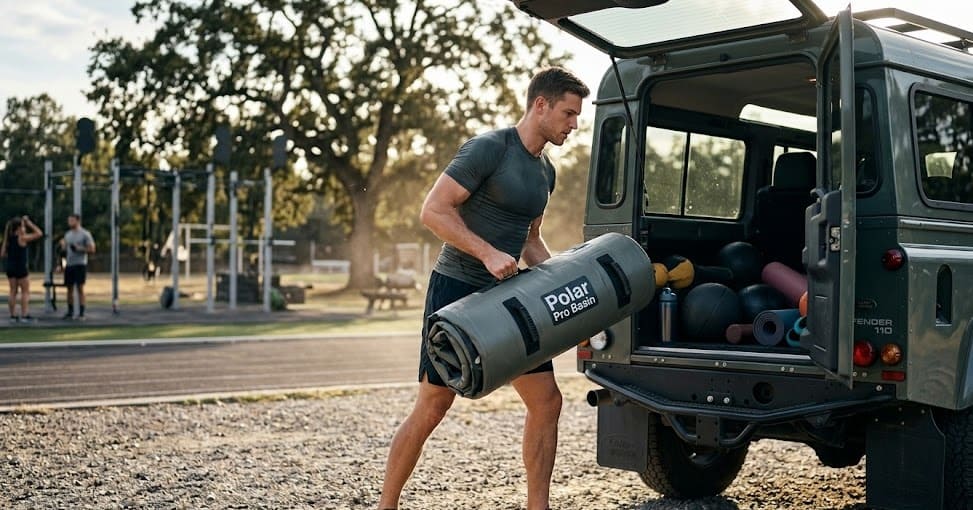
This drastic reduction in overall mass offers unprecedented, liberating portability. The entire setup is completely collapsible; the basin can be fully deflated, tightly rolled up, and easily stored or transported. This unique feature allows dedicated users to pack the entire suite into the trunk of a vehicle, transport it to a secondary summer residence, deploy it at an athletic training camp, or simply relocate it across a backyard patio without the need to hire professional moving contractors.
Evaluating Budget Alternatives: The Cold Pod
The Cold Pod currently occupies the absolute budget spectrum of the consumer market, frequently retailing for under $140. While financially accessible, clinical evaluation exposes severe functional limitations that often lead to immense buyer remorse.
This specific unit requires the manual inflation of an upper stability ring, which numerous customer assessments note requires highly frustrating, frequent reinflation every few days just to maintain basic structural integrity. More critically, it entirely lacks any form of active thermodynamic management. It is, fundamentally, an uninsulated bucket. Users are forced to manually acquire, transport, and deposit substantial quantities of frozen matter for every single session. The recurring financial cost of purchasing these melting blocks, combined with the extreme physical inconvenience, almost universally leads to the rapid abandonment of the equipment.
Institutional Confidence: Analyzing Warranties
A manufacturer’s warranty is not merely a legal document; it is a direct, transparent reflection of their internal confidence in their global supply chain, their quality assurance protocols, and long-term component reliability.
Lumi Therapy, a highly prominent competitor in the European market, offers a surprisingly restrictive 6-month limited warranty on their primary pod body, and an incredibly brief 30-day warranty on their critical inflatable top ring. This incredibly short coverage window exposes the consumer to significant, unacceptable financial risk shortly after the initial purchase date.
Polar Recovery displays a 60-day money-back guarantee badge, while the refund policy also says unused items can be returned within 30 days of receiving the order. Check the current return terms before buying, especially if you are outside the UK.
Customer Reviews: Real Experiences with the Polar Recovery Chiller
Customer feedback around cold plunge chillers usually comes down to three practical issues: setup, water flow, and whether the unit can keep water cold in real outdoor conditions. These are more useful buyer signals than vague wellness claims.
Setup Issue: Air Locks and Water Flow
One common setup issue with cold plunge chillers is poor water flow after the first connection. This does not always mean the chiller is broken. Sometimes air gets trapped in the hose or pump line, and the system needs to be primed correctly.
That is why buyers should read the setup instructions carefully, check hose direction, keep the chiller positioned correctly, and make sure water is moving before leaving the unit to run. If water flow is weak or stops, turn the unit off and follow the brand’s troubleshooting steps before using it again.
The engineering solution to this physics problem is surprisingly low-tech and instantly effective: the user must manually prime the line. By temporarily severing the power and slightly loosening the threaded inlet connection, the trapped atmospheric air is allowed to slowly bleed out, instantly replaced by the much heavier, gravity-fed fluid.
Alternatively, physically elevating the intake hose until gravity forces the fluid past the air pocket instantly resolves the cavitation. Once primed, a strong, consistent stream of bubbles will aggressively exit the return jet, immediately followed by smooth, powerful fluid flow.
Thermodynamic Plateaus in Extreme Ambient Environments
The second operational challenge frequently discussed in customer assessments occurs during peak summer heatwaves, specifically when ambient atmospheric temperatures soar above 30 Celsius. The compressor operates via a delicate vapor-compression refrigeration cycle, absorbing heat from the fluid and rejecting it into the surrounding air via a densely finned condenser coil.
If the ambient air is extremely hot, the thermal delta (the difference in temperature) between the hot condenser coil and the surrounding air is severely reduced. This makes heat rejection highly inefficient. Furthermore, if the unit is unwisely placed in direct, punishing sunlight or pushed flush against a solid brick wall, the exhaust fan begins desperately recycling its own super-heated exhaust air. This leads to a rapid performance plateau, where the liquid temperature ceases to drop.
To successfully maintain the punishing therapeutic chill during severe heatwaves, users must strictly adhere to specific environmental protocols. They must ensure optimal, unhindered airflow around all mechanical vents, strategically place the unit in a heavily shaded environment (or erect an awning), and absolutely guarantee the pleated purification cartridge is immaculate. A dirty, restricted mesh forces the pump to work exponentially harder, generating severe internal friction heat that is transferred directly into the water, actively counteracting the compressor’s cooling objective.
Who should buy the Polar Recovery Cube Mini Chiller?
Buy the Mini if you want a quieter, lower-cost chiller for regular home plunges. It makes the most sense for shaded patios, garages, garden rooms, spare rooms, and indoor setups where noise matters.
Who should buy the Polar Recovery Pro Chiller?
Buy the Pro if you need stronger cooling, hot/cold control, ozone filtration, WiFi control, or a setup that will be used by more than one person regularly.
Who should skip both?
Skip both if you are still testing cold plunging, have no safe place for the chiller, cannot manage water hygiene, or expect cold water exposure to fix health problems by itself.
What we could verify
We could verify that Polar Recovery lists the Cube Mini Chiller with a 1/3 HP compressor, 280W power consumption, approximately 39–45 dB noise level, 24/7 water flow, and 20-micron filtration. We could also verify that the Pro Chiller product page lists cooling to 3°C, heating to 45°C, built-in ozone filtration, and WiFi control.
What we could not verify
We could not verify long-term durability, real-world energy cost across seasons, customer support quality, warranty claim experience, app stability, filter lifespan in heavy use, or noise level in every home environment. We also have not personally tested the chillers yet.
Final Verdict: Is the Polar Recovery Ice Bath Chiller Worth It?
The Polar Recovery Cube Mini Chiller is the better-value choice for most home users who want a more consistent cold plunge routine without buying ice every week. It is quieter, cheaper, and easier to justify if you already own a compatible tub.
The Polar Recovery Pro Chiller is the premium option. It makes sense for buyers who want faster cooling, heating up to 45°C, ozone filtration, WiFi control, or a heavier-use setup. The price jump is significant, so it is not the obvious choice for casual users.
Overall, Polar Recovery chillers are worth considering if cold plunging is already part of your weekly routine. If you are still experimenting, start cheaper first and upgrade only when the habit is proven.
Frequently Asked Questions
Is the Polar Recovery Cube Mini Chiller enough for home use?
For most home users, yes. The Cube Mini is designed for steady residential cooling, lower noise, and regular use with a compatible ice bath. It is the better first choice if you do not need heating, ozone filtration, or faster commercial-style cooldowns.
When is the Polar Recovery Pro Chiller worth it?
The Pro Chiller is worth considering if you want hot and cold control, built-in ozone filtration, WiFi control, faster cooldowns, or a setup used by several people. It is much more expensive, so casual users should think carefully before upgrading.
Do I still need to clean the water?
Yes. Filtration and ozone can reduce maintenance, but they do not eliminate it. You still need to keep the tub covered, follow filter replacement guidance, shower before use, and replace or treat water according to the brand’s instructions.
Can cold plunging reduce inflammation?
Cold water immersion may help some people with post-exercise soreness and perceived recovery, but it should not be presented as a guaranteed inflammation treatment. Results depend on timing, temperature, duration, training type, and individual response.
Who should avoid cold plunging?
People with heart disease, blood pressure problems, fainting risk, pregnancy, Raynaud’s symptoms, or other medical concerns should get medical advice before cold plunging. Cold water can cause a strong cold shock response.