
Table of Contents
A calmer home is not created by buying more wellness products. It is created by reducing the number of small decisions, missing supplies, duplicate subscriptions, unfinished chores, delivery problems, and digital interruptions competing for your attention.
That is the practical meaning of household ecology: how your home environment, routines, supplies, subscriptions, shopping habits, and digital services work together.
This is not a clinical term or a form of therapy. It is a simple framework for identifying unnecessary household friction and deciding whether tools such as Amazon Prime genuinely make daily life easier—or simply encourage more shopping.
For a broader reset from constant digital input, start with our digital burnout recovery guide.
Affiliate disclosure: MindReset.org may earn a commission if you join or purchase through our links. This does not increase your price and does not affect our editorial judgment.
Amazon disclosure: As an Amazon Associate, we earn from qualifying purchases.
Research note: This guide is based on current Amazon documentation, publicly available membership information, practical household-organization principles, and comparison with free or lower-cost alternatives. We have not evaluated every Prime feature in every region.
What we assessed: delivery convenience, digital benefits, recurring costs, duplicate subscriptions, impulse-buying risk, regional limitations, household fit, and whether Prime can replace existing friction rather than create more consumption.
What we could not independently verify: how much time or money a particular household will save, customer-service quality, delivery reliability in every postcode, long-term membership value, or whether greater convenience will reduce stress for an individual user.
Wellness note: Household organization may support a calmer routine, but it is not treatment for anxiety, depression, burnout, insomnia, ADHD, trauma, or another medical or mental-health condition.
Availability note: Prime benefits, membership fees, delivery speeds, media catalogs, advertisements, regional availability, and promotional offers may change. Check the current official terms before joining.
Quick Verdict: Is Amazon Prime Good for Household Ecology?
Amazon Prime may be useful when it replaces repeated errands, separate delivery charges, or digital services you already pay for.
It is less useful when convenience causes unnecessary purchases, duplicate subscriptions, overflowing cupboards, constant packages, or more time spent browsing products.
Before joining, review your real household behaviour:
- How often do you order household essentials?
- How much do you currently spend on delivery?
- Would you actually use Prime Video, Music, or Reading?
- Do you already pay for competing streaming services?
- Does fast delivery prevent urgent shopping trips—or encourage impulse purchases?
Best fit: households that regularly order eligible essentials, use several included benefits, and maintain clear purchasing limits.
Skip it: households that order rarely, already have multiple unused subscriptions, or tend to shop automatically when delivery feels free.
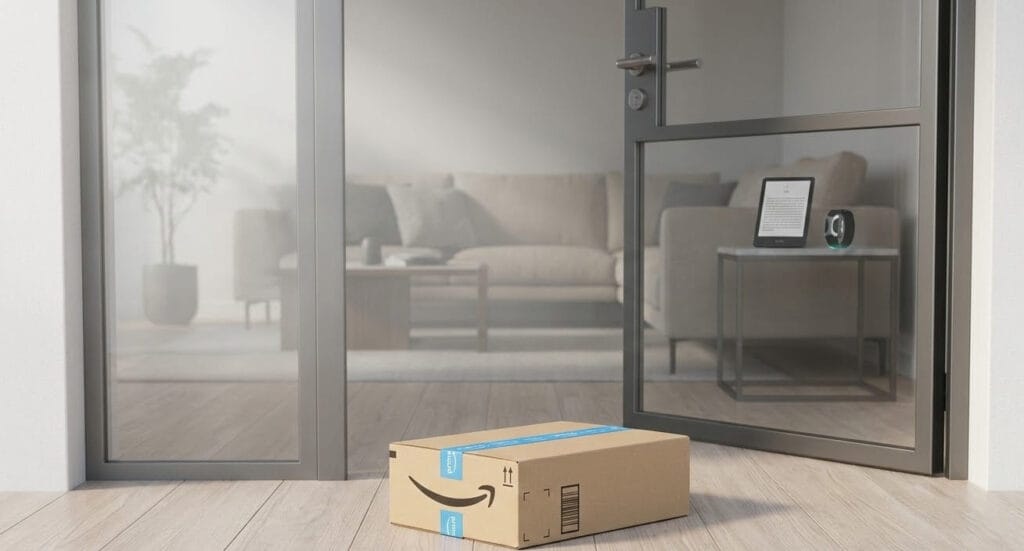
Household Ecology Decision Table
| Source of friction | Free first fix | Where Prime may help | Skip Prime if |
|---|---|---|---|
| Repeated household shopping trips | Create one weekly restocking list | Delivery of eligible recurring essentials | You order only occasionally |
| Urgent replacement purchases | Keep one backup of critical items | Faster eligible delivery in supported areas | Fast delivery encourages unnecessary buying |
| Too many entertainment subscriptions | Cancel services you rarely use | Prime Video may replace one existing service | You mainly watch content not included with Prime |
| Automatic evening scrolling | Choose one planned film, book, or playlist | Prime Video, Music, or Reading provide planned content | You continue browsing without limits |
| Household purchasing chaos | Use a shared list and fixed order day | One account can centralize eligible orders | Family members buy without coordination |
| Decision fatigue | Standardize frequently purchased products | Saved lists and repeat purchasing reduce searching | You spend hours comparing minor variations |
What Household Ecology Actually Means
In this guide, household ecology means the relationship between four parts of daily home life:
- Physical environment: clutter, storage, lighting, cleaning, supplies, and usable space.
- Household routines: shopping, cooking, laundry, maintenance, and restocking.
- Digital environment: notifications, subscriptions, entertainment, accounts, and shopping apps.
- Decision systems: how often you must remember, compare, replace, reorder, cancel, or solve the same problem.
A household becomes harder to manage when these systems do not connect. You buy duplicates because nobody checked the cupboard. You run out of basics because no restocking day exists. You pay for services nobody uses. You spend an evening comparing products that solve a minor problem.
The goal is not perfect organization. It is fewer repeated decisions.
For a similar approach to your digital environment, read our guide to digital detox and focus tools.
Reduce Household Friction Before Buying a Subscription
Prime cannot repair a household system that has no boundaries.
Before paying for another membership, make these free changes:
Create one household restocking list
Keep one shared list for toiletries, cleaning products, pantry items, pet supplies, batteries, and other repeat purchases. Do not keep separate lists across several apps and pieces of paper.
Choose one purchasing day
Unless something is genuinely urgent, place household orders once or twice per week. This reduces repeated browsing, packages, notifications, and small purchasing decisions.
Keep one backup of critical supplies
Maintain a single unopened backup of items that cause real inconvenience when they run out. Avoid turning this into bulk buying or storing months of products you may never use.
Review subscriptions every three months
Check video, music, reading, cloud storage, fitness, app, and delivery subscriptions. Cancel services that have not been used recently.
Use a 24-hour rule for non-essential purchases
Add the item to a list instead of buying immediately. Return the next day and ask whether it solves a recurring problem or simply looked attractive during a tired moment.
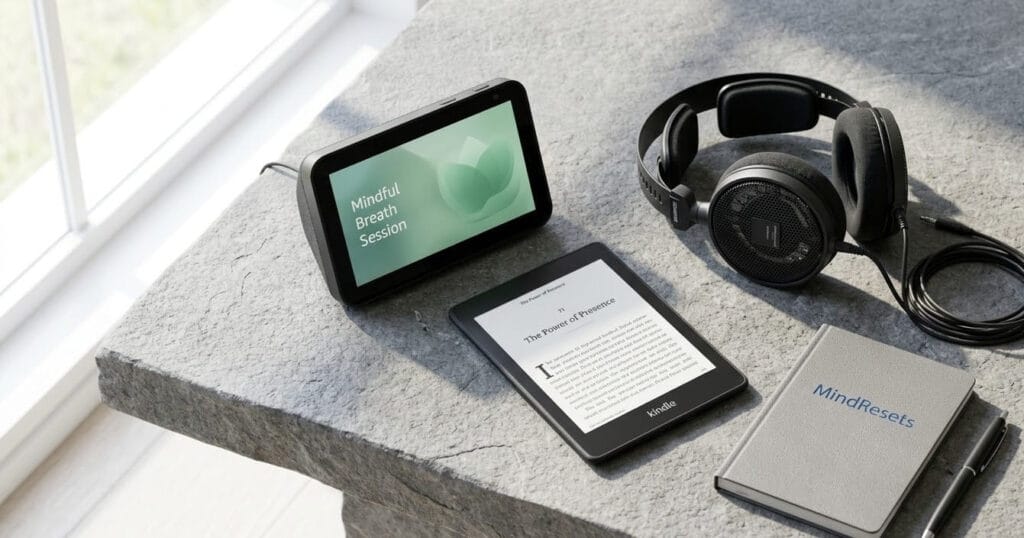
What Does Amazon Prime Actually Include?
Prime benefits vary by country, availability, device, and current membership terms. For readers using Amazon.com in the United States, the main relevant benefits include delivery, video, music, and reading.
Fast delivery on eligible items
Prime offers fast delivery on many eligible products. Delivery speed depends on the item, seller, stock, location, order time, and fulfilment method.
This can reduce friction when you repeatedly buy household basics. It does not mean that every Amazon product qualifies for free same-day, one-day, or two-day delivery.
Prime Video
Prime members receive access to a changing selection of included films and series. Some content contains limited advertisements, and other titles may require a separate rental, purchase, or channel subscription.
Prime Video may replace another subscription only when the included catalog matches what your household actually watches.
Amazon Music Prime
Music Prime includes a large ad-free music and podcast catalog, but it is not identical to Amazon Music Unlimited. Outside selected All-Access Playlists, playback may be shuffle-based and offer less direct control.
Do not join Prime only because an advertisement makes Music Prime sound identical to a full on-demand music subscription.
Prime Reading
Prime Reading provides access to a rotating selection of eBooks, audiobooks, magazines, comics, and other reading material. It is smaller and more limited than Kindle Unlimited.
It may be sufficient for occasional readers, but people looking for a particular book or a much larger catalog may still need to purchase titles or use another service.
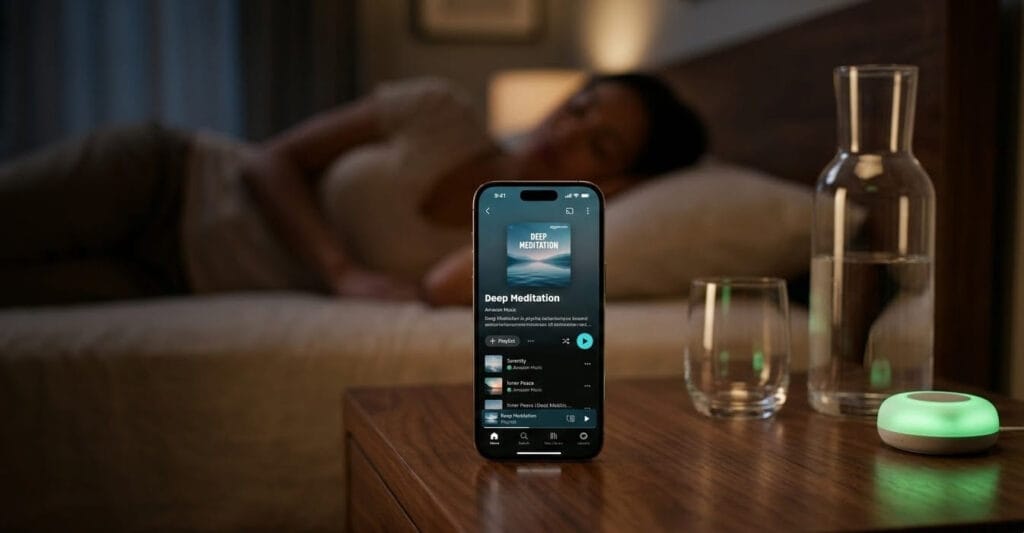
Can Prime Support a More Intentional Digital Routine?
Prime Video, Music, and Reading do not automatically create healthier digital habits. They are still digital services designed to keep people inside an ecosystem.
They become more useful when you use them intentionally:
- Choose a film before opening Prime Video.
- Create a short playlist instead of browsing music for twenty minutes.
- Select one Prime Reading title and finish it before downloading more.
- Turn off shopping and entertainment notifications you do not need.
- Do not combine television, phone scrolling, messages, and online shopping in the same evening.
The goal is planned consumption rather than endless selection.
For practical ways to break automatic feed checking, see our guide on how to stop doomscrolling.
How Amazon Prime Can Make Household Ecology Worse
Convenience is not always the same as simplicity.
Prime can increase household friction when it creates:
- more impulse purchases;
- duplicate household products;
- extra cardboard, packaging, and returns;
- several small deliveries instead of one planned order;
- shopping as an automatic response to boredom;
- paid channel subscriptions added through Prime Video;
- an unused membership that renews automatically;
- the belief that every small inconvenience needs a purchased solution.
A delivery membership saves time only when the time is not transferred into browsing, comparing, returning, unpacking, and managing unnecessary products.
Hidden Costs and Subscription Risks
- Membership renewal: monthly or annual fees continue until the membership is cancelled.
- Duplicate services: Prime Video, Music Prime, and Reading may overlap with subscriptions you already pay for.
- Paid content: not every film, channel, book, audiobook, or song experience is included.
- Impulse spending: fast delivery can reduce the pause between wanting and buying.
- Regional limitations: delivery speeds and digital benefits vary by country and location.
- Return friction: more orders can create more packaging, labels, drop-offs, and refund tracking.
- Seller variation: Amazon marketplace purchases may come from different third-party sellers.
- Notification overload: shopping recommendations, offers, and delivery alerts can add digital noise.
The 10-Minute Household Friction Audit
Use this audit before joining or renewing Prime.
- Open your orders from the previous three months.
- Count how many purchases were genuinely necessary.
- Identify repeat products that could go on one household list.
- Count products bought impulsively or returned.
- List every video, music, reading, delivery, and cloud subscription you currently pay for.
- Mark which Prime benefits would replace an existing cost.
- Mark which benefits sound attractive but are unlikely to be used.
- Decide whether monthly or annual commitment fits your uncertainty.
- Set one calendar date to review the membership again.
- Cancel if the service no longer replaces enough real friction.
This is a better decision method than joining because Prime promises convenience in general.

Who Should Consider Amazon Prime?
- Households that frequently order eligible everyday supplies.
- People in areas where Prime delivery is consistently useful.
- Families that will use several included benefits instead of paying for duplicates.
- Buyers who already maintain shopping lists and purchasing boundaries.
- People who can review and cancel subscriptions they no longer use.
- Households where delivery genuinely replaces repeated driving or urgent errands.
Who Should Skip Amazon Prime?
- People who order from Amazon only a few times per year.
- Buyers who routinely make impulsive late-night purchases.
- Households already paying for several unused digital subscriptions.
- People who prefer local shops, collection services, or other retailers.
- Anyone expecting Prime to reduce anxiety or fix an overwhelmed household.
- Buyers whose region receives little practical delivery advantage.
- People who dislike advertising, rotating catalogs, or shuffle-based music access.
Free and Lower-Cost Alternatives
- Use one weekly household shopping list.
- Combine purchases into one planned order.
- Use retailer click-and-collect services.
- Keep one backup of essential products.
- Borrow digital and physical books through your local library.
- Use free podcasts, radio, or owned music instead of another subscription.
- Rotate one streaming service at a time.
- Buy frequently used products locally when the price and convenience are better.
- Use browser bookmarks instead of keeping shopping apps on your home screen.
A subscription is not a household system. It is only one possible layer inside that system.
What We Could Verify
- Amazon lists fast delivery on eligible items among the main Prime benefits: official Prime benefits.
- Prime Video provides a changing selection of included titles and currently uses limited advertisements: official Prime page.
- Amazon Music Prime and Amazon Music Unlimited provide different levels of playback control and features: Amazon Music FAQ.
- Prime Reading provides a rotating catalog rather than unlimited access to every Kindle book: Prime Reading catalog.
- Prime benefits, prices, catalogs, delivery speeds, and regional access can change.
What We Could Not Verify
We could not verify that Amazon Prime reduces stress, improves mental health, saves a specific percentage of cognitive energy, changes cortisol or dopamine, improves nervous-system regulation, or produces a measurable therapeutic benefit.
We also could not verify how much money or time an individual household will save. Value depends on ordering habits, delivery availability, existing subscriptions, regional pricing, and whether convenience increases or reduces unnecessary purchasing.
FAQ
What is household ecology?
Household ecology is used here as a practical description of how your home environment, supplies, routines, digital services, subscriptions, and purchasing habits interact. It is not a medical or psychological diagnosis.
Can Amazon Prime reduce household stress?
Prime may reduce some logistical friction when delivery and digital benefits replace real errands or existing costs. It should not be expected to treat stress or improve mental health.
Is Prime worth it only for delivery?
It depends on your ordering frequency, regional delivery options, and the cost of alternatives. Review several months of actual orders rather than estimating from memory.
Is Amazon Music Unlimited included with Prime?
No. Music Prime is included with an eligible Prime membership, but Amazon Music Unlimited is a separate paid tier with broader on-demand control and additional audio features.
Is every Prime Video title free with Prime?
No. Some titles are included, while others require a rental, purchase, or additional channel subscription. The included catalog changes over time.
Is Prime Reading the same as Kindle Unlimited?
No. Prime Reading provides a smaller rotating selection included with Prime. Kindle Unlimited is a separate subscription with a much larger catalog.
What should I do before joining Prime?
Review your recent orders, delivery costs, existing subscriptions, return history, and actual use of streaming or reading services. Join only when the membership replaces enough real costs or repeated inconvenience.
Final Verdict: Build the System Before Buying the Service
Amazon Prime can support better household ecology when it replaces repeated errands, delivery charges, or digital subscriptions that your household already uses.
It is not automatically a good purchase. Fast delivery can reduce friction, but it can also accelerate impulse buying. Included media can replace other services, but it can also become another unused subscription.
Start with free systems: one shopping list, one order day, fewer subscriptions, one backup of essentials, and clear purchasing rules.
Then evaluate whether Prime makes that system easier.
The goal is not frictionless consumption. The goal is a home that requires fewer unnecessary decisions while still keeping you in control of what enters it.
For more practical tools that can simplify daily routines without adding unnecessary complexity, see our guide to smart gadgets for a quick mind reset.