Table of Contents
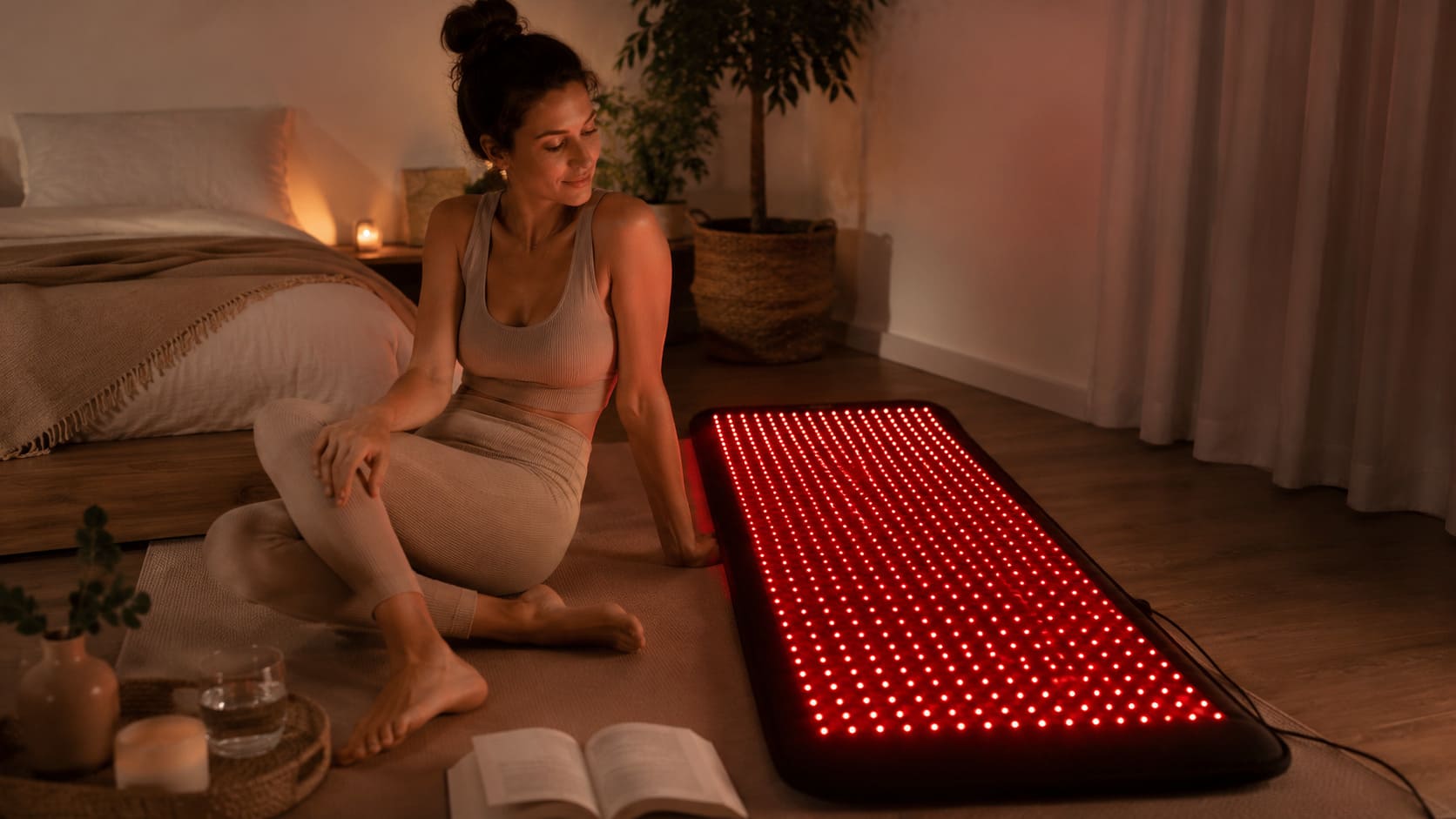
A full body red light therapy mat sounds like an easy upgrade: lie down, switch it on, and expose a larger body area to red and near-infrared light without standing in front of a panel. The harder question is whether that convenience is worth paying more than $1,000 for.
This research-based review examines the HigherDOSE Full Body Red Light Mat, including its 660nm and 850nm wavelengths, full-body coverage, setup, session options, buyer risks, warranty, and practical alternatives. The goal is not to promise pain relief, perfect sleep, or dramatic recovery. It is to help you decide whether this type of wellness device fits your routine and budget.
Affiliate disclosure: MindReset.org may earn a commission if you buy through our links. This does not increase your price and does not affect our editorial judgment.
Research note: We have not personally tested this product yet. This guide is based on official product specifications, public documentation, available photobiomodulation research, published buyer information, and comparison with other red light therapy devices.
What we assessed: wavelengths, listed irradiance, LED count, dimensions, session controls, purchase price, starter-kit contents, return policy, warranty, likely setup demands, and how the mat compares with a red light panel or light therapy bag.
What we could not independently verify: uniform light intensity across the entire mat, long-term comfort, real-world durability, controller reliability, customer support quality, medical-grade performance, or product-specific effects on pain, inflammation, sleep, cortisol, collagen production, and muscle recovery.
Health note: This article provides general buyer guidance, not medical advice, diagnosis, or treatment. Follow the manufacturer’s instructions and speak with a qualified professional if you have a medical condition, use photosensitizing medication, have unusual light sensitivity, or are unsure whether red light therapy is appropriate for you.
Quick Verdict
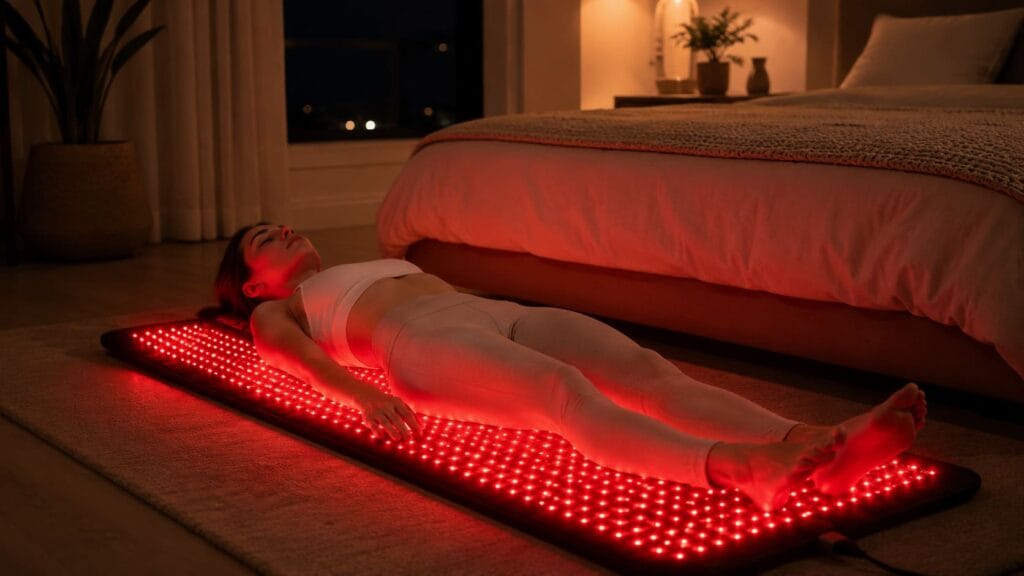
The HigherDOSE Full Body Red Light Mat makes the most sense for buyers who want a passive, direct-to-skin red light routine and have enough space to use a mat measuring almost 79 inches long. Its disclosed 660nm and 850nm wavelengths, 1,000 LEDs, multiple session times, and flexible design are meaningful advantages.
However, it remains a premium wellness purchase rather than a basic recovery necessity. The brand-reported 90 mW/cm² irradiance has not been independently verified for this review, the 40Hz setting should not be treated as proven brainwave control, and we could not verify FDA clearance for this specific mat. Buyers mainly interested in adjustable intensity, shorter targeted sessions, or a lower entry price may be better served by a red light panel.
| Buyer situation | Our recommendation | Why | Skip if |
|---|---|---|---|
| You want passive full-body coverage | Consider the HigherDOSE mat | You can lie directly on the mat instead of rotating in front of a panel | You do not have enough floor, bed, or wall space |
| You want the highest practical value | Compare the bundle and standalone price | The Starter Kit may temporarily cost less than the mat alone | You do not need the oil or cleaner |
| You want adjustable distance and intensity | Consider a light panel | A panel gives more control over positioning and treatment area | You dislike standing, sitting, or turning during sessions |
| You expect guaranteed pain relief or better sleep | Skip | Those outcomes are not guaranteed and were not independently verified | You are buying mainly to treat a medical problem |
| You already struggle to maintain wellness routines | Think carefully | A 20–60 minute device only works as a purchase if it is actually used | The mat is likely to stay stored under a bed |
Who Should Buy the HigherDOSE Full Body Red Light Mat?
- Buyers who want a low-effort, full-body red light therapy session while lying down.
- People who dislike standing in front of a red light panel and rotating the body between positions.
- Wellness enthusiasts who already use recovery tools consistently and have space for a large body mat.
- Buyers who value direct skin exposure, multiple session lengths, and both red and near-infrared light in one device.
- Households where more than one person may realistically use the mat.
Who Should Avoid It?
- Anyone expecting the mat to cure pain, inflammation, insomnia, fatigue, or another health condition.
- Buyers with limited storage space or no suitable bed, floor, couch, or wall area.
- People who are unlikely to maintain regular use of a 20–60 minute wellness device.
- Budget-focused buyers who only need targeted light for the face, knees, back, or another smaller area.
- Anyone who needs an FDA-cleared device for a specific medical indication.
What Is a Full Body Red Light Therapy Mat?
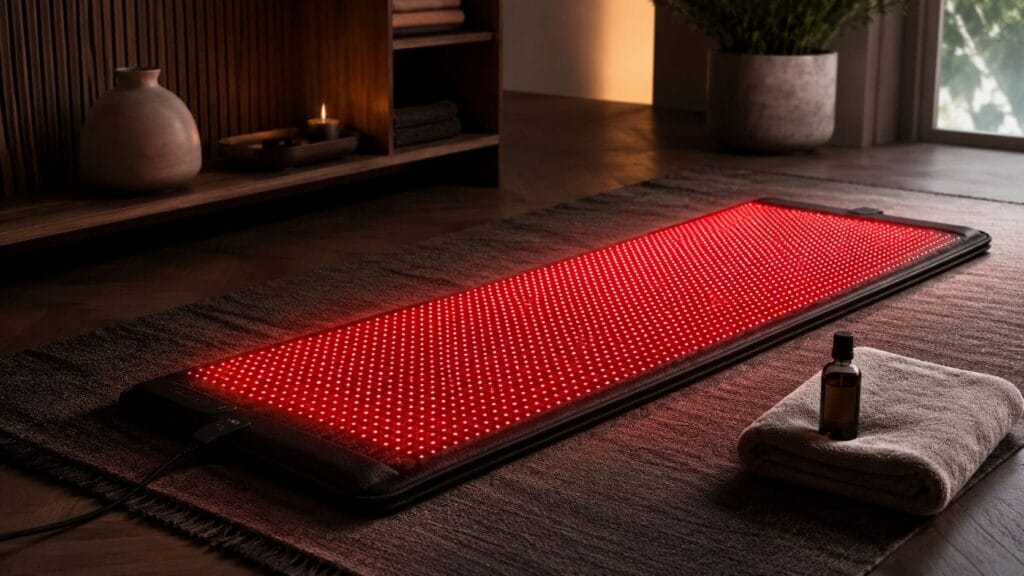
A red light therapy mat is a flexible LED device designed to expose a larger body area to specific light wavelengths. Instead of standing several inches away from a rigid light panel, the user lies on, under, or beside the mat.
The main attraction is convenience. A body red light therapy mat can provide broad coverage without asking the user to hold a handheld device or rotate every few minutes. This passive format may fit stretching, breathwork, reading, meditation, or a phone-free evening routine.
A mat is not automatically more effective than a panel. Results depend on light wavelengths, irradiance, exposure time, distance from the skin, treatment area, device construction, and whether the buyer uses it consistently. A large glowing surface can still be poor value if the manufacturer does not disclose meaningful specifications.
It is also important not to confuse a full-body red light therapy mat with an infrared sauna blanket or a HigherDOSE infrared PEMF mat. A sauna blanket is built around heat and sweating. A PEMF mat uses pulsed electromagnetic fields, often combined with heat. A red light mat uses LEDs to deliver red and NIR light.
HigherDOSE Full Body Red Light Mat: Key Specifications
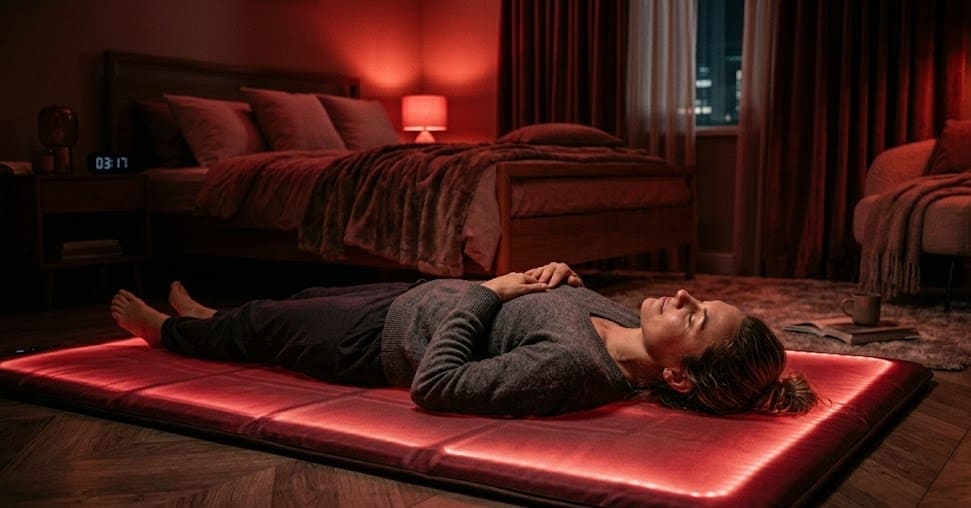
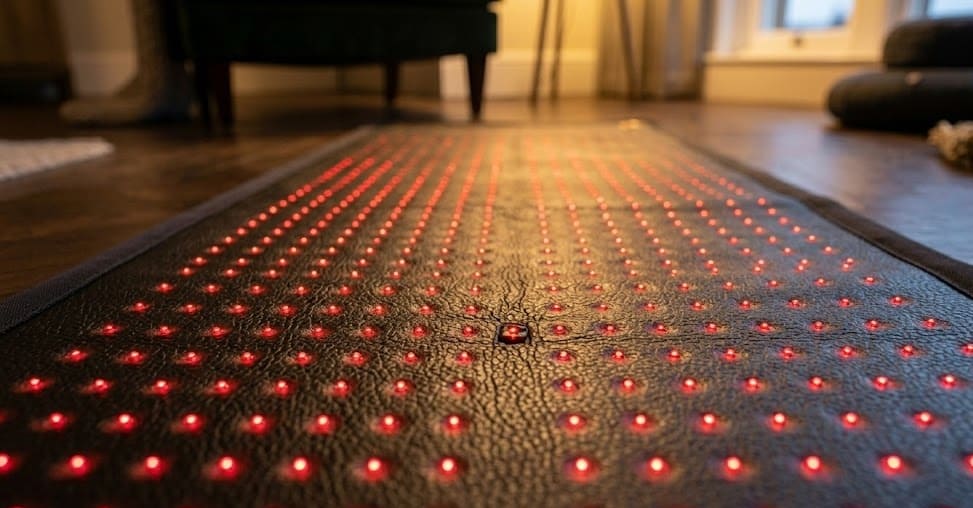
The HigherDOSE Full Body Red Light Mat is a flexible full-body device with a PU leather exterior and an embedded LED grid covered by silicone. It can be placed flat, draped over the body, or hung vertically, although direct skin exposure is the brand’s preferred setup for maximum light delivery.
| Specification | HigherDOSE Full Body Red Light Mat | Buyer interpretation |
|---|---|---|
| Red wavelength | 660nm | A commonly used visible red wavelength |
| Near-infrared wavelength | 850nm | Invisible NIR light commonly used in recovery-focused devices |
| Total LEDs | 1,000 | 825 single-chip 660nm LEDs and 175 dual-chip 660nm/850nm LEDs |
| Listed irradiance | 90 mW/cm² | Brand-reported; not independently measured for this review |
| Pulse option | 40Hz NIR pulsing | An optional pulsed mode, not proof of brainwave entrainment |
| Session lengths | 20, 30, 40, or 60 minutes | More flexible than a single fixed timer |
| Dimensions | 78.7 × 41.37 inches | Large enough for broad coverage but demanding to store and position |
| Power | USB-C to wall plug | No app, battery, or paid subscription required |
| Current listed price | $1,199 | Premium purchase; check current pricing before buying |

The specification list is more transparent than many generic red light mats. In particular, HigherDOSE discloses the wavelengths, LED configuration, irradiance, session times, dimensions, and materials. That does not independently prove the results promised in brand marketing, but it gives buyers more useful information than a product page that only talks about “powerful light energy.”
660nm and 850nm: What Do the Wavelengths Mean?
The mat combines 660nm red light and 850nm near-infrared light. These are two common wavelength ranges in consumer photobiomodulation devices, but they are not interchangeable.
660nm red light is visible and is commonly associated with skin-focused LED light therapy research. Some studies of red light protocols have reported changes in skin appearance, texture, and markers connected with collagen production. That does not mean every 660nm device will deliver the same skin health results.
850nm NIR light is invisible to the eye and generally penetrates tissue differently from visible red light. Research into near-infrared light therapy has explored exercise performance, muscle recovery, pain, and other applications. However, study devices, doses, treatment distances, and participant groups vary considerably.
The combination of red and near-infrared light gives the mat a broader use case than a single-wavelength skin device. Still, “deeper penetration” should not be translated into guaranteed deep-tissue healing or direct treatment of joints and organs.

What Can Full-Body Red Light Therapy Realistically Support?
The wider photobiomodulation literature gives buyers a reason to take red light therapy seriously, but not a reason to believe every marketing claim. Research has explored red and near-infrared light therapy for skin applications, exercise-related muscle recovery, inflammation markers, and certain pain conditions.
The main limitation is protocol dependence. Wavelength is only one variable. Light intensity, delivered dose, treatment time, distance, pulse pattern, frequency of use, body area, and the condition being studied can all affect an outcome.
For that reason, evidence supporting one clinical light device cannot automatically validate a flexible consumer mat. We did not find product-specific clinical evidence proving that the HigherDOSE mat:
- provides reliable pain relief;
- reduces inflammation in every user;
- controls cortisol;
- increases melatonin production;
- treats insomnia or burnout;
- entrains brainwaves through its 40Hz mode;
- guarantees faster muscle recovery;
- produces a measurable increase in collagen throughout the body.
A more realistic expectation is that the mat provides a convenient way to add red and NIR light exposure to a wellness or post-exercise routine. Some users may also find the quiet, screen-free session relaxing, but that experience should not be confused with a verified medical effect.
Buyers interested mainly in creating a calmer evening environment may also want to improve the surrounding routine with reduced screen exposure, lower room lighting, or appropriately chosen blue light blocking glasses. The mat does not cancel out every other part of an inconsistent sleep routine.
Red Light Therapy Mat vs Panel vs Light Therapy Bag
The best red light therapy mats are not automatically the best red light therapy devices for every buyer. The correct format depends on how much coverage, flexibility, control, and storage convenience you need.
| Device format | Main advantage | Main limitation | Best for |
|---|---|---|---|
| Full-body red light therapy mat | Passive direct-skin use and broad coverage | Large footprint and limited distance control | Buyers who want to lie down during a session |
| Red light panel | Adjustable distance, positioning, and targeted use | You may need to stand, sit, and rotate | Performance-focused buyers who want more control |
| Light therapy bag | Can surround more of the body at once | More enclosed, potentially less comfortable, and harder to clean | Buyers who specifically want a wraparound format |
| Compact red light device | Lower price and easy storage | Does not cover larger body areas | Targeted use for one area |
A panel is often the more rational purchase when light intensity, measured distance, and flexibility matter more than comfort. A red light therapy bag may provide light from more than one direction, but enclosed designs can add cleaning, heat, and fit concerns.
The HigherDOSE mat occupies the lifestyle-friendly middle ground. It gives more full-body coverage than a compact red light panel while feeling less enclosed than a red light therapy bag.

What Is It Like to Use This Full Body Mat?
The main appeal is simplicity. Place the mat on a suitable flat surface, connect it to power, choose a session length, and position the body for direct or close light exposure.
The available 20, 30, 40, and 60-minute therapy sessions give the user more flexibility than a device with one fixed program. Twenty minutes may fit a morning or post-workout routine, while longer options may suit buyers who want to combine a light session with stretching, reading, breathing exercises, or relaxation audio.
However, a nearly 79-inch body mat is not frictionless. Before buying, ask where it will be used, where it will be stored, whether it needs to be moved daily, and whether direct skin contact is realistic in that space.
A mat placed permanently on a spare bed or dedicated wellness area will probably be used more consistently than one that must be unpacked, flattened, cleaned, and stored after every session. Daily use is not automatically better, and buyers should follow the manufacturer’s instructions rather than trying to maximize exposure.
There is no app or subscription to manage. That is a genuine advantage for buyers tired of connected wellness products. The controls are physical, and the device is powered through a wall connection.
Price, Starter Kit, Warranty, and Hidden Costs
At the time of our latest check, the standalone HigherDOSE Full Body Red Light Mat was listed at $1,199. The Full Body Red Light Starter Kit was temporarily listed at $1,074, reduced from $1,343.
That unusual pricing means buyers should compare both pages before ordering. During a promotion, the kit may cost less than the mat alone while also including Daily Body Oil and High Maintenance Cleaner. Prices, bundle contents, promo codes, and availability can change without notice.
The oil and cleaner are optional accessories, not essential requirements for receiving red and near-infrared light. Do not assume that a cosmetic oil “activates” red light or is necessary for the mat to function. Buyers with sensitive skin should also evaluate body products separately rather than treating the bundle as automatically better.
| Cost or policy | Current buyer information | What to check before ordering |
|---|---|---|
| Standalone price | $1,199 at latest check | Current promotion and regional price |
| Starter Kit | Mat, Daily Body Oil, and cleaner | Whether the bundle is currently cheaper than the mat |
| Subscription | None required | No app or recurring software fee |
| Return window | 120 days from delivery for wellness technology | Product must return in acceptable, like-new condition |
| Return shipping | Prepaid label is currently stated | Regional conditions and return portal requirements |
| Warranty | One-year limited warranty | Exclusions, proof of purchase, country limitations, and home-use requirement |
| Commercial use | Not covered by the consumer warranty | Do not assume home warranty applies in a spa, gym, or clinic |
The 120-day return window reduces buyer risk, but this is not the same as a free trial without conditions. Returned technology must be in acceptable condition, and missing contents or damage can affect eligibility.
The one-year warranty covers qualifying defects in materials and workmanship under normal home use. It does not make the product medical grade, and commercial or institutional use may void coverage.
Customer Reviews: What Can Buyers Actually Trust?
Customer reviews can help identify practical patterns, but they should not be used as clinical proof. Statements such as “my pain disappeared,” “I slept deeply,” or “my inflammation went away” describe personal experiences that may be influenced by routine changes, expectations, concurrent treatments, exercise, or other factors.
For a premium full-body red light mat, the most useful review details concern:
- how easy the mat is to unpack and store;
- whether the controller and cable feel reliable;
- whether the surface is comfortable during longer sessions;
- whether the light appears evenly distributed;
- how easy the mat is to clean;
- how quickly customer support responds;
- whether the buyer continued using it after the first month.
The HigherDOSE website displays customer feedback, but we could not independently audit reviewer identity, long-term ownership, or whether all reviews were collected under the same conditions. Treat high ratings as one buyer signal, not a substitute for product specifications, return terms, and independent testing.
Pros and Cons
Pros
- Large full-body coverage
- 660nm red and 850nm near-infrared light
- Published LED count and irradiance specification
- 20, 30, 40, and 60-minute settings
- Can be used flat, draped, or hung
- No app or subscription
- 120-day return policy
- One-year limited warranty
- Starter Kit may offer better promotional value
Cons
- High purchase price
- Requires substantial use and storage space
- Brand-reported intensity was not independently verified
- No verified product-specific clinical trial found
- 40Hz mode should not be presented as proven brainwave control
- Benefits depend heavily on consistent use and protocol
- Not clearly FDA cleared as a specific medical device
- Direct skin use can create cleaning and privacy considerations

Alternatives to the HigherDOSE Full Body Red Light Mat
Do not buy a mat simply because a comparison article calls it one of the “5 best red light” products. Start by choosing the correct device format.
1. A Full-Size Red Light Panel
A red light panel is the strongest alternative for buyers who want adjustable distance, easier intensity comparisons, and the ability to target specific body areas. It may also deliver a more predictable dose when the manufacturer publishes irradiance at a clearly stated distance.
2. A Compact Red Light Panel
A compact red light device costs less, stores easily, and may be enough for a back, knee, shoulder, face, or small post-exercise area. The compromise is reduced coverage and more repositioning.
3. A Red Light Therapy Bag
A light therapy bag or wraparound device may expose more than one side of the body at once. The trade-off is a more enclosed experience, more surface contact, and potentially more complicated cleaning.
4. Other Full-Body Mats
Other products currently marketed in this category include the Nuvio Red Light Mat, Nicebeam Full Body Red Light Mat, and Megelin red light therapy bag. Do not assume that similar dimensions or red LEDs make them equivalent. Compare disclosed wavelength, light intensity, measurement distance, warranty, returns, electrical certification, and independent testing.
5. HigherDOSE Infrared PEMF Mat
The HigherDOSE Infrared PEMF Mat is a different type of wellness tool. It combines heat, PEMF settings, and a heavier mat format. Choose it for a heat-and-PEMF routine, not as a direct substitute for red and NIR light.
You can also compare the broader HigherDOSE bestseller bundles before committing to a single premium device.
Safety and Buyer Precautions
Red light therapy does not use ultraviolet light and is generally described as non-invasive when appropriate devices are used as directed. That does not mean every duration, intensity, or use case is suitable for every person.
- Read the product instructions before the first session.
- Begin with a conservative session rather than immediately selecting the longest option.
- Do not stare directly into bright LEDs.
- Ask a qualified professional about eye protection when appropriate.
- Check whether any medication or skincare product increases light sensitivity.
- Stop using the device if exposure causes unusual discomfort, irritation, headache, or other concerning symptoms.
- Do not use damaged cables, controllers, or modified electrical components.
- Keep the mat clean, dry, and used within the manufacturer’s published guidelines.
The mat should not replace medical assessment, physical rehabilitation, prescribed treatment, exercise, sleep hygiene, or other appropriate care. A wellness device is an optional support tool, not a rescue device for unexplained pain or persistent fatigue.
Frequently Asked Questions
Is the HigherDOSE Full Body Red Light Mat FDA cleared?
We could not verify FDA clearance for this specific full-body mat. HigherDOSE markets other FDA-cleared products, but regulatory status does not automatically transfer from one device to another. Buyers who require an FDA-cleared device should request the exact clearance number and intended-use documentation.
Does a red light therapy mat provide pain relief?
Photobiomodulation has been studied for certain pain conditions, but results depend on the condition and treatment protocol. This research-based review did not verify that the HigherDOSE mat reliably provides pain relief, and it should not be treated as a replacement for medical care.
Is 660nm red light and 850nm near-infrared light a good combination?
660nm and 850nm are common wavelengths of red and NIR light used in wellness and photobiomodulation devices. The combination offers both visible red and near-infrared light, but wavelength alone does not determine effectiveness. Dose, intensity, distance, coverage, and session consistency also matter.
Do you need direct skin contact?
HigherDOSE recommends direct skin exposure for its intended skin and recovery use cases. Clothing can block or reduce some light. Direct contact is not always necessary for every setup, but the amount of usable light reaching the body will depend on distance and barriers.
How long is a red light therapy session?
The mat provides 20, 30, 40, and 60-minute light session options. Longer is not automatically better. Follow product guidance and choose a schedule that remains realistic and comfortable.
Can you use the mat every day?
The product is designed for regular use, but an ideal schedule is not universal. Daily use should not be treated as necessary for best results, and buyers should avoid exceeding the manufacturer’s instructions in an attempt to accelerate outcomes.
Is the Full Body Red Light Starter Kit worth buying?
It may be the better purchase when a promotion makes the kit cheaper than the mat alone. Compare the current checkout price rather than assuming the bundle costs more. The oil and cleaner add convenience, but they are not required for the LEDs to operate.
Final Verdict: Is the HigherDOSE Mat Worth It?
The HigherDOSE Full Body Red Light Mat is one of the more interesting premium red light mats because it combines a large flexible surface, disclosed 660nm and 850nm wavelengths, 1,000 LEDs, multiple session times, and a straightforward no-app setup.
Its main advantage is not a guaranteed biological transformation. It is convenience. The mat allows a buyer to receive broad red and near-infrared light exposure while lying down, rather than standing in front of a light panel and changing position.
That convenience may justify the price for committed wellness buyers who have enough space, prefer passive routines, and understand that red light therapy may support some users without guaranteeing pain relief, better sleep, reduced inflammation, or faster muscle recovery.
For most budget-conscious buyers, a reputable panel remains the more practical starting point. It usually offers greater control, takes less floor space, and can target specific areas without requiring a four-figure investment.
Our decision: consider the HigherDOSE mat if full-body coverage and a lie-down format are the features you will genuinely use. Skip it if you are mainly responding to broad wellness claims or expect it to solve a medical problem. Before buying, compare the standalone mat with the Starter Kit because promotional pricing may make the bundle the better deal.