
Table of Contents
Creative flow is the experience of becoming deeply absorbed in making something while outside distractions fade into the background. It can happen while drawing, coloring, building, writing, arranging flowers, playing music, or working through a guided craft.
The difficult part is usually not “unlocking” a special brain state. It is getting past the blank page, excessive choice, perfectionism, phone interruptions, and projects that are either too easy to hold attention or too difficult to continue.
Quick verdict: To make creative flow more likely, lower the difficulty of the first step, choose a project with a clear next action, remove the phone from reach, and stop before the activity becomes exhausting. You do not need artistic talent, expensive supplies, or a therapeutic claim.
Health note: Creative hobbies may feel enjoyable, absorbing, or calming, but ordinary crafting is not a treatment for anxiety, depression, trauma, ADHD, insomnia, or another health condition. Seek qualified support when symptoms are persistent, worsening, or interfering with daily life.
What Does Creative Flow Mean?
Short answer: Creative flow is a state of strong involvement in an activity where attention is focused on the process and the next action feels clear.
Research commonly describes flow as deep absorption supported by clear goals, immediate feedback, and a workable balance between challenge and skill. The exact brain mechanisms remain under study, so it is safer to describe flow as a subjective experience rather than claim that one product switches off a particular brain region or releases a guaranteed combination of neurotransmitters.
A useful research overview is available through the National Library of Medicine article on attention restoration, flow, and creativity.
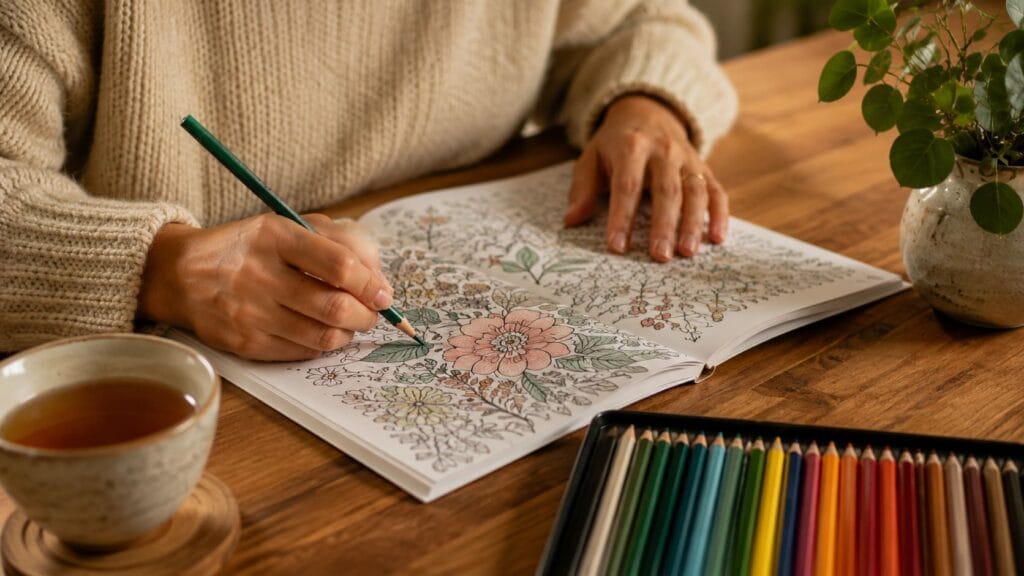
Creative Hobbies Are Not the Same as Art Therapy
Short answer: Coloring, drawing, LEGO building, and craft kits can be worthwhile hobbies, but they should not automatically be called art therapy.
The American Art Therapy Association defines art therapy as a mental health profession involving art-making, psychological theory, and a psychotherapeutic relationship. A coloring book or craft product does not become therapy simply because it is relaxing or creative.
See the official American Art Therapy Association explanation of art therapy.
On MindReset.org, we use terms such as creative hobby, low-pressure art activity, screen-free project, and guided craft unless a qualified art-therapy context is specifically being discussed.
Creative Flow Decision Table
| Your barrier | Best first approach | Why it may help | Skip if |
|---|---|---|---|
| A blank page feels intimidating | Use a coloring page, template, or guided build | The first action is already defined | Following instructions feels restrictive |
| You lose interest quickly | Choose a project with visible progress | Each small section provides feedback | The project requires hours before anything looks complete |
| You keep checking your phone | Use a 10-minute phone-free starting block | Removes the fastest competing stimulus | You need the phone for an urgent responsibility |
| Perfectionism stops you | Create something temporary | There is less pressure to preserve or display it | Temporary work feels frustrating rather than freeing |
| You have too many ideas | Set one material, one subject, and one time limit | Constraints reduce decision load | The rule removes the part you enjoy most |
| You feel mentally tired | Choose repetitive coloring, arranging, or building | The next action remains predictable | Fine detail causes strain or irritation |
| You want to learn a skill | Use a beginner kit with clear instructions | Provides a defined progression | The project is marketed as beginner-friendly but assumes prior knowledge |
1. Lower the Difficulty of the First Step
Do not begin with “make something creative.” That instruction is too broad. Define one physical action that takes less than a minute.
- Open the coloring book to the marked page.
- Place five LEGO pieces on the table.
- Draw one circle.
- Mix one paint color.
- Write one deliberately bad opening sentence.
- Thread the needle.
- Put the clay on the work surface.
The goal of the first step is not quality. It is movement. Once the materials are open and your hands are occupied, continuing becomes easier.
2. Choose a Project With Visible Progress
Projects are easier to continue when each short session leaves a visible result. This can be one colored section, one assembled flower, one stitched row, one completed miniature object, or one paragraph.
Visible progress matters more than the final object. A project that takes six weeks can still feel manageable when every session produces a clear change.
- Good fit: paint by numbers, embroidery sections, crochet rows, miniature rooms, flower building sets, simple pottery forms, or adult coloring.
- Harder fit: projects requiring long preparation before the first satisfying result.
For guided projects selected by skill level, time, and mess, compare our best craft kits for adults.
3. Use a 10-Minute Starting Window
A long creative session can feel impossible before it starts. Set a timer for 10 minutes and give yourself permission to stop when it ends.
Use this rule:
I only need to begin. Continuing is optional.
Stopping after 10 minutes is not failure. The session has already completed its job: you practiced beginning. Continue only when the activity still feels workable.
4. Remove the Phone From Reach
Creative flow has strong competition. Notifications, short videos, shopping tabs, and message previews provide immediate novelty with almost no starting effort.
For one short session:
- put the phone in another room;
- use airplane mode when safe;
- place it face down inside a drawer;
- turn off non-essential notifications;
- use a physical reference image instead of repeatedly unlocking the screen.
Keep essential calls available when you have medical, work, or caregiving responsibilities.
For a broader plan, read our guide on how to stop doomscrolling.
5. Copy Before Trying to Invent
Starting from a reference is not cheating. Copying a simple shape, following a tutorial, reproducing a color combination, or assembling a guided project reduces the number of decisions required at the beginning.
Try one of these:
- copy a leaf from a photograph;
- color an existing illustration;
- follow a basic origami diagram;
- rebuild a small model from instructions;
- write a paragraph in the structure of one you admire;
- arrange materials in the same order as a tutorial.
Once you are moving, change one detail. That small choice begins the shift from reproduction to personal expression.
6. Use Constraints Instead of Unlimited Choice
Too much freedom can make a creative activity harder. A useful constraint removes options without controlling the whole result.
- Use only three colors.
- Draw only objects on the table.
- Build with 20 pieces.
- Write exactly 100 words.
- Photograph only shadows.
- Create for 15 minutes.
- Use only paper already in the home.
The constraint should create direction, not punishment. Change it when the rule makes the activity less interesting.
7. Create Something You Do Not Need to Keep
Perfectionism becomes stronger when every mark feels permanent, public, or expensive. Temporary work lowers the stakes.
- draw with water on a Buddha Board;
- make a small clay form and reshape it;
- arrange leaves or stones, then return them;
- build a temporary block structure;
- write on scrap paper;
- make a digital sketch you do not publish.
The work can disappear and still have been worthwhile. The session is the activity; the object is optional.
8. Choose Materials That Feel Good to Use
Creative tools do not need to trigger a physiological reset to be useful. Texture, resistance, color, sound, and ease of handling can influence whether you want to continue.
- Choose pencils that do not require heavy pressure.
- Use larger handles when fine grips are uncomfortable.
- Select low-mess materials when cleanup prevents you from starting.
- Use a stable work surface and suitable lighting.
- Choose materials that fit your strength, vision, mobility, and available space.
For additional screen-free sensory options, see our guide to sensory and tactile activities.
9. Stop Before the Activity Becomes Exhausting
Flow can make time less noticeable, but longer is not always better. Stop while you still know what the next action will be.
Pause when you notice:
- hand, neck, back, or eye strain;
- irritation replacing interest;
- rushing to finish;
- repeated mistakes caused by fatigue;
- skipping food, medication, sleep, or necessary responsibilities;
- the activity becoming another performance test.
Leaving one easy step unfinished can make tomorrow’s session easier to begin.
10. Prepare the Next Starting Point
Before stopping, spend one minute making the next session obvious.
- Mark the next coloring section.
- Place the next LEGO bag beside the instructions.
- Leave the correct pencil on top of the book.
- Write one sentence explaining the next step.
- Put the materials together in one tray or box.
- Photograph the setup before clearing the table.
A clear restart point reduces the friction of returning.
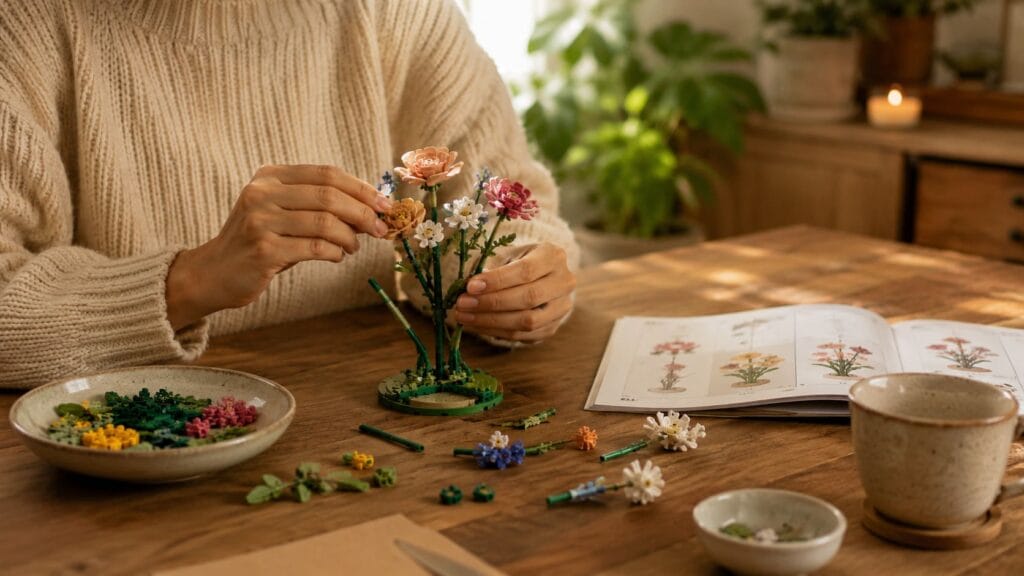
What to Do When Perfectionism Takes Over
Perfectionism often appears before the skill needed to produce the imagined result. The answer is not to convince yourself that every result is excellent. Lower the consequence of making an imperfect result.
- Use cheaper practice paper.
- Make three fast versions instead of one “important” version.
- Choose a temporary medium.
- Do not post the work online.
- Set a time limit before starting.
- Copy a simple reference.
- Leave one small mistake unchanged.
- Define success as completing the session, not producing a display piece.
When thoughts remain crowded rather than perfectionistic, our brain dump guide may provide a clearer first step.
Optional Tools That May Reduce Starting Friction
You do not need to buy anything to practice creative flow. The following products are included because each solves a specific starting problem. They are not therapy devices and do not guarantee calm, focus, dopamine release, or nervous-system regulation.
MindReset.org may earn a commission if you buy through our links. This does not increase your price and does not affect our editorial judgment.
As an Amazon Associate, we earn from qualifying purchases.
Research note: We have not personally tested every product below. This section is based on official product information, available specifications, buyer feedback, and comparison with similar creative tools.
Original Buddha Board — Best for Temporary Drawing
The Original Buddha Board is designed for painting with water. The marks gradually disappear as the surface dries, leaving the board ready for another drawing.
- Best for: people who freeze when a drawing feels permanent.
- Why it may help: no paint, ink, color selection, or finished object is required.
- Skip if: you want to preserve, frame, scan, or share your work.
- Hidden cost: limited creative range compared with paper and ordinary art supplies.
Johanna Basford Rooms of Wonder — Best for Guided Coloring
Rooms of Wonder provides detailed pre-drawn interiors and objects, so the user can begin with color selection rather than an empty page.
- Best for: adults who enjoy fine detail and want a clear starting structure.
- Why it may help: the illustration supplies boundaries while leaving color choices open.
- Skip if: intricate pages cause eye strain, hand fatigue, or frustration.
- Hidden cost: pencils or pens are sold separately.
Faber-Castell Polychromos — Best Premium Pencil Upgrade
Polychromos are artist-grade colored pencils known for strong pigments, smooth color application, and broad color availability. A small starter set is usually enough for casual coloring or drawing.
- Best for: users who already know they enjoy colored-pencil work.
- Why it may help: consistent application can reduce frustration caused by weak or scratchy pencils.
- Skip if: you are unsure whether coloring will become a regular hobby.
- Hidden cost: large sets are expensive and unnecessary for beginners.
LEGO Wildflower Bouquet — Best Guided Build With a Display Result
LEGO Wildflower Bouquet 10313 is an adult building set with 939 pieces and adjustable flower stems. The instructions provide a clear sequence, while the finished stems can be rearranged for display.
- Best for: adults who prefer construction and instructions to drawing.
- Why it may help: every completed section provides visible progress and the final result has a practical display use.
- Skip if: repetitive assembly, small pieces, or detailed instructions feel tiring.
- Hidden cost: a vase is not included, and the set has limited replay value unless you rebuild or rearrange it.
What We Could Verify
- Flow research commonly describes focused absorption, clear goals, feedback, and a workable challenge-skill balance.
- Art therapy is a mental health profession and should not be used as a casual synonym for adult coloring or crafting.
- The Original Buddha Board uses water and the marks disappear as the surface dries.
- Rooms of Wonder is a detailed coloring book featuring imagined interior spaces and hidden elements.
- Faber-Castell markets Polychromos as artist-grade colored pencils with high-quality pigments and smooth color application.
- LEGO Wildflower Bouquet 10313 is an 18+ set with 939 pieces, eight flower types, and adjustable stems.
What We Could Not Verify
- That any one product reliably produces creative flow.
- That these activities deactivate a specific brain region.
- That a product predictably releases dopamine, anandamide, or another neurotransmitter.
- That coloring, building, drawing, or tactile play directly lowers heart rate or cortisol for every user.
- Long-term durability and comfort of every product under regular use.
- Whether a particular hobby will feel calming, engaging, boring, or frustrating for an individual buyer.
What Creative Activities Cannot Replace
Creative hobbies can be valuable without being medical care. They do not replace:
- assessment by a qualified clinician;
- evidence-based treatment for mental health symptoms;
- professional art therapy delivered by a trained practitioner;
- changes to unsafe, exhausting, or harmful circumstances;
- sleep, nutrition, medication, rehabilitation, or other necessary care;
- urgent support during a crisis.
When creativity feels impossible because of persistent low mood, major anxiety, trauma symptoms, loss of interest, sleep disruption, or difficulty functioning, the problem may require more than a better set of pencils.
FAQ
How do I get into creative flow?
Choose a manageable project, define the first physical action, remove obvious distractions, and use a short starting window. Flow cannot be forced, but these conditions may make sustained involvement more likely.
Do I need artistic talent?
No. Guided building, coloring, arranging, tracing, collage, and beginner craft kits all provide creative choices without requiring advanced drawing skills.
Is adult coloring art therapy?
Not by itself. Adult coloring is a creative hobby. Art therapy is a mental health profession involving a trained practitioner, art-making, psychological theory, and a therapeutic relationship.
What is the easiest creative activity to start?
A coloring page, simple collage, guided LEGO build, paint-by-number section, or water drawing board can be easier than starting with an empty page because the first action is already defined.
How long should a creative session last?
Ten to twenty minutes is enough for a starting session. Continue when you remain comfortable and interested. Stop when strain, irritation, or fatigue begins replacing engagement.
Can creative flow reduce stress?
Some people find absorbing creative activities enjoyable or calming, but the response varies. A hobby should not be presented as guaranteed stress treatment or nervous-system regulation.
What should I buy first?
Use materials already available before buying premium supplies. When you know which activity you enjoy, choose the tool that removes a real barrier: a guided book for blank-page anxiety, better pencils for frustrating color application, or a structured kit for unclear next steps.
Final Verdict: Make Starting Easier
Creative flow is not a product feature and cannot be guaranteed by a fidget, coloring book, building set, or premium pencil. The most useful tools are the ones that reduce a specific obstacle between you and the activity.
- Lower the difficulty of the first step.
- Choose visible progress.
- Begin with 10 minutes.
- Remove the phone from reach.
- Copy before inventing.
- Use helpful constraints.
- Try temporary work.
- Choose comfortable materials.
- Stop before exhaustion.
- Prepare the next starting point.
Start with what you already own. Buy something only when it makes beginning, continuing, or handling the materials meaningfully easier.
For a broader set of guided, screen-free projects, continue with our comparison of craft kits for adults. For a lower-pressure approach to daily routines, read our slow living guide.