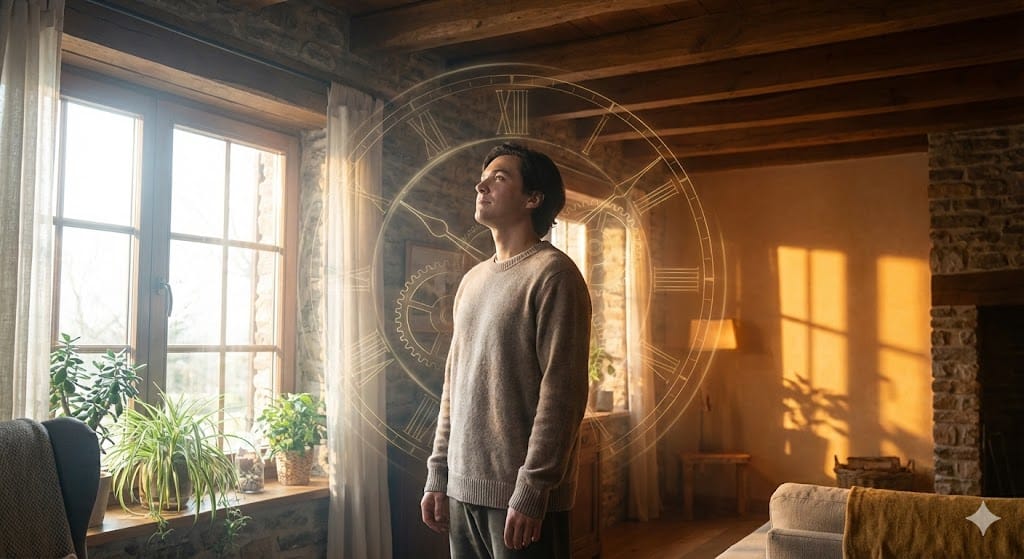
The Biological Clock of 2026
Understanding the relationship between biorhythms and light is the most powerful biohack you can implement in 2026 to reclaim your natural energy. We spend our days in dimly lit offices and our nights under the harsh glare of artificial blue light. This disconnect is the root cause of many “unexplained” symptoms: chronic fatigue, insomnia, and low mood. Understanding the relationship between biorhythms and light is the most powerful biohack you can implement to reclaim your natural energy.
The Master Clock: Circadian Rhythms Every cell in your body has a clock. These clocks are synchronized by a “Master Clock” in your brain called the Suprachiasmatic Nucleus (SCN). The primary signal that sets this clock is light. When light hits your eyes, it sends a direct message to your brain to either produce cortisol (the alertness hormone) or melatonin (the sleep hormone). If your light exposure is inconsistent, your “internal clock” becomes desynchronized, leading to what scientists call “social jetlag.”
The Importance of Morning Sunlight The first 30 to 60 minutes after waking up are critical. Exposure to natural sunlight (even on a cloudy day in Edinburgh) triggers a massive release of cortisol. This isn’t the “stress cortisol” you feel during a deadline; it’s the “alertness cortisol” that wakes up your brain and sets a timer for melatonin production 14-16 hours later. If you miss this morning light, your body won’t know when to start its “sleep countdown,” leading to restless nights.
The Edinburgh Light Challenge: Biohacking in Low-Light Environments Living in higher latitudes like Edinburgh, managing your biorhythms and light exposure becomes a tactical necessity rather than a luxury. During winter months, when natural sunlight is scarce, your suprachiasmatic nucleus (SCN) lacks the primary signal it needs to suppress melatonin. This often results in “social jetlag” and chronic fatigue.
To counteract this, 2026 biohacking protocols suggest using high-lux SAD lamps within 30 minutes of waking. This artificial stimulus mimics the solar spike, effectively “resetting” your internal master clock. By being intentional with your biorhythms and light consumption, you ensure that your cortisol levels peak in the morning and your body begins melatonin production at the correct time, regardless of the grey Scottish sky outside.

The Blue Light Danger At the other end of the spectrum is the blue light from our smartphones and laptops. Blue light mimics the high-intensity light of the midday sun. When you look at a screen at 10 PM, you are essentially telling your brain that it is noon. This suppresses melatonin production by up to 50%, making it nearly impossible to enter the deep, restorative stages of sleep.
The Mind Reset Light Protocol
- View Sunlight Within 30 Minutes of Waking: Spend at least 10 minutes outside. Do not wear sunglasses; the light needs to reach your retinal cells.
- The “Afternoon Anchor”: Get another 10-15 minutes of sunlight in the late afternoon. This low-angle sun helps reinforce the “end of day” signal to your brain.
- Low and Warm After Sunset: After 8 PM, switch to warm, amber lighting. Use salt lamps or smart bulbs with “candlelight” settings.
- The Screen Blackout: No screens 60 minutes before bed. If you must use a device, use heavy red-light filters or “night shift” modes.
Conclusion
You are a biological being in a digital world. By aligning your habits with your biorhythms and light, you stop fighting against your own biology and start working with it. This is the foundation of energy management. Respect the sun, embrace the dark, and watch your focus transform.
Recommendation: Managing light is the first step to a perfect night. For a complete strategy, read our guide on the Evening Wind-down Routine.