Table of Contents
Blue light blocking glasses are sold for two very different reasons: making screen use more comfortable during the day and reducing evening light exposure before sleep.
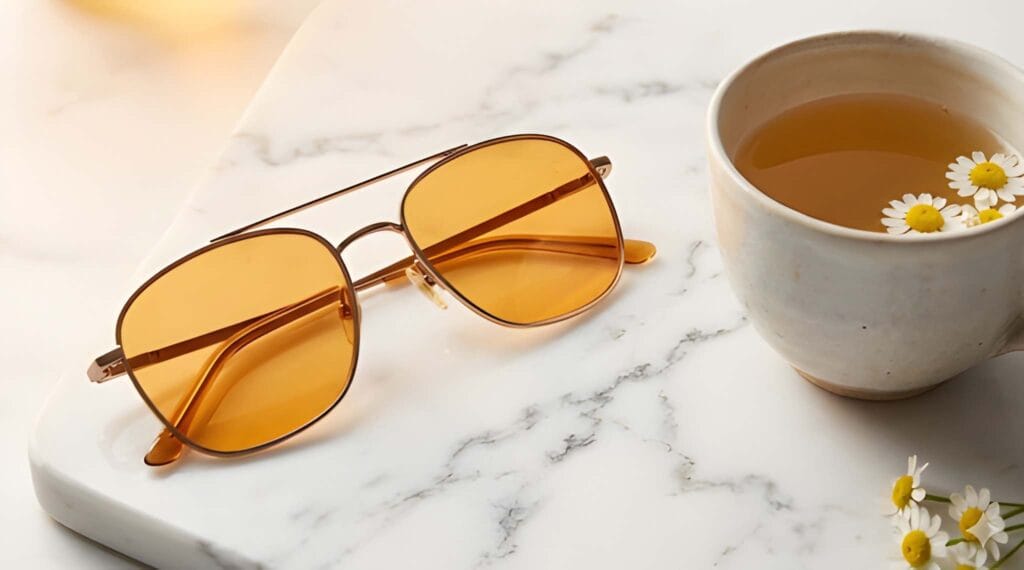
Those goals require different lenses. Nearly clear blue light glasses may preserve normal color perception for office work, while amber or orange glasses for sleep block more blue light and noticeably change how the room looks.
This research-based buyer guide explains which claims are reasonable, which are mostly marketing, how to compare the percentage of blue light filtered, and whether premium options such as Swanwick Sleep Swannies justify their higher price.
Affiliate disclosure: MindReset.org may earn a commission if you buy through our links. This does not increase your price and does not affect our editorial judgment.
Research note: We have not personally tested every pair in this guide. This article is based on current product specifications, official documentation, peer-reviewed research, systematic reviews, available user feedback, and comparison between similar products.
Health note: Blue light blocking glasses are consumer eyewear, not a treatment for insomnia, depression, anxiety, burnout, eye disease, or sleep and circadian disorders. Persistent poor sleep, headaches, eye pain, or vision changes should be discussed with an appropriate healthcare professional.
Quick Verdict: Do Blue Light Blocking Glasses Work?
For digital eye strain: ordinary blue light filtering lenses are not strongly supported by current evidence. Dryness, reduced blinking, glare, screen distance, uncorrected vision, and long periods without breaks are often more important than the amount of blue light emitted by a computer.
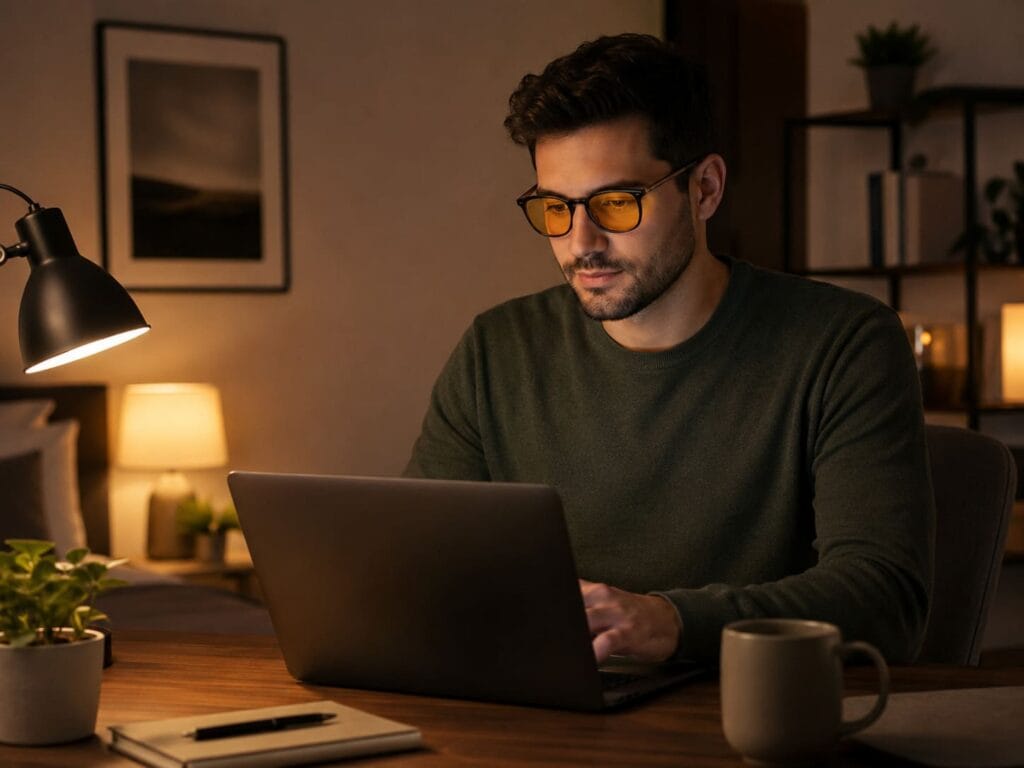
For evening light exposure: deep amber blue-blocking glasses may be useful for some people who continue using screens or bright artificial light before bed. Small studies suggest that evening wear of blue-blocking glasses can reduce the alerting effect of blue-enriched light and may help certain users prepare for sleep. Results are not consistent enough to promise better sleep for everyone.
Best use case: you cannot reliably dim the room, stop evening screen use, or reduce light exposure in the evening through simpler methods.
Skip them if: you expect clear daytime computer glasses to cure eye strain, or expect amber glasses at night to fix a complex sleep problem by themselves.
MindReset verdict: buy according to lens purpose, transmission data, comfort, and fit—not vague claims about detoxification, nervous system recovery, or guaranteed sleep improvement.
Who Should Consider Blue Light Glasses?
- People who must work, study, or use bright screens late in the evening.
- Shift workers trying to control light exposure before their planned sleep period.
- Travellers adjusting their evening light routine after crossing time zones.
- People who cannot replace strong white light with warmer, dimmer lighting at home.
- Users who have already improved screen distance, blinking, breaks, and room lighting but still want to test a light filtering tool.
- People who understand that glasses may support one part of a sleep routine without treating the underlying cause of poor sleep.
- Prescription glasses users who need fitovers, clip-ons, or custom prescription lenses.
The strongest case is practical. A pair of blue light-blocking glasses for sleep can reduce selected light wavelengths without requiring every lamp, television, phone, or family member in the room to change.
Who Should Skip Blue Light Blocking Glasses?
- Anyone expecting them to treat a sleep disorder without professional assessment.
- People whose main problem is dry eyes caused by low blink rate and long screen sessions.
- Buyers who can simply dim lights, stop using screens, or change their evening environment for free.
- Drivers or workers who need accurate color discrimination while wearing dark amber or red lenses.
- People who find tinted glasses uncomfortable, disorienting, or headache-provoking.
- Anyone shopping for blue light eyewear based only on a vague “blocks blue light” label.
- Buyers who assume the darkest lens is automatically the best blue light option for every time of day.
How Blue Light Exposure Affects Sleep and Circadian Rhythms
Blue light is part of the visible light spectrum. It is not inherently harmful, and blue light during the day plays a useful role in daytime alertness and circadian timing.
The light emitted by the sun is far brighter than the light emitted by a phone, tablet, or laptop. Natural blue light during the morning and daytime helps provide a strong timing signal to the body.
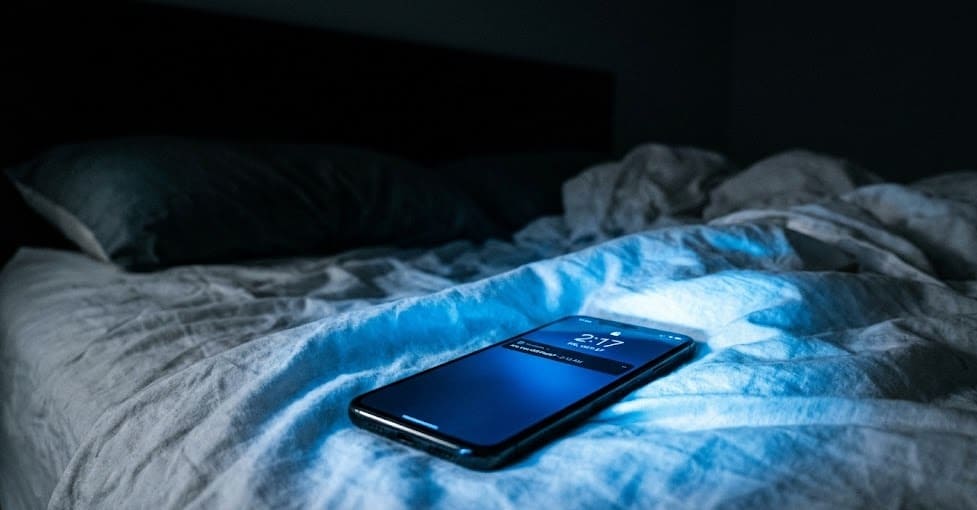
The issue is timing. Bright evening light can delay the body’s transition toward night, especially when the light source is close to the eyes and contains short blue wavelengths. Screens, cool-white LEDs, televisions, and overhead bulbs are common sources of blue light, but total brightness, duration, distance, and timing also matter.
This is why “blue light from your devices” is only part of the picture. A bright ceiling fixture may create more total light exposure than a dim phone with a warm screen setting.
Glasses are only one way to manage evening brightness. Our guide to light environment tools for evening wind-down compares warm lamps, brighter daytime lighting, screen-comfort tools, and products that are mostly unnecessary.
Blue light suppresses melatonin under certain laboratory conditions, but consumer advertising often ignores intensity. The levels of blue light emitted by a small screen at low brightness are not equivalent to high-intensity laboratory light or outdoor daylight.
Can Blue Light Blocking Glasses Improve Sleep?
The evidence is mixed rather than useless.
A 2023 Cochrane review assessed blue light-filtering spectacle lenses for visual performance, eye strain, macular health, and sleep. Across the available sleep trials, some reported improvement and others found no meaningful difference. The certainty of the evidence was very low because studies were small and used different populations, lenses, schedules, and outcome measures.
Other reviews focused specifically on evening wear of blue-blocking glasses have been more positive, particularly in studies involving insomnia symptoms, delayed sleep phase, shift schedules, or strong evening light exposure. However, that does not prove that every commercial pair will improve your sleep.
A small randomized crossover trial involving people with insomnia symptoms found that amber-tinted lenses worn for two hours before bedtime improved several sleep outcomes compared with clear placebo lenses. The study included only 14 people, so the result should be treated as promising rather than definitive.
Another controlled study found that blue blocking glasses reduced evening melatonin suppression and alertness caused by an LED screen, but did not produce clear changes in measured sleep stages the following night.
If room light, window light, noise, or bedroom temperature is the larger problem, start with our sleep-friendly bedroom setup guide before spending premium money on glasses.
Practical interpretation: blue-blocking glasses for sleep may be worth testing when evening light is an obvious problem. They should not be presented as a guaranteed way to sleep better or as a replacement for consistent wake time, appropriate morning light, a dark bedroom, and treatment of medical sleep problems.
Read the underlying evidence in the Cochrane review of blue light-filtering lenses and the review of blue-blocking glasses for sleep and mood.

Do Blue Light Glasses Reduce Digital Eye Strain?
Current evidence does not show a reliable advantage for ordinary blue light glasses over standard non-filtering lenses for short-term computer eye strain.
The American Academy of Ophthalmology does not recommend special blue light computer glasses solely to prevent digital eye strain. Common causes include reduced blinking, incomplete blinking, dry air, glare, uncorrected vision, poor contrast, screen distance, and hours of continuous near work.
Clear lenses may still feel more comfortable if they include a useful prescription, anti-reflective coating, appropriate magnification, or glare reduction. That comfort should not automatically be attributed to blue light filtering.
Claims that clear lenses effectively block all blue light are especially misleading. A lens that remains nearly colorless must continue transmitting much of the visible light spectrum.
Better first steps include:
- taking regular visual breaks;
- blinking fully and frequently;
- increasing text size;
- reducing reflections and glare;
- matching screen brightness to the room;
- keeping an appropriate viewing distance;
- checking whether prescription glasses need updating;
- discussing persistent dryness or pain with an eye-care professional.
If the real issue is excessive screen use rather than the lens itself, these digital detox tools for reducing screen time may provide more practical value than another pair of computer glasses.
See the American Academy of Ophthalmology guidance on blue light glasses.
Daytime Blue Light Glasses vs Glasses for Sleep
| Lens type | Best use | What it does | Main limitation |
|---|---|---|---|
| Clear or nearly clear | Office work and daytime screens | May reduce glare or filter a small amount of short-wavelength light | Usually does not block enough evening blue light for a strong nighttime effect |
| Light yellow | Late afternoon or early evening | Reduces some blue wavelengths while preserving more natural color | May not block more blue light where a buyer needs strong nighttime filtering |
| Deep amber or orange | One to two hours before bed | Filters a much larger amount of blue and some green light | Strong color distortion and reduced suitability for driving |
| Deep red | Maximum evening filtering | Lenses block more blue light and a larger part of the green spectrum | Severe color distortion and limited practical use |
Daytime blue light glasses and nighttime glasses are not interchangeable. Dark glasses during the day may reduce useful daytime light signals and make indoor environments feel unnecessarily dim. Clear glasses at night may not reduce enough of the relevant evening light.
A three-stage system—clear for daytime, yellow for transition, and amber for bedtime—is convenient for enthusiasts, but most buyers do not need three expensive pairs. One well-fitted amber pair plus sensible lighting may be enough.
Clear, Yellow, Amber, and Red Lenses Compared
Lens color provides a useful clue, but it is not a substitute for a transmission report.
Two lenses can look similar while filtering different wavelengths of light. Coatings, dye concentration, lens thickness, and manufacturing tolerances affect the amount of blue that reaches the eye.
When shopping for blue light glasses, look for:
- a graph showing transmission across the visible light spectrum;
- the wavelength range tested;
- the percentage of blue light blocked at each relevant range;
- independent laboratory testing rather than a colored marketing chart;
- separate specifications for daytime and nighttime lenses;
- clear information about color distortion and intended use.
The phrase “blocks 99%” means little without a range. Blocking 99% at 400 nanometers is different from blocking 99% across 400–500 nanometers.
Similarly, listings that use awkward phrases such as “lens blue light glasses” or “advanced blue light-filtering technology” without publishing measurements should not be treated as evidence.
What Wavelengths Should Blue-Blocking Glasses for Sleep Filter?
The human circadian system responds strongly to short-wavelength light, but it does not operate with a single hard cutoff. Sensitivity extends across overlapping blue and blue-green light wavelengths.
Many nighttime brands target approximately 400–500 nanometers, while darker red or amber-tinted lenses block more blue and may extend farther into green wavelengths.
A buyer does not necessarily need to filter out the blue portion of every light source completely. The appropriate level depends on:
- how bright the room is;
- how close the light source is;
- how much exposure to blue light occurs before bed;
- whether screens remain on;
- how sensitive the user is to evening light;
- the desired sleep phase and bedtime;
- whether accurate color perception is still required.
Amber-tinted lenses block more blue than nearly clear lenses, but maximum filtering also creates maximum color distortion. That trade-off is central to choosing glasses for sleep.
Shopping for Blue Light Glasses: What Actually Matters?
1. Choose the Intended Time of Use
Do not buy one pair for every situation unless the brand provides interchangeable lenses. Glasses during the day should preserve normal visibility and color. Glasses in the evening can use a stronger tint because their goal is reducing evening light.
2. Check the Transmission Spectrum
The best blue light blocking glasses provide real transmission information. Avoid relying only on phrases such as “high protection,” “digital defense,” or “blocks harmful light.”
3. Check Fit and Side Coverage
A narrow fashion frame can allow considerable light around the lens. Large lenses, close fit, or wraparound coverage may be more useful when the goal is controlling evening light exposure.
4. Compare Comfort and Weight
The best blue light glasses are useless if pressure on the nose, ears, or temples makes you remove them after ten minutes. Check lens width, bridge width, temple length, total frame width, and available sizes.
5. Check Prescription Options
Prescription glasses, fitovers, readers, and magnetic clip-ons are available. Prescription orders often cost more and may have stricter return terms, so verify the policy before buying.
6. Check Returns Before Opening the Package
Fit and color distortion are personal. A return period is especially important when buying dark lenses online.
What Are the Best Blue Light Glasses for Different Buyers?
| Buyer | Best lens type | Why | Skip if |
|---|---|---|---|
| Daytime office worker | Clear lens with anti-reflective coating and correct prescription | Preserves color and may improve screen comfort | You expect it to improve sleep |
| Late-night screen user | Deep amber blue light-blocking glasses | Reduces stronger evening blue light exposure | You can stop screen use and dim the room instead |
| Prescription wearer | Fitover, clip-on, or custom prescription lens | Avoids stacking poorly fitted frames | Return terms are unclear |
| Color-sensitive work | Clear or light yellow lens | Less color distortion | You need maximum nighttime filtering |
| Maximum evening filtering | Deep amber or red lens with side coverage | Lenses block more blue light and part of the green spectrum | You must drive or identify colors accurately |
| First-time buyer | Affordable amber glasses with verifiable spectrum | Tests whether the routine suits you | The listing provides no transmission data |
There is no universal best blue light product. The correct choice depends on the problem being solved, when the glasses will be worn, how strong the evening light is, and whether comfort matters more than maximum filtration.
Swanwick Sleep Glasses: What We Could Verify
Swanwick divides its eyewear into Focus, Relax, and Sleep categories.
- Focus Swannies: nearly clear lenses positioned for daytime work and screen use.
- Relax Swannies: yellow lenses positioned for the transition after work and early evening.
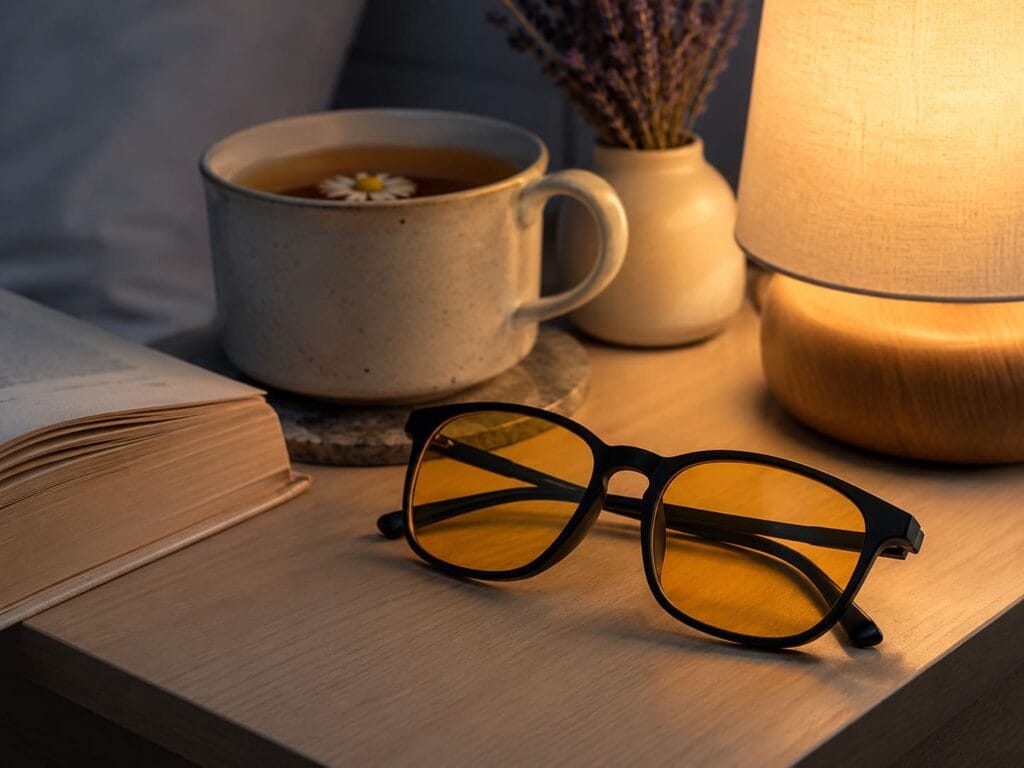
- Sleep Swannies: deep amber lenses designed for use approximately one to two hours before bed.
The current official product pages state that Sleep Swannies block 99% of blue light in the targeted nighttime range. Swanwick uses CR-39 lenses, anti-reflective coatings, and either cellulose acetate or alloy frames depending on the model.
We could verify that Swanwick offers multiple sizes, prescription options, readers, fitovers, and snap-on systems. The standard direct-purchase guarantee is currently 30 days, but prescription eyewear, individual bundle components, Last Chance products, and certain hygiene products are excluded.
We could not independently confirm that Swanwick glasses will improve sleep quality for every buyer, restore a natural sleep rhythm, reduce stress, improve mood, increase deep sleep, or support cellular repair. Those are stronger brand claims than the current overall evidence supports.
Which Swanwick Blue Light Blocking Glasses Fit Which Buyer?
Prices below were listed on the official US site when this guide was updated. Discounts, colors, cases, prescription upgrades, and availability may change.
| Model | Listed starting price | Best for | Buyer warning | Direct link |
|---|---|---|---|---|
| Sleep Swannies Classic Black | From $129.99 | Most buyers wanting a standard acetate nighttime frame in multiple sizes | Amber tint changes color perception | Check availability |
| Sleep Swannies Kensington Black | From $149.99 | Buyers preferring a larger rounded-square frame | Only one regular size was listed | Check availability |
| Sleep Swannies Aviator Gold | From $149.99 | Adjustable nose pads and a large metal aviator frame | Metal fit and styling will not suit everyone | Check availability |
| Sleep Swannies Fitover Black | From $149.99 | Wearing over existing prescription glasses | Measure the full width and lens height of your current frame first | Check availability |
| Focus & Sleep Classic Snap-On | From $189.99 | Switching between daytime clear lenses and nighttime amber filtering | The magnetic sleep lens works only with the included compatible frame | Check availability |
| Circadian Optimization Set Aviator | $429.99 | Buyers wanting Focus, Relax, and Sleep lenses in one complete system | High cost and unnecessary complexity for most first-time buyers | Check availability |
Best value within Swanwick: the Classic Sleep Swannies are the lowest-priced straightforward nighttime option.
Best for existing prescription glasses: Fitover Sleep Swannies may be simpler than ordering a separate prescription pair.
Best for multiple daily uses: the snap-on system is more practical than carrying separate frames, but it costs considerably more than a single amber pair.
Skip for most beginners: the $429.99 Circadian Optimization Set is difficult to justify until you know that wearing blue light glasses consistently fits your routine.
Hidden Costs, Shipping, and Returns
- Premium case: may cost extra depending on the selected configuration.
- Prescription lenses: increase the purchase price and may have different return rules.
- Multiple lens systems: Focus, Relax, and Sleep combinations cost much more than one pair of glasses for sleep.
- International taxes and duties: may apply outside the United States.
- Replacement risk: tinted lenses can scratch, hinges can loosen, and coatings can wear over time.
- Returns: Swanwick currently lists a 30-day guarantee for eligible glasses and lighting, but excludes prescription eyewear and certain other products.
Read the current product page and return policy before ordering. Do not assume that custom prescription glasses can be returned under the same terms as a standard non-prescription frame.
Cheaper Ways to Reduce Blue Light and Evening Light Exposure
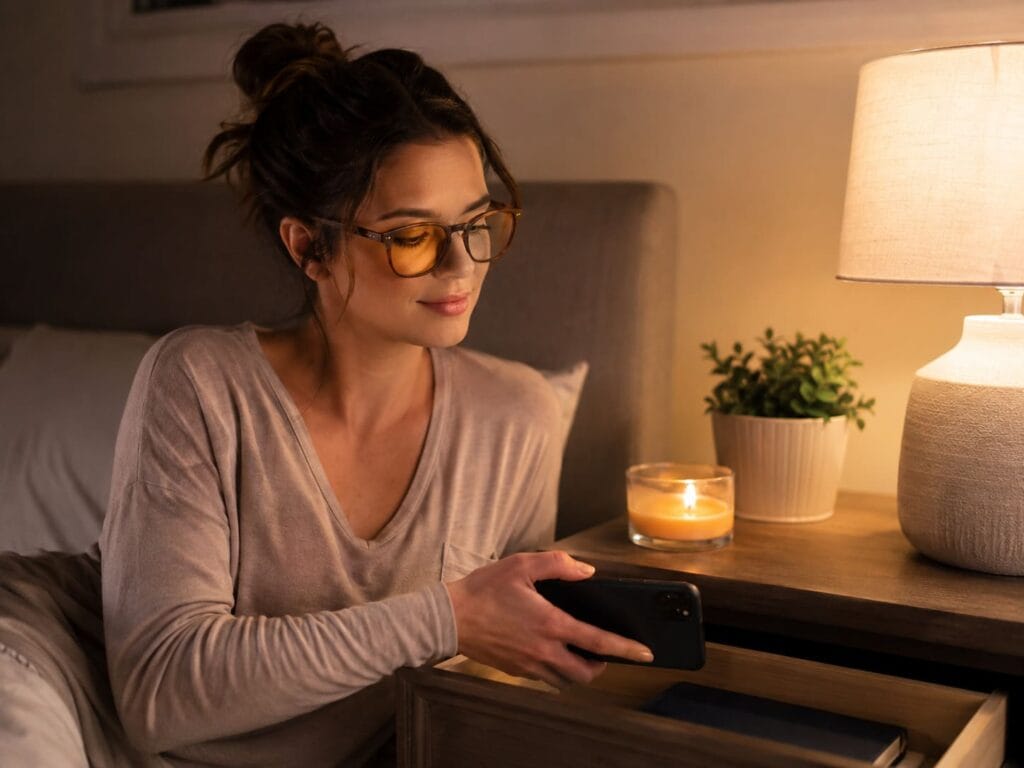
Blue light blockers are not the only solution. Several ways to reduce blue light and total evening light cost little or nothing:
- lower screen brightness;
- use a warmer display setting;
- replace cool-white bulbs with dim warm lighting;
- turn off unnecessary overhead lights;
- increase distance from bright screens;
- stop work and stimulating content before bed;
- use lamps positioned below eye level;
- keep the bedroom dark;
- get bright outdoor light after waking;
- maintain a reasonably consistent wake time.
A software filter can reduce the blue appearance of a display, but it does not remove total brightness or change other sources of artificial light in the room.
For many people, reducing white light intensity provides more value than obsessing over the exact wavelengths of blue light from a single device.
Blue Light Blocking Glasses Pros and Cons
Pros
- Simple and passive to use
- Can reduce evening blue light exposure without switching off every device
- Amber lenses may help some users under strong evening light
- No app, subscription, battery, or charging
- Prescription, fitover, reader, and clip-on options exist
- Can be tested alongside other sleep habits
- Portable for travel or shift work
Cons
- Sleep evidence remains mixed and product-specific
- Clear blue light glasses are unlikely to solve digital eye strain
- Amber and red lenses distort colors
- Dark lenses are unsuitable for driving
- Fit and pressure points vary
- Premium products can be expensive
- Transmission claims are not always independently verified
- Glasses may distract from cheaper lighting changes
What We Could Verify
- Blue light is part of the visible light spectrum.
- Evening light timing, intensity, duration, and spectrum can influence circadian responses.
- Amber lenses generally block more blue light than clear lenses.
- Some small trials have reported sleep-related benefits from evening amber glasses.
- The larger evidence base remains mixed and low-certainty.
- Current evidence does not support blue light filtering lenses as a reliable solution for digital eye strain.
- Swanwick currently sells Focus, Relax, and Sleep lens categories.
- Swanwick lists CR-39 lenses and multiple frame, prescription, fitover, and snap-on options.
- The official US starting prices currently range from about $129.99 for Classic Sleep Swannies to $429.99 for an Aviator Circadian Set.
- The current standard direct-purchase guarantee is 30 days for eligible products.
What We Could Not Verify
- That any pair will improve sleep for every user.
- That premium glasses work better than every cheaper amber alternative.
- Exact real-world transmission for every color, model, and production batch.
- Long-term frame comfort for every head and face shape.
- Scratch resistance and coating durability over years of daily use.
- That blue light glasses prevent retinal disease caused by normal screen use.
- That they treat insomnia, burnout, anxiety, mood disorders, or nervous system dysregulation.
- That they increase deep sleep, REM sleep, cellular repair, energy, or work performance in every user.
- How smoothly every return, prescription order, or support request is handled.
FAQ About Blue Light Blocking Glasses
Do blue light glasses work for sleep?
They may help some people reduce evening light exposure, especially when deep amber lenses are worn before bed under bright artificial light. Research results are mixed, and they do not reliably improve sleep for everyone.
What color glasses are best for sleep?
Deep amber or orange lenses generally block more blue light than clear or light-yellow lenses. Red lenses may block even more of the blue-green spectrum but create stronger color distortion.
Can clear blue light glasses improve sleep?
Clear lenses usually filter only a limited amount of blue light because they must preserve normal color transmission. They are less suitable than amber lenses when the goal is strong nighttime filtering.
Can blue light glasses help eye strain?
Current systematic-review evidence does not show a reliable advantage over standard lenses. Breaks, blinking, glare reduction, appropriate screen distance, room lighting, and correct prescription are usually better starting points.
When should I wear blue-blocking glasses for sleep?
Many nighttime brands recommend wearing them approximately one to two hours before the intended bedtime. Start by using them consistently during the period when bright evening light and screens would otherwise be present.
Can I wear amber glasses all day?
That is usually unnecessary. Blue light during the day contributes to normal alertness and circadian timing. Dark lenses are better reserved for the evening unless a qualified professional recommends another schedule.
Can I drive while wearing amber or red glasses?
Dark tinted lenses alter color perception and reduce the amount of visible light reaching the eyes. Do not use them for driving unless the manufacturer explicitly confirms that the specific lens meets the applicable legal and safety requirements.
Are prescription blue light blocking glasses available?
Yes. Premium brands may offer prescription glasses, readers, fitovers, or clip-ons. Check the additional cost and return restrictions before ordering customized lenses.
Do I need glasses if my phone has night mode?
Night mode can reduce the cooler appearance of the screen, but brightness, distance, duration, and other room lights still matter. Glasses provide broader filtering when multiple light sources remain active.
How will I know whether the glasses help?
Use them consistently for one to two weeks while keeping bedtime, wake time, caffeine, and room lighting reasonably stable. Track simple outcomes such as how sleepy you feel before bed and how long you believe it takes to fall asleep. Avoid obsessing over small changes in wearable scores.
Blue light glasses solve only one narrow part of the evening environment. Before building a larger setup, compare these practical sleep gadgets and choose the product that addresses your actual problem: light, noise, temperature, tracking, or physical comfort.
Final Verdict: Are Blue Light Blocking Glasses Worth Buying?
Blue light blocking glasses are not a universal sleep solution and are not strongly supported as a treatment for computer eye strain.
They make the most sense as a practical evening light-management tool for people who cannot avoid bright screens and artificial light before bed.
For sleep, choose deep amber or orange lenses with a published transmission spectrum, comfortable fit, adequate side coverage, and a usable return policy. Do not pay premium prices solely because a brand promises nervous system recovery, perfect melatonin protection, or guaranteed sleep quality.
For daytime screen comfort, start with blinking, breaks, correct prescription, glare control, text size, and sensible screen positioning. Nearly clear blue light filtering should be treated as an optional feature rather than the main solution.
Buy Swanwick if: you value premium frames, multiple sizes, fitover or prescription choices, published lens positioning, and a 30-day eligible-product return period.
Choose a cheaper alternative if: you only need one basic amber pair and can find credible transmission data, comfortable fit, and acceptable returns elsewhere.
MindReset final verdict: evening blue light glasses may be worth testing, but the best blue light buying decision is the least expensive tool that meaningfully reduces your actual evening light exposure and remains comfortable enough to use consistently.
Research Sources
- Cochrane: Blue-light filtering spectacle lenses for visual performance, sleep, and macular health
- PubMed: Evening wear of blue-blocking glasses for sleep and mood disorders
- PubMed: Blocking nocturnal blue light for insomnia
- PubMed: Blue blocker glasses and evening LED exposure
- American Academy of Ophthalmology: Are blue light-blocking glasses worth it?
- Swanwick official blue light blocking glasses collection