
Conventional meditation often feels more like a mental marathon than a path to serenity. For many, the “torture of silence” isn’t a lack of effort, but a lack of direction. When you sit in silence trying to “clear your mind,” you are essentially flying blind without a cockpit—this is why traditional techniques often lead to frustration rather than focus.
Many people try to master spiritual practices in the hope of achieving inner peace, but conventional meditation often turns into a real ordeal of silence. You sit in the lotus position, trying not to think about anything, but instead of achieving Zen, what you get is chaos in your mind. Why does this happen? Traditional meditation demands an incredible effort from the beginner without any feedback. In this article, we’ll explore how to turn subjective effort into a measurable result with the help of neurotechnologies and why your brain resists silence.
When you’re in a state of chronic exhaustion, the advice to simply sit quietly and observe your breath feels like a joke. You close your eyes, but instead of peace, you’re overwhelmed by a flood of unsettling thoughts, reminders of deadlines, and an unstoppable inner monologue. For an exhausted nervous system, trying to meditate often becomes an additional source of stress. You berate yourself for not being able to concentrate, and as a result, you feel even more exhausted. This happens because your brain has lost its ability to self-regulate. It is trapped in a state of hypervigilance, and a simple command to relax is not enough.
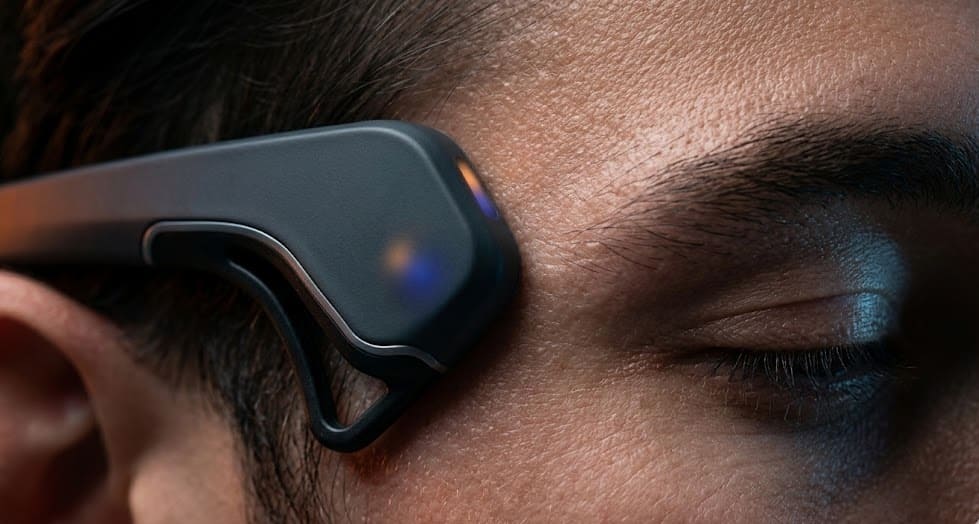
The main problem with traditional methods is the lack of feedback. You don’t know if you’re actually relaxing or if you’re just sitting there with your eyes closed while your neurons are still racing due to cortisol. You need a mirror for your brain. You need a tool that shows you in real time what’s happening with your brain waves. At-home neurofeedback is a technology that converts your brain’s invisible electrical signals into understandable sounds, allowing you to learn to control your state just as easily as you control the muscles in your body.
How Neurofeedback Makes Progress Visible
The main problem with conventional meditation is the lack of objective feedback. When you close your eyes, you’re left alone with your brain, unsure whether you’re truly in a “zen” state or simply wandering through the labyrinths of your own thoughts. Neurofeedback technology, implemented in Muse devices, acts as a “mirror” of your neural activity. EEG sensors record the brain’s electrical signals in real time and convert them into soundscapes.
When your mind is active and restless (beta waves dominate), the sound of the storm or rain in your headphones intensifies. As soon as you calm down and enter a state of concentration, the storm subsides and you hear birds singing. This creates a loop of instant learning—something that’s sorely lacking when you practice conventional meditation alone. Instead of spending weeks wondering, “Am I doing this right?”, you get precise data. This approach allows the brain to build new neural connections—which are responsible for stress resilience—much more quickly, turning subjective efforts into a measurable result.
Muse: Why is conventional meditation less effective than at-home neurofeedback?
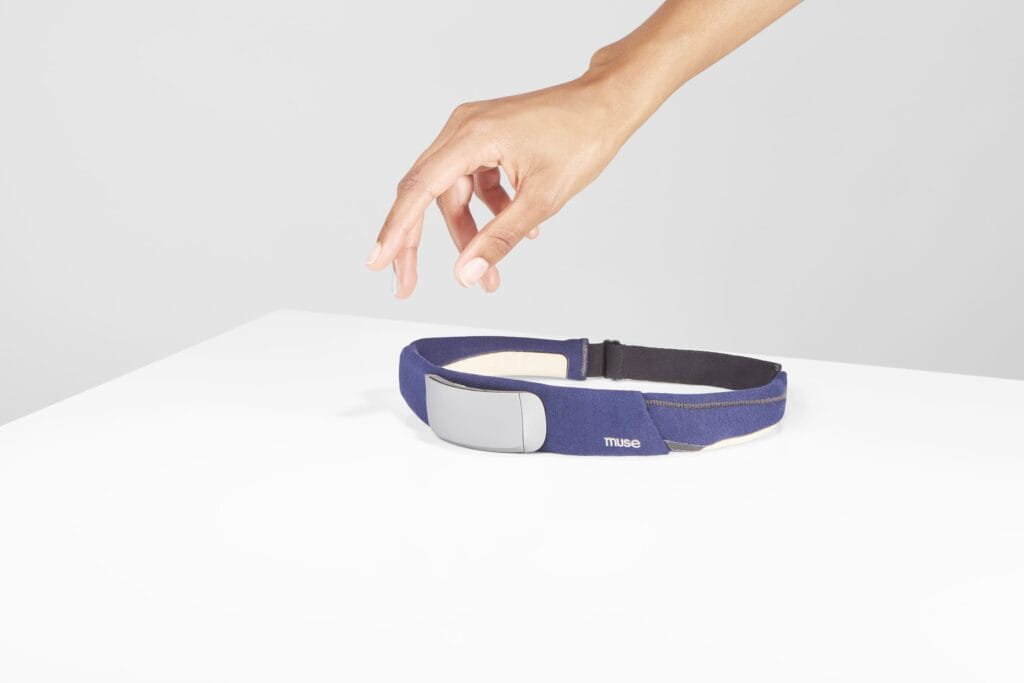
The Muse headband isn’t just a device—it’s a personal neuro-coach that uses clinical-grade electroencephalography (EEG). Its sensors track your brain activity, heart rate, breathing, and body movements. But the real magic lies in how it feeds that data back to you. Muse uses acoustic ecology to teach you to be still. When your brain is active and anxious, you hear the sounds of a storm or heavy rain through your headphones. As soon as you begin to calm down and your beta waves give way to alpha rhythms, the storm subsides. When you reach a state of deep calm, you hear birds singing.
This instant feedback is a game-changer. Your brain is a learning machine, and it loves rewards. To your brain, the sound of birds singing becomes that positive reinforcement. Unconsciously, you start seeking out that same state of inner calm just to hear that sound again. It’s not magic—it’s neurobiology at work. After a few sessions, you begin to physically feel the moment when your nervous system shifts from survival mode to recovery mode. You stop guessing and start knowing with certainty how your consciousness feels.
Conventional meditation or Muse? Which should you choose for the “Reset”?
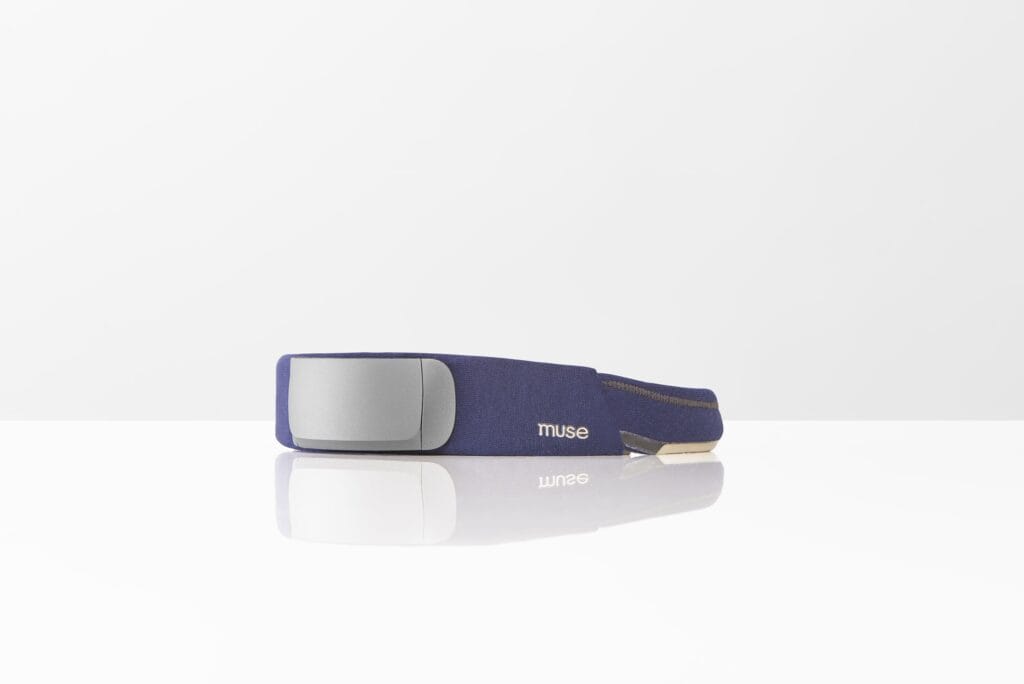
The Muse lineup offers two main devices to help you transform. The Muse 2 is a classic rigid headband, ideal for daytime neurofeedback sessions and for quickly relieving stress between work tasks. It helps you lay the groundwork for your concentration and learn basic self-regulation techniques.
If your main issue is nighttime exhaustion and trouble falling asleep, the Muse S is the right choice for you. Made from a soft, breathable fabric, it’s designed to stay on your head all night long. In addition to daytime neurofeedback, Muse S offers digital sleep aids: special soundscapes that react to your brainwaves, helping you fall asleep, and activate again if you wake up in the middle of the night. It’s the deepest integration of technology into your sleep you can imagine.
We understand that the road to recovery can be a financial burden. That’s why, as your partners at Mind Reset, we have a direct agreement with the manufacturer. If you use our link and the promo code MINDRESTS, you’ll receive a discount of up to 20%. This makes neurofeedback technology accessible just when you need it most. You can get your discount at the following link: Get Muse with a 15% discount.
How regular meditation and proper breathing create a sense of peace
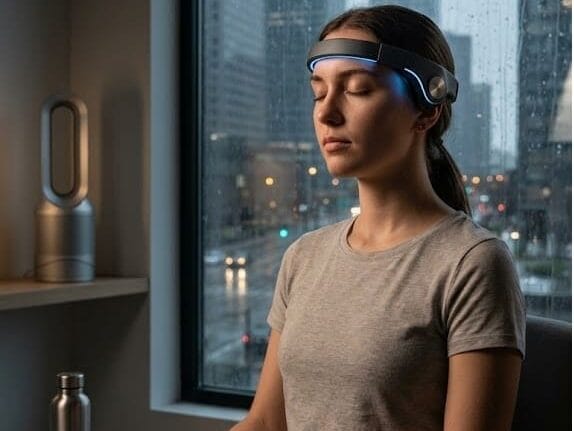
Using Muse isn’t an end in itself, but rather part of your overall recovery strategy. When you have objective data about your brain’s state, you can incorporate other practices much more effectively. For example, combine neurofeedback sessions with our materials in the “Deep Recovery” section. When you see in the Muse app that your calmness level increases after following our breathing protocols, this gives you unwavering confidence that you’re on the right track.
Your nervous system isn’t an enemy you need to defeat. It’s a complex mechanism that needs to be fine-tuned. When you stop fighting yourself and start using Muse as a neural mirror, you discover the only natural way to overcome your challenges. You feel relief simply because you no longer feel powerless in the face of your own anxiety. You gain control, you gain insights, and you gain peace of mind.
Conclusion: Discover Your Silence
Your Mind Reset begins with objectivity. Stop waiting for meditation to pay off someday. Start observing and feeling your brain’s activity starting today. Use Muse to build a solid bridge between the chaos of burnout and the crystal-clear clarity of your new life.
Make a conscious choice to embrace technologies that support your biological well-being. Take advantage of our partnership offer to make this investment in your own health as rewarding as possible. Your brain is ready to learn how to be still. Help it listen to the birds instead of the storm. Your path to healing has become much clearer.