Table of Contents
Modern life does not only make people tired. It keeps them overstimulated.
MindReset.org may earn a commission if you buy through our links. This does not increase your price and does not affect our editorial judgment.
Research note: We have not personally tested the Game Over Classic Gaming Bean Bag Chair or every product category mentioned in this guide. This article is based on current product information, public documentation, general home-environment guidance, and practical comparison with similar seating, lighting, and low-stimulation tools.
We could assess the current product format, published materials and features, intended use, included filling, available designs, and the practical role of seating, lighting, clutter reduction, and screen boundaries. We could not independently verify long-term comfort, support for every body type, material durability, filling compression, delivery quality, customer support, or real-world use over months.
Wellness note: A calmer home corner may support rest, reading, decompression, and a more consistent evening routine, but it is not a treatment for anxiety, burnout, sensory processing conditions, sleep disorders, trauma, or nervous system dysfunction. Product availability, specifications, prices, delivery regions, warranties, and return terms may change.
Screens stay on late. Notifications pull attention in ten directions. Noise, clutter, and constant mental switching make it harder to step out of work mode, even when the workday is over. That is why more people are not just looking for rest — they are looking for a space that helps them actually shift gears.
A neuro-recovery space is a small, intentional area in your home designed to reduce avoidable sensory input and make it easier to step out of work mode. It is not a miracle corner or therapy in furniture form. It is simply a more reliable place to slow down, breathe, read, rest, and decompress after a demanding day.
If you want your home to support recovery instead of constant stimulation, this is where to start.
Quick Verdict: What Makes a Neuro-Recovery Space Useful?
A useful neuro-recovery space does not require expensive technology. Start with one comfortable seat, softer lighting, fewer visible work cues, less notification noise, and a short routine you can repeat when you are already tired.
The Game Over bean bag is one possible UK-focused seating option, but it is not essential. A supportive armchair, floor chair, reading chair, or existing sofa corner may work just as well if it feels comfortable and clearly separate from your normal work setup.
What to skip: expensive “neuro” gadgets, complicated wellness décor, and products claiming to heal, reset, or directly regulate the nervous system.
What Is a Neuro-Recovery Space?
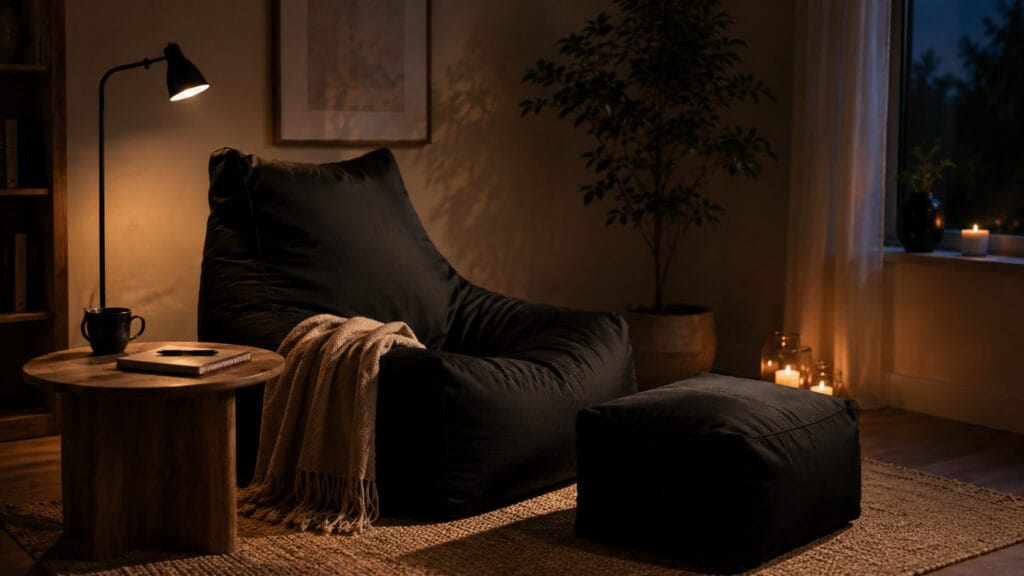
A neuro-recovery space is a dedicated corner, room, or setup that helps you move from “always on” into something calmer and more restorative.
The goal is not perfection. The goal is contrast.
If the rest of your day feels noisy, rushed, digital, bright, and mentally fragmented, your recovery space should feel quieter, softer, more grounded, and easier to settle into. That can mean better lighting, a more supportive seat, fewer visual distractions, and a short routine you can repeat daily.
In practical terms, a neuro-recovery space is where you go for:
- decompression after work,
- quiet reading,
- breathwork,
- screen-light reduction,
- journaling,
- sensory downshifting,
- low-pressure rest.
It is less about aesthetics alone and more about how the space changes what you see, hear, and do during a recovery break.
Why Your Home Environment Affects Recovery More Than You Think
People often think recovery is only about sleep, supplements, or formal wellness practices. Those can help, but your environment shapes behavior long before you notice it.
A room with harsh overhead lighting, nowhere comfortable to sit, and screens glowing from every corner does not invite recovery. It invites more stimulation. On the other hand, a space with softer light, physical comfort, and fewer demands makes it easier to step down from pressure and mental noise.
That does not mean your environment “heals the brain” on its own. It means it can either keep you activated or make it easier to settle.
That distinction matters.
It gives you a consistent environmental cue: this is where work stops and a quieter routine begins.
Step 1 — Start With Comfort That Makes You Want to Stay
If your recovery space is not physically comfortable, you will not use it consistently.
Start with one practical question:
Where will you actually sit long enough to decompress?
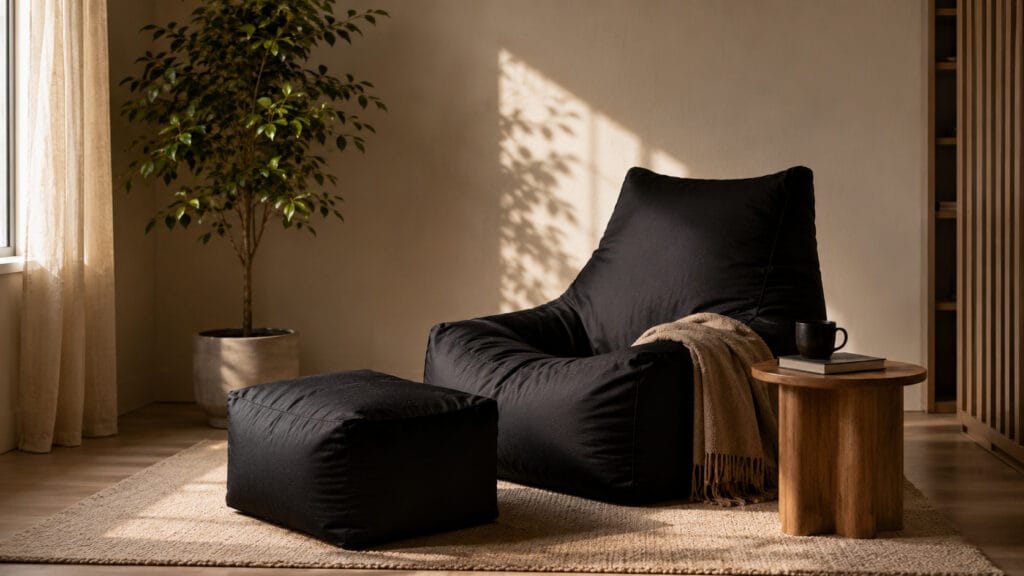
A dedicated recovery corner works best when it includes a seat that feels clearly different from your work chair. If your desk chair is associated with meetings, deadlines, and screen fatigue, your recovery seat should signal the opposite.
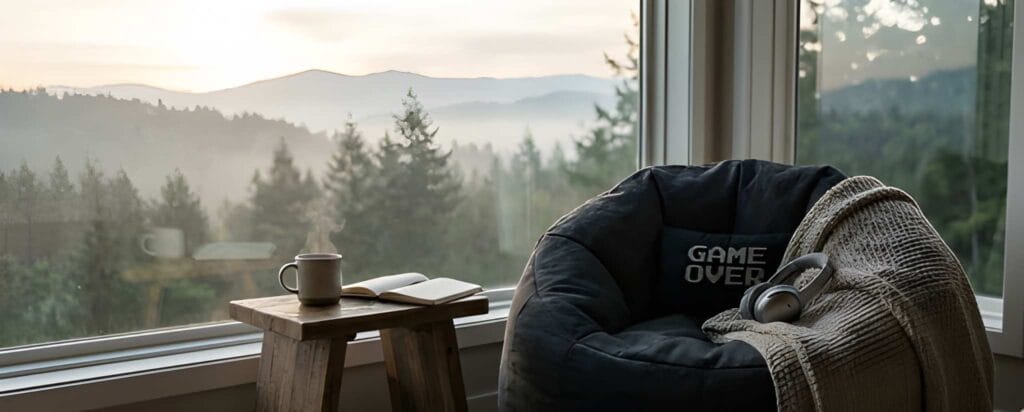
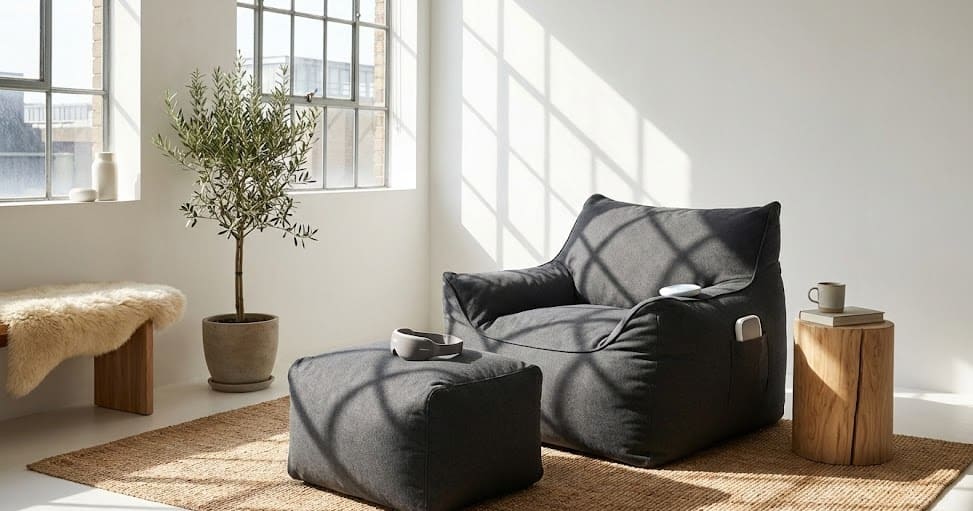
Based on the current product listing, the Game Over Classic Gaming Bean Bag Chair is worth considering because it offers:
- a relaxed bean bag seating format;
- included EPS bead filling;
- a setup that feels clearly different from an office chair;
- multiple colour and design options on the current UK product page.
That matters more than it may seem. A recovery space becomes more useful when it creates a clear boundary from “productive mode.” A bean bag chair with a footstool can help create that shift because it is not trying to feel like office furniture. It feels like permission to stop bracing.
You do not have to use this exact product, but the principle is strong:
your recovery space should feel like a place to land, not another place to perform.
Step 2 — Use Calmer Lighting, Not Just More Lighting
Lighting is one of the fastest ways to change how a space feels.
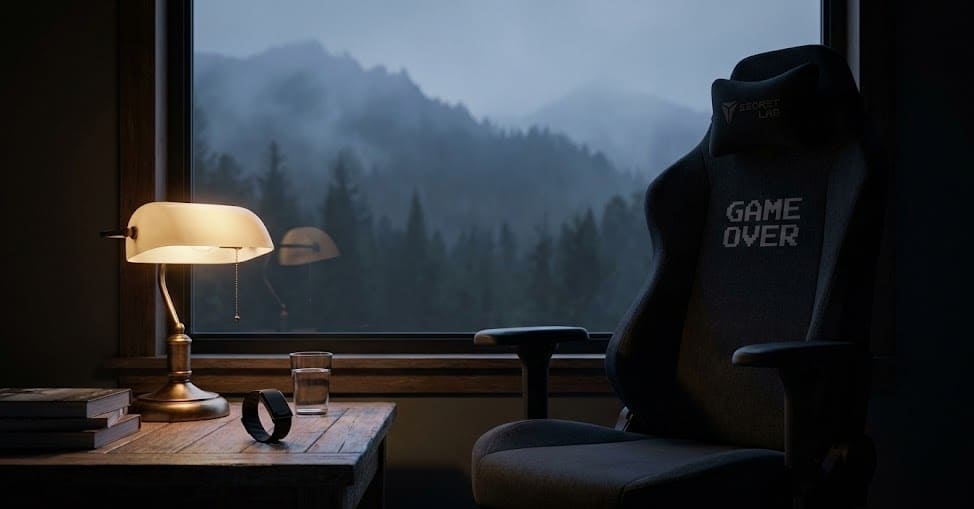
A neuro-recovery space should not depend on harsh ceiling light or a bright screen in a dark room. That combination often makes evenings feel more draining, not more restful. Instead, aim for light that feels soft, directional, and easy on the eyes.
Good options include:
- warm ambient lighting,
- one focused reading lamp,
- softer evening desk lighting,
- reduced glare,
- fewer competing light sources.
If your recovery space also doubles as a reading nook or quiet desk corner, lighting becomes even more important. A bad setup can make you feel more tired. A better one can make the same corner feel calmer and easier to use.
Step 3 — Reduce Sensory Noise Before Adding More Tools
A lot of people try to build a calm space by buying more things. Usually the better first move is removing friction.
Before you add gadgets, ask:
- Is the area cluttered?
- Is there constant notification noise nearby?
- Are there too many visible devices?
- Does the space feel visually busy?
- Is the seat uncomfortable after ten minutes?
A neuro-recovery space works best when it lowers input. That might mean putting your phone out of reach, keeping cables hidden, removing random objects, or choosing a single corner instead of trying to transform the whole room.
Less noise often does more for recovery than more equipment.
This is also where many wellness spaces fail: they become another project. Another thing to optimize. Another corner full of pressure. Recovery works better when the space feels simple enough to use without mental effort.
Step 4 — Build a Small Reset Ritual Around the Space
A good recovery corner is not just a place. It is also a repeatable cue.
Once the physical space is ready, pair it with a short low-friction ritual. Not a complex protocol. Just a short sequence your system starts to recognize.
For example:
- Sit down in the chair.
- Settle into the seat and place your feet comfortably on the floor or on a separate footrest if you already own one.
- Turn on one warm light.
- Take five slower breaths.
- Read two pages, journal for five minutes, or sit in silence.
That is enough.
Over time, the power of the space comes from repetition. Your brain does not need another high-performance routine. It needs something simple enough to repeat when you are already tired.
This is where a dedicated seat like the Game Over chair can help again. It creates a more distinct ritual container than “sitting somewhere on the sofa while checking messages.”
What Should You Put in a Neuro-Recovery Space?
You do not need much.
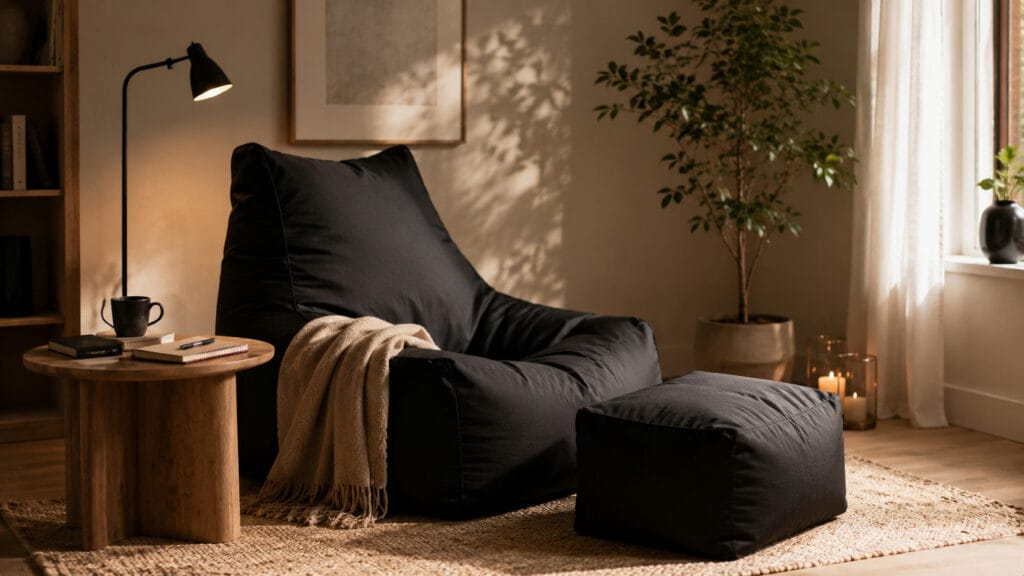
A good setup usually includes:
- one comfortable seat,
- one soft or warm light source,
- a small side table or surface,
- a blanket or texture that feels grounding,
- a notebook or journal,
- optional headphones or low-stimulation audio,
- optional plant or natural material,
- minimal visual clutter.
If you want to expand later, you can add carefully chosen tools, but the basics should come first. Physical comfort, softer light, and lower sensory load will usually do more than stacking five gadgets into one corner.
Best Tools for a Calm Recovery Corner
If you want the space to feel more complete, these are the most useful categories to consider:
1. A dedicated recovery seat
This is the anchor. It should feel relaxed, supportive, and clearly separate from work posture.
2. Softer lighting
A lamp or ambient light source that makes the space usable without harsh overhead brightness.
3. A grounding object
A blanket, cushion, or tactile item helps the space feel less sterile and more physically inviting.
4. Low-stimulation support tools
A journal, timer, breathing tool, or calming audio can help you use the space intentionally without making it complicated.
5. A visual limit on work cues
No inbox open. No endless tabs. No work piles. If possible, keep this corner visually cleaner than the rest of the room.
You do not need an expensive setup to start; often a few affordable tools for a mind reset are more useful than a complicated wellness room.
Who This Space Is Best For
A neuro-recovery space makes the most sense for people who feel mentally “on” for too long.
It is especially useful if you:
- work on screens most of the day,
- feel overstimulated by noise or clutter,
- struggle to switch off after work,
- need a calmer corner for reading or decompression,
- want a more practical wellness setup at home,
- do not have an entire room to dedicate to recovery.
You do not need a huge house or a luxury renovation. A recovery space can be one corner, one chair, one lamp, and one small routine used consistently.
What to Avoid
A calm recovery corner should reduce pressure rather than create another project.
Avoid turning the recovery space into:
- another productivity station,
- another screen-heavy zone,
- a cluttered “wellness shelf,”
- a place full of unrealistic expectations,
- a corner that looks good but feels uncomfortable.
If the space is too complicated, you will stop using it.
If it is too performative, it will feel like work.
The best recovery spaces are simple enough to use even on low-energy days.
Final Thoughts: Build a Space You Will Actually Use
A neuro-recovery space is not about perfection. It is about making recovery easier to start.
You are not trying to create a magical environment that fixes stress. You are creating a physical cue that helps you step out of stimulation and into something calmer. Better comfort, softer light, fewer distractions, and a dedicated ritual can go a long way.
If you want a practical starting point, begin with the thing that changes the feeling of the space fastest:
a dedicated seat that invites you to actually stay there.
That is where a product like the Game Over Classic Gaming Bean Bag Chair can fit well. It helps turn a random corner into a more intentional recovery zone — one that feels less like a task and more like a reset.