Table of Contents
Best Desk Gadgets for Focus and Work Stress: What Actually Helps?
Most desk gadgets promise a calmer, cleaner, more productive workday. Some genuinely reduce friction. Others just add more plastic, more notifications, and more clutter to a workspace that is already overloaded.
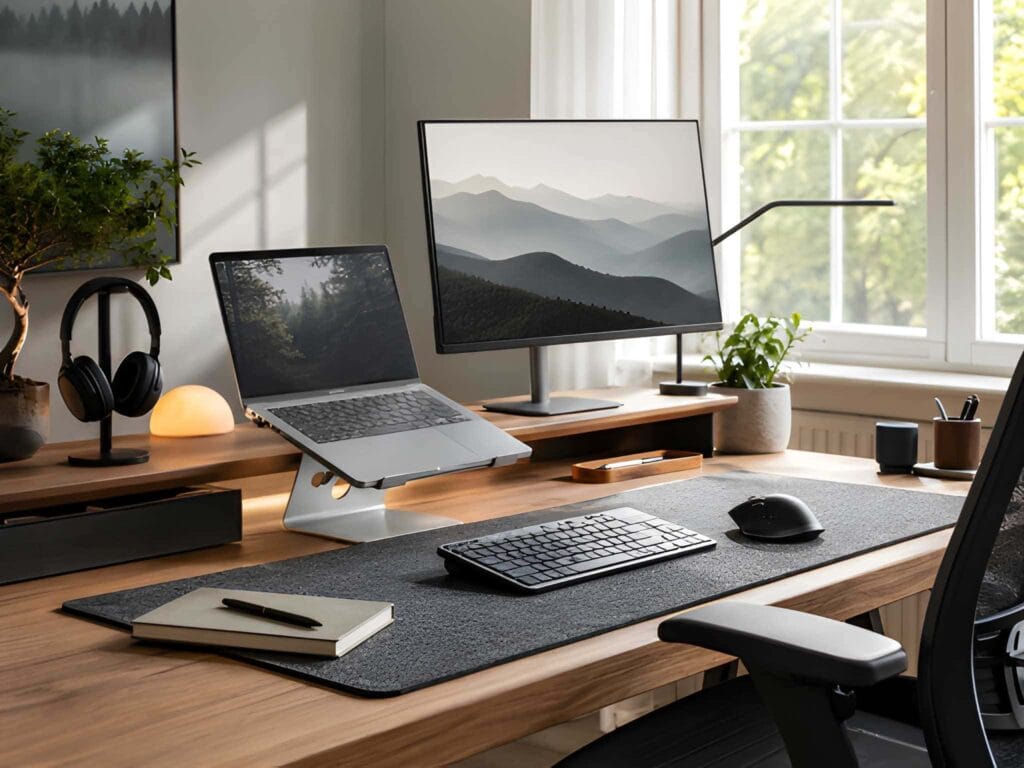
This guide is not about turning your desk into a wellness showroom. It is about choosing practical desk gadgets that may support focus, reduce everyday work stress, and make long work sessions feel easier to manage.
MindReset.org may earn a commission if you buy through our links. This does not increase your price and does not affect our editorial judgment.
As an Amazon Associate, we earn from qualifying purchases.
Research note: We have not personally tested every product mentioned in this guide. This article is based on product specifications, public documentation, available research, user feedback patterns, and comparison with similar workspace tools.
Health note: Desk gadgets are not a treatment for burnout, anxiety, insomnia, depression, ADHD, or any medical condition. They can support a better work routine, but they do not replace healthier boundaries, proper rest, medical care, or a realistic workload.
Quick Verdict: Buy the Gadget That Removes Your Biggest Work Friction
The best desk gadget is not the most advanced one. It is the one that solves the problem you actually feel every day.
If noise breaks your focus, start with sound control. If dark mornings make you feel slow and foggy, consider better desk lighting. If stress shows up as restless hands, a quiet tactile tool may help. If your neck and shoulders feel tense after long sessions, posture support should come before another “calming” device.
For most people, the best desk reset starts with three upgrades: better light, less noise, and a cleaner ergonomic setup. Smart bottles, fidget tools, scent diffusers, and app-connected accessories can be useful, but they should come later.
Desk Gadget Decision Table: What Should You Buy First?
| Work problem | Best first buy | Why it helps | Skip if |
|---|---|---|---|
| Background noise breaks focus | White noise machine or sound masking tool | Helps reduce sudden noise distractions | You already use good noise-cancelling headphones |
| Dark mornings or low desk energy | Bright task light or light therapy lamp | Supports a more alert work environment | You are sensitive to bright light or use it late in the day |
| Restless hands during calls | Silent fidget tool | Gives your hands something quiet to do | You turn it into another distraction |
| Neck, shoulder, or wrist discomfort | Laptop stand, monitor arm, ergonomic mouse or keyboard | Reduces physical friction during long desk sessions | Your desk setup is already comfortable |
| You forget to drink water | Smart bottle or simple reminder bottle | Supports a basic hydration habit | You already drink consistently |
| Stale desk environment | Small diffuser or scent-free reset tool | May make a personal workspace feel more pleasant | You work in a shared office, have pets nearby, or are sensitive to scent |
| Visual clutter and mental overload | Cable tray, desk organizer, drawer system | Reduces daily visual noise | You already keep your desk minimal |
Are Smart Desk Gadgets Actually Worth It?
Some are. Many are not.
A smart desk gadget is worth buying when it removes a repeated problem from your workday. A white noise machine can be useful if you work near traffic, family noise, neighbors, or a loud office. A light therapy lamp can be useful if your workspace is dark in the morning. A monitor arm can be more valuable than almost any “stress gadget” if your screen height is causing tension.
But if the product mostly adds lights, apps, Bluetooth pairing, subscription features, or vague wellness claims, be careful. The goal is not to own more gadgets. The goal is to create a desk that makes focus easier.
A good MindReset desk setup should feel boring in the best way: quiet, clean, well-lit, physically comfortable, and easy to use.
Best for Noise: A Portable White Noise Machine or Sound Masking Tool

Noise is one of the most common focus killers. It is not always loud noise that causes the problem. Often it is unpredictable noise: voices, doors, traffic, notifications, kitchen sounds, or other people moving around the house.
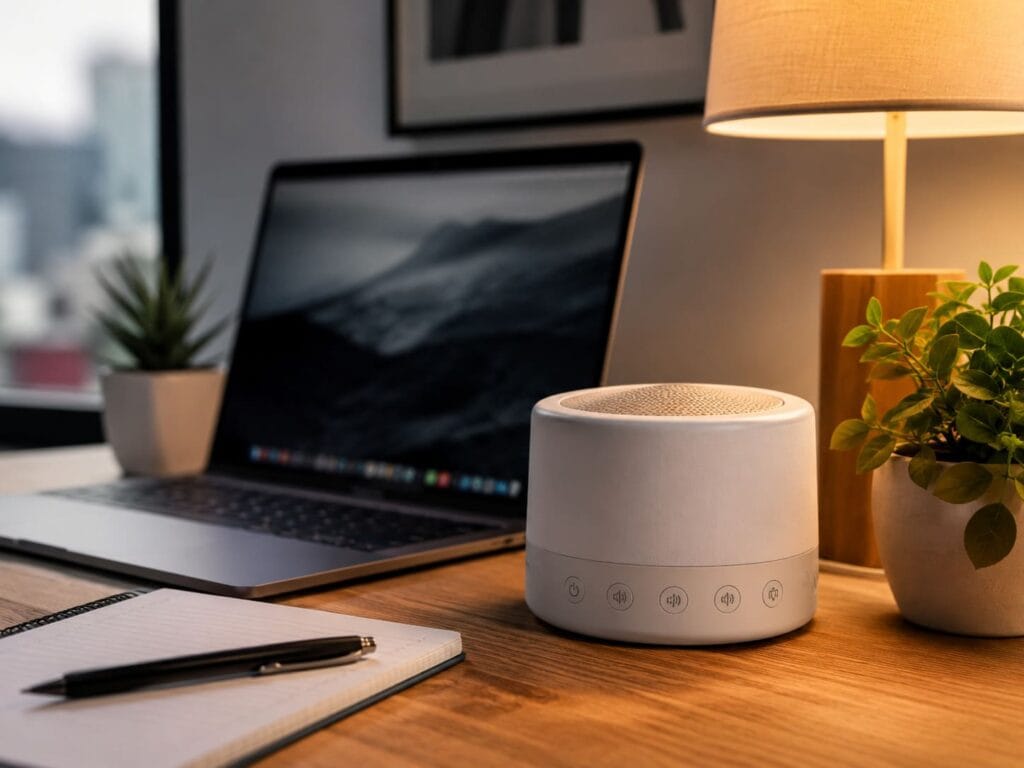
A portable white noise machine can help by creating a steady background sound. This does not make your workspace silent, but it can make sudden sounds feel less intrusive. For some people, this is less tiring than wearing headphones all day.
Product examples to consider include compact white noise devices such as the LectroFan Micro2 or similar portable sound machines. The exact model matters less than the core features: steady sound, easy controls, compact size, no annoying loop, and enough volume for your workspace.
Best for:
- Home offices with background noise
- Shared flats or family homes
- Light sleepers who also work in the bedroom
- People who dislike wearing headphones for hours
Not ideal for:
- Open offices where sound may annoy coworkers
- People who already use strong noise-cancelling headphones
- Anyone who finds white noise distracting
Buyer tip: choose a device with simple physical buttons. If you need an app every time you want to change the sound, the gadget may become another source of friction.
Best for Dark Mornings: A Bright Desk Light or Light Therapy Lamp

Light affects how your work environment feels. A dim desk can make the morning feel heavier, especially in winter or in rooms with poor natural light.
A bright task light or light therapy lamp may support alertness and a stronger morning routine. This does not mean it will “fix” your sleep, mood, or energy. But better light can make your desk feel less like a cave and more like a place where your brain understands that the workday has started.
Product examples include Verilux HappyLight-style lamps, bright desk task lamps, or other reputable light therapy devices. If you use a light therapy lamp, follow the product instructions carefully and avoid using bright light late in the evening unless advised by a professional.
Best for:
- Dark rooms
- Winter mornings
- Remote workers who rarely get morning sunlight
- People who feel slow starting work in poor lighting
Not ideal for:
- People with light sensitivity
- Late-night desk sessions
- Anyone with eye conditions or medical concerns without professional guidance
Buyer tip: place the lamp where it supports your desk environment without shining directly into your eyes. Comfort matters more than chasing the strongest device.
Best for Restless Hands: A Silent Fidget Tool

Not every stress tool needs to be digital. For many people, a quiet tactile object is more useful than another app.
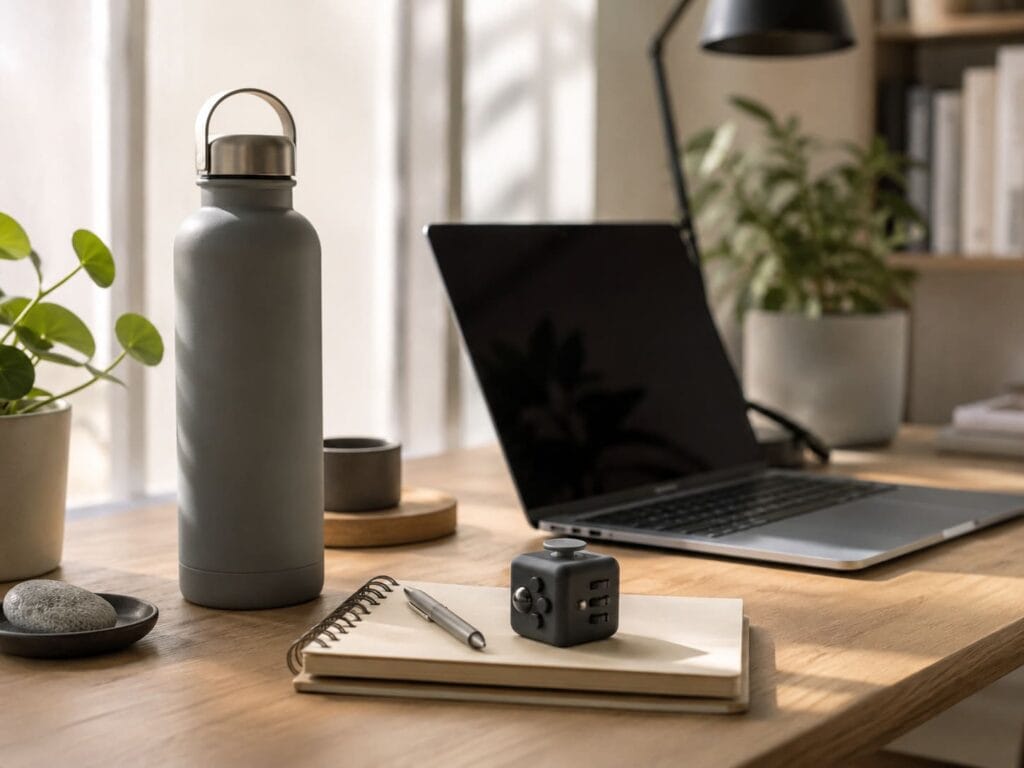
A silent fidget tool can give your hands something to do during meetings, planning sessions, or deep work. The key word is silent. If it clicks, rattles, spins loudly, or attracts attention, it becomes a toy rather than a focus support.
Product examples include ONO Roller-style hand rollers, smooth worry stones, textured desk objects, or simple grip-friendly tactile tools.
Best for:
- Video calls
- Reading sessions
- Planning work
- People who click pens, bite nails, or constantly reach for their phone
Not ideal for:
- People who get distracted by objects easily
- Shared meetings where movement is visible and distracting
- Anyone expecting a fidget tool to solve deeper workload stress
Buyer tip: avoid anything that looks childish, noisy, or overly complicated. The best fidget tool is one you can use without thinking about it.
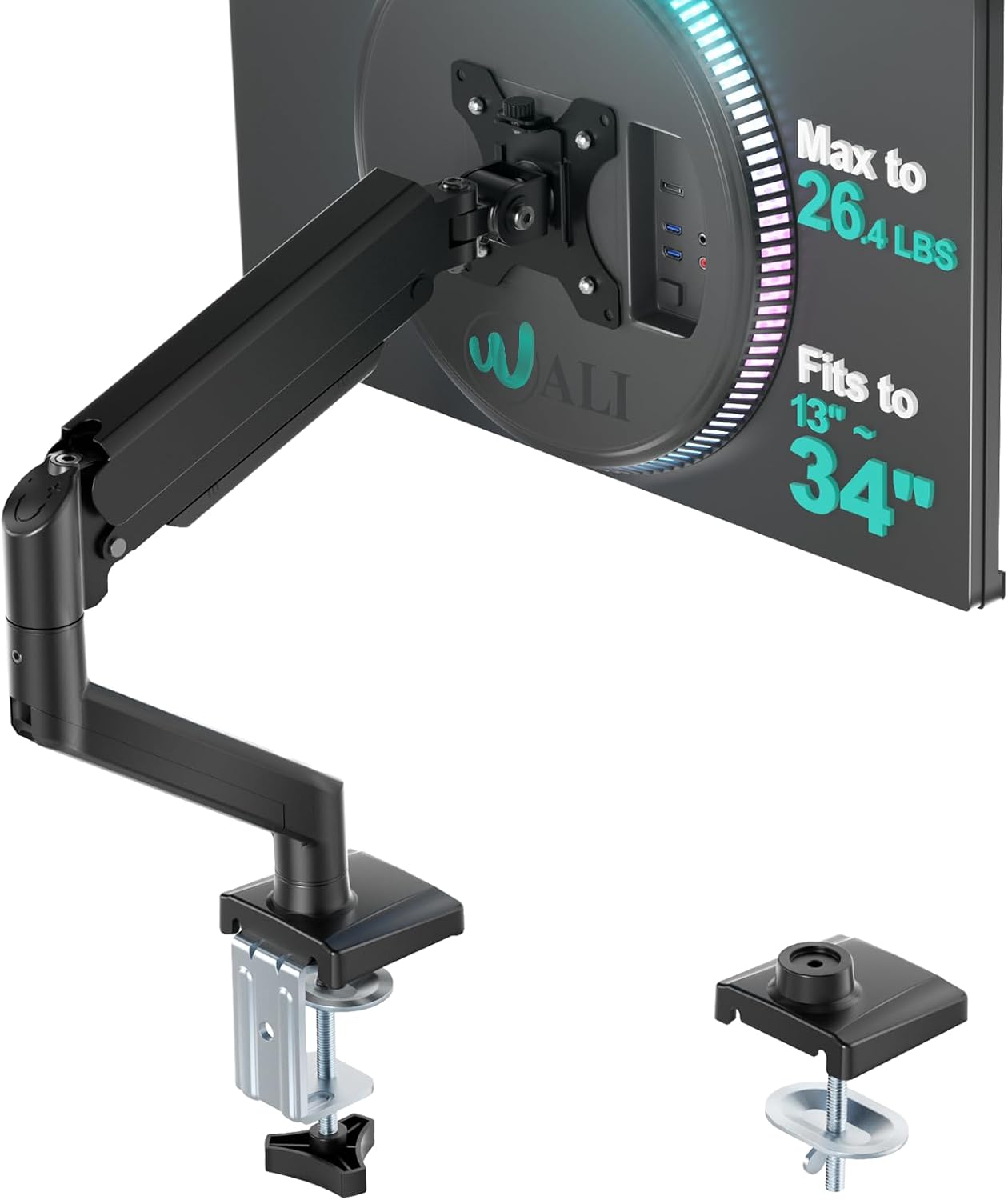
Best for Posture-Related Desk Stress: Monitor Arm, Laptop Stand, or Ergonomic Input Device
This is the least glamorous category, but often the most important.
If your screen is too low, your laptop is flat on the desk, your wrists are bent, or your shoulders are raised all day, your body may treat your desk as a low-level stressor. Over time, that can make work feel more draining.
A laptop stand, monitor arm, external keyboard, ergonomic mouse, or better chair setup may do more for your daily comfort than a “calming” gadget.
Best for:
- Laptop workers
- Long writing or editing sessions
- Remote workers
- People who finish the day with neck, shoulder, wrist, or back tension
Not ideal for:
- Very small desks with no room
- People who move workstations constantly
- Anyone who buys ergonomic accessories but never adjusts them properly
Buyer tip: start with screen height. Your monitor or laptop screen should not force you to hunch forward all day. A simple laptop stand plus external keyboard and mouse can be a major upgrade.
Best for Hydration Habits: Smart Water Bottle or Reminder Bottle

Hydration is basic, but basic habits are often the first things to disappear during busy workdays.
A smart water bottle can remind you to drink. Some glow, send app reminders, or track intake. That can be useful if you genuinely forget water for hours. But if you already drink enough, a smart bottle is not a priority purchase.
Product examples include HidrateSpark-style smart bottles or simpler bottles with time markers. A cheaper reminder bottle may be enough for most people.
Best for:
- People who forget to drink during deep work
- Long desk sessions
- Remote workers who live on coffee
- People who like habit tracking
Not ideal for:
- Anyone who hates app-connected products
- People who already drink consistently
- Buyers who do not want another rechargeable object
Buyer tip: do not overbuy this category. If a simple bottle on your desk solves the problem, you do not need a smart one.
Optional: Desk Diffuser or Scent Tool

A small diffuser can make a personal workspace feel more pleasant. But this is an optional comfort tool, not a core desk upgrade.
Scent is personal. What feels calming to one person may irritate another person. In a shared office, a diffuser is often a bad idea. It can bother coworkers, trigger sensitivities, or simply make the workspace feel less professional.
If you work alone and enjoy scent, choose a small device, use it lightly, and avoid strong claims. Essential oils should not be treated as medicine or as a guaranteed stress solution.
Best for:
- Private home offices
- People who already know they enjoy certain scents
- Short reset sessions before or after work
Not ideal for:
- Shared offices
- Homes with pets nearby
- People with allergies, asthma, migraines, or scent sensitivity
- Anyone expecting “therapeutic” results from a cheap USB diffuser
Buyer tip: if in doubt, skip this category. Better lighting and better ergonomics are usually more useful.
What We Would Buy First
If you are building a calmer desk setup from scratch, this is the order we would follow:
- Fix posture first
Start with a laptop stand, monitor arm, external keyboard, or ergonomic mouse if your body feels tense after work. - Improve lighting
A good task light or morning light setup can make your workspace feel more alert and less draining. - Control noise
Use a white noise machine, sound masking, or headphones if noise breaks your focus. - Add one tactile reset tool
A silent fidget tool can help if restless hands push you toward your phone. - Add habit support only if needed
A smart bottle or reminder tool is useful only if it solves a real habit problem. - Treat scent as optional
A diffuser is a nice-to-have for some private workspaces, not a must-buy.
What We Would Skip
Skip desk gadgets that create more friction than they remove.
That includes noisy fidget toys, cheap RGB lights with no purpose, app-connected devices that require constant charging, “wellness” gadgets with vague claims, and products that make your desk look calmer while your work routine stays chaotic.
Also skip anything that depends on a subscription unless the subscription clearly improves the product. For most desk accessories, you should not need a subscription to get value.
The best desk gadgets are low-maintenance. They should quietly support the workday, not demand attention.
Hidden Costs to Check Before Buying
Before buying any smart desk gadget, check these details:
- Does it require an app?
- Does it need frequent charging?
- Does it have replacement parts?
- Does it use filters, pads, oils, or cartridges?
- Does it make sound that could annoy others?
- Is there a subscription?
- Is the product actually available from the seller?
- Is the return policy reasonable?
- Does the product solve a real problem or just look good in photos?
This matters because many cheap desk gadgets are impulse buys. They look useful for one week, then disappear into a drawer.
What We Could Verify
For this guide, we could verify the general use case for each product category: sound masking, desk lighting, ergonomic setup, tactile tools, hydration reminders, and optional scent-based workspace comfort.
We could also compare product positioning, public specifications, common buyer feedback patterns, and practical fit for a desk-based work routine.
What We Could Not Verify
We could not verify long-term comfort, app stability, battery degradation, customer support quality, real-world durability over months of daily use, or whether each product will fit every workspace.
We also could not verify that any single gadget will reduce your personal stress level. Work stress depends on workload, sleep, management, health, finances, boundaries, environment, and many other factors.
Final Verdict: Build a Low-Friction Desk, Not a Gadget Museum
The best desk gadgets for focus and work stress are not the ones with the most features. They are the ones that remove the most friction.
For most people, the strongest first upgrades are simple: better screen height, better lighting, less noise, and fewer visual distractions. After that, a silent fidget tool or hydration reminder can support the routine.
Be careful with gadgets that promise a full nervous system reset from a small object on your desk. A better workspace can support self-regulation, but it cannot replace rest, boundaries, movement, sunlight, sleep, or a more realistic workload.
If your desk currently feels noisy, dark, cluttered, and physically uncomfortable, do not buy five gadgets at once. Pick the biggest source of friction and solve that first.
A calmer desk is not about owning more things. It is about making work feel less chaotic.
FAQ
What is the best desk gadget for work stress?
The best desk gadget depends on your main source of stress. For noise, choose sound control. For physical tension, improve ergonomics. For dark mornings, improve lighting. For restless hands, choose a silent tactile tool. Do not start with random wellness gadgets before solving the obvious friction points.
Are white noise machines good for focus?
White noise machines may help some people by masking unpredictable background sounds. They are especially useful in home offices, shared flats, or noisy environments. They are not ideal if you find steady sound distracting or if you work in a shared office where the sound may bother others.
Is a light therapy lamp worth it for a desk?
A light therapy lamp may be useful if your workspace is dark, especially in winter mornings. It should be used carefully and according to the product instructions. It is not a general cure for tiredness, sleep problems, or mood issues.
Are fidget tools professional enough for work?
Some are. Silent, minimal fidget tools can be useful during calls, reading, or planning. Loud, flashy, or toy-like fidget gadgets are less suitable for professional settings and may become distracting.
Should I buy a smart water bottle?
Buy a smart water bottle only if you regularly forget to drink water and like reminders or habit tracking. If a normal bottle on your desk works, you do not need a smart one.
Should I use an essential oil diffuser at my desk?
Use a diffuser only in a private workspace where scent will not bother other people. Avoid it in shared offices, around pets, or if you have allergies, migraines, asthma, or scent sensitivity. Treat it as a comfort tool, not a health solution.
What desk gadget should I buy first?
Start with the biggest problem. If your body feels tense, fix your ergonomic setup. If noise breaks your focus, buy a sound control tool. If your workspace feels dark and heavy, improve lighting. The right first purchase should make your workday noticeably easier.