Table of Contents
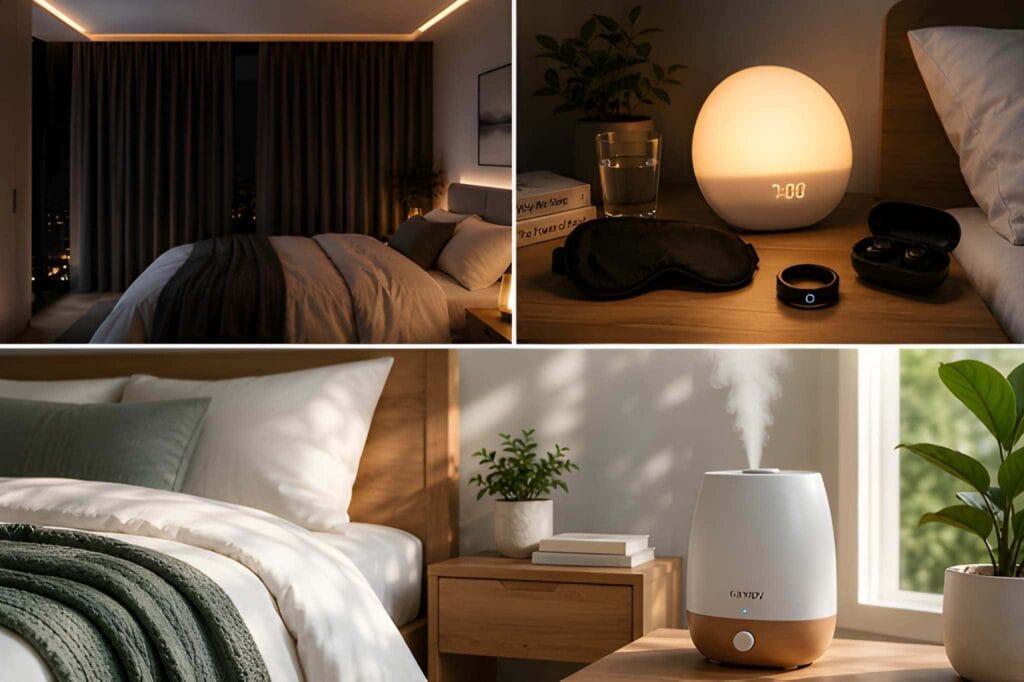
A sleep sanctuary is not a bedroom packed with expensive gadgets. It is a room where the basics work: darkness, quiet, comfort, temperature, low-stimulation light, and fewer reasons to reach for your phone at night.
Quick answer: the best sleep sanctuary gadgets are the ones that solve a specific bedroom problem. If your room is too bright, start with blackout curtains or a sleep mask. If noise wakes you up, start with earplugs or a white noise machine. If your bed feels too hot, look at breathable bedding before buying expensive sleep tech.
This page is not a list of random wellness gadgets. It is a buyer guide for people who want to build a calmer bedroom setup without wasting money on products that look impressive but do not fix the real issue.
Use the guide this way: identify the problem first, choose the cheapest realistic fix, then upgrade only if the basic solution is not enough. Most bedrooms do not need ten sleep gadgets. They need one or two well-chosen tools that make the room darker, quieter, cooler, or less digitally distracting.
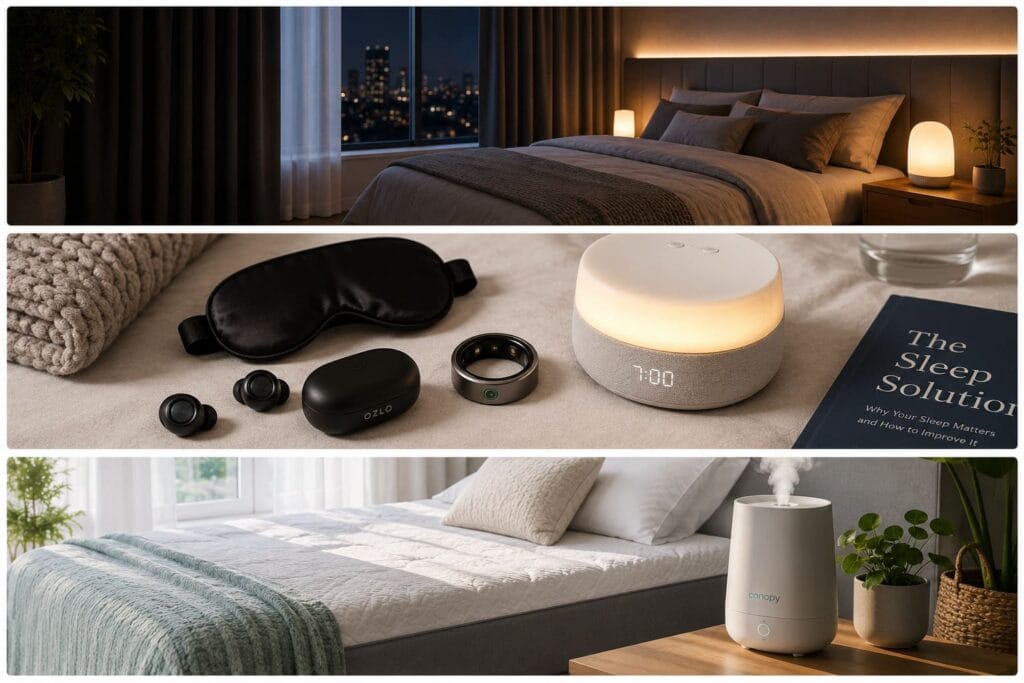
This guide is a practical buyer guide to sleep sanctuary gadgets. We will look at blackout curtains, sleep masks, gentle wake lights, white noise machines, sleepbuds, mattress upgrades, cooling systems, humidifiers, sleep trackers, weighted blankets, and simple night routine tools.
The goal is not to buy everything. The goal is to identify the real problem in your bedroom and choose the tool that solves it.
MindReset.org may earn a commission if you buy through some links on this page. This may include direct brand partner links, retailer links, and Amazon affiliate links. This does not increase your price and does not affect our editorial judgment.
As an Amazon Associate, we earn from qualifying purchases.
Research note: We have not personally tested every product in this guide. This article is based on product specifications, public documentation, available research, user feedback, and comparison with similar sleep and bedroom tools.
Sleep note: Sleep sanctuary gadgets may support a better bedroom environment, but they do not treat insomnia, anxiety, sleep apnea, depression, PTSD, ADHD, or any medical condition. If sleep problems continue, or if snoring is severe or linked with breathing pauses, speak with a qualified healthcare professional.
Quick Verdict: Which Sleep Sanctuary Gadgets Are Actually Worth Buying?
The best sleep sanctuary gadgets are usually the boring ones that fix a real bedroom problem.
If your room is too bright, start with blackout curtains or a sleep mask. If noise wakes you up, try earplugs, white noise, or sleepbuds. If you overheat, look at cooling bedding or a bed climate system. If your mattress is uncomfortable, fix comfort before buying more tech. If your room feels dry, a humidifier may be useful. If you want data, a sleep tracker can help you notice patterns, but it will not fix the room by itself.
The wrong move is buying impressive gadgets before fixing the basics. A tracker cannot make a room dark. A humidifier cannot fix a bad mattress. A wake light will not help much if you are still doomscrolling in bed.
Build the bedroom first. Add gadgets only where they clearly help.
Sleep Sanctuary Gadgets: What to Buy First
Use this simple decision table before buying anything.
| Bedroom Problem | Best First Buy | Premium Option | Skip If |
|---|---|---|---|
| Too much light | Blackout curtains | Motorized blackout curtains or shades | Your room is already dark |
| Light leaks or travel | Sleep mask | Premium blackout sleep mask | You hate anything touching your face |
| Harsh mornings | Gentle wake light | Sunrise alarm / sleep routine device | You already wake gently |
| Noise | Earplugs or white noise | Sleepbuds | You sleep better in silence |
| Overheating | Cooling bedding | Bed climate system | Temperature is not your issue |
| Bad comfort | Mattress topper or mattress | Premium mattress system | Your bed is still comfortable |
| Dry air | Humidifier | Smart or low-maintenance humidifier | Humidity is already comfortable |
| Want sleep data | Sleep tracker ring | Advanced sleep wearable | Sleep scores make you anxious |
| General wellness vibe | Better lighting and less clutter | Optional decor | It does not solve a real problem |
This order protects you from wasting money. The first question is not “Which gadget is best?” The first question is “What is actually disrupting my sleep space?”
What Is a Sleep Sanctuary, Really?
A sleep sanctuary is a bedroom designed to reduce friction around sleep. It should make the evening easier, the night calmer, and the morning less harsh.
That does not mean the room has to look like a luxury hotel. It means the room has to support the basics: darkness, quiet, temperature comfort, a comfortable bed, softer light, and fewer digital distractions.
The best sleep sanctuary setup usually includes a few practical layers:
- light control
- noise control
- bed comfort
- temperature management
- low-stimulation lighting
- phone-free wake-up routine
- optional air support
- optional sleep tracking
The mistake many people make is starting with the most exciting gadget. A better approach is to start with the most obvious problem.
If the room is bright, fix light. If the room is noisy, fix sound. If the bed is uncomfortable, fix the bed. If your phone keeps pulling you back into apps, fix the routine.
Blackout Curtains and Motorized Shades: Fix Light Before Buying Sleep Tech

Light control is one of the strongest foundations of a sleep sanctuary. Street lights, car headlights, early sunrise, neighbour lights, and glowing electronics can make a bedroom feel less restful at night.
Blackout curtains are a practical first upgrade because they solve a visible problem. If your room is not dark, buying a sleep tracker before fixing light is usually backwards.
TWOPAGES blackout curtains fit this category well because they belong to the foundation layer of the bedroom: windows, privacy, light control, and room feel.
Motorized blackout curtains or shades are the premium version. They are useful if you want the bedroom to close down automatically in the evening and open gently in the morning. That can make the sleep routine feel smoother without adding another screen.
Best for:
- bedrooms with street light
- early sunrise
- shift workers
- people who wake up too early because of light
- anyone who wants a darker, calmer bedroom
Skip if:
- your bedroom is already dark
- you rent and cannot install curtains
- light is not your real issue
Sleep Masks: The Simple Blackout Fix for Travel, Naps, and Light Leaks

A sleep mask is the simplest way to create darkness without changing the room. It is especially useful if blackout curtains are not possible, if light leaks around curtain edges, or if you travel often.
Manta Sleep fits this section because the product solves one clear problem: light around the eyes. A good sleep mask should block light, feel comfortable, and avoid creating annoying pressure on the face.
A sleep mask is not a magic sleep solution. It is a darkness tool. That is exactly why it belongs in a practical sleep sanctuary guide.
Best for:
- travel
- naps
- shared bedrooms
- shift work
- light-sensitive sleepers
- rooms where curtains are not enough
Skip if:
- you hate anything touching your face
- you sleep hot around the eyes
- your bedroom is already fully dark
Gentle Wake Lights: A Better Alternative to Harsh Alarm Clocks

A loud alarm can make mornings feel aggressive. A gentle wake light is a better fit for many sleep sanctuary setups because it uses gradual light and softer sound instead of shock.
This does not mean a wake light will fix poor sleep. It will not replace a consistent schedule, a dark room, or enough time in bed. But it can make waking feel less abrupt, especially if your current alarm creates stress before the day even starts.
A good wake light belongs in the “morning transition” layer of the bedroom. It helps the room move from night to morning without needing your phone as the first object you touch.
Useful options may include sunrise alarm clocks, soft wake lights, or smart sleep routine devices like Hatch-style or Loftie-style tools.
Best for:
- people who hate harsh alarms
- anyone trying to keep the phone out of the bedroom
- darker winter mornings
- calmer morning routines
Skip if:
- you already wake naturally
- you rely on multiple alarms because you are not sleeping enough
- you will still keep your phone beside the bed
White Noise, Earplugs, and Sleepbuds: What Works Better for Bedroom Noise?

Noise is one of the most practical sleep problems to solve. Traffic, neighbours, a snoring partner, pets, or building noise can make a bedroom feel unpredictable.
Start cheap. Earplugs are often the simplest first test. If direct noise reduction helps, you may not need a premium gadget.
White noise machines are different. They do not block sound in the same way. They create a steady background sound that can make sudden noises less noticeable. This can be useful if small sound changes wake you up.
Sleepbuds are the premium option. They can make sense if you need a more personal sound solution, especially in shared bedrooms. Products like Ozlo-style or Soundcore-style sleepbuds belong here, but they are not necessary for everyone.
Best for:
- city noise
- neighbours
- partner snoring
- unpredictable background sounds
- people who need sound masking
Skip if:
- you sleep better in silence
- earbuds bother your ears
- basic earplugs already solve the problem

Mattress and Comfort Upgrades: When the Bed Is the Real Problem

Sometimes the issue is not light, sound, or technology. Sometimes the bed is simply uncomfortable.
If you wake up sore, toss and turn, overheat on old foam, or feel unsupported, a mattress upgrade may be more useful than any gadget on the nightstand. This is where Simba-style mattress systems fit the guide.
But a mattress is a serious purchase. Do not buy one just because a buyer guide mentions it. Buy one if your current bed is clearly part of the problem.
A cheaper first step may be a mattress topper if the base mattress is still usable but needs a comfort layer. A full mattress upgrade makes more sense when the existing mattress is old, sagging, too warm, or no longer supportive.
Best for:
- uncomfortable beds
- old mattresses
- pressure points
- poor support
- people who wake up stiff
Skip if:
- your mattress is still comfortable
- your real problem is light, noise, caffeine, or screen use
- you are buying only because the product looks premium

Cooling and Heating Systems: Worth It for Hot Sleepers, Not Everyone

Temperature is a major part of bedroom comfort. Some people wake up because the room is too hot, the bedding traps heat, or the mattress sleeps warm.
Cooling and heating systems can be useful, but this category is easy to overbuy. Premium systems like Eight Sleep-style, BedJet-style, or Chilipad-style setups can be impressive, but they only make sense if temperature is truly your problem.
For many people, simpler steps come first: breathable bedding, lighter blankets, better ventilation, cooler room settings, or a mattress topper that sleeps less hot.
Active temperature systems are better for people who have already tried the basics and still wake up too hot or too cold.
Best for:
- hot sleepers
- couples with different temperature preferences
- warm mattresses
- night-time overheating
- people who wake up because of temperature changes
Skip if:
- temperature is not your issue
- lighter bedding already solves the problem
- you do not want another device to maintain
Humidifiers and Bedroom Air: Useful Upgrade or Wellness Marketing?

A humidifier can be useful if your bedroom air feels dry, especially during winter heating or in dry climates. Dry air can make the room feel less comfortable at night.
Canopy fits this category as an optional home wellness upgrade. It should not be positioned as a core sleep solution for everyone. It belongs in the “air comfort” layer of the room.
The important question is simple: is dry air actually a problem in your bedroom?
If yes, a humidifier may be worth considering. If not, it may become another device you clean for no clear benefit.
Best for:
- dry bedroom air
- winter heating
- people who wake up feeling dry
- rooms that feel stale or uncomfortable
Skip if:
- humidity already feels fine
- you dislike maintenance
- you are buying only because it sounds like a wellness upgrade
Sleep Trackers: Useful Data, Not a Sleep Solution

Sleep trackers can be useful for awareness. A ring-style tracker such as Ultrahuman Ring AIR can help people watch patterns around sleep timing, rest, movement, recovery, and routine.
But a tracker does not fix the bedroom. It will not make the room dark. It will not block noise. It will not make a mattress comfortable. It will not stop you from scrolling at midnight.
Use a tracker as feedback, not as the foundation.
A sleep tracker is most useful when you are willing to change habits based on what you notice. It is less useful if you only check scores and feel worse.
Best for:
- people who like data
- sleep routine experiments
- recovery tracking
- noticing patterns over time
Skip if:
- sleep scores make you anxious
- you already know the room is the problem
- you expect the device to solve sleep directly
Weighted Blankets and Comfort Tools: Helpful for Some, Easy to Overbuy

Weighted blankets can feel comforting for some people. They may create a sense of pressure and stillness that makes the bed feel more grounded.
But this category is also easy to overbuy. Weighted blankets are not for everyone. Some people find them too hot, too restrictive, or annoying to move under.
If you want to test this category, keep the promise modest: comfort, stillness, and a calmer bed feel. Avoid treating weighted blankets as a solution for anxiety, insomnia, or medical sleep problems.
Best for:
- people who like pressure
- cooler bedrooms
- comfort-focused evening routines
- people who want a grounded bed feel
Skip if:
- you sleep hot
- you dislike heavy bedding
- you move a lot at night
- you expect it to solve a medical issue
Amber Night Lights and Phone-Free Bedside Tools

The bedroom should not become a second office. If your phone is your alarm, your entertainment, your news feed, and your night light, it is doing too many jobs near your bed.
A simple amber night light can help if you wake up at night and need low light without switching on something harsh. A phone-free alarm or gentle wake device can help keep the phone away from your pillow.
This category is not glamorous, but it can be powerful. Less phone exposure in the bedroom can make the space feel more like a sleep environment and less like a digital command centre.
Best for:
- night bathroom trips
- phone-free bedroom routines
- low-stimulation evenings
- people who check their phone in bed
Skip if:
- you already keep screens out of the room
- your night lighting is already soft
- you will still use your phone as the real alarm
What to Skip: Sleep Sanctuary Gadgets That Are Mostly Marketing
Not every bedroom product deserves space in your sleep sanctuary. Some products look attractive but do not solve a clear problem.
Skip products that promise perfect sleep. Skip anything that sounds like a medical treatment without strong evidence. Skip gadgets that add more apps, lights, notifications, or maintenance without fixing light, noise, comfort, temperature, air, or routine.
Also be careful with products that duplicate a tool you already own. You do not need two sleepbuds sections, three wake lights, and five “calming” devices on the same nightstand.
Better to have fewer tools that each do a clear job.
Skip first:
- vague sleep sprays with big claims
- pillow speakers if white noise already works
- robes or blankets that do not fit the bedroom setup
- smart displays that add screens and notifications
- expensive gadgets before fixing light and noise
- products with mismatched descriptions and product cards
- anything claiming to cure insomnia, anxiety, burnout, or nervous system problems
A real sleep sanctuary is practical. It is not a storage room for wellness marketing.
Hidden Costs to Check Before Buying
Before buying any sleep gadget, check the boring details.
Look for:
- shipping region
- return policy
- trial period
- subscription costs
- app requirements
- replacement parts
- cleaning requirements
- warranty
- whether the product works without Wi-Fi
- whether it adds another screen or notification
This matters because a product can look great on the page but become annoying in daily life. A humidifier that is hard to clean, a tracker that pushes too many notifications, or a smart light that depends on an app may not feel calming after a few weeks.
The best sleep sanctuary gadgets should make the room easier to use, not more complicated.
What We Could Verify
We could verify the basic buyer logic behind the main categories:
- blackout curtains and shades are for light control
- sleep masks are for portable darkness
- wake lights are for gentler morning transitions
- earplugs, white noise, and sleepbuds are for noise management
- mattresses and toppers are for comfort
- cooling systems are for temperature problems
- humidifiers are for dry-room comfort
- trackers are for sleep awareness and pattern tracking
- weighted blankets are optional comfort tools
We could also verify that the old “buy everything” approach is not the best fit for a trustworthy buyer guide. The better structure is problem-first: identify the bedroom problem, then choose the simplest product that solves it.
What We Could Not Verify
We could not verify that any product will improve sleep for every person. Sleep is personal, and bedroom problems vary.
We also could not verify long-term comfort, app stability, battery degradation, fabric durability, customer support quality, return experience, or real-world durability over months of daily use.
We cannot verify that any bedroom gadget will solve chronic insomnia, sleep apnea, severe fatigue, anxiety, depression, or other medical concerns. If you have ongoing sleep problems, breathing issues during sleep, severe daytime fatigue, or symptoms that do not improve, speak with a qualified healthcare professional.
FAQ: Sleep Sanctuary Gadgets
What is the first sleep sanctuary gadget to buy?
Start with the problem you can see or hear. If the room is too bright, buy blackout curtains or a sleep mask. If noise wakes you up, start with earplugs or white noise. If the bed is uncomfortable, fix comfort first.
Are sleep trackers worth it?
Sleep trackers can be worth it if you want awareness and are willing to change habits. They are not worth it if you expect them to fix a poor bedroom environment by themselves.
Are motorized blackout curtains worth it?
Motorized blackout curtains can be worth it if light is a major issue and you want a smoother evening and morning routine. If your room is already dark, they are not a priority.
Is a humidifier a sleep gadget?
A humidifier is not really a sleep gadget. It is an air comfort tool. It can be useful if your bedroom air is dry, but it is not essential for everyone.
Should I buy a wake light or a sleep mask first?
If your problem is morning shock from a harsh alarm, consider a wake light. If your problem is light during sleep, start with a sleep mask or blackout curtains.
What sleep sanctuary gadgets should I skip?
Skip products that do not solve a real problem. Also skip gadgets that make medical-style claims, add more screens, or duplicate tools you already own.
Final Verdict: Build the Bedroom First, Then Add Gadgets
The best sleep sanctuary gadgets are not the most expensive ones. They are the ones that solve the real problem in your bedroom.
If your room is too bright, start with blackout curtains or a sleep mask. If noise wakes you up, start with earplugs, white noise, or sleepbuds. If you overheat, look at cooling. If your mattress is uncomfortable, fix comfort before buying more tech. If the air is dry, a humidifier may make sense. If you want data, a sleep tracker can help you notice patterns, but it will not fix the room by itself.
Skip products that promise perfect sleep, make medical-style claims, or add more screens and apps without solving light, noise, comfort, temperature, or routine.
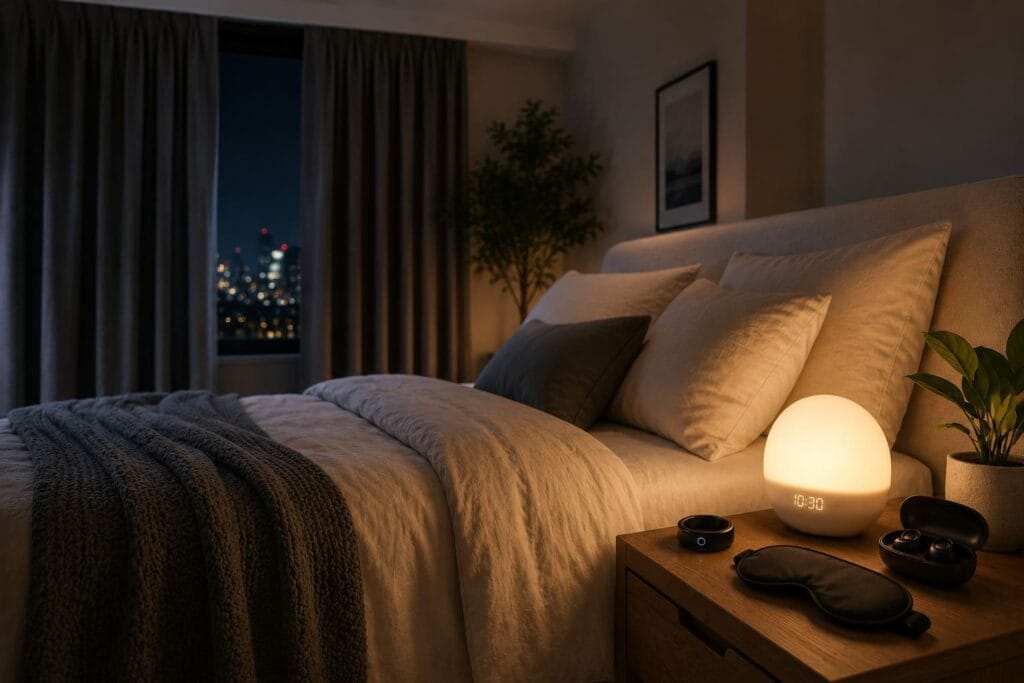
A sleep sanctuary should feel calm, practical, and easy to use. Build the room first. Add gadgets only where they clearly help.
Key things to remember:
- Fix light before buying advanced sleep tech.
- Use a sleep mask when curtains are not enough.
- Start cheap with noise control before buying premium sleepbuds.
- Upgrade the mattress only if comfort is truly the problem.
- Use cooling systems only if temperature disrupts your sleep.
- Treat humidifiers as air comfort tools, not must-have sleep devices.
- Use sleep trackers for awareness, not as a direct solution.
- Skip vague wellness products that do not solve a clear bedroom problem.
- The best sleep sanctuary is practical, calm, and matched to your real needs.